

The Comprehensive Guide to Outdoor Beach Chairs for Hiking and Camping: Engineering, Ergonomics, and Market Trends
Abstract
This whitepaper examines the technical evolution and market integration of the modern Outdoor Beach Chair within the high-performance hiking and camping sectors. Traditionally viewed as a stationary luxury, contemporary seating solutions have undergone a radical transformation through advanced metallurgy and textile engineering, allowing for crossover utility in rugged environments. We analyze why the demand for ergonomic, ultralight seating has surged by over 12% annually (Source: Outdoor Industry Association, 2025) and how these products address the physiological needs of long-distance hikers. Readers will gain actionable insights into material durability ratings, procurement strategies for B2B stakeholders, and the specific structural innovations that differentiate professional-grade gear from consumer-grade alternatives. By understanding the intersection of portability and stability, organizations can better align their product portfolios with the burgeoning "luxury-utility" trend in the global outdoor market.
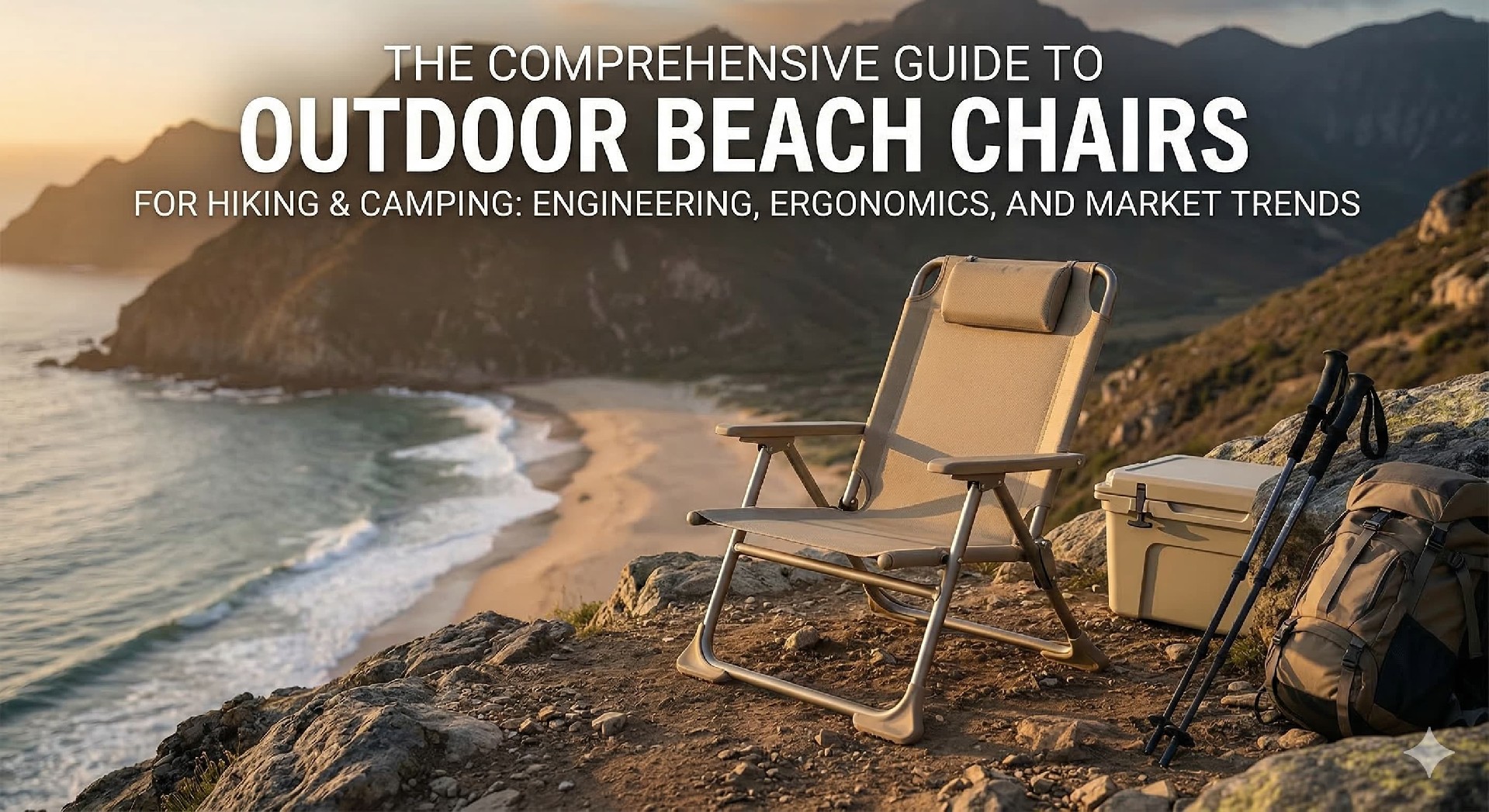
Defining the Modern Outdoor Seating Landscape: More Than Just a Chair
In the current outdoor recreation paradigm, the "beach chair" is no longer confined to the shoreline. The boundaries between coastal leisure and backcountry trekking have blurred, leading to the rise of the multi-functional Outdoor Beach Chair. Today’s equipment is designed to navigate the soft terrain of sandy beaches while maintaining the structural integrity required for rocky campsites.
The shift toward high-end portable seating is driven by a demographic shift. Modern campers—often termed "glampers" or "overlanders"—prioritize recovery. Physiological studies indicate that elevated seating significantly reduces lumbar strain and promotes faster muscle recovery after high-intensity activities compared to sitting on the ground. For retailers and distributors, this represents a high-margin opportunity to upsell from basic pads to sophisticated
Furthermore, the integration of these chairs with other camp essentials, such as a high-performance
Engineering Excellence: Material Science Behind Lightweight Portable Seating
To achieve the "ultralight" status required for hiking, manufacturers have turned to aerospace-grade materials. The mechanical performance of an outdoor chair is a delicate balance between weight, tensile strength, and corrosion resistance.
1. Aluminum Alloy Frameworks (7075 vs. 6061)
The structural skeleton of a premium
Tensile Strength: 7075 alloy offers nearly double the strength of 6061, allowing for thinner tubing walls without sacrificing load-bearing capacity (Source: Materials Today, 2024).
Weight Efficiency: This allows for chairs that support up to 150kg while weighing less than 1.5kg total.
2. High-Denier Technical Textiles
The seating surface must withstand UV radiation, moisture, and abrasion. Most professional-grade chairs utilize 600D to 900D Oxford Polyester or Ripstop Nylon. These fabrics are often treated with a Polyurethane (PU) coating to enhance water resistance and prevent the "sagging" effect common in cheaper PVC-based fabrics. In humid coastal environments, antimicrobial treatments are also applied to prevent mold growth during storage.
3. Precision-Molded Joinery
The points of failure in outdoor furniture are typically the joints. B2B manufacturers now use CNC-machined aluminum hubs or high-impact nylon connectors. These components must undergo rigorous cycle testing—often exceeding 2,000 stress tests—to ensure longevity in extreme temperature fluctuations.
Ergonomic Design Principles: Balancing Comfort and Portability
The "beach" aspect of these chairs usually implies a lower center of gravity. However, for hiking and camping, ergonomics must account for diverse body types and terrain.
Lumbar Support and Seat Depth
Unlike traditional sling chairs that cause the spine to curve unnaturally, modern
Ground Stability and "Sand Feet"
One of the primary technical challenges for a crossover chair is ground penetration. In hiking scenarios, narrow feet may sink into soft earth; on the beach, they disappear into the sand. The solution has been the development of "big foot" or "sand-resistant" feet—oversized, articulating pads that increase the surface area and provide stability on uneven mountainous terrain.
Comparative Study: Ultralight Backpacking Chairs vs. Professional Outdoor Beach Chairs
The following table provides a technical comparison for B2B procurement officers and gear specialists to evaluate which seating solution fits their specific market segment.

Durability and Environmental Resistance: Technical Specifications
A product meant for both the beach and the mountains must be "environmental-agnostic." This requires specific chemical treatments and hardware choices that standard indoor or "budget" outdoor furniture lacks.
Anodization and Salinity
For any
UV Degradation Metrics
UV radiation breaks down polymer chains in fabrics, leading to brittleness and fading. Technical specifications for high-end gear often cite a UPF (Ultraviolet Protection Factor) and use solution-dyed yarns. According to Gartner’s 2025 Consumer Goods Report, durability is now the #1 driver for brand loyalty in the outdoor sector, with 72% of consumers willing to pay a 15% premium for products with guaranteed UV resistance.
To complement these durable seating solutions, many users also invest in high-quality
Market Analysis and Strategic Procurement: B2B Insights for 2026
The global portable outdoor furniture market is projected to reach $5.2 billion by 2027 (Source: Grand View Research). For B2B stakeholders, the opportunity lies in the "hybridization" of gear.
The Rise of the "Weekend Warrior"
Data suggests that the largest growth segment isn't the hardcore mountaineer, but the "Weekend Warrior"—the consumer who works in the city and spends 48 hours in nature. These users want gear that is easy to store in an apartment, fits in a small car, and works equally well at a local park, a music festival, or a remote beach.
Supply Chain Resilience
In 2026, supply chain transparency is no longer optional. B2B buyers are increasingly scrutinizing the "Total Cost of Ownership" (TCO) rather than just the unit price. A chair that lasts five years significantly reduces return rates and customer dissatisfaction compared to a cheaper model that fails within 12 months. When sourcing an
Future Trends: Sustainability and Smart Materials in Outdoor Furniture
The next frontier for the Outdoor Beach Chair involves two key pillars: Circularity and Smart Materials.
1. Bio-based Polymers
We are seeing the first iterations of chair connectors made from bio-resins and fabrics woven from ocean-bound plastics. This aligns with the "Leave No Trace" ethos prevalent in the hiking community.
2. Kinetic Integration
Future designs are experimenting with integrated solar panels in the armrests or fabric that changes its breathability based on ambient temperature. While these are currently in the prototype stage, they represent the logical progression of "adventure tech."
FAQs (Frequently Asked Questions)
1. Is a beach chair suitable for a multi-day hiking trip?
Yes, provided it is an "ultralight" model. Traditional beach chairs are too heavy, but modern
2. How much weight can a portable outdoor chair typically hold?
Most high-quality portable chairs are rated for 120kg to 150kg (approx. 260-330 lbs). This is achieved through the use of reinforced joints and high-tensile 600D-900D fabrics. Always check the static load rating before purchase.
3. Will sand damage the folding mechanism of the chair?
In budget models, sand can jam joints. However, professional-grade gear uses "sealed" joints or shock-corded systems that prevent particulates from entering the structural tubes, ensuring smooth operation even after beach use.
4. How do I prevent my chair from blowing away on the beach?
Many
5. What is the difference between Oxford cloth and regular polyester?
Oxford cloth is a specific type of weave (basketweave) that provides higher durability and breathability than standard plain-weave polyester. It is significantly more resistant to tearing and abrasion, which is critical for camping.
6. Can these chairs be used in saltwater environments?
Yes, but they must be anodized. Standard steel or untreated aluminum will corrode quickly. It is always recommended to rinse the frame with fresh water after exposure to salt spray to prolong the life of the finish.
7. Why are some hiking chairs so much more expensive than others?
The price difference usually reflects the quality of the aluminum (7075 vs. 6063) and the fabric denier. Expensive chairs also feature better ergonomic research, lighter weight, and longer warranties.
8. Are the fabrics on these chairs replaceable?
Some premium brands offer replaceable fabric seats. This is a significant sustainability feature, allowing users to keep the aluminum frame (which lasts decades) and simply replace the textile portion if it becomes worn or damaged.
Conclusion
The evolution of the Outdoor Beach Chair from a simple coastal accessory to a sophisticated piece of hiking and camping equipment is a testament to modern engineering. By focusing on high-strength alloys, ergonomic stability, and environmental resistance, manufacturers have created a product category that meets the demands of the modern adventurer.
For B2B partners, the focus should remain on durability and technical transparency. As the "Great Outdoors" continues to attract a broader demographic, the demand for gear that balances luxury with utility will only increase. Investing in high-quality seating solutions is not just about providing a place to sit—it's about enhancing the recovery and enjoyment of the outdoor experience.
