

Abstract:
This comprehensive technical whitepaper explores the intricate dynamics of the global family pool supply chain, providing critical insights for B2B wholesalers, distributors, and cross-border trade professionals. What this article covers: We dissect the core material science behind modern inflatable and above-ground family pools, focusing on PVC formulations, high-frequency welding technologies, and stringent international safety certifications. Why it matters now: With the global outdoor recreation market experiencing sustained growth, securing reliable, high-margin inventory requires moving beyond superficial supplier checks and understanding the underlying manufacturing processes. How to leverage this data: Readers will learn actionable strategies to optimize container loading and logistics, source REACH-compliant and eco-friendly materials, and integrate smart inventory management systems to maximize seasonal ROI. By mastering these technical and operational facets, procurement teams can significantly reduce defect rates, enhance brand reputation, and build resilient global supply chains in the highly competitive water sports and leisure equipment sector.
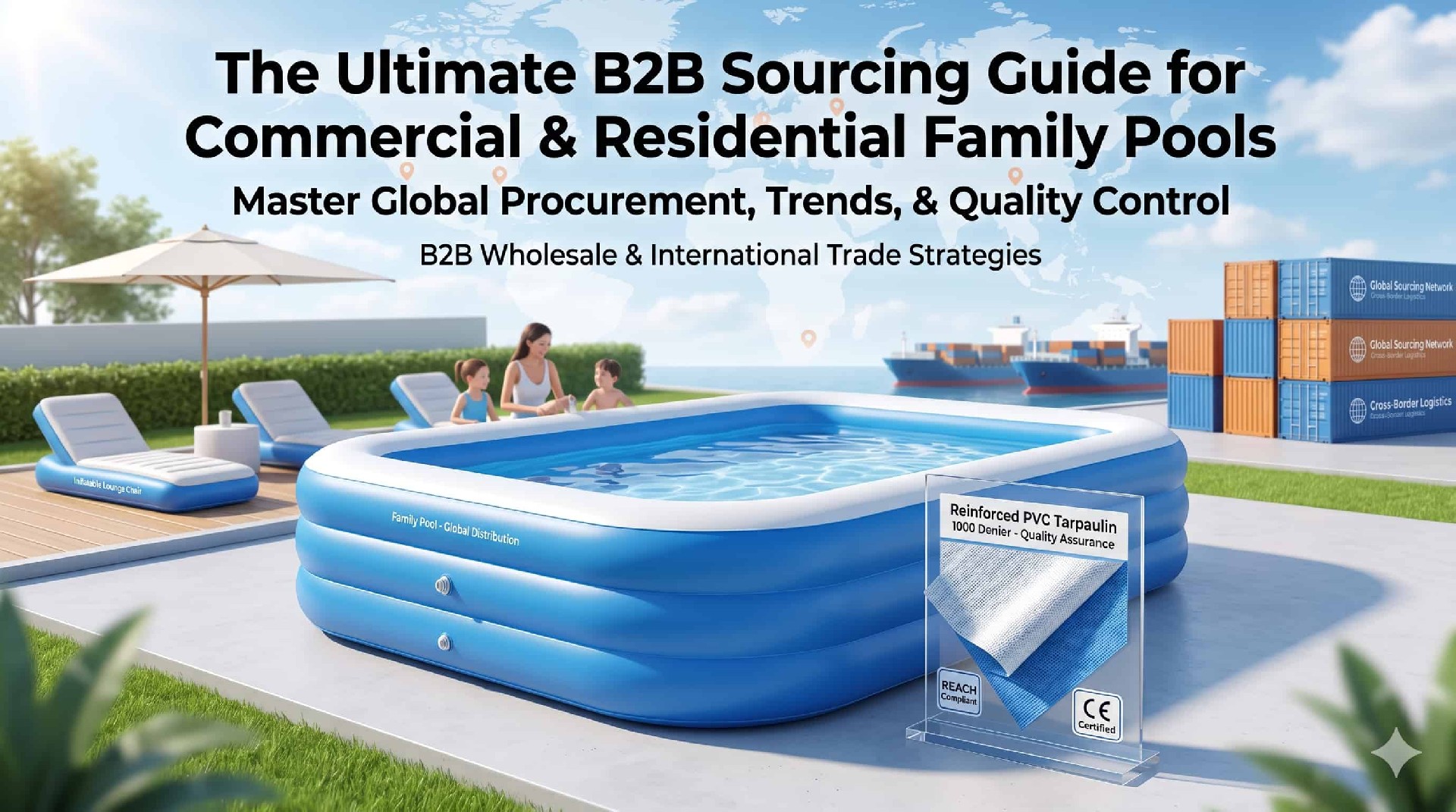
1. The Global Market Landscape for Family Pools and Outdoor Leisure Equipment
The global market for outdoor recreational equipment, specifically focusing on the family pool segment, has undergone a massive transformation over the past five years. Driven by a shift in consumer behavior toward home-based entertainment and "staycations," the demand for durable, high-capacity water features has surged. For B2B buyers and international wholesalers, understanding this macroeconomic landscape is the first critical step in formulating a profitable procurement strategy.
1.1 Market Growth and CAGR Projections
The above-ground and inflatable family pool sector is no longer a niche market; it is a multi-billion-dollar industry. According to recent market analyses, the global above-ground pools market is projected to expand at a Compound Annual Growth Rate (CAGR) of approximately 5.8% from 2024 to 2030 (Source: Grand View Research, 2024). This growth is heavily concentrated in North America and Western Europe, where suburban housing models provide ample backyard space. However, emerging markets in the Asia-Pacific region are showing rapid adoption rates, fueled by rising middle-class disposable incomes and increasing urbanization.
For wholesale distributors, this data indicates a sustained, long-term demand curve rather than a temporary pandemic-era spike. Procurement strategies must shift from short-term spot buying to securing long-term manufacturing contracts with reliable overseas suppliers to lock in favorable raw material pricing and guarantee peak-season production capacity.
1.2 Changing Consumer Demographics and Product Expectations
Historically, the family pool was viewed as a disposable, single-season commodity. Today, end-users are demanding "commercial-grade" durability for residential use. This shift necessitates a complete overhaul of how B2B buyers source products. Consumers are actively researching PVC gauge thickness, UV resistance, and pump filtration capabilities before making a purchase.
Distributors who continue to source low-tier, uncertified pools face increasing return rates and brand damage. The modern B2B buyer must prioritize suppliers who invest in R&D, offer multi-chamber structural integrity, and provide transparent compliance documentation. Furthermore, the integration of related outdoor leisure products is becoming crucial. Retailers want suppliers who can offer a complete lifestyle package, meaning cross-border traders must diversify their catalogs to include complementary items like
2. Core Material Science: Analyzing PVC and Drop-Stitch Technologies in Family Pools
To procure high-quality family pools, one must understand the chemistry and engineering of the materials used. The days of accepting generic "plastic" are over. B2B negotiations should center on specific material properties, denier counts, and environmental compliance.
2.1 The Anatomy of Commercial-Grade PVC (Polyvinyl Chloride)
The vast majority of inflatable and framed family pools utilize PVC. However, the quality of PVC varies drastically. In professional B2B sourcing, we categorize PVC by its thickness (measured in gauge or millimeters) and its reinforcement structure.
Standard K80 PVC: Often used in entry-level inflatable pools, K80 is a cold-crack resistant PVC formulation that performs reasonably well in temperate climates. However, for large-capacity family pools, standard K80 is prone to stretching and puncture under high hydrostatic pressure.
Reinforced PVC Tarpaulin (Laminated PVC): This is the gold standard for premium family pools. It consists of a dense polyester mesh (often 1000 Denier) sandwiched between two layers of heavy-duty PVC. This "sandwich" construction prevents catastrophic blowouts. The internal mesh provides tensile strength, while the outer PVC layers provide water tightness and abrasion resistance. When auditing a factory, B2B buyers must request tensile strength test reports (e.g., ASTM D751) to verify the integrity of the laminated mesh.
2.2 Plasticizers and Environmental Compliance (REACH & RoHS)
Raw PVC is naturally rigid (like a plumbing pipe). To make it flexible enough for a family pool, manufacturers add plasticizers—most commonly phthalates. This is a critical area for B2B risk management.
Many regions, particularly the European Union (under the REACH regulation) and the US (under the CPSIA), have strict limits on specific phthalates (such as DEHP, DBP, and BBP) due to health concerns. Sourcing non-compliant family pools can lead to devastating customs seizures and product recalls. Professional buyers must demand "Phthalate-Free" or "6P-Free" PVC formulations and require third-party laboratory testing certificates (from organizations like SGS, Intertek, or TÜV Rheinland) before authorizing mass production. (Source: European Chemicals Agency, 2025).
2.3 Emerging Drop-Stitch Technology
Borrowed from the manufacturing of high-end
3. Manufacturing Processes: Welding, Extrusion, and Quality Control
Understanding the factory floor operations is essential for identifying reliable B2B partners. The difference between a 1% defect rate and a 10% defect rate usually comes down to the welding technology and the stringency of the Quality Control (QC) protocols.
3.1 High-Frequency (HF) Welding vs. Hot Air Welding
The seams of a family pool are its most vulnerable points. The hydrostatic pressure of thousands of gallons of water constantly pushes against these seams.
High-Frequency (Radio Frequency) Welding: This is the preferred method for high-quality PVC family pools. HF welding uses electromagnetic energy to excite the molecules within the PVC, causing them to melt and fuse from the inside out. This creates a bond that is actually stronger than the original material itself. During factory audits, check the calibration records of the HF welding machines; inconsistent power output leads to weak spots in the seams.
Hot Air/Hot Wedge Welding: While suitable for some straight-line industrial applications, hot air welding is generally inferior for the complex, curved seams of a multi-chamber inflatable family pool. It relies on external heat to melt the surface, which can degrade the PVC's structural integrity if not perfectly controlled.
3.2 In-Line Quality Control and Pressure Testing Protocols
A rigorous QC system is non-negotiable in cross-border trade. When sourcing family pools, mandate the following QC checkpoints in your manufacturing agreement:
Raw Material Inspection (IQC): Testing incoming rolls of PVC for thickness consistency, color fastness, and cold-crack resistance before cutting begins.
In-Process Quality Control (IPQC): Visual inspection of seams immediately after the welding process.
Inflation and Retention Testing: This is the most crucial step. Every single pool (100% inspection, not batch sampling) must be inflated to its operational pressure and left for a minimum of 24 to 48 hours to check for micro-leaks. Pressure gauges should be used to monitor minute drops in PSI.
Final Quality Control (FQC): Inspection of the packaging, ensuring accessories (pumps, repair patches) are included, and verifying that the color box artwork matches the client's specifications.
4. Key Procurement Criteria and Cross-Border Logistics for B2B Sourcing
Successful B2B trade is not just about finding a good product; it's about moving that product efficiently across the globe. Family pools are bulky, heavy items, which presents unique logistical challenges.
4.1 Master Carton Optimization and CBM Calculations
Shipping empty air is the fastest way to erode profit margins in the wholesale family pool business. Because these items are heavy and dense when deflated, optimizing the packaging to maximize container load is critical.
B2B buyers must work closely with factory engineers to design the folding pattern and color box dimensions. The goal is to maximize the utilization of a 40ft High Cube (40HQ) shipping container. For example, reducing the retail box size by just 2 centimeters on each side can allow for an additional 200 units per container, drastically reducing the landed cost per unit. Always request a detailed Packing List and calculate the exact Cubic Meters (CBM) before placing an order.
4.2 Incoterms and Freight Forwarding Strategies
Choosing the right Incoterms dictates who bears the risk and cost at each stage of the journey.
FOB (Free On Board): The most common arrangement for experienced B2B buyers. The supplier is responsible for delivering the family pools to the port of origin (e.g., Shenzhen or Ningbo) and clearing them for export. The buyer takes control of the ocean freight, allowing them to negotiate directly with shipping lines or freight forwarders for the best rates.
DDP (Delivered Duty Paid): Often preferred by smaller dropshippers or Amazon FBA sellers, where the supplier handles everything up to the final destination warehouse. While convenient, this bakes hidden logistics margins into the unit price.
Given the seasonal nature of family pools, managing shipping timelines is vital. Ocean freight from Asia to North America or Europe can take 30 to 45 days. To have inventory ready for the peak summer season (May-July), production must start in December, and containers must be on the water by late February.
4.3 Navigating Tariffs and Import Duties
Cross-border traders must remain vigilant regarding trade policies. The Harmonized System (HS) codes for inflatable and framed pools determine the import duty rates. Misclassifying a product can lead to severe fines and port delays. B2B buyers should consult with licensed customs brokers to ensure accurate HS code classification and explore strategies for tariff mitigation, such as sourcing from countries with favorable Free Trade Agreements (FTAs) if the primary manufacturing hubs face high punitive tariffs.
5. Maximizing ROI: Inventory Management and Seasonal Merchandising
Procuring the family pools is only half the battle; managing the inventory lifecycle dictates the ultimate return on investment (ROI). B2B distributors must employ sophisticated forecasting and cross-merchandising strategies.
5.1 Demand Forecasting and the Bullwhip Effect
The family pool market is intensely seasonal. A sudden heatwave in May can empty a distributor's warehouse in days, while a cold, rainy June can result in massive overstock. This volatility often leads to the "Bullwhip Effect" in the supply chain, where small fluctuations in retail demand cause massive over-ordering at the wholesale level.
To mitigate this, B2B buyers should leverage historical sales data, localized weather forecasts, and early pre-season booking discounts from manufacturers. Implementing a vendor-managed inventory (VMI) system or utilizing API-driven inventory syncing can help distributors maintain lean stock levels while preventing stockouts.
5.2 Cross-Selling and the "Backyard Oasis" Concept
To maximize average order value (AOV) and B2B client lifetime value, wholesalers should position the family pool not as a standalone item, but as the centerpiece of a comprehensive outdoor leisure ecosystem.
When a retail client purchases a wholesale container of family pools, procurement teams should aggressively cross-sell complementary accessories. For example, a consumer relaxing in a pool will likely want comfortable poolside seating; offering a stylish
6. Emerging Trends: The Future of the Family Pool Industry
To maintain a competitive edge, B2B content specialists, marketing teams, and procurement officers must look ahead to the technological and material innovations shaping the next five years of the industry.
6.1 Eco-Friendly Manufacturing and Circular Economy
As environmental regulations tighten and consumer awareness grows, the demand for sustainable family pools is rising. Traditional PVC is notoriously difficult to recycle. Forward-thinking manufacturers are exploring alternative materials, such as TPU (Thermoplastic Polyurethane), which is lighter, stronger, and more environmentally friendly than PVC, albeit currently more expensive.
Furthermore, we are seeing the emergence of recycled PVC initiatives, where post-industrial scrap is re-calendered into inner layers of the pool fabric. B2B buyers who secure partnerships with factories pioneering these sustainable practices will hold a significant advantage in securing contracts with large, eco-conscious retail chains.
6.2 Smart Integration and Automated Maintenance
The integration of IoT (Internet of Things) into the backyard pool is accelerating. Future family pool packages will increasingly feature smart filtration pumps that monitor water chemistry (pH, chlorine levels) in real-time and send alerts to the user's smartphone. For wholesalers, this means expanding technical competencies to audit electronic components, secure CE/FCC certifications for wireless devices, and manage warranty claims for complex electro-mechanical parts. This shift elevates the family pool from a simple textile product to a smart home peripheral. (Source: IoT Analytics Hardware Report, 2025).
7. FAQs (Frequently Asked Questions on B2B Family Pool Procurement)
1. What is the standard Minimum Order Quantity (MOQ) for wholesale family pools?
Standard MOQs typically range from 500 to 1,000 units depending on the size and complexity of the pool. For highly customized designs or bespoke printed patterns, factories may require higher MOQs to offset the cost of creating new printing cylinders and welding molds.
2. How long is the manufacturing lead time for custom commercial-grade family pools?
During the off-season (August-November), lead times are generally 30 to 45 days. However, during the peak production season (December-April), lead times can extend to 60 or even 90 days. B2B buyers must finalize their orders by early Q4 to ensure spring delivery.
3. What are the key safety certifications required for the European market?
To legally import family pools into the EU, the products must comply with the EN 16927 standard (for mini-pools) or EN 16582 (for domestic swimming pools). Furthermore, all PVC materials must strictly adhere to the REACH regulation regarding restricted chemical substances and plasticizers.
4. Can we customize the PVC thickness for commercial-grade family pools?
Yes, B2B buyers can and should dictate PVC specifications. While entry-level pools might use 0.3mm PVC, commercial-grade or heavy-duty family pools should utilize 0.5mm to 0.9mm PVC, often reinforced with an internal polyester mesh (tarpaulin) for maximum tear resistance and longevity.
5. How does high-frequency (HF) welding compare to hot air welding for pool seams?
HF welding is vastly superior for family pools. It uses electromagnetic waves to melt the PVC from the inside, creating an airtight, structural bond stronger than the surrounding material. Hot air welding is an external surface melt, which is less reliable for the complex curves and high hydrostatic pressure of large pools.
6. What is the expected lifespan of a heavy-duty inflatable family pool?
With proper care, a high-quality, reinforced PVC family pool should last 3 to 5 seasons. Factors affecting lifespan include UV exposure, proper winterization (storing it dry in a temperature-controlled environment), and adherence to recommended water chemistry guidelines to prevent material degradation.
7. Are eco-friendly or sustainable materials available for family pool manufacturing?
The industry is slowly transitioning. While standard PVC dominates, some premium suppliers now offer TPU (Thermoplastic Polyurethane) pools, which are phthalate-free, biodegradable over long periods, and significantly stronger. Some factories also utilize a percentage of recycled PVC in the core layers of laminated materials.
8. How should wholesale distributors store unsold inventory during the off-season?
Unsold inventory must be stored in a climate-controlled warehouse. Extreme heat can cause the folded PVC to stick together, while freezing temperatures can make the PVC brittle and prone to cracking along the fold lines. Boxes must be stacked according to the manufacturer's weight limits to avoid crushing the lower units.
Conclusion
The procurement and distribution of the family pool represents a sophisticated intersection of material science, cross-border logistics, and seasonal market forecasting. As consumer expectations shift toward commercial-grade durability and eco-conscious manufacturing, B2B wholesalers can no longer rely on superficial sourcing strategies. By understanding the intricacies of high-frequency welding, REACH-compliant PVC formulations, and master carton optimization, procurement professionals can drastically reduce defect rates, optimize container yields, and secure higher profit margins. The key to long-term success in the water sports and outdoor leisure market lies in building robust, transparent relationships with technically capable manufacturers who view quality control as a core competency rather than an afterthought.
Call to Action: Ready to elevate your seasonal inventory with high-margin, technically superior outdoor leisure products? Stop settling for subpar quality and unpredictable supply chains.
