

Abstract
As the global outdoor recreation and adventure tourism sectors continue to experience unprecedented growth, the demand for commercial-grade watercraft has surged. This comprehensive whitepaper explores the critical technical specifications, manufacturing paradigms, and B2B sourcing strategies associated with the modern Raft Drifting Boat. Why is this important now? Supply chain volatility, evolving material sciences (such as the shift from traditional PVC to advanced TPU), and stringent international safety compliance mandates require wholesale buyers and brand owners to adopt a more analytical approach to procurement. By reading this guide, B2B professionals will learn how to evaluate manufacturer capabilities, optimize cross-border logistics, select the precise material compositions for specific aquatic environments, and ultimately maximize their return on investment (ROI) in the competitive water sports equipment market.
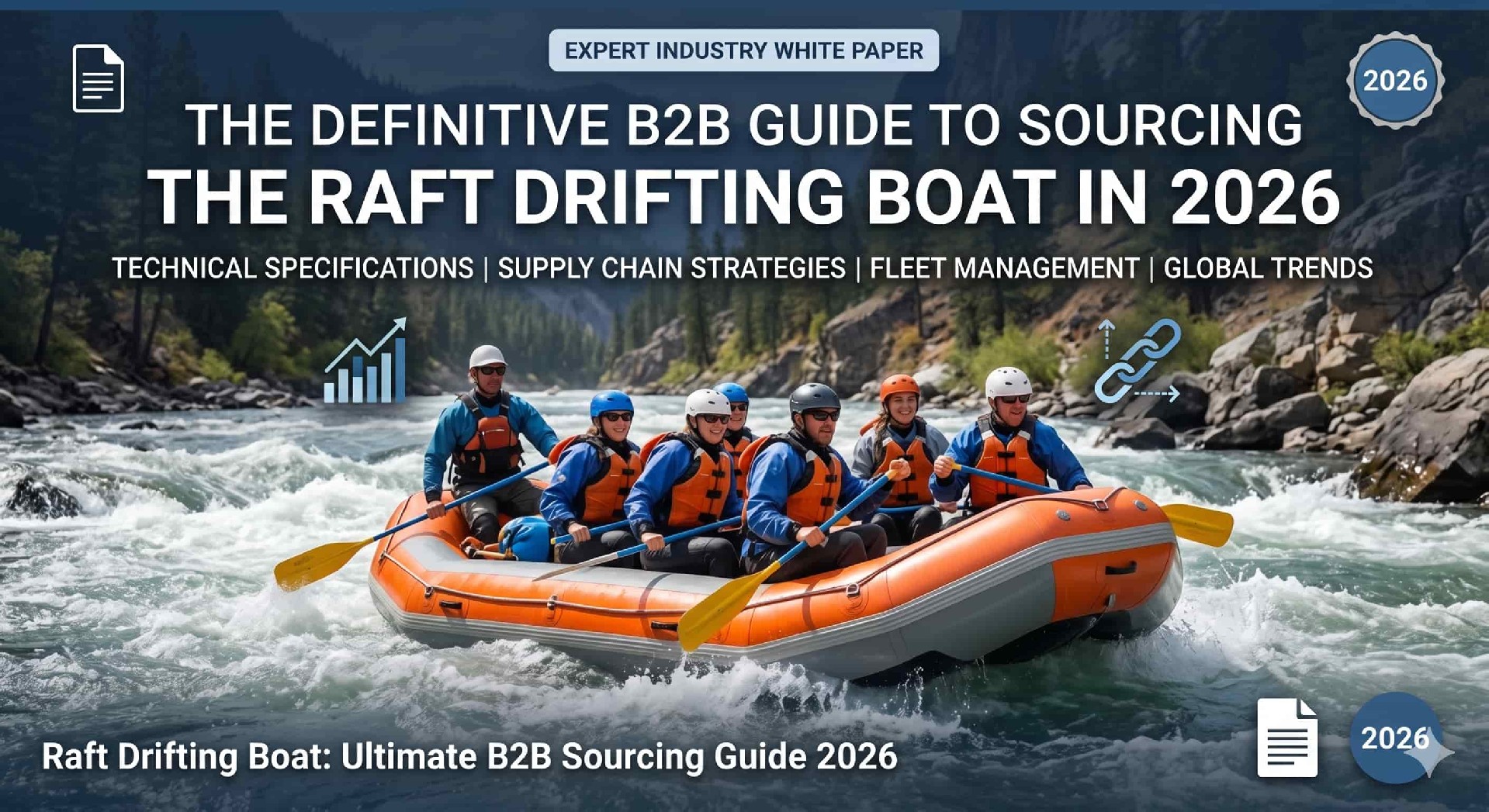
Understanding the Raft Drifting Boat: Anatomy and Core Technologies
To successfully navigate the wholesale market for any commercial inflatable vessel, buyers must possess a granular understanding of the product's underlying engineering. A
Material Science: PVC, Hypalon, and TPU Comparisons
The foundation of any high-quality river raft lies in its base fabric and protective coatings. The choice of material dictates the vessel's lifespan, resistance to environmental degradation, and overall manufacturing cost.
Polyvinyl Chloride (PVC): PVC remains the most ubiquitous material in the inflatable boat industry, accounting for approximately 75% of the global market volume. Modern commercial-grade PVC rafts utilize a dense polyester or nylon base fabric—typically rated between 1000 and 2000 Denier—coated with multiple layers of plastisol. While highly cost-effective and amenable to efficient thermowelding processes, standard PVC is susceptible to UV degradation over a 5 to 7-year horizon if not properly treated. Advanced formulations now incorporate heavy UV inhibitors and anti-fungal agents to mitigate these issues.
Chlorosulfonated Polyethylene (CSM/Hypalon): Historically considered the gold standard for expedition-grade whitewater rafts, Hypalon offers unparalleled resistance to UV radiation, extreme temperature fluctuations, and chemical exposure (such as spilled fuel). Hypalon cannot be heat-welded; it must be meticulously hand-glued using specialized neoprene-based contact adhesives. This labor-intensive process significantly increases the manufacturing lead time and the final wholesale price. However, a well-maintained Hypalon raft can boast a service life exceeding 15 to 20 years. (Source: Outdoor Industry Association Materials Report, 2025).
Thermoplastic Polyurethane (TPU): As sustainability mandates reshape B2B procurement, TPU is rapidly gaining market share. TPU is inherently more abrasion-resistant than PVC, significantly lighter, and entirely recyclable. It does not require the toxic plasticizers used in PVC manufacturing, making it an eco-friendly alternative. Furthermore, TPU can be efficiently high-frequency (HF) welded, ensuring airtight seams that are structurally stronger than the surrounding fabric.
Chamber Construction and Drop-Stitch Technology
The architectural integrity of a rafting vessel relies heavily on its internal baffling and floor construction. Commercial rafts utilize a multi-chamber design to ensure buoyancy redundancy; if one chamber is punctured, the vessel must remain afloat.
Internal Baffling: High-end manufacturers utilize cone-shaped internal baffles between air chambers. Unlike flat baffles, cone baffles flex and invert based on pressure differentials, preventing structural failure if an adjacent chamber rapidly deflates.
Self-Bailing Floors: Modern whitewater rafts feature laced or welded-in self-bailing floors. These thick, reinforced floors sit slightly above the waterline and are perforated with scupper holes, allowing intruding water to drain instantly.
Drop-Stitch Integration: Originally popularized by the
Stand Up Paddle Board
Global Market Trends and Demand for Commercial Whitewater Rafts
B2B buyers must align their procurement cycles with overarching macroeconomic trends and shifting consumer demographics. The global market for inflatable watercraft has evolved significantly in the post-pandemic era, transitioning from a niche adventure segment to a mainstream recreational pillar.
Industry Growth Statistics and Post-Pandemic Resurgence
The global inflatable boat market is projected to reach USD 2.8 billion by 2030, registering a Compound Annual Growth Rate (CAGR) of 6.4% from 2024 to 2030 (Source: Grand View Research, 2026). This sustained growth is driven by a structural shift in consumer spending toward experiential travel and outdoor recreation.
Commercial outfitters, summer camps, and municipal parks are rapidly expanding their fleets to accommodate this influx of outdoor enthusiasts. Consequently, the B2B demand for highly durable, 6-to-12 person commercial rafts has outpaced the demand for smaller, consumer-grade dinghies. Wholesale distributors must anticipate longer factory lead times—often extending from 45 to 90 days during peak pre-season manufacturing cycles—and adjust their inventory forecasting accordingly.
The Shift Toward Sustainable and Eco-Friendly Manufacturing
Institutional buyers and governmental procurement agencies are increasingly implementing strict Environmental, Social, and Governance (ESG) criteria. This directly impacts the B2B water sports market. Distributors are facing pressure to source products manufactured with lower carbon footprints.
As mentioned previously, the transition from PVC to TPU is a major trend. Furthermore, factories that utilize non-toxic, toluene-free adhesives and operate under ISO 14001 (Environmental Management) certifications are securing larger B2B contracts. Sourcing managers must actively audit potential suppliers for their environmental compliance, as this can serve as a significant unique selling proposition (USP) in downstream B2B and B2C marketing.
B2B Sourcing Strategy for High-Performance River Rafts
Sourcing complex sporting goods from overseas manufacturers requires a rigorous, data-driven approach. A successful B2B procurement strategy mitigates risk, ensures consistent quality, and optimizes landed costs.
Evaluating Manufacturer Capabilities and Certifications
The barriers to entry for manufacturing low-grade inflatables are relatively low, but producing commercial-grade whitewater rafts requires significant capital investment in HF welding machinery, automated cutting tables, and skilled labor.
When vetting potential manufacturing partners, B2B buyers must demand the following documentation and proof of capability:
ISO 9001:2015 Certification: Ensures the factory has a standardized quality management system in place.
CE Certification (EN ISO 6185-3): Essential for importing boats into the European Union, and widely recognized globally as a benchmark for structural integrity, buoyancy, and load capacity for boats with a hull length of less than 8 meters.
Material Test Reports: Third-party lab reports (e.g., from SGS or TUV Rheinland) verifying the Denier count, tear strength, tensile strength, and UV resistance of the base fabric.
Production Machinery Audits: Verification that the factory utilizes advanced hot-air seam sealing or High-Frequency (HF) welding, rather than relying solely on manual gluing, which introduces high variability in quality.
Cost-Benefit Analysis: Bulk Purchasing vs. Quality Assurance
In B2B wholesale, unit cost is invariably tied to the Minimum Order Quantity (MOQ). Standard MOQs for commercial rafts typically range from 20 to 50 units per model, depending on custom branding requirements.
While negotiating the lowest possible Free On Board (FOB) price is a standard procurement goal, buyers must calculate the Total Cost of Quality (TCQ). A factory offering a unit price 15% below the market average often achieves this by using secondary-grade PVC, inferior Halkey-Roberts style valves, or reducing the overlap margin on primary seams. In the commercial outfitting sector, a seam failure during a class IV rapid is a catastrophic liability.
Therefore, buyers should implement a strict Acceptable Quality Limit (AQL) protocol. An AQL of 1.5 for major defects and 4.0 for minor defects is standard for critical safety equipment. Investing in pre-shipment inspections by independent quality assurance firms is a mandatory expense that drastically reduces the risk of receiving unsalable inventory.
Cross-Border Trade Logistics and Import Compliance for Inflatable Boats
The logistical complexities of importing bulky recreational equipment cannot be overstated. Ocean freight volatility, shifting tariff landscapes, and rigorous customs clearance procedures require meticulous planning.
Tariffs, HS Codes, and Customs Clearance Strategies
Accurate product classification is the bedrock of international trade compliance. Inflatable rafts and watercraft are generally classified under the Harmonized System (HS) code 8903.10 (Inflatable vessels for pleasure or sports).
However, nuances exist. If the raft is designed specifically for propulsion by an outboard motor (featuring a rigid transom), customs authorities may classify it differently than a pure paddle-powered drift boat. Misclassification can lead to severe penalties, delayed clearance, and unexpected demurrage charges.
B2B importers must also navigate bilateral trade agreements and punitive tariffs. For example, importers in the United States sourcing from Asia must factor in Section 301 tariffs, which have historically added a 25% surcharge to the base duty rate of recreational vessels (Source: Global Trade Magazine, 2025). Engaging a licensed customs broker early in the procurement cycle ensures accurate landed cost calculations and prevents margin erosion.
Optimizing Freight Shipping for Bulky Watercraft
Inflatable boats, even when tightly rolled and packaged, consume substantial cubic volume. Unlike heavy industrial machinery, rafts tend to "cube out" a shipping container before they "weigh out."
To maximize freight ROI, buyers must focus on container optimization:
Packaging Specifications: Work with the factory to utilize heavy-duty, double-corrugated export cartons (minimum 5-ply) strapped tightly. Vacuum-packing or heavy compression rolling at the factory level can reduce carton volume by up to 15%.
Container Selection: A 40-foot High Cube (40HQ) container offers 76 cubic meters of space, compared to the 33 cubic meters of a standard 20-foot (20GP) container. Given that ocean freight rates for a 40HQ are rarely double that of a 20GP, the per-unit shipping cost drastically decreases when ordering in larger volumes.
Mixed Loading: To further optimize space, intelligent B2B buyers will mix their container loads. For instance, filling the dead space around large commercial rafts with smaller, high-margin accessories like paddles, life jackets (PFDs), air pumps, or highly compact
Fishing Kayaks
Fleet Maintenance and Maximizing ROI for Commercial Rafting Operators
For wholesale distributors selling directly to commercial outfitters, providing robust after-sales support and maintenance education is a powerful value-added service. Commercial operators do not view rafts as disposable commodities; they are capital assets that must generate revenue over multiple seasons.
Preventive Maintenance Protocols
The primary enemies of a commercial raft are UV degradation, mold/mildew from improper storage, and abrasive wear from dragging over river rocks. B2B suppliers should provide their clients with rigorous maintenance manuals:
UV Protection: Recommend the application of specialized marine UV protectants (e.g., 303 Aerospace Protectant) every 30 to 45 days during the active season. This prevents the PVC plasticizers from baking out and turning the fabric brittle.
Storage: Rafts should never be stored tightly rolled while wet. They must be inflated, washed with mild soap, thoroughly dried, and stored partially inflated in a climate-controlled environment to prevent seam stress and structural creasing.
Valve Maintenance: The inflation/deflation valves (typically leafield or Halkey-Roberts designs) require periodic cleaning and silicone-based lubrication to prevent micro-leaks caused by sand or silt ingress.
Repairing Punctures and Seam Failures in the Field
Equipping B2B clients with field repair capabilities drastically improves client satisfaction and product longevity. Every commercial fleet order should include comprehensive repair kits containing matching fabric swatches, high-grade methyl ethyl ketone (MEK) solvent for surface preparation, and two-part polyurethane adhesive (for PVC/TPU) or polychloroprene adhesive (for Hypalon).
Outfitters must be trained to differentiate between a simple puncture (which can be patched in the field) and a structural seam failure (which requires returning the boat to a controlled environment for a heat-gun re-weld or professional vulcanization). By supplying OEM repair materials alongside the bulk boat orders, distributors create an additional, high-margin revenue stream while extending the operational life of the equipment.
Advanced Customization: OEM and ODM Solutions for Water Sports Brands
In the hyper-competitive water sports market, generic, unbranded equipment yields low profit margins. Successful B2B buyers leverage Original Equipment Manufacturer (OEM) and Original Design Manufacturer (ODM) services to create distinct, defensible brand identities.
OEM Strategy: Branding and Aesthetics
OEM purchasing involves taking a factory's existing structural blueprint and applying custom aesthetics. This is the fastest route to market. Options include:
Custom Colorways: Matching the raft's PVC/TPU colors to a brand's specific Pantone requirements.
Logo Application: Utilizing silk-screen printing or welded rubber badges for high-visibility brand placement on the bow, stern, and side tubes.
Accessory Customization: Upgrading standard D-rings to heavy-duty stainless steel, adding custom-branded EVA foam traction pads, or specifying upgraded aluminum thwarts.
ODM Strategy: Ground-Up Product Development
For enterprise-level buyers and established outdoor brands, ODM is the preferred path. This involves collaborating with the factory's R&D department to design a raft from the ground up.
Custom Hull Design: Modifying the rocker profile (the upward curve of the bow and stern) to optimize the boat for specific river classifications. A high-rocker boat excels in steep, technical whitewater, while a low-rocker boat tracks better on flat water.
Proprietary Features: Developing custom modular seating arrangements, integrated dry-storage compartments, or specialized rigging systems for multi-day expedition fishing.
While ODM requires significantly higher capital investment for custom molds and extended lead times for prototyping and hydro-dynamic testing, it results in exclusive, patented intellectual property that cannot be easily replicated by competitors.
Frequently Asked Questions (FAQs)
1. What is the difference between a commercial raft drifting boat and a consumer recreational raft?
Commercial rafts are constructed from thicker, heavily reinforced materials (1000D+ PVC or Hypalon), feature multiple redundant air chambers, integrated pressure relief valves, and self-bailing floors designed to withstand daily abuse, extreme UV exposure, and heavy passenger loads, unlike thin vinyl consumer boats.
2. How long does a standard PVC whitewater raft typically last?
With proper care, UV protection, and winterized storage, a high-quality commercial PVC raft can last 7 to 10 years in a rigorous outfitting environment. Hypalon models can exceed 15 years. Lifespan depends heavily on preventing prolonged UV exposure and dragging over abrasive surfaces.
3. What is the standard manufacturing lead time for wholesale raft orders?
For B2B bulk orders, expect a factory lead time of 45 to 60 days for production, depending on the season and OEM customizations. Shipping via ocean freight adds an additional 25 to 45 days, meaning buyers should initiate purchase orders 3-4 months before their required delivery date.
4. Can PVC rafts be repaired as easily as Hypalon rafts?
Yes, but the methods differ. PVC and TPU are easily repaired using specialized two-part polyurethane adhesives or by utilizing a heat gun for thermal welding. Hypalon requires aggressive sanding of the surface and specific neoprene-based contact cements for patches to adhere permanently.
5. Are drop-stitch floors better than traditional I-beam inflatable floors?
Yes, for most commercial applications. Drop-stitch technology inflates to a much higher pressure (up to 12 PSI), creating a rigid, flat surface. This provides superior stability for passengers standing or moving within the raft and improves the hydrodynamic tracking of the vessel through the water.
6. What certifications should I look for when importing inflatable boats into the EU or US?
For the European Union, CE certification under the EN ISO 6185-3 standard is mandatory for boats of this size. In the US, compliance with United States Coast Guard (USCG) manufacturing standards and National Marine Manufacturers Association (NMMA) certification provides strong liability protection and ensures quality.
7. How do I calculate the shipping capacity for a 40HQ container of rafts?
Capacity depends on the specific dimensions of the deflated, rolled boats. However, a standard 40HQ container (76 CBM) can typically hold between 150 to 200 units of standard 14-foot commercial whitewater rafts, assuming optimal factory compression and standard export carton dimensions.
8. Is it worth paying the premium for Hypalon over PVC for a B2B fleet?
It depends on the operating environment. If the fleet is stationed in extreme high-UV environments (like the Grand Canyon or equatorial regions) or exposed to harsh chemicals, Hypalon’s longevity justifies the premium. For standard, seasonal whitewater parks, advanced heavy-duty PVC or TPU offers better ROI.
Conclusion
Navigating the complex ecosystem of B2B water sports procurement requires far more than simply finding a supplier with the lowest price. Sourcing a high-quality Raft Drifting Boat demands a comprehensive understanding of material sciences, structural engineering, international logistics, and shifting consumer expectations. By prioritizing robust manufacturing audits, specifying optimal materials like high-denier PVC or TPU, and strategically managing ocean freight consolidation, wholesale buyers can secure highly durable fleets that drive long-term profitability and ensure absolute safety for end-users.
As the outdoor recreation industry continues its rapid expansion, securing a reliable, high-quality manufacturing pipeline is your ultimate competitive advantage. Evaluate your current fleet specifications, demand transparency from your manufacturing partners, and upgrade your procurement strategy today. Contact your sourcing agent or factory representative to request updated material test reports and begin prototyping your next-generation raft models before the upcoming season.
