Introduction: The Unseen Metrics of Recreational Kayaking Performance
As a B2B sourcing specialist, your decision to stock recreational kayaks transcends simple trends. It requires a deep understanding of the engineering materials that differentiate a durable asset from a liability. While the health benefits of recreational kayaking—a low-impact, aerobic whole-body workout engaging the core, back, and arms —are a significant market driver, commercial success depends on the structural integrity, payload capacity, and material specifications of the products you source. This technical guide cuts through the marketing fluff, providing a product designer's perspective on the critical engineering specs that define premium inflatable recreational kayaks. We will analyze material constructions, weld engineering, and compliance standards (CE, EN71, ISO 6185, REACH) to empower you with the knowledge to make authoritative sourcing decisions.
Fabric Technology Deep Dive: Hypalon vs. Reinforced PVC
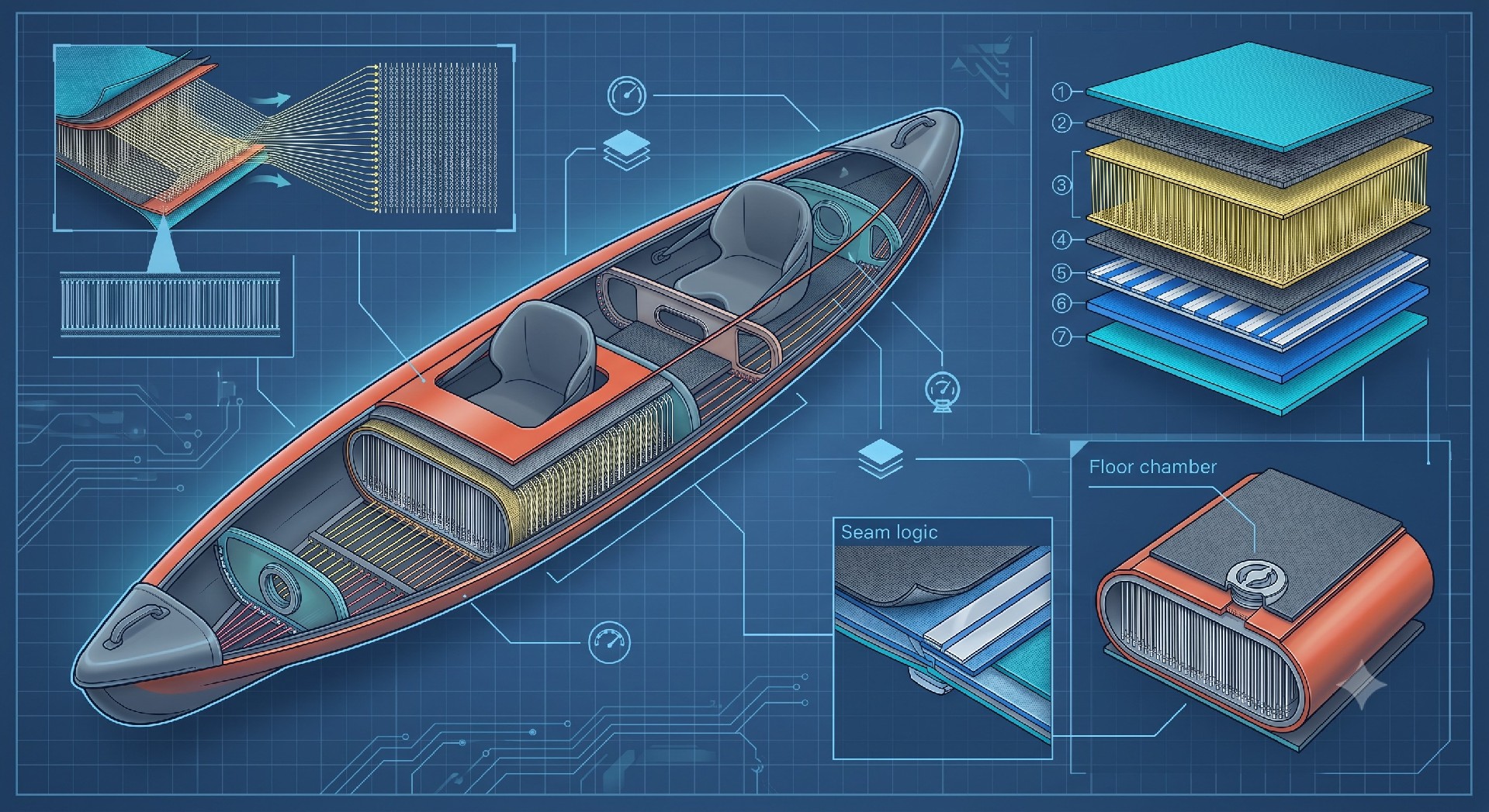
The debate between Hypalon (Chlorosulfonated Polyethylene) and Reinforced PVC (Polyvinyl Chloride) is central to durability and lifespan. For commercial fleets, the choice impacts ultraviolet (UV) degradation rates and abrasion resistance. Hypalon offers superior UV resistance and longevity but comes with a significantly higher cost and requires more complex, labor-intensive gluing processes. Conversely, modern Reinforced PVC, often incorporating a polyester scrim, provides excellent strength-to-weight ratios and allows for high-frequency heat welding, which reduces labor costs and eliminates glue seams—a common point of failure . High-quality PVC formulations are now compliant with REACH standards, mitigating environmental and health concerns. For recreational kayaks, we recommend a minimum base fabric denier of 1100D for optimal puncture resistance and longevity in rental scenarios.
Weld Engineering and Chamber Safety
The structural integrity of an inflatable recreational kayak is defined by its seams. Heat-welded seams, created by melting the PVC layers together under high pressure, create a bond that is as strong as the material itself. This is vastly superior to glued seams, which can dehydrate and fail over time. For commercial-grade safety, multi-chamber designs are non-negotiable. High-end models feature 3 to 5 independent air chambers, ensuring that a puncture in one section does not lead to a catastrophic sinking. This is critical for high-traffic rentals and aligns with ISO 6185 standards for buoyancy.
Technical Specifications: The Product Designer's Parameter Guide
When evaluating recreational kayak specs, procurement managers must look beyond the hull shape. Here is the data matrix that quantifies commercial-grade quality.
| Key Parameter | Technical Specification | Industry Standard |
|---|---|---|
| Material Construction | 0.9mm - 1.2mm Reinforced PVC / 1100D Polyester Scrim | REACH Compliant, UV Stabilized |
| Drop-Stitch Floor PSI | 8 - 10 PSI (Optimal Rigidity) | ISO 6185-1 |
| Seam Technology | High-Frequency Heat-Welded | EN71 Part 3 (Safety) |
| Maximum Payload | 400 kg / 880 lbs (Tandem) | CE Certification |
| Inflation Time | < 5 Minutes (High-Pressure Pump) | Commercial Efficiency |
Critical Output Metrics Explained
Drop-Stitch PSI: The pounds per square inch (PSI) rating indicates internal pressure capability. A floor drop-stitch technology rated for 8–10 PSI ensures rigid, plank-like rigidity, allowing the kayak to perform similarly to a hard-shell. Low-pressure floors (under 5 PSI) are prone to flexing, reducing tracking and speed.
Fabric Weight/Thickness: Measured in denier or millimeters, a 0.9mm to 1.2mm thickness (with a minimum 1000D nylon or polyester scrim) ensures resistance to rock abrasion and impacts .
Inflation/Deflation Efficiency: For rental turnover, a kayak that inflates to operational pressure in under 5 minutes using a high-pressure pump, and deflates to a compact size in under 2 minutes, significantly reduces downtime between rentals.
Maximum Payload/Weight Capacity: Accurate specifications typically range from 180 kg to 400 kg (397 lbs to 882 lbs). This ensures safety for single or tandem use, adhering to the maximum load limits defined by the manufacturer and regulatory bodies .
Commercial Application Scenarios and Rentals
Understanding the athletic implications of recreational kayaking enhances its marketability to resorts and rental centers. Research confirms that kayaking provides significant cardiovascular benefits, lowering blood pressure and improving lipid profiles . A 150-pound individual can burn 340 to 400 calories per hour , making it a functional fitness tool that tones the lats, biceps, and deltoids while engaging the core for stability . Furthermore, the low-impact nature of the sport makes it accessible to a wide demographic, including older adults or those with joint issues . Sourcing durable kayaks that can handle the stress of daily, multi-user environments—specifically those with robust UV and puncture defenses—ensures guest satisfaction and long-term fleet profitability.
[IMAGE_2]
Conclusion: Sourcing for the Long Haul
In the B2B recreational kayaking market, you are not just buying an inflatable toy; you are investing in a piece of fitness and recreation equipment that must endure environmental stressors and heavy usage. Prioritize kayaks with heat-welded seams, high-denier reinforced PVC, and drop-stitch floors rated for at least 8 PSI. Ensure compliance with ISO 6185 and CE to cover liability and guarantee quality. By focusing on these material deep-dive metrics, you mitigate returns, enhance user safety, and ensure your product line is synonymous with reliability and peak performance.