

Redefining Chemical-Free Sanitation: An Engineering Imperative for B2B Buyers
For commercial operators—from high-throughput water sports rental fleets to premium glamping resorts—the challenge of maintaining crystal-clear inflatable pool water without a chemical overload is a critical operational and financial concern. The reliance on harsh sanitizers not only increases recurring operational expenditure (OpEx) but also degrades the structural integrity of high-performance PVC and Hypalon fabrics over time . As a lead product designer with over 15 years in the industry, I assert that the future of commercial inflatable water assets lies in a robust, multi-layered approach to filtration and preventative hygiene. This guide delivers a comprehensive, data-driven blueprint for sourcing and maintaining inflatable pools that prioritizes physical debris management, advanced mechanical filtration, and material science, effectively minimizing or eliminating the need for chemical shock treatments while maximizing asset lifespan.
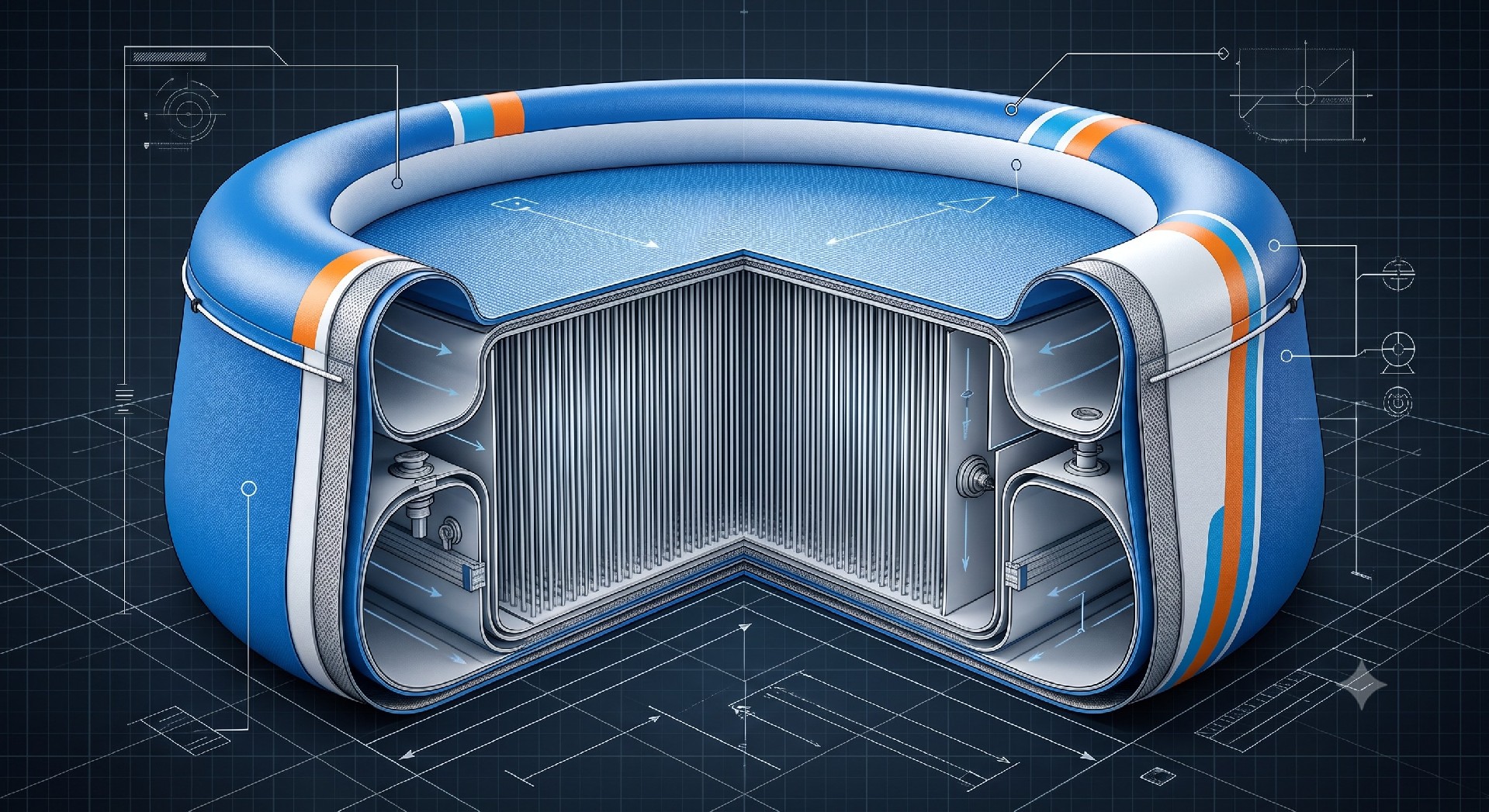
Fabric Technology and Hydrodynamic Integrity
The foundation of any chemical-free maintenance strategy is the structural resilience of the pool itself. B2B buyers must scrutinize material specifications to ensure the pool can withstand rigorous mechanical cleaning and UV exposure without degrading. Industry standards such as Reach compliance for material safety and EN71 for toy safety are non-negotiable baseline requirements.
Material Thickness and Denier Count
Commercial-grade inflatable pools should utilize reinforced materials with a high denier count to resist punctures and abrasion. A minimum specification of 0.9mm / 1100D Reinforced PVC is standard for heavy-duty applications, offering a superior balance of flexibility and tear resistance. The Drop-stitch construction method, which allows for higher operating pressures, is critical for maintaining a rigid structure that simplifies mechanical cleaning and debris skimming.
Seam Integrity: Welded vs. Glued
In a chemical-free environment, where manual scrubbing and frequent water changes are common, seam integrity is paramount. Heat-welded seams provide a molecular bond that is significantly stronger and more durable than glued seams, which are susceptible to hydrolysis and delamination from mild cleaning agents like vinegar solutions. B2B sourcing should prioritize high-frequency (HF) welded seams to ensure longevity and prevent micro-leaks that can compromise filtration efficiency.
Advanced Mechanical Filtration and System Integration
To achieve commercial-grade water clarity without chemical overload, a multi-stage mechanical filtration system is essential. This system must be scalable based on pool volume and usage intensity.
High-Efficiency Pump and Cartridge Filtration
For pools exceeding 500 gallons, integrating a dedicated sand or cartridge filter pump is non-negotiable. These systems operate by continuously cycling water through a fine filter media, trapping particulate matter as small as 5-10 microns. The flow rate (GPM) and filter area are key specifications; a pump should ideally circulate the entire pool volume at least once every 6-8 hours to prevent stagnation and the proliferation of anaerobic bacteria . Regular cleaning or replacement of the filter cartridge—every 2 to 4 weeks—is critical to maintaining hydraulic efficiency .
Surface Skimming and Oil Absorption
Proactive debris removal is the first line of defense. A daily skimming routine using a fine-mesh net removes organic matter (leaves, insects, sunscreen oils) before they break down and feed algae blooms. Supplementing this with an oil-absorbing sponge or scum ball passively collects hydrophobic contaminants like body oils and lotions, keeping the waterline clean and reducing the load on the filter .
| Key Parameter | Technical Specification | Commercial Impact |
|---|---|---|
| Material Thickness | 0.9mm - 1.2mm / 1100D-1500D Reinforced PVC or CSM (Hypalon) | Higher denier = superior puncture and UV resistance, critical for chemical-free scrubbing. |
| Seam Construction | High-Frequency (HF) Welded / Heat-Welded | Provides molecular bond, outlasting glued seams by >300% in high-usage environments. |
| Filtration System | Sand or Cartridge Filter (≥1,500 L/h flow rate) | Ensures complete water turnover every 6 hours, preventing stagnation and bacterial growth. |
| Drop-Stitch Core | Operating Pressure: 6-8 PSI | Provides rigid floor/walls, facilitating efficient manual skimming and vacuuming. |
Operational Protocols and Preventative Hygiene
Establishing strict usage protocols is the most cost-effective method for reducing contamination in a chemical-free system. Human-introduced contaminants—sweat, urine, and cosmetic residues—are primary contributors to cloudiness and bacterial growth.
Pre-Swim Hygiene Stations
Implement a mandatory foot bath and/or quick rinse station at all entry points. This simple measure prevents grass, dirt, and sand from being introduced into the water, significantly reducing the sediment load that blinds the filtration system . For high-turnover rental setups, a foot bath with a mild, biodegradable soap solution is recommended.
Strategic Siting and Physical Covers
Location plays a pivotal role in water quality. Positioning the pool away from overhanging trees and high-traffic areas minimizes the ingress of leaves, pollen, and bird droppings . A high-quality, taut-fitting solar cover or tarp acts as a physical barrier against environmental contaminants and significantly reduces evaporation and algae growth by limiting UV exposure .
Total Cost of Ownership (TCO) and Compliance
Adopting a chemical-free maintenance model yields substantial long-term ROI. The elimination of recurring chemical costs (chlorine, algaecides, pH balancers) translates to direct savings, while reducing wear on pool liners extends the asset's operational lifespan. Furthermore, it aligns with environmental, social, and governance (ESG) goals by preventing the discharge of chemical-laden water into municipal drainage systems.
[IMAGE_2]
Conclusion: The Asset Protection Strategy
Keeping inflatable pool water clean without chemical overload is not merely a maintenance task; it is a strategic approach to asset management that demands a deep understanding of material science, mechanical engineering, and operational discipline. By sourcing high-specification equipment (0.9mm / 1100D PVC with HF-welded seams), integrating robust mechanical filtration, and enforcing strict preventative hygiene protocols, B2B operators can achieve unparalleled water clarity, reduce OpEx, and significantly extend the commercial lifespan of their inflatable assets. This holistic strategy ensures that your investment remains profitable and compliant with ISO 6185 and CE standards, delivering a superior, sustainable experience for end-users.
