

The Backpacker's Dilemma: Comfort, Weight, and Ground Insulation
For backpackers, the sleeping pad is a critical piece of gear that directly impacts rest, recovery, and overall hiking performance. The choice between an inflatable moisture-proof mat and a traditional closed-cell foam pad is a long-standing debate. While foam pads offer simplicity and durability, the modern inflatable mat presents a compelling alternative, particularly for those prioritizing pack weight and sleep quality without sacrificing ground protection. This article provides a technical and commercial comparison, helping you determine which product class best serves your specific backcountry needs.
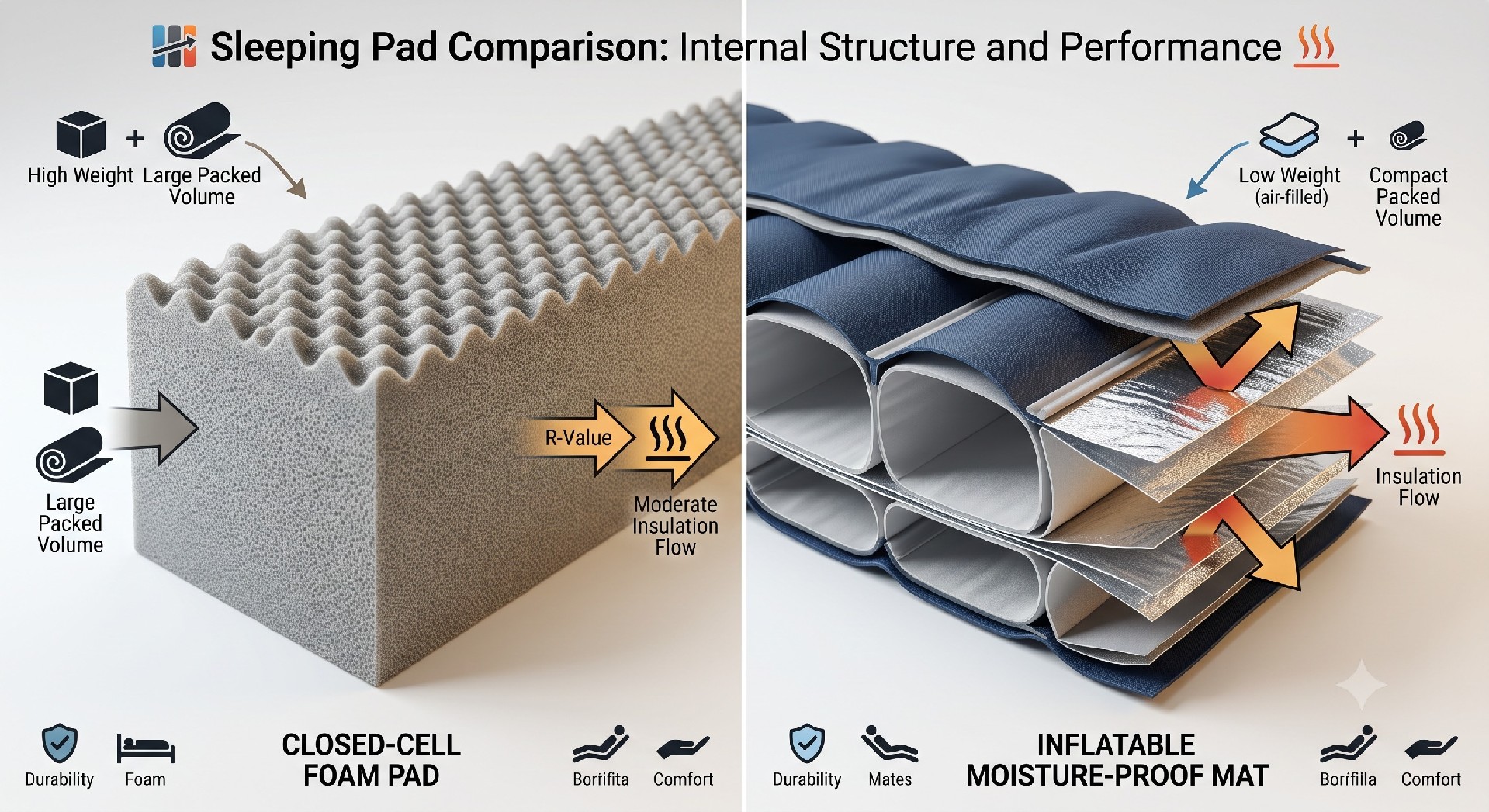
Material and Construction: From Simple Foam to Engineered Air Chambers
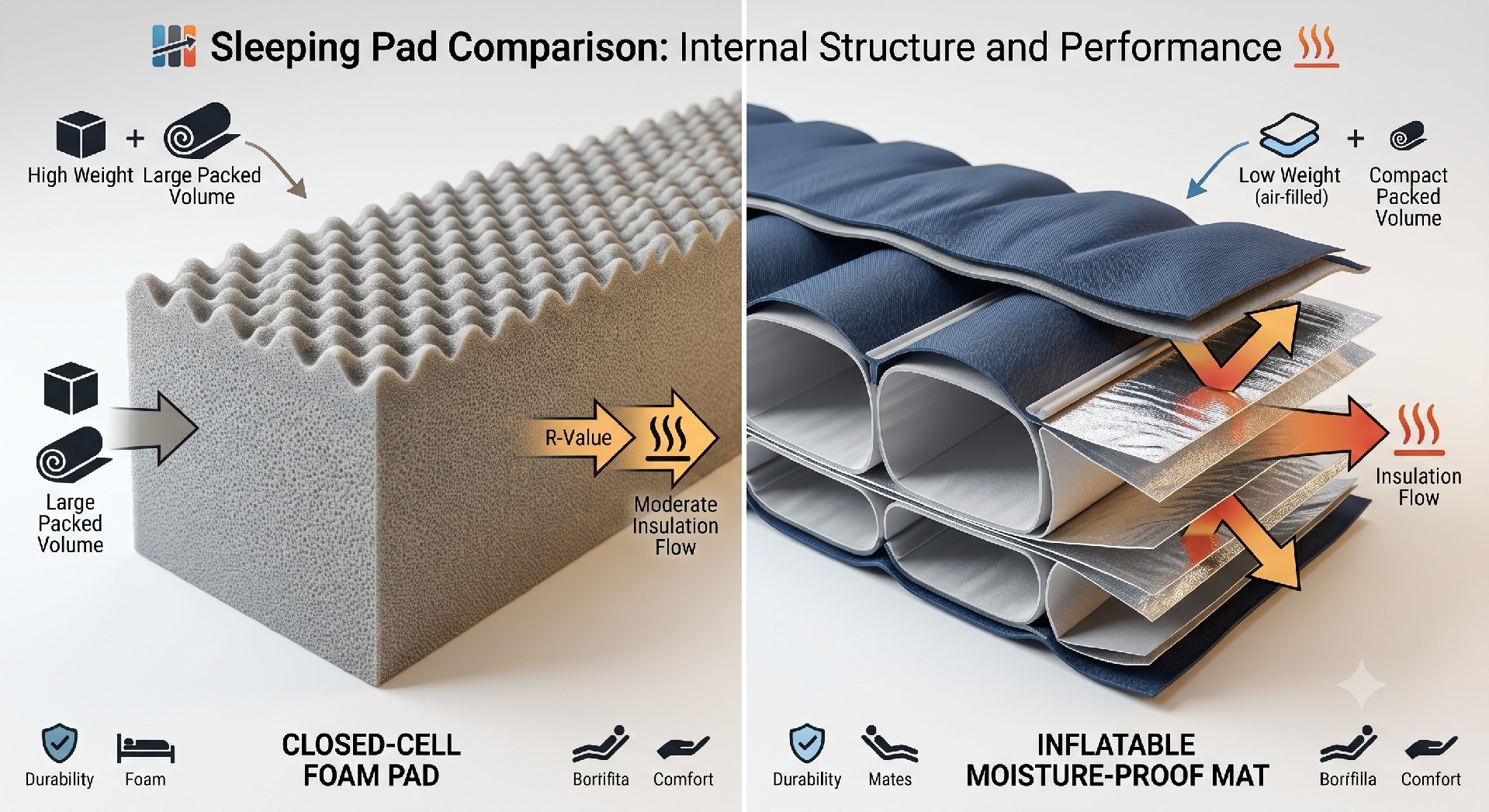
The fundamental difference lies in their construction and materials. A foam pad is a homogeneous sheet of foam, typically cross-linked polyethylene (XLPE). Its insulating properties and cushioning are determined by the foam's density and thickness. Conversely, an inflatable moisture-proof mat is constructed from multiple layers of fabric, often 20D or 30D nylon or polyester, bonded together to form airtight chambers. These chambers are filled with air to create a thick, customizable sleeping surface.
Moisture Management and Ground Insulation
Both pads act as a barrier against ground moisture and cold. However, the mechanism differs. Foam pads provide a solid, physical barrier but can absorb moisture over time, especially on damp ground or in humid conditions, reducing their R-value. Inflatable mats use a sealed air chamber. Air is an excellent insulator, and the reflective inner layers common in many mats significantly increase the R-value. Furthermore, the sleek, waterproof shell of an inflatable mat is highly effective at preventing moisture from wicking into the pad, keeping the sleeper drier.
Weight and Packed Volume: A Critical Tradeoff
This is where the inflatable mat shines for the weight-conscious backpacker. A standard closed-cell foam pad (e.g., 0.5-inch thick) can weigh around 400-500g and, despite its lightweight nature, is bulky. It must be strapped to the outside of a pack, catching on brush and increasing wind resistance. Inflatable mats, such as a typical 3-inch thick version, often weigh less than 500g and pack down to the size of a one-liter water bottle.
Foam Pad: Low weight, but high bulk. Strapped to the outside of the pack.
Inflatable Mat: Low weight, exceptionally low bulk. Stored inside the pack.
Setup and Inconvenience
The ease of setup and takedown is a key commercial decision. A foam pad is ready to use instantly; unroll and sleep. Inflatable mats require labor to inflate (either by breath, a pump sack, or a small pump) and deflate/pack away in the morning. For a backpacker doing a long-distance trek, this few minutes of daily effort is a worthwhile tradeoff for a superior night's sleep and a significantly smaller pack size.
| Evaluation Dimension | Inflatable Moisture-Proof Mat | Foam Pad | Backpacker's Best-Fit |
|---|---|---|---|
| Typical Weight | 400-550g (example only, verify against datasheet) | 400-500g | Mat is comparable or lighter, with far lower bulk. |
| Packed Volume | 1.0-2.0 liters | 8-12 liters | Mat is the clear winner for minimalist packs. |
| Comfort | Excellent (3-4 inches thick) | Good to Fair (0.5-1 inch thick) | Mat provides vastly superior sleep quality. |
| Insulation (R-Value) | 3-5+ (Wide range available) | Typically 1.5-2.5 (Supplier-dependent) | Mat offers superior thermal performance. |
| Durability | Good (Prone to punctures, but repairable) | Excellent (Nearly indestructible) | Foam pad wins on ultimate reliability. |
| Setup Labor | Requires inflation (2-5 minutes) | Instant | Foam pad is zero-effort. |
| Price (Average) | Higher ($100-250 range) | Lower ($30-80 range) | Mat requires a higher upfront investment. |
Durability and Longevity: Real-World Performance
A common concern is the perceived fragility of inflatable mats. A puncture is a potential failure point, whereas a foam pad is nearly indestructible. However, modern materials and manufacturing have made inflatable mats highly resilient. They are typically made from tough, ripstop fabrics and feature durable coatings to resist punctures and abrasion.
For the backpacker, the choice is a comparison of risk vs. reward. A foam pad is a 'set and forget' item—it will not fail. An inflatable mat is a 'care for' item; a small repair kit is often essential gear. The reward is significantly better comfort and thermal performance, which many backpackers find justifies the minor maintenance risk. For commercial operators (e.g., guiding services), the decision is more complex: foam pads are more durable and require less maintenance, but inflatable mats offer a superior client experience and take up far less storage space.
The Inflatable Advantage: Commercial Decisions
Beyond the individual backpacker, commercial buyers such as trekking operators and outdoor retailers need to consider their purchase stage and use case. The choice often comes down to:
Acceptable Deflection: For a guide, a 3-inch thick mat offers far more comfort than a foam pad for clients, reducing complaints and fatigue.
Storage: Inflatable mats' smaller packed size significantly reduces storage space in a warehouse or gear cache, a key commercial consideration.
Lifecycle Cost: While foam pads are cheaper upfront, their bulkiness and potential for reduced insulation over time may lead to a shorter usable lifecycle compared to a well-maintained inflatable mat. A good inflatable mat can last for many years with proper care, offering a better value proposition.
Backpacker Application: When to Choose Each
The decision matrix is clear. For the weight-obsessed, high-mileage backpacker, or those tackling rough terrain, the inflatable moisture-proof mat is a superior choice. It offers the best balance of weight, packability, and comfort, and is the go-to for ultralight and fast-packers. For the budget-conscious or casual camper, or for those who prioritize simplicity and bulletproof reliability above all else, a foam pad is still a worthy choice. It is also ideal for use as a multi-purpose item, like a sit pad or emergency shelter base.
Final Verdict: The Inflatable Mat is the Backpacker's Champion
For the modern backpacker, the inflatable moisture-proof mat has demonstrably beaten foam pads. Its superiority in the three key areas of weight, packed volume, and comfort is undeniable. While it requires a small amount of care and investment, the payoff is a better rest, a lighter pack, and a more enjoyable backcountry experience. From a commercial standpoint, it represents a strategic upgrade for guiding services looking to enhance client satisfaction and optimize their logistical footprint. The inflatable mat is not just an alternative; it is the professional's choice for the trail.
Buyer Checklist for Backpacking Pads:
Determine R-Value Requirement: Select an R-value based on your typical camping conditions (Summer: 1-3, 3-Season: 3-5, Winter: 5+).
Set Weight & Packed Volume Targets: Define your maximum acceptable weight and packed size to fit your pack's internal volume.
Choose a Valve System: Consider ease of inflation/deflation. Look for a reliable valve with simple operation.
Evaluate Fabric: Choose a fabric denier (20D, 30D) that balances weight with durability for your expected usage.
