

Why Your Inflatable Cushion Loses Pressure Overnight
If your inflatable cushion is noticeably softer or flat each morning, the immediate assumption is often a puncture. However, for commercial-grade inflatable equipment, overnight deflation is frequently caused by non-hole-related factors. Understanding the physics of pressure retention, material behavior, and component tolerances is essential for fleet operators, rental businesses, and OEM buyers. This article focuses on the engineering and operational reasons behind this common issue, providing a diagnostic framework and commercial decision-making criteria.
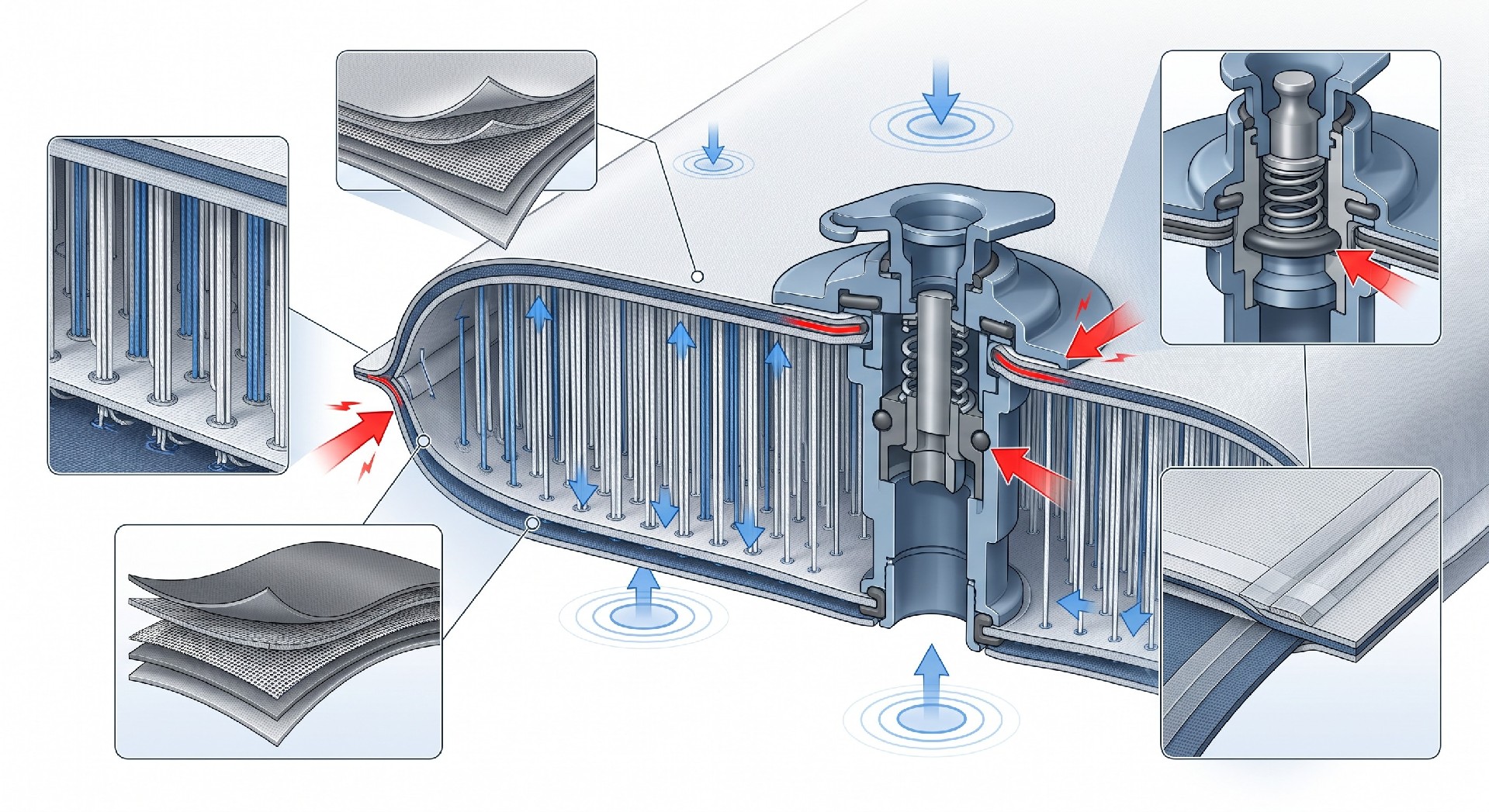
Primary Causes: Temperature, Pressure, and Material Relaxation
The most common cause of overnight deflation in an inflatable cushion without a hole is a drop in ambient temperature. The ideal gas law dictates that as temperature decreases, the volume of air within a fixed container decreases, reducing internal pressure. This is a physical law, not a leak. A temperature drop of just 5°C to 10°C can result in a pressure reduction of 2% to 3% in a typical commercial inflatable cushion operating in the 2 to 5 PSI range. This pressure loss is often enough to make the cushion feel soft or partially deflated, particularly if it was inflated to its minimum working pressure at the end of a warm day.
Material relaxation and creep are another significant factor. The PVC, TPU, or drop-stitch fabric used in inflatable cushions undergo micro-stretching when first inflated. Over the first few hours, the fabric relaxes, causing a slight increase in volume and a corresponding drop in pressure. This is a normal bedding-in process, especially for new equipment. The combination of cooling temperatures and material settling can easily account for a 10% to 15% pressure loss overnight, which is often perceived as a serious leak. For a commercial buyer, understanding this behavior is crucial for setting realistic maintenance and inspection expectations.
Finally, the valve itself is a common source of slow pressure loss. A valve’s seal, whether it’s a simple plug, a one-way flapper, or a high-performance twist-lock mechanism, is a mechanical component that can fail to maintain a perfect seal, especially under varying pressure and temperature. A tiny tolerance gap, a speck of dust, or a slight misalignment can allow a slow, continuous egress of air. While a hole creates a rapid, localized leak, a valve leak is often a slow, uniform loss that is difficult to trace with a simple soapy water test. For commercial operations, a valve inspection is a standard part of the daily setup and takedown routine.
Diagnostic Sequence for Commercial Fleets
For a B2B buyer or rental operator, a systematic approach is needed to differentiate between a temperature-related pressure drop, a valve leak, and a hole. The diagnostic sequence should be structured to minimize downtime and avoid unnecessary repairs. First, always document the inflation pressure at a consistent time and temperature, such as first thing in the morning before the sun hits the equipment. This provides a baseline for comparison. If the pressure is consistently lower in the morning, but holds steady during the day, the issue is almost certainly temperature-related.
Second, perform a valve-specific test. Clean the valve area thoroughly with a mild detergent and water. Then, apply a specialized leak detection spray or a thick soapy solution directly to the valve seal and the base of the valve where it meets the cushion fabric. If bubbles form, the valve is the source of the leak. For many commercial-grade cushions, replacement valves are relatively inexpensive and can be swapped out in minutes, making this a cost-effective maintenance step. Third, inspect the integrity of the seam around the valve. The seam is often a stress point, and a tiny failure in the seam tape or adhesive can create a pinhole leak that is not visible to the naked eye.
Checklist for Overnight Deflation
Record Baseline Pressure: Use a calibrated pressure gauge to record the PSI at the same time each day (e.g., 7:00 AM).
Analyze Temperature Logs: Compare the overnight low temperature with the morning pressure reading. A correlation of 2-3% pressure drop per 5°C is normal.
Valve Seal Test: Apply leak detection spray to the valve mechanism and its base. Bubbles indicate a valve leak.
Seam Inspection: Visually inspect the seam tape and adhesive around the valve and along the main load-bearing seams for any delamination or stress marks.
Pressure Hold Test: Inflate the cushion to its rated working pressure, close the valve, and leave it for 4 hours in a stable temperature environment. A loss of more than 5% in a temperature-stable environment may indicate a slow leak.
This checklist is a practical tool for any commercial facility or rental fleet managing multiple inflatable cushions. It streamlines the troubleshooting process and helps operators distinguish between a field-serviceable issue and a problem requiring factory-level repair or replacement.
| Diagnostic Step | Observed Symptom | Likely Cause | Corrective Action |
|---|---|---|---|
| Check ambient temperature change. | Pressure loss correlates with overnight temperature drop. | Thermal contraction of air (Ideal Gas Law). | No repair needed; top off in the morning. Consider thermal pressure compensation if required. |
| Inspect valve seal with soapy water spray. | Bubbles form around the valve core or base. | Worn or contaminated valve seal or O-ring. | Replace valve assembly or clean seal. |
| Perform a 4-hour pressure hold test at stable temperature. | Pressure loss exceeds 5% of working PSI. | Slow leak in the fabric, seam, or valve. | Isolate with soapy water test; mark for repair. |
| Visual inspection of seams, especially around high-stress zones. | Visible delamination, seam tape lifting, or adhesive failure. | Seam failure or pinhole leak in the fabric. | Professional repair using appropriate welding/adhesive technique. |
Commercial Decisions: When to Repair, Replace, or Accept
For a commercial operator, the financial and operational impact of an inflatable cushion that deflates overnight is significant. A half-deflated cushion can damage its internal structure if used, or it can lead to customer complaints and safety concerns. Therefore, the decision-making process must be data-driven. The first commercial decision is whether to adjust operational procedures to accommodate the normal pressure loss. If the deflation is purely temperature-driven, a simple policy of topping off the cushion with air each morning is the most cost-effective solution. This requires staffing and a reliable air pump, but it avoids the cost of replacement or repair.
The second decision involves valve replacement. If the diagnostic tests confirm a valve leak, the cost to replace a valve is typically low, ranging from $10 to $100 depending on the valve type and the cushion’s size. This is a standard line item in a maintenance budget. The more complex decision is when the leak is due to a seam failure. Repairing a seam on an inflatable cushion requires specialized welding or adhesive techniques. For a low-cost cushion, it may be more economical to replace the entire unit rather than pay for a high-quality repair. For high-end, drop-stitch equipment, seam repair is often cost-effective and extends the asset's life significantly.
Finally, the acceptable PSI threshold for operation is a critical commercial parameter. For a recreational pool or lounge cushion, a 10% drop in PSI may be acceptable. However, for a commercial dock fender or an industrial work platform, a 5% drop can compromise structural performance and safety. The buyer must define their own acceptance criteria based on the cushion's application. A commercial operator should have a clear policy: any cushion that loses more than a specified percentage (e.g., 15%) of its working pressure overnight, excluding temperature effects, should be flagged for immediate inspection and repair.
OEM and Procurement Considerations
For an OEM brand owner or a procurement team, the issue of overnight deflation is a key quality attribute. When specifying a new batch of inflatable cushions, buyers should request data on the material's initial stretch and stabilization characteristics. A high-quality drop-stitch fabric will have a lower initial creep and will stabilize its dimensions more quickly. Additionally, the valve design is critical. Buyers should request valve cycle life data (e.g., number of open/close cycles before seal failure) and pressure-holding capacity under varying thermal conditions. The material's thermal expansion coefficient also plays a role; materials with a lower coefficient will experience less pressure fluctuation with temperature changes.
During the supplier audit and sample evaluation, a pressure-hold test in a controlled temperature environment is a simple but powerful acceptance test. Inflate a sample cushion to its working pressure, let it stabilize for 2 hours, and then record the pressure for 24 hours at a stable temperature. The OEM should provide data on what a typical, acceptable pressure loss is for that specific product class and construction. For a commercial inflatable cushion, a 24-hour pressure loss of less than 5% in a stable environment is often a good target. Buyers should also discuss the warranty policy regarding slow leaks. Many warranties cover material defects but may exclude environmental factors or normal wear on valves.

Conclusion: A Practical Diagnosis Strategy
Overnight deflation in an inflatable cushion is rarely a mystery that requires a search for a single hole. Instead, it is a symptom that can be effectively diagnosed using a structured process. By understanding the impact of temperature, material behavior, and valve integrity, commercial users can distinguish between a normal operational variance and a real problem. This knowledge allows for better maintenance planning, more accurate budgeting for parts and replacements, and a more objective evaluation of OEM suppliers.
The optimal course of action is to implement a daily diagnostic routine that records pressure and temperature data. When deflation is identified, the sequence of checks should be: environmental factors, valve seal, and then seam integrity. This approach minimizes unnecessary repairs and ensures that the equipment is always safe and ready for use. For procurement, investing in higher-quality materials and superior valve designs can reduce long-term maintenance costs and downtime. In the commercial world, an ounce of diagnostic procedure is worth a pound of repair labor, and a clear understanding of the physics of your inflatable cushion is the best tool in your kit.
