

Why Cold Feet Ruin Sleep Quality and What Commercial Buyers Can Do About It
For outdoor professionals, rental operators, and procurement teams, the question of how to keep your feet warm inside a sleeping bag on cold nights is not merely about personal comfort. It directly impacts customer satisfaction scores, repeat booking rates, and the perceived quality of your equipment fleet. Cold extremities are one of the most common complaints in cold-weather camping, and they often stem from a combination of physiological factors and the sleeping bag's thermal performance at the foot box. This guide moves beyond generic advice to provide a commercial-grade analysis of insulation systems, material science, and operational protocols that ensure warm feet for end-users in every deployment scenario.
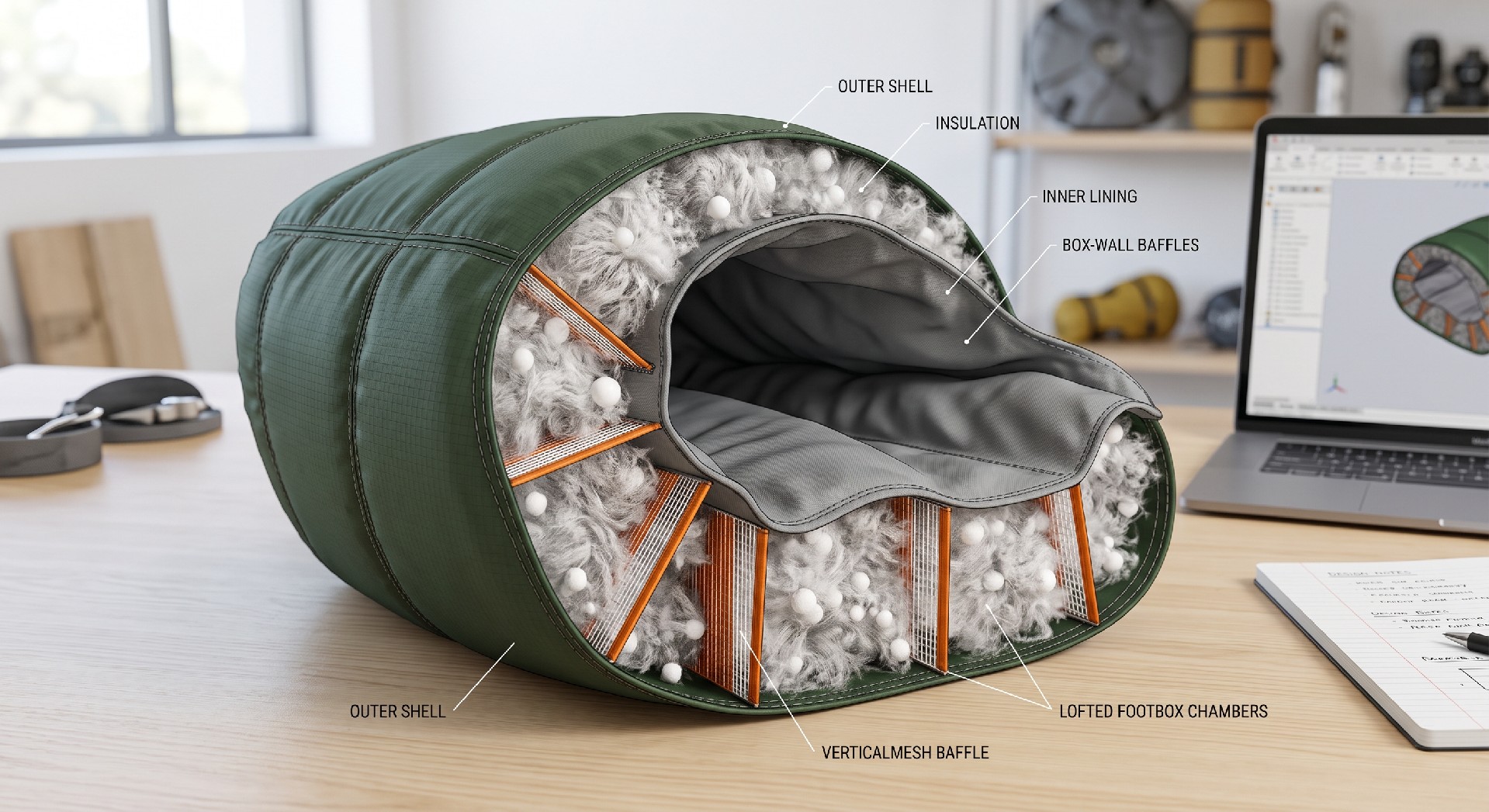
Understanding the Thermal Dynamics of the Foot Box
The foot box is the most challenging section of a sleeping bag to keep warm. Several factors contribute to this: extremities have lower core blood flow in cold conditions, the foot box often compresses insulation against the tent floor or sleeping pad, and moisture from sweat or condensation tends to accumulate in this area. From a product engineering perspective, the foot box represents a critical failure point if not designed with sufficient loft, appropriate materials, and an understanding of how users sleep. Commercial buyers must evaluate how manufacturers address these challenges, as the difference between a satisfied customer and a complaint often hinges on this specific feature.
Key Thermal Mechanisms
Loft Retention: The ability of insulation to trap dead air. Compression reduces loft and thermal resistance (R-value). The foot box must maintain loft even when the user shifts position.
Moisture Management: Vapor from feet moves outward. If it condenses within the insulation, it significantly reduces thermal efficiency. Shell and lining materials must facilitate vapor transfer.
Heat Loss Pathways: Conduction occurs through the sleeping pad interface. Convection is minimized by a well-designed draft collar at the foot box. Radiation is managed by reflective barriers in some premium designs.
Material Selection: Insulation and Shell Fabrics
The choice of insulation type is the single most impactful decision for thermal performance. For commercial fleets, the trade-off between warmth, weight, packed volume, durability, and cost is paramount.
Insulation Options
Down Insulation: Offers the highest warmth-to-weight ratio and compressibility. However, down loses significant insulating power when wet and requires careful drying. For a rental fleet, down's high cost and vulnerability to moisture often make it unsuitable unless the target use case is dry, cold, and expertly managed.
Synthetic Insulation: Performs better than down when damp, dries faster, and is generally more durable and cost-effective for high-turnover fleets. Continuous filament insulation like Climashield Apex offers superior loft retention and durability against repeated compression. Short-staple synthetics are less durable but more affordable.
Hybrid Construction: Some manufacturers use synthetic insulation in the foot box and down elsewhere. This approach addresses the specific moisture and compression challenges of the foot zone while leveraging down's benefits for the rest of the bag.
Shell and Lining Fabrics
For the foot box, materials must balance breathability to allow vapor egress with enough durability to withstand abrasion from tent floors. Nylon and polyester are standard, with ripstop weaves preferred for enhanced durability. A DWR (Durable Water Repellent) treatment on the shell is critical to prevent liquid water from saturating the insulation from the outside. The lining should be soft and comfortable, while also aiding in moisture transfer away from the skin.
| Insulation Type | Warmth-to-Weight Ratio | Wet Performance | Commercial Durability |
|---|---|---|---|
| Premium Goose Down | Highest | Poor (loses loft when wet) | Moderate (high cost to replace) |
| Synthetic (Continuous Filament) | Good | Good (retains loft when damp) | Excellent (resists repeated compression) |
| Synthetic (Short Staple) | Moderate | Moderate | Fair (prone to clumping) |
| Hybrid (Down + Synthetic Foot) | High | Good (due to synthetic foot) | Good (down requires careful maintenance) |
Thermal Enhancement Features
Beyond the basic insulation and shell, specific design features directly impact how to keep your feet warm inside a sleeping bag. These are often differentiators between entry-level and premium products.
Foot Box Construction
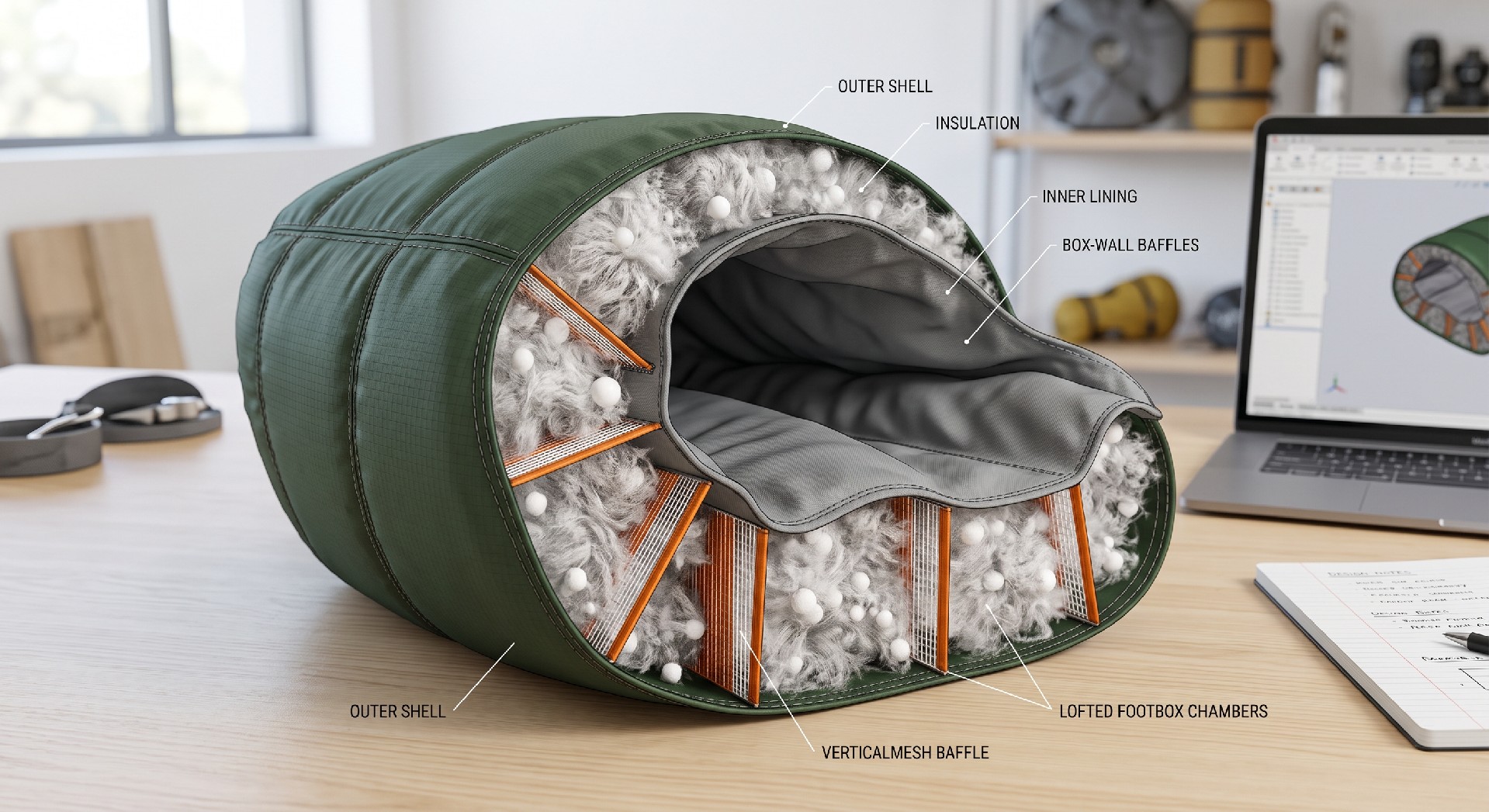
The shape of the foot box matters. A box- or trapezoid-shaped foot box allows for more loft space around the feet, reducing compression compared to a tapered foot box. More space for loft translates directly to higher thermal resistance. However, a larger foot box increases weight and packed volume. The design must be appropriate for the target use. For instance, a minimalist mountaineering bag might accept a tighter foot box for weight savings, while a general rental bag should prioritize comfort and warmth.
Draft Collars and Cinches
A draft collar is a layer of insulation and fabric that wraps around the ankles to seal out cold air. This prevents cold air from entering the bag from the foot end and stops warm air from escaping. Adjustable cinches that snug the bag around the ankles are also effective. These elements are critical for maintaining a warm microclimate inside the foot box. In a commercial context, ensure the cords and toggles are robust and easy for users to operate.
Removable Liners
Liners made from fleece or silk add a thin layer of warmth and can be removed for washing. For rental fleets, using a disposable or easily washable liner can improve hygiene, add warmth, and protect the main sleeping bag from body oils and dirt. While not a core insulation solution, liners are an effective operational add-on.
Reflective Technology
Some bags incorporate reflective films or coatings, like ThermaCapture or similar, that reflect body heat back toward the occupant. This is often a low-weight, low-bulk method to increase thermal efficiency. The effectiveness of such technology is generally supplementary to the primary insulation. For commercial buyers, it is a feature to consider as a value-add but should not be the primary reason for selection.
Operational Factors and User Preparation
Even the best sleeping bag cannot overcome poor user preparation or inappropriate operational conditions. For fleet operators, educating the end-user and supplying the right ancillary gear is as important as the bag itself.
Insulated Sleeping Pads
Conduction is a major heat loss mechanism. The cold ground will draw heat directly from the bag's compressed insulation. Every sleeping bag needs a sleeping pad with a sufficient R-value to provide a thermal barrier. For commercial cold-weather kits, ensure the pad is rated for the expected temperature range. The system (bag + pad) must be considered together.
Moisture Management
Users should go to bed with dry, warm feet. Damp feet will cool rapidly. Furthermore, adding chemical hand warmers to the foot box is a highly effective and low-cost solution. Even for a high-end bag, a hand warmer in the foot box provides a significant and immediate boost in comfort. This is an easy recommendation for commercial operations to include in their gear lists.
Proper Layering
Ensure users understand not to wear too many tight socks, as this can restrict circulation and make feet colder. One pair of clean, dry, warm wool or synthetic socks is ideal. Similarly, wearing a hat to bed can significantly reduce overall heat loss, helping the body send more warmth to the extremities.
Testing and Quality Assurance for Commercial Buyers
When procuring sleeping bags for rental or resale, how can a buyer ensure the foot box's thermal performance meets their needs? The answer lies in a combination of material knowledge, manufacturer verification, and independent assessment.
Assessing Manufacturer Claims
Be skeptical of extreme temperature ratings. The EN 13537 standard provides a standardized testing methodology for sleeping bags, assigning a comfort limit, a lower limit, and an extreme rating. Use these as a benchmark. A bag rated for 0°C (comfort) is more reliable than one rated for -10°C (extreme). For a commercial application, selecting a bag with a generous safety margin is wise. Never rely on the 'extreme' rating for operational planning.
Key Acceptance Criteria
For the foot box, specify clear acceptance criteria in your purchasing agreements. This can be based on material specifications (e.g., fill weight of insulation, type of shell fabric) and design elements. A robust specification sheet is the first line of defense against subpar performance. When in doubt, ask for a sample for field testing before committing to a large order.
B2B Procurement Checklist: Insulating the Foot Box
For procurement teams, OEM buyers, and fleet managers, here is a condensed checklist to guide the selection and purchasing process. This ensures that the question of how to keep your feet warm inside a sleeping bag is addressed at the product specification level, not just as a user tip.
Define the Use Case: Clearly outline the expected temperature range and weather conditions. This will determine the required insulation level.
Select Insulation Type: Choose between down (for high-end, dry conditions) and synthetic (for wetter conditions, higher durability, and better ROI for rentals). Consider hybrid designs for targeted performance.
Inspect the Foot Box: Confirm it has a box construction or a generous anatomical shape to prevent insulation compression. Ensure a draft collar is present.
Verify Materials: Check the shell fabric denier (e.g., 20D ripstop is lighter, 40D is more durable). Ensure a DWR coating is standard. For linings, confirm they are comfortable and breathable.
Request a Sample: Perform a field test with a sample bag to assess the foot box's performance. This is non-negotiable for large orders.
Review the Full System: Consider the sleeping bag and sleeping pad as a system. Ensure you have the capability to supply the correct pad for the conditions.
Plan for Maintenance: Understand the cleaning and drying requirements of the bag. For synthetics, this is usually simpler and faster, which is a major advantage for a rental fleet.
Conclusion: A Strategic Approach to Cold-Weather Comfort
Keeping feet warm inside a sleeping bag on cold nights is a problem that requires a multi-faceted strategy. For commercial buyers, the solution lies in a careful balance of material science, innovative product design, and operational control. It is insufficient to simply buy a bag with a low-temperature rating. The focus must be on the integrity of the foot box, the quality of the insulation, and the overall system of which the bag is a part. By implementing the procurement checklist and understanding the thermal dynamics, B2B buyers can confidently select sleeping bags that deliver reliable comfort and durability, ensuring high customer satisfaction and a strong return on investment for their cold-weather equipment fleet.
