

Why Standard Dry Bags Fail Your Electronics—And How to Choose the Right One
For kayakers, paddleboarders, and raft guides, the waterproof bag is the single most critical piece of safety equipment for electronics. A failed seal or a puncture from a paddle blade can turn a smartphone, VHF radio, or GPS unit into a brick. While many manufacturers claim their bags are waterproof, a 30-minute submersion test or a rough sea state quickly separates the gear that meets its IP rating from the ones that don't. This guide helps commercial buyers, rental operators, and private expedition planners specify the best waterproof bags to protect electronics while kayaking, focusing on submersion depth, closure system reliability, and rugged construction.
Essential Specifications for Electronics Dry Bags
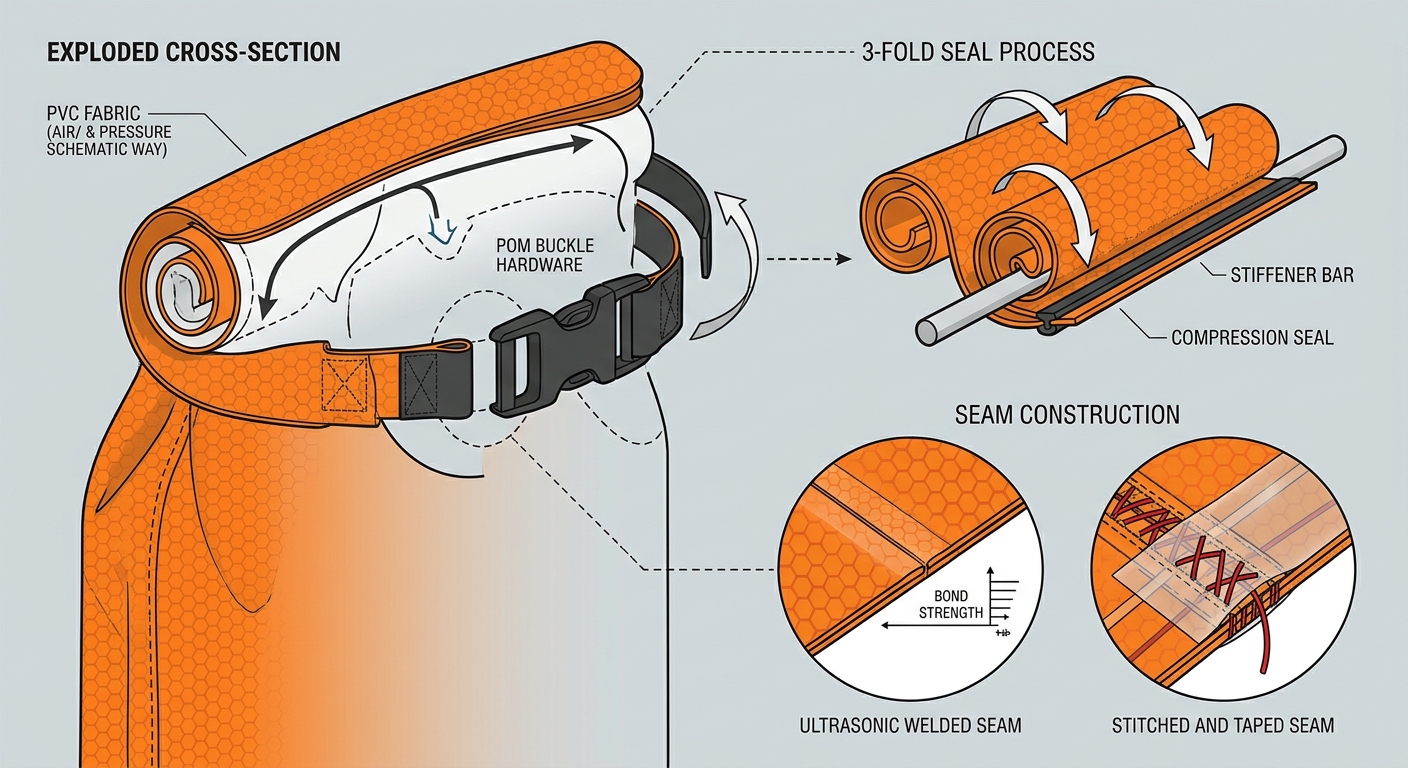
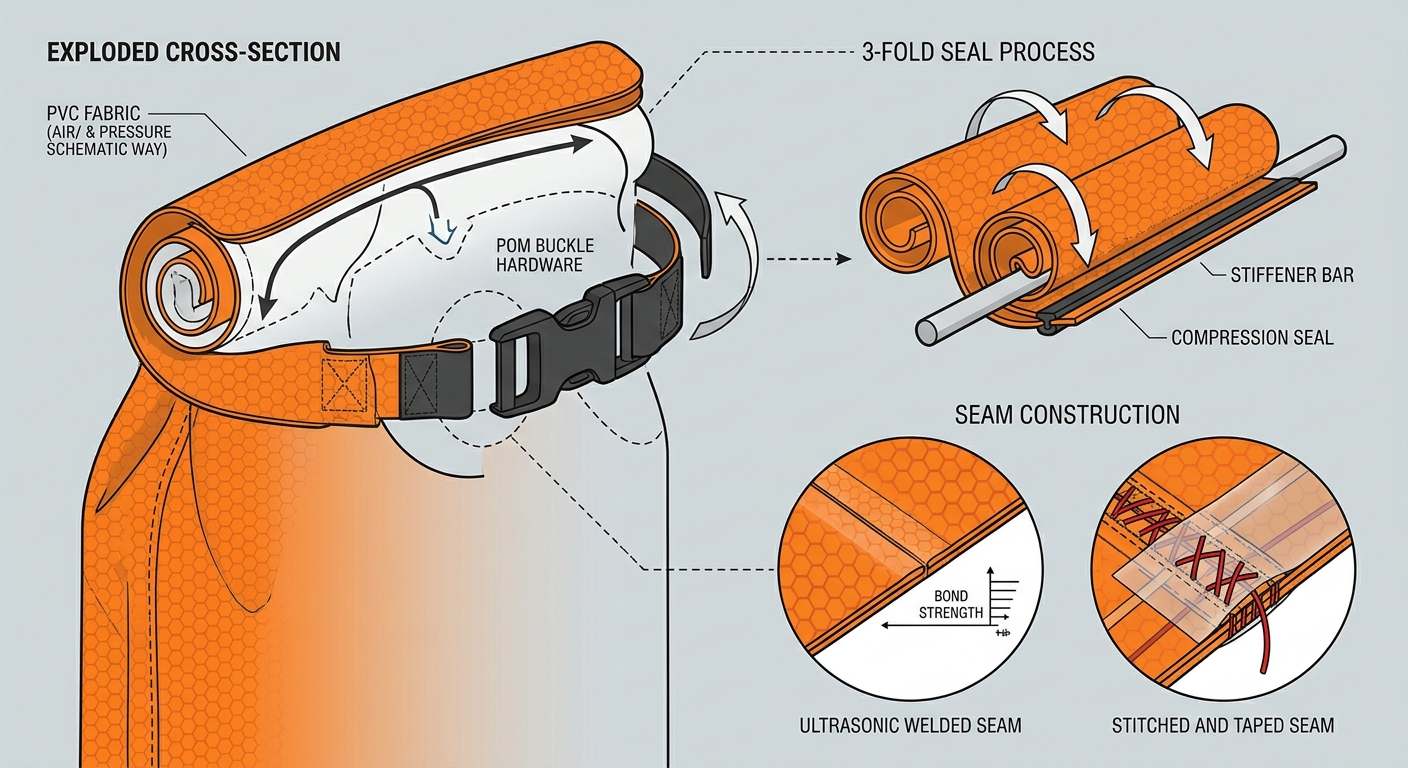
When evaluating dry bags for sensitive gear, you must look beyond the generic waterproof claim. The most common failure points are the closure system and the seam construction. For electronics, a simple roll-top with a single fold is often insufficient for prolonged submersion. The best designs employ a tri-fold or buckle-assisted closure that creates a tight seal under increasing water pressure.
Submersion Rating: This is the primary differentiator. A bag rated for 1 meter (IPX7) is fine for splash protection but not for a capsize. For kayaking, a submersion rating of at least 5 meters (IPX8) is the commercial standard for high-value electronics. This is typically achieved through a combination of thick TPU material and an air-tight zipper or a high-fold roll-top system.
Closure System: The choice between a roll-top and a zipper is a significant commercial decision. Waterproof zippers offer quick access but require more maintenance and are a point of failure if not regularly lubricated. Roll-top closures are simpler and more reliable over time, but the user must be trained to roll it down at least three times to achieve the rated submersion depth. For rental fleets where user error is high, a buckle-assisted roll-top with a clear visual indicator for a correct seal is preferable.
Material Selection: The fabric weight and coating determine abrasion resistance and flexibility. For kayak cockpits where space is tight, a 210D TPU-coated nylon offers a good balance of durability and packability. For whitewater scenarios where gear is exposed to rocks, a heavier 420D or 500D material is essential, though it will increase the packed volume and weight. Commercial buyers must assess the risk of impact versus the need for compact storage.
Commercial Buyer Considerations
For fleet buyers or outfitters, the cost-per-use is a key metric. A cheap PVC bag may save money upfront but will fail faster under UV exposure and repeated use. Spending 20-30% more on a TPU bag with a five-year seam warranty often yields a better ROI due to reduced replacement costs and customer equipment claims. Furthermore, consider the spare parts availability. Can you source replacement straps, buckles, or sealing rings, or must you replace the entire unit when one component fails?
| Evaluation Dimension | Roll-Top Dry Bag | Waterproof Zipper Case | Best-Fit Scenario |
|---|---|---|---|
| Submersion Reliability | High (when folded correctly) | Moderate (requires seal maintenance) | Roll-Top for turbulent water, Zipper for quick access |
| Ease of Access | Slow (unrolling process) | Immediate (zipper pull) | Zipper for primary device, Roll-Top for backup |
| Durability | Very High (no moving mechanical parts) | Moderate (zipper track is a weak point) | Roll-Top for rental fleets, Zipper for personal use |
| User Training Required | High (must fold 3 times) | Low (just zip it) | Zipper for general consumers, Roll-Top for guided trips |
| Weight & Packability | Excellent (lightweight, compresses) | Good (heavier due to rigid structure) | Roll-Top for backpacking kayak trips, Zipper for day-use |
Choosing the Right Configuration for Your Kayak
The physical size of the bag must match both the electronics and the kayak's storage area. A large bag for a tablet or laptop is useless if it doesn't fit through the kayak hatch or sit securely between the deck and the cockpit rim.
Hard vs. Soft Cases: For GPS units and VHF radios that need to be mounted or accessed quickly, a rigid, transparent case with a secure zipper is preferred. These offer protection from impact and are often easier to use with a lanyard or mounting bracket. For backup power banks and spare phones, a soft dry bag is more practical as it conforms to the hull shape. The best strategy for a kayak trip is often to use a rigid case for the primary device and a soft dry bag with multiple compartments for backup gear.
Air Removal: An often overlooked feature is the ability to remove air from the bag. Excess air creates positive pressure that can stress the closure seal as the outside water pressure increases. By squeezing the air out before sealing, you reduce the pressure differential and significantly increase the bag's reliability in deeper water. Look for bags with a one-way purge valve that allows air evacuation without letting water in.
Risk Mitigation and Packing Strategy
Even the best dry bag is not a guarantee of survival. An effective electronics storage strategy involves layering. Place small electronics in a micro-dry bag, then inside the main dry bag, and finally inside a hard-shell Kayak or deck storage pod if available. This redundancy is critical because a single punctured bag on a multi-day trip can be a catastrophic failure. To minimize damage from condensation, consider adding a small silica gel packet inside the micro-dry bag to absorb any residual moisture.
User Checklist for Commercial Operations
Pre-Trip Inspection: Visually inspect the closure seal for debris or cracks. Inflate the bag slightly and listen for hissing to find a pinhole leak.
Test Submersion: Perform a periodic submersion test with a non-essential item (like a piece of tissue paper) to confirm the closure is still functional.
Maintenance: Rinse the closure system with fresh water after saltwater use. Keep silicone lubricant on hand for zippers to prevent corrosion and jamming.
For rental operations, it is advisable to replace or retire dry bags annually, depending on usage volume. The UV degradation of the outer coating and the wear on the sealing surface from frequent opening and closing are the primary drivers of the replacement cycle.
Decision Framework: Which Bag for Which Buyer?
The selection process should be driven by the intensity of the use case, not just price. The following recommendations help clarify the best commercial fit:
For Rental Fleet Operators: Prioritize durability over weight. Choose a 420D TPU roll-top with a wide diameter and a clear closure indicator. The emphasis should be on ease of use for the customer and ease of inspection for the staff. A bag with a clear window on the top layer helps verify the seal without opening it.
For Expedition/Guide Use: Split high-value electronics into multiple smaller bags to mitigate catastrophic loss. Prioritize IPX8-rated bags and carry a repair kit with seam sealant and a spare closure clip.
For OEM/Brand Owners: When sourcing private-label bags, specify the material thickness, the number of roll folds for the submersion test, and the type of stitching or radio-frequency welding used for the seams. Ensure the supplier can provide a test report from an accredited lab showing the actual submersion depth achieved, as many claims are based on a laboratory drop test that does not simulate the sustained pressure of a deep-water capsize.
Purchase Verdict
Protecting electronics is about managing risk. The best waterproof bag is the one that matches the specific submersion risk and physical demands of your activity. For leisurely flatwater paddling, a high-quality roll-top dry bag with a submersion rating of 1 meter is sufficient. For whitewater kayaking or expedition sea kayaking where rescue is not immediate and gear is exposed to impact, the only responsible choice is a reinforced TPU bag with a multi-roll closure, confirmed to hold a seal at depths exceeding 5 meters. Always verify the test conditions of the manufacturer; if they only cite a water resistance claim (like IPX6 for heavy spray), they are not suitable for submersion.
