

The Definitive Guide to Foldable Inflatable Pillows: Engineering, Materials, and Market Viability
What: This white paper provides a deep technical dive into the foldable inflatable pillow market, moving beyond its perception as a cheap novelty to analyze its role as an engineered travel solution. We explore the evolution from basic PVC inflatables to advanced TPU materials, ergonomic structural baffling, and precision valve technology.
Why: In the post-pandemic travel resurgence, demand for ultra-compact, hygienic, and supportive travel accessories is skyrocketing. For B2B retailers, corporate buyers, and outdoor gear procurement managers, understanding the material science and manufacturing quality behind these products is crucial for reducing returns and ensuring customer satisfaction.
How: Readers will gain actionable insights into selecting the right manufacturing partners based on material specifications (TPU vs. PVC), understanding the ergonomics of baffled designs, and recognizing the supply chain dynamics driving this niche market. This guide empowers procurement strategies focused on durability, comfort, and sustainability.
Redefining Portable Comfort: The Evolution of the Inflatable Pillow
The trajectory of travel comfort accessories has historically been dominated by bulky memory foam or microbead options. While comfortable, their logistical footprint makes them impractical for the modern, minimalist traveler or space-conscious retailer. The foldable inflatable pillow has emerged as the definitive solution to this spatial challenge, but its evolution has been marked by significant hurdles in engineering and public perception.
Early iterations were plagued by poor material choices—primarily cheap, rigid polyvinyl chloride (PVC)—and rudimentary designs that created a "balloon effect," offering bounce rather than support. Today's leading products are a departure from these predecessors, representing a convergence of material science and human factors engineering.
Moving Beyond PVC: The Shift to Advanced Materials
The most significant shift in the manufacturing of high-quality inflatable support gear is the migration away from PVC toward Thermoplastic Polyurethane (TPU). PVC, while cost-effective, suffers from brittleness in cold temperatures, poor elasticity, and environmental concerns due to phthalate plasticizers.
TPU, conversely, offers superior abrasion resistance, high elasticity, and excellent shear strength. Crucially for a "foldable" product, TPU can be laminated onto soft fabrics (like brushed polyester or nylon), creating a composite material that feels gentle against the skin yet remains airtight and durable through thousands of inflation/deflation cycles. This laminate allows the deflated product to fold flat without creating permanent creases that could lead to micro-leaks.
The Ergonomics Challenge in Inflatable Design
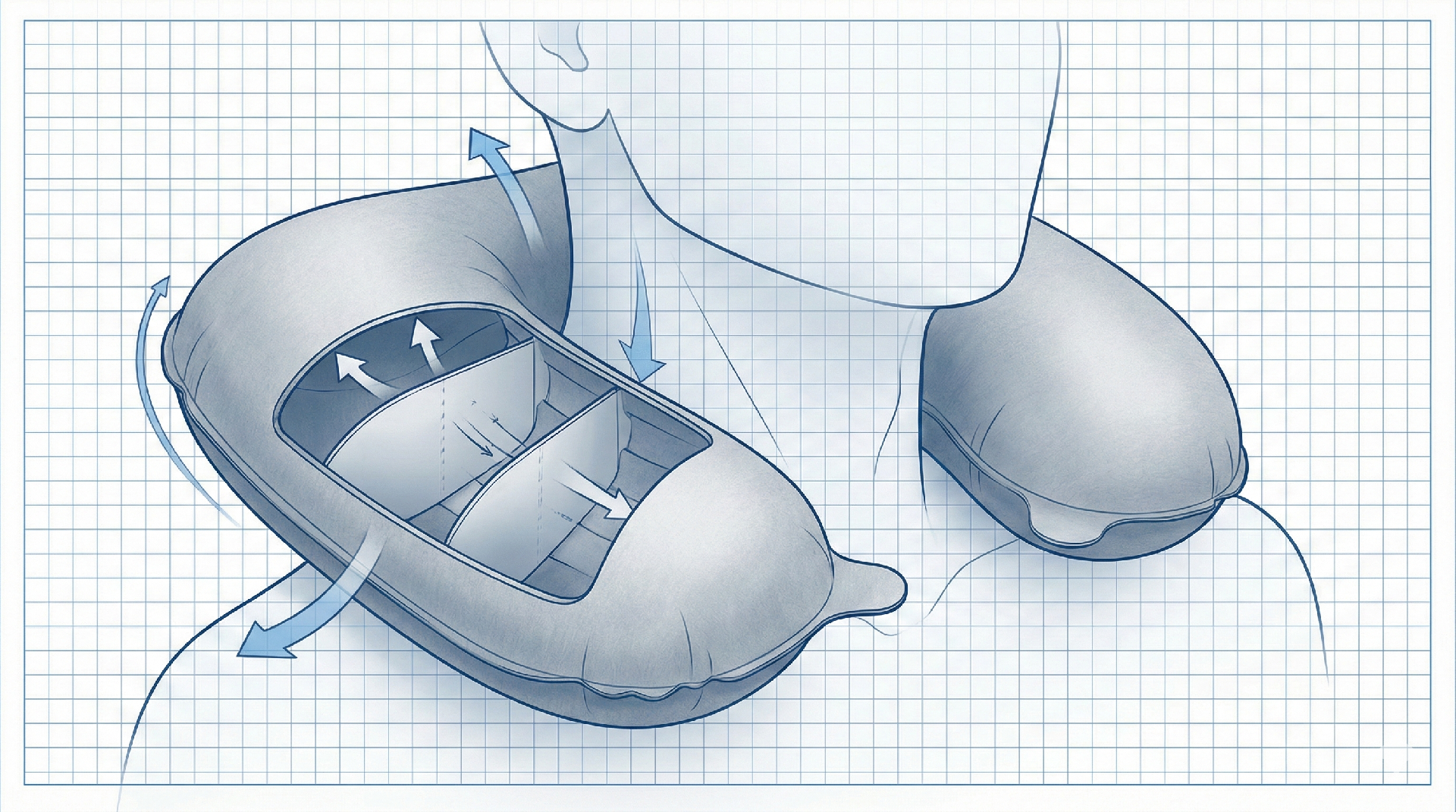
A common complaint with traditional inflatable pillows is the lack of stabilized support; air naturally migrates to the point of least resistance when pressure is applied. Modern engineering addresses this through internal baffling and ergonomic shaping.
By integrating internal I-beams or baffled chambers, designers can control airflow within the pillow. This prevents the "beach ball" effect, ensuring that when a user leans their head to the right, the air doesn't simply rush to the left side. Instead, the structure holds firm, providing consistent cervical support critical for long-haul travel.
Material Science and Manufacturing: TPU vs. PVC vs. Hybrids
For B2B buyers, understanding the substrate is paramount to predicting product longevity and user satisfaction. The choice of material dictates the manufacturing process, the final price point, and the environmental footprint.
The Dominance of Thermoplastic Polyurethane (TPU)
As noted, TPU is the gold standard for modern foldable inflatable pillows. Its key advantage in this specific application is its "memory." Unlike PVC, which can develop permanent creases leading to cracks, TPU recovers its shape well after being tightly folded for extended periods. Furthermore, TPU is oil and grease resistant, making it hygienic for products that come into prolonged contact with skin and sweat.
Welding Technologies: RF Welding vs. Heat Sealing
The method used to join the material seams is as critical as the material itself.
1、Heat Sealing: Often used for cheaper PVC products, this involves applying direct heat to melt layers together. It is faster but can result in brittle seams that fail under pressure.
2、Radio Frequency (RF) Welding (or Dielectric Welding): This is the preferred method for high-quality TPU inflatables. RF welding uses high-frequency electromagnetic energy to excite the molecules of the material, causing them to melt from the inside out and fuse together. This creates a seam that is as strong as the original material, crucial for withstand the pressures of inflation and the weight of a human head. (Source: TWI Global, 2024)
The table below summarizes the key differences between the dominant materials in the market.
| Feature | Traditional PVC (Polyvinyl Chloride) | Modern TPU (Thermoplastic Polyurethane) |
| Primary Use Case | Budget/Promotional Items | Mid-range Outdoor Gear |
| Durability/Elasticity | Low to Medium. Brittle in cold. | High. Excellent abrasion resistance. |
| Skin Feel (Uncovered) | Plastic, sticky when warm. | Smooth, rubber-like. |
| Foldability/Packing | Poor. Prone to crease damage. | Good. Resists creasing. |
| Environmental Impact | High (Phthalates, difficult recycling). | Lower (Often BPA/Phthalate free, recyclable). |
Design Engineering for Maximum Compactness and Support
The core value proposition of a foldable inflatable pillow is the ratio of deployed comfort to packed size. Achieving this requires precision engineering components.
Valve Technology: The Unsung Hero of Inflation/Deflation
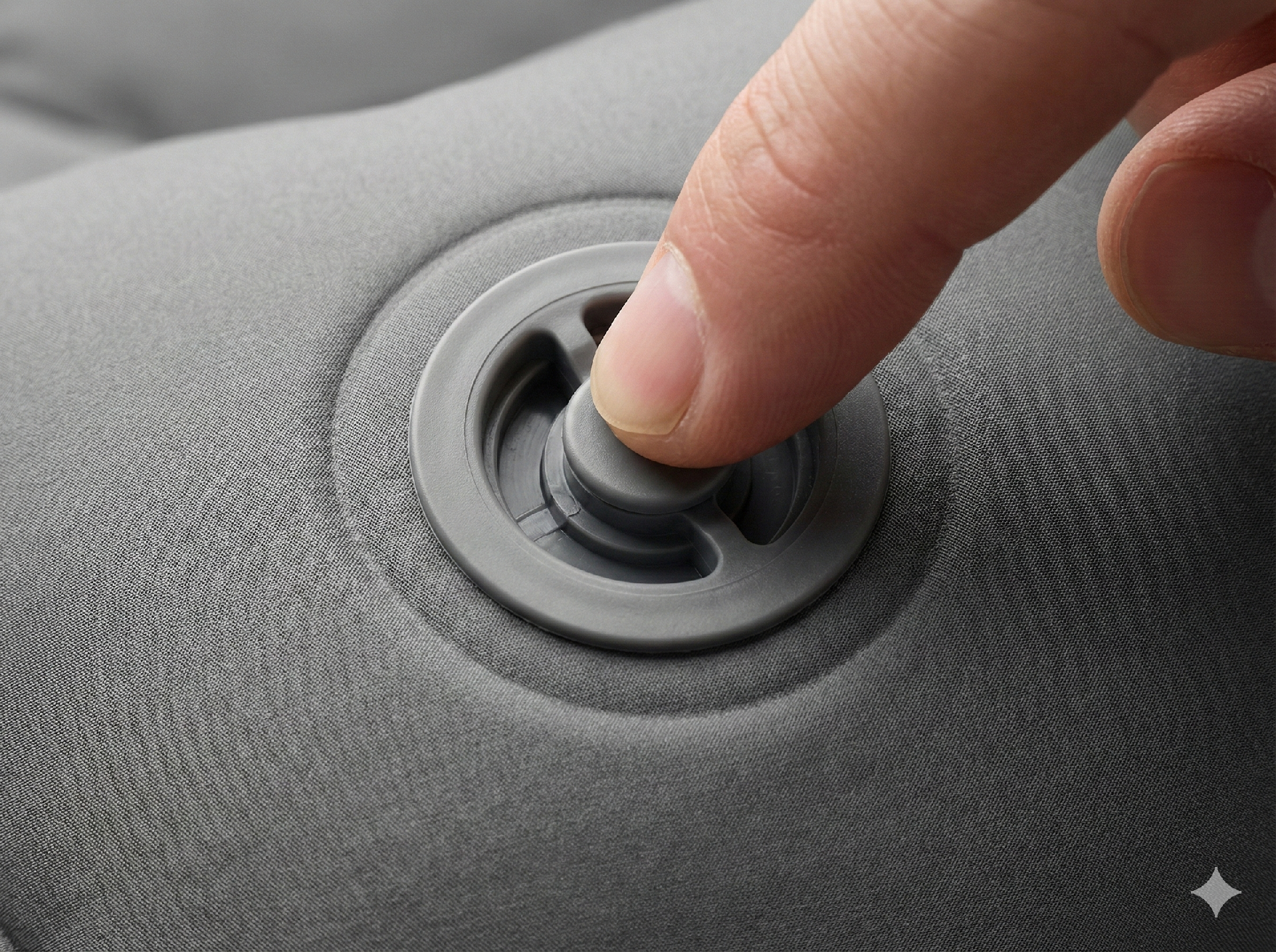
The valve is the primary user interface and a frequent failure point. Cheap inflatables use a simple "pinch" valve that is difficult to inflate fully and slow to deflate.
Premium foldable pillows utilize low-profile, multi-function valves. These typically feature a one-way membrane for easy inflation without air escaping between breaths, and a central push-button mechanism for micro-adjustments or rapid dumping of air. Crucially, for a "foldable" product, the valve must be flush with the pillow surface to prevent it from protruding and creating bulk or potential damage when packed tightly.
Structural Baffling and Chamber Design
To maximize compactness, the internal structure must collapse completely. Modern designs often use "offset I-beams." Instead of sewing top and bottom layers directly together (which creates cold spots and weak points), fabric baffles are welded between the layers. This creates a uniform thickness when inflated—similar to a quality mattress—and allows the entire structure to flatten completely when deflated, rolling up tighter than a standard t-shirt.
Market Trends and B2B Procurement Considerations
The global travel accessories market is projected to grow significantly, driven by a resurgence in leisure travel and an increased focus on traveler wellness. The "foldable" segment is outpacing general accessories due to airline baggage restrictions and the "carry-on only" trend.
Demand Drivers in Travel and Outdoor Sectors
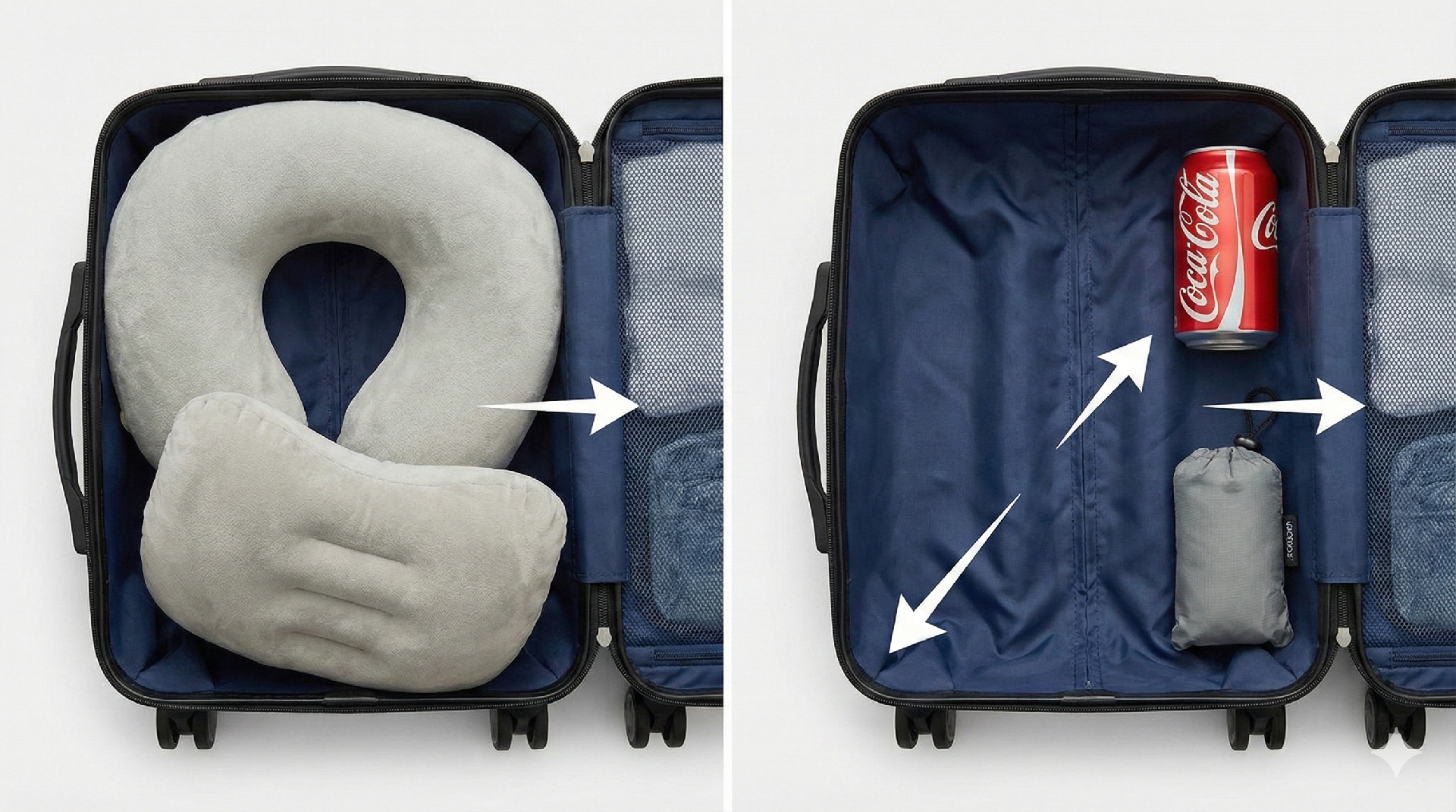
For retailers, the foldable inflatable pillow offers high shelf-space efficiency. A single hook can hold dozens of units, whereas traditional foam pillows require substantial floor space.
1、Business Travel: Demand for minimalist, professional-looking gear that fits in a laptop bag.
2、Outdoor/Camping: Ultralight hikers require sleep support that adds negligible weight and volume to their pack.
3、Hygiene Concerns: Post-pandemic, travelers prefer personal, washable items over airline-provided blankets or pillows. TPU laminate pillows are easily wiped down with sanitizers.
The visual below perfectly illustrates the logistical advantage of inflatable versus foam options.
Quality Control Metrics for Bulk Purchasing
When sourcing these products, B2B buyers must insist on rigorous QC standards to avoid high return rates due to leaks. Key metrics include:
1、24-Hour Inflation Test: Every unit should remain inflated for 24 hours post-production to detect slow leaks in seams or valves.
2、RF Weld Inspection: Visual and stress testing of seams to ensure consistent fusion.
3、Lamination Bond Strength: Ensuring the outer fabric layer does not delaminate from the inner TPU bladder over time.
Sustainability and the Future of Inflatable Gear
The industry is moving toward circular economy models. While TPU is better than PVC, it is still a synthetic polymer.
Biodegradable Options and Circular Economy Models
Innovations are emerging in bio-based TPUs derived from renewable resources like castor beans, reducing reliance on fossil fuels. Furthermore, forward-thinking manufacturers are developing "monomaterial" designs, where the valve, bladder, and outer fabric are all made from compatible TPU variations, significantly simplifying the recycling process at the product's end-of-life.
B2B buyers should prioritize suppliers actively engaged in these sustainability initiatives, as eco-conscious consumers are increasingly willing to pay a premium for "greener" travel gear. (Source: McKinsey & Company, "The State of Fashion 2024" report on consumer shifts towards sustainability).
Frequently Asked Questions (FAQs)
What is the best material for a foldable inflatable pillow?
For a balance of durability, packability, and comfort, TPU laminated with a soft fabric (like brushed polyester) is superior to PVC. It is less prone to cracking, lighter, and feels better against the skin.
How do you wash an inflatable travel pillow?
Most TPU-laminated pillows are hand-washable. Inflate the pillow fully, close the valve, and wash gently with warm water and mild soap. Rinse thoroughly and allow it to air dry completely before deflating and packing to prevent mildew.
Are inflatable pillows allowed on airplanes?
Yes, absolutely. They are standard travel accessories. However, it is recommended to slightly deflate the pillow during flight to account for cabin pressure changes, which will cause the air inside the pillow to expand.
Why does my inflatable pillow lose air slowly?
A slow leak is usually caused by one of two issues: a micro-puncture in the fabric body or debris stuck in the valve seal. Try cleaning the valve mechanism first. If the leak persists, locate the puncture with soapy water and repair it with a TPU patch kit.
What is the difference between an inflatable pillow and a memory foam pillow?
Memory foam offers contoured, static support but is bulky, heavy, and retains heat. Inflatable pillows offer adjustable firmness and extreme compactness for travel but require ergonomic baffle designs to provide stable support.
How long do inflatable travel pillows last?
A high-quality TPU pillow with RF-welded seams can last for years of regular travel if cared for properly (kept away from sharp objects and stored dry). Cheaper PVC pillows may only last a few trips before seam failure occurs.
Can side sleepers use inflatable neck pillows?
Yes, but design is critical. Look for pillows with raised side "wings" or ergonomic shaping intended to bridge the gap between the shoulder and head when leaning to the side, rather than a simple uniform U-shape.
Is TPU better than PVC for inflatable pillows?
Yes. TPU is more environmentally friendly (phthalate-free), has better elasticity and memory (resisting creases from folding), is lighter, and performs better in cold temperatures compared to traditional PVC.
Conclusion
The foldable inflatable pillow has evolved from a disposable accessory into an engineered piece of essential travel gear. For B2B stakeholders, the market opportunity lies in distinguishing high-margin, technically superior products made with RF-welded TPU and ergonomic baffling from generic PVC alternatives. By focusing on material science, valve quality, and verified manufacturing standards, retailers and corporate buyers can offer solutions that genuinely meet the demands of the modern, mobile consumer.
As travel continues to rebound and passengers prioritize personal hygiene and packing efficiency, investing in high-quality portable comfort solutions is a strategic imperative.
