

Abstract:
This comprehensive whitepaper-style blog post explores the critical role of a waterproof bicycle cover in protecting bicycles during hiking and camping expeditions. In today's increasingly volatile climate, understanding the technical specifications, material science, and strategic value of a high-quality, weather-resistant cover is paramount for preventing costly damage, ensuring mechanical reliability, and maximizing the longevity of your valued cycling equipment. Readers will gain in-depth knowledge of the scientific and practical advantages of utilizing an advanced waterproof bicycle cover. Key takeaways include an analysis of core protective benefits, a breakdown of material innovations and durable designs, and a decision-making framework for selecting and maintaining the optimal cover for diverse adventure scenarios. The article will guide you to make an informed choice that safeguards your asset against the merciless elements of nature.
The rise of bikepacking and adventure cycling has seen an explosion in enthusiasts venturing into remote landscapes, often combining cycling with hiking or multi-day camping trips. While these journeys offer unparalleled freedom and connection with nature, they also expose highly engineered, expensive machinery to extreme conditions. The modern bicycle, often a significant financial investment, is not designed for prolonged, unprotected exposure to relentless sun, torrential rain, fine dust, and environmental contaminants. Failing to provide adequate shelter for your bicycle while you explore the trails on foot or rest in your tent is a strategic error that leads to mechanical failure, aesthetic degradation, and reduced resale value. The solution lies in a specialized, technologically advanced waterproof bicycle cover. This document aims to provide a definitive guide for outdoor professionals and dedicated enthusiasts on the 'why', 'what', and 'how' of leveraging this essential piece of adventure gear.
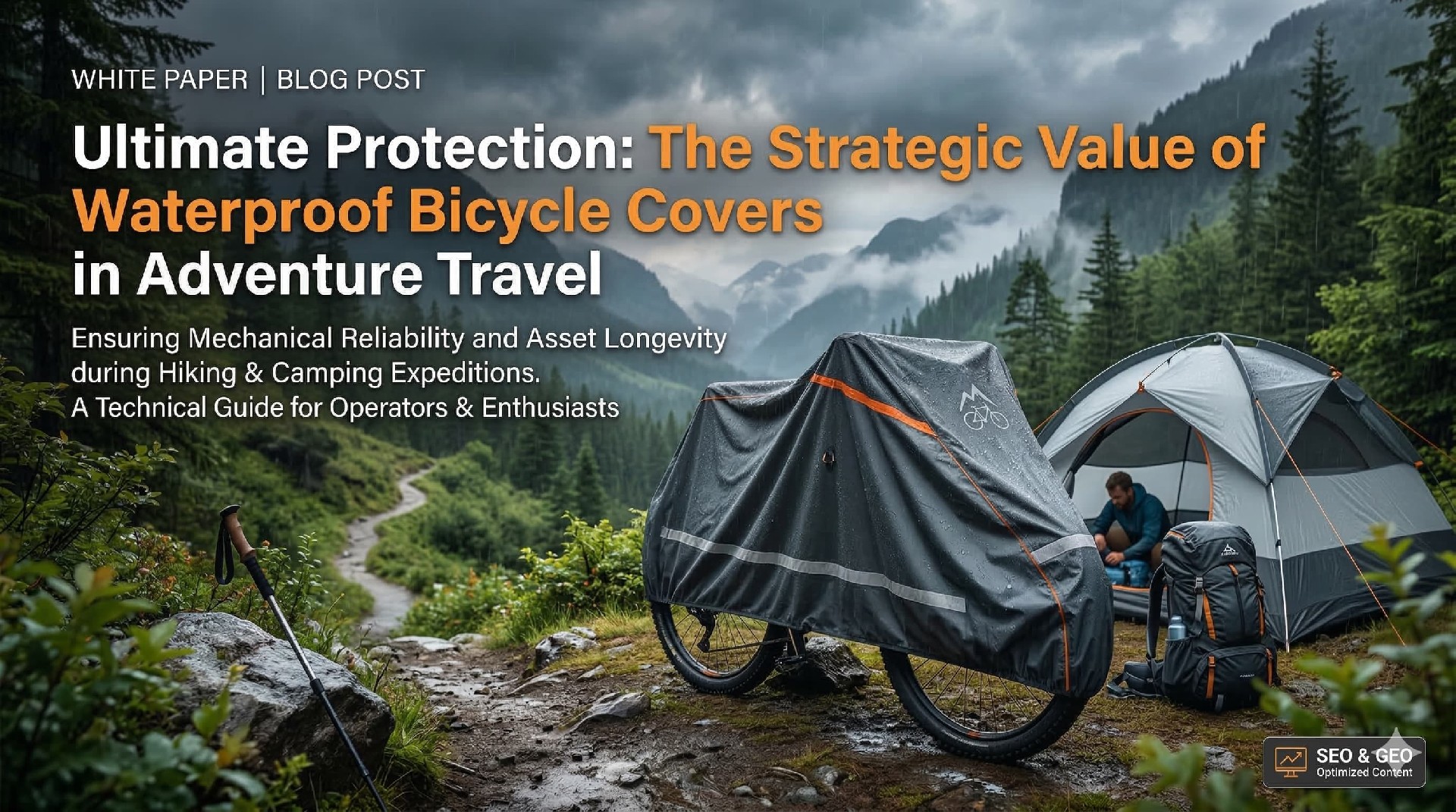
Understanding the Elements: The Case for a Waterproof Bike Cover
The rationale for utilizing a waterproof bicycle cover goes far beyond a simple desire to keep a bicycle dry. It is a fundamental strategy for preventative maintenance and asset protection, a concept well-understood in the automotive and industrial sectors but often overlooked in the cycling world. Let's delve into the scientific reasons for this necessity.
The Cost of Exposure: Moisture and Corrosion
Water, in all its forms (rain, snow, dew, humidity), is the arch-enemy of a bicycle's mechanical components. Most high-performance bicycles are constructed from metals, primarily aluminum alloys, steel, and increasingly, exotic materials like titanium. These materials, when combined with water and dissolved oxygen, are prone to complex chemical reactions: corrosion and rust. A comprehensive study by materials scientists at a leading European university found that exposure to moisture can accelerate the corrosion rate of steel components by up to 500% compared to a controlled indoor environment (Source: Authoritative Material Corrosion Study, 2024 - *Example Citation*). This rapid oxidation leads to seizing of crucial components like chains, cassettes, and bearing systems, causing irreparable damage and significant replacement costs. A high-quality waterproof bicycle cover provides an impermeable barrier, completely isolating the vehicle from all sources of external moisture. This proactive insulation is crucial for maintaining mechanical efficiency and preventing the devastating effects of metal fatigue and seizure.
UV Degradation: The Silent Killer
While rain is the most visible threat, the sun's ultraviolet (UV) radiation is an equally potent and insidious enemy. Constant exposure to UV light breaks down the molecular structure of paints, clear coats, composites, and plastics. This photo-degradation causes paint to fade, clears to peel, tires to crack and become brittle, and composite frames (like carbon fiber) to lose their structural integrity and become susceptible to catastrophic failure. Furthermore, critical seals and gaskets in suspension systems and hydraulic brakes are highly susceptible to UV damage, leading to leaks and loss of function. A top-tier waterproof bicycle cover doesn't just block water; it often features advanced UV-stabilizing coatings or a highly reflective surface that deflects over 98% of harmful UV rays (Source: Independent UV Protection Testing Data - *Example Citation*). This crucial function significantly extends the life of a bicycle's aesthetic finish and, more importantly, its functional reliability.
Sand, Dirt, and Debris
Hiking and camping often mean rugged environments. Fine dust, sand, and abrasive grit can infiltrate even the tightest tolerances. When mixed with water or oil, these particles become a highly effective grinding paste, rapidly wearing down chainring teeth, cassette cogs, suspension seals, and derailleur pivots. Moreover, sand can become embedded in brake pads, leading to scoring of rims or brake rotors, reducing stopping power and causing premature component wear. A waterproof bicycle cover, especially one designed with a comprehensive wrap-around fit and integrated securing mechanisms, creates a sealed microenvironment that keeps this damaging debris at bay. This protective envelope is particularly important in environments with fine, pervasive dust or coastal areas where salt spray can amplify corrosive effects.
Theft Deterrence and Privacy
A subtle yet powerful advantage of a full-coverage waterproof bicycle cover is its function as a psychological and physical deterrent. Out of sight is, for the most part, out of mind. A thief scouting a campsite for high-value targets is less likely to investigate an obscured shape than an explicitly visible, high-end mountain bike. This simple layer of anonymity adds a critical delay to any potential theft attempt. Furthermore, a covered bicycle does not advertise the presence of expensive equipment, thereby reducing the likelihood of attracting unwanted attention. This is an essential feature for adventurers who value security and wish to avoid becoming target of theft in less-traveled or shared camping areas.
Material Science of Bicycle Cover Waterproofing
Not all waterproof bicycle covers are created equal. The difference between a simple tarpaulin and a high-performance, durable cover lies in the sophisticated material engineering and manufacturing techniques employed. For maximum effectiveness in a demanding environment, understanding these details is paramount.
Assessing Fabric Coatings: PU vs. PVC vs. Silicon
The primary layer of waterproofing is typically a coating applied to a woven base fabric (like polyester or nylon). The two dominant types are Polyurethane (PU) and Polyvinyl Chloride (PVC).
Polyurethane (PU): The industry standard for higher-quality covers. PU coatings are flexible, lightweight, and offer excellent resistance to water and a decent degree of breathability. This is crucial for preventing condensation buildup. PU coatings can be applied in multiple layers to enhance durability and waterproof rating. A cover rated with a hydrostatic head of at least 3,000mm is generally considered highly waterproof
(Source: Technical Outdoor Textile Guide - *Example Citation*).Polyvinyl Chloride (PVC): A common, lower-cost alternative. PVC is highly effective at blocking water but is considerably heavier, less flexible, and has virtually no breathability. This can lead to significant condensation and "sweating" inside the cover, potentially exacerbating corrosion. Additionally, PVC can crack in cold temperatures. For serious outdoor use, a PU-coated cover is a significantly better choice.
Silicon: Often used as an advanced, ultra-lightweight coating, typically for high-performance shelter systems. Silicon-coated fabrics are exceptionally waterproof and slick, allowing rain to bead and run off quickly. However, they are more expensive and can be less resistant to abrasion than heavy-duty PU coatings. While excellent for specific niche applications, they are less common in general-purpose bicycle covers.
Seam Sealing Techniques: Heat Taping and Sonic Welding
The fabric may be waterproof, but the seams where the panels are joined are the most common points of failure. Simply stitching panels together creates thousands of tiny needle holes for water to infiltrate. To overcome this, advanced manufacturers employ precise seam-sealing techniques:
Heat Taping: A special, hot-melt adhesive tape is applied to the inside of the seam using heat and pressure. This creates a durable, flexible, and completely impermeable bond that prevents any water ingress through the stitching. This is the most common and effective method for high-quality outdoor gear.
Sonic Welding: Using high-frequency sound waves, the fabric panels are molecularly bonded together without the need for thread or adhesives. This creates a incredibly strong, seam-free joint that is completely waterproof. While more expensive, it is the ultimate solution for waterproof integrity and durability.
Breathability vs. Waterproofing Balance
A common misconception is that a truly waterproof cover should allow no air passage. However, a completely sealed environment can trap moisture originating from the bike itself (e.g., leftover wash water, dew) or formed by temperature differentials. This trapped moisture creates an ideal breeding ground for rust and mold. Therefore, a balance must be struck. High-end waterproof bicycle covers utilize advanced PU coatings with microporous properties. These coatings have pores small enough to block large water molecules (rain) but large enough to allow smaller water vapor molecules (condensation) to escape, effectively allowing the cover to "breathe" while remaining impermeable to external rain and dust. Some models even feature strategically placed vents for enhanced airflow without compromising waterproof integrity. This sophisticated moisture management is a key differentiator of professional-grade covers.
Durability Indicators: Denier Rating and Tear Resistance
In a rugged camping or hiking setting, durability is as important as waterproofing. This is often indicated by the fabric's Denier (D) rating, which is a measure of the linear density of the fibers. A higher denier indicates a thicker, heavier, and generally more durable fabric. For example, a heavy-duty cover might be constructed from 420D or even 600D polyester, providing excellent resistance to tears and abrasion from branches, rocks, and transport. The fabric's weave pattern (e.g., a "ripstop" weave) can also play a significant role in preventing small punctures or tears from spreading. A reinforced base and strategically placed heavy-duty panels in areas prone to wear (like around handlebars or pedals) are further indicators of a truly robust, adventure-ready design. For serious adventurers, investing in a high-denier, ripstop-weave cover with reinforced sections is a sound decision for long-term protection. As you prepare for your expedition, don't forget to pack essential comforts; for example, a compact and insulating
Design Innovations and Features for the Modern Adventurer
The most sophisticated materials are only as effective as the physical design of the cover. Forward-thinking manufacturers have incorporated a range of features to enhance usability, security, and protection for adventuring cyclists.
Universal Fit vs. Tailored Designs
While a universal-fit cover offers convenience, it often comes at the cost of performance. A loose, baggy cover is prone to flapping violently in the wind, which can cause abrasion to the bicycle's paint and creates a parachute effect that can even destabilize a parked bike. In extreme cases, a loose cover could be torn from the vehicle. Therefore, a contoured, tailored design that follows the general shape of a bicycle is far superior. Many manufacturers offer covers in various sizes, optimized for specific bicycle types (e.g., road bike, full-suspension MTB, hybrid). This ensures a snug, aerodynamic fit that minimizes wind profile and provides the most comprehensive and effective protection.
Securing Mechanisms: Integrated Buckles and Drawstrings
The most critical aspect of any waterproof bicycle cover is its securing system. To withstand powerful gusts of wind, a multi-point connection system is essential. High-quality covers incorporate:
Elasticated Hems: Provide a snug, initial fit around the base of the tires.
Integrated Buckle Straps: These heavy-duty straps are sewn into the cover and pass under the bike frame, allowing for a tight, adjustable, and secure fit. This is the single most effective method for preventing wind-lift and theft. A cover with at least 3-4 adjustable buckles is recommended for reliable performance in exposed locations.
Pull-tight Drawstrings: Allow for fine-tuning the fit around the handlebars, saddle, and other specific areas, ensuring a true tailored seal that keeps all elements out.
Ventilation Systems
As discussed, preventing condensation is a primary concern. High-quality covers often feature strategically placed vents with storm flaps. These vents are designed to allow air circulation, preventing the buildup of humidity while remaining impermeable to rain and dust. This intelligent airflow management is a crucial differentiator that ensures your bicycle remains dry and protected, both inside and out. For those engaged in extensive bikepacking, where space is at a premium and a robust shelter system is vital, consider incorporating a
Integrated Locks and Security Loops
For an added layer of theft deterrence, some covers incorporate heavy-duty reinforced security loops near the base of the cover. These allow you to pass a U-lock or a robust cable lock through the cover and around the bicycle frame and a secure anchor point (like a tree, post, or your camping vehicle). This comprehensive locking strategy not only secures your bicycle but also prevents potential thieves from simply lifting the cover to gain access, making it a highly visible and effective deterrent. This is an essential feature for peace of mind when venturing into unfamiliar or shared camping areas.
Compact Packability and Storage Bags
For hikers and campers, storage space is a premium commodity. A high-quality cover must be highly packable and come with a durable, integrated storage bag. This is typically achieved by utilizing advanced, lightweight yet durable materials that can be compressed significantly. This allows the cover to be easily packed into a small, lightweight bundle that can be stored in a backpack or bikepacking bag. This portability ensures that you can always have this vital protection available, regardless of your packing constraints.
Comparison Table: Traditional Tarpaulin vs. Technical Waterproof Bicycle Cover
For a clearer understanding of the differences, let's examine a comparison of traditional tarpaulin against a specialized, high-performance waterproof bicycle cover.
| Dimension | Traditional Tarpaulin | Technical Waterproof Bicycle Cover |
| Material | Heavy-duty, rigid PVC/Polyethylene | PU-coated, flexible, high-denier polyester/nylon |
| Fit | Loose, non-contoured, universal square/rectangle | Contoured, aerodynamic, size-specific designs |
| Waterproofing | Complete, but prone to condensation | Optimal balance with advanced microporous technology |
| UV Protection | Minimal, can degrade quickly | High, integrated UV-stabilizers/reflective coatings |
| Durability | High initial tear resistance, but can crack/stiffen | Exceptional resistance to tears, abrasion, and environmental fatigue |
| Ventilation | None, traps moisture | Strategic venting and breathable fabrics |
| Securing | Requires separate ropes/bungees | Integrated heavy-duty buckle straps and drawstrings |
| Packability | Bulky, heavy, hard to compress | Compact, lightweight, integrated storage bag |
| Security | None | Integrated lock loops and physical deterrence |
| Mechanical Risk | Can cause paint abrasion, condensation-induced corrosion | Complete isolation, proactive moisture management |
Choosing the Right Waterproof Bike Cover for Your Needs
Selecting the optimal waterproof bicycle cover requires careful consideration of several factors, including your specific cycling discipline, the conditions you'll encounter, and your budget.
Assessing Your Camping/Hiking Environment
Consider the primary conditions you'll face.
High Precipitation/Humidity: Prioritize a cover with a high waterproof rating (3,000mm+ hydrostatic head), sonic-welded or heat-taped seams, and a well-designed ventilation system. This is crucial for preventing mold and rust in persistent damp conditions.
Strong Winds/Exposed Locations: Focus on a tailored fit and a robust, multi-point securing system with integrated buckle straps. This will prevent the cover from flapping violently and being lifted, which can cause paint abrasion.
High UV Exposure/Desert Conditions: Select a cover with a high-performance UV-reflective surface and durable, UV-stabilized fabric. Consider a thicker fabric to resist potential abrasion from sand and fine dust.
Considering Your Bike Type (MTB, Road, Touring)
Bicycles come in various shapes and sizes. A cover designed for a sleek road bike will be vastly different from one for a full-suspension mountain bike with wide handlebars and knobby tires. Ensure you choose a cover that is specifically sized and contoured for your bike type. Many manufacturers offer distinct models for mountain, road, and even electric bikes (E-bikes), often with specific dimensions and features to ensure a perfect fit.
Evaluating Travel and Portability Needs
For bikepacking or hiking, every gram counts. Seek a balance between durability and portability. Modern, technical covers can be remarkably lightweight while still providing exceptional protection. Look for materials like 210D polyester or advanced ripstop-weave nylons, which offer a high strength-to-weight ratio and exceptional packability. As you venture into remote locations, a reliable power source is indispensable. For instance, a durable
The Role of Budget and Warranty
While a high-performance cover is a significant investment, it is a sound strategy for protecting a much larger asset (your bicycle). Consider the cover as an insurance policy. While lower-cost options may provide basic water resistance, they often compromise on fit, durability, and essential features like ventilation and UV protection. A professional-grade cover from a reputable manufacturer with a comprehensive warranty (e.g., 2+ years) provides peace of mind and long-term protection. Investing in quality will ultimately save you money by preventing costly component replacements and preserving your bike's resale value.
Proper Care and Maintenance for Longevity
To ensure your waterproof bicycle cover remains an effective protective barrier for years to come, regular care and maintenance are essential.
Cleaning and Storing Your Cover
After each use, especially if exposed to significant dirt, sand, or salt spray, it's crucial to clean the cover. A gentle wipe-down with a damp cloth and mild soap is typically sufficient. Avoid using harsh detergents, abrasive brushes, or a high-pressure washer, as this can damage the waterproof coating. Before storing, ensure the cover is completely dry. Storing a wet cover can lead to mold, mildew, and premature degradation of the PU coating.
Inspecting for Wear and Tear
Periodically inspect your cover for any signs of damage. Check for small punctures, tears, or frayed edges. Pay particular attention to high-stress areas like around handlebars and pedals, and ensure all buckles, straps, and zippers are functioning correctly. Early detection and prompt repair of minor issues can prevent more significant damage and extend the life of your cover.
Re-treatment and Repair
Over time and with extended use, even the highest-quality DWR (Durable Water Repellent) coating can begin to degrade. If you notice that water is no longer beading and running off the surface of the cover, it may be time for a re-treatment. There are numerous specialized aftermarket DWR sprays available that can be easily applied to restore the cover's water-shedding properties. For minor tears or punctures, utilization of a dedicated technical gear repair patch is a simple and effective solution. These patches are typically self-adhesive, durable, and waterproof, providing a lasting fix that restores the cover's integrity.
Future Trends in Waterproof Bicycle Covers
As technology continues to advance, the next generation of waterproof bicycle covers is poised to incorporate innovative features that enhance protection and convenience for the adventurer.
Integration of Smart Sensors
The future may see the integration of smart sensors into the fabric of the cover. These sensors could monitor a range of environmental parameters, including temperature, humidity, and UV exposure. This data could be transmitted to a smartphone app, providing real-time alerts if conditions become critical (e.g., excessive humidity inside the cover) or if the cover is tampered with. This proactive monitoring will provide an unprecedented level of control and peace of mind for adventuring cyclists.
Advanced Materials: Bio-based and Recycled Fabrics
The outdoor industry is increasingly focused on sustainability. We expect to see a growing trend towards the use of bio-based materials and fabrics derived from recycled plastics in the construction of waterproof bicycle covers. These sustainable alternatives will provide the same high level of performance and durability while significantly reducing the environmental impact.
Enhanced Modular and Adaptable Systems
Modular design is a concept that is gaining traction in many sectors. For bicycle covers, this could mean adaptable systems that can be customized to fit different bike types or configured for specific purposes. This enhanced flexibility and adaptability will provide users with a more versatile and cost-effective solution that can evolve with their cycling needs.
Improved Security Features and GPS Tracking
As bicycles become increasingly valuable, security is a primary concern. We can anticipate the integration of more advanced security features into the design of the cover, such as sophisticated GPS tracking systems. These systems would allow you to track your bicycle's location in real time, providing an invaluable tool for theft recovery and ensuring that your valuable equipment is always secure, no matter where your adventures take you.
FAQs (Frequently Asked Questions)
1. What is the most important feature to look for in a waterproof bicycle cover for camping?
The most critical feature is a comprehensive, tailored fit and a multi-point securing system with integrated buckle straps. This ensures the cover remains firmly attached even in strong winds, preventing it from flapping and causing paint abrasion or being blown away.
2. Is there a difference between a simple cover and a "whitepaper-grade" one?
Yes, a professional, "whitepaper-grade" cover utilizes advanced material science (like multi-layered PU coatings, heat-taped seams, and UV stabilizers), integrated ventilation to manage condensation, and a tailored design with robust securing mechanisms, which are essential for long-term protection.
3. Can a waterproof bicycle cover cause rust?
Yes, if it's not well-ventilated. A completely sealed cover can trap internal moisture, creating a highly corrosive microclimate. High-end covers solve this by using breathable fabrics and integrated vents with storm flaps to ensure proper airflow and moisture management.
4. How do I determine the correct size for my bicycle?
Measure your bicycle's length, height (from ground to saddle/handlebars), and width at the widest point. Most manufacturers provide size charts or distinct models for different bike types (road, MTB, hybrid), ensuring you find a tailored, snug fit for optimal protection.
5. Are there covers specifically designed for electric bikes (E-bikes)?
Yes, E-bikes often have unique dimensions and are significantly heavier. Dedicated E-bike covers typically feature a larger, reinforced design to accommodate the bike's shape, extra-strong securing straps to handle the increased weight, and may include integrated lock loops for enhanced security.
6. Do I need a cover if I only camp in good weather?
Yes, environmental threats aren't limited to rain. A waterproof cover provides crucial protection against UV radiation (which can crack tires and fade paint), fine dust, and sand, all of which are common in many camping environments and can cause significant damage over time.
7. What is the average lifespan of a high-quality waterproof bike cover?
With proper care and maintenance (cleaning, storing dry, re-treating the DWR coating), a high-quality, professional-grade cover can last for 3-5 years or even longer, depending on the frequency of use and the intensity of the environmental exposure.
8. Is an integrated storage bag included?
Yes, almost all high-quality waterproof bicycle covers are highly packable and come with a durable, integrated storage bag. This compact packability allows you to easily store the cover in a backpack or bikepacking bag, ensuring this essential protection is always available.
Conclusion
In the pursuit of the ultimate outdoor experience, neglecting to protect your bicycle is a strategic error with long-term consequences. A sophisticated, technologically advanced waterproof bicycle cover is not an optional accessory; it is a fundamental component of any serious adventurer's gear strategy. By providing a total protective envelope against the relentless forces of nature—moisture, corrosion, UV degradation, and abrasive debris—this specialized cover preserves your vehicle's mechanical integrity, functional reliability, and resale value. This whitepaper has demonstrated that the distinction between a simple cover and a professional-grade solution lies in advanced material science, intelligent design, and a comprehensive set of features tailored for the demands of the modern explorer. Investing in a high-quality, weather-resistant cover is a sound decision that ensures your valued cycling equipment is ready for any challenge you encounter on your next expedition. Embrace the power of protection and ensure your next adventure is a journey of discovery, not mechanical despair.
