

Introduction
In the competitive landscape of the global party supplies industry, B2B buyers—ranging from event planning agencies and hospitality groups to large-scale retailers and interior design firms—face a constant challenge: sourcing decorations that balance visual impact with logistical efficiency and cost-effectiveness. The seasonal nature of events, particularly Easter, demands a proactive approach to inventory management and thematic design. This whitepaper-grade analysis examines a significant asset in this sector: the wholesale new design cartoon rabbit shaped inflatable decoration.
Traditionally, large-scale thematic decor required significant investment in rigid fiberglass structures or cumbersome plush installations. However, advances in polymer science, specifically in eco-friendly PVC inflatable manufacturing, have revolutionized commercial decorating. This article provides a technical and strategic overview of why inflatable bunny rabbits have become a cornerstone of modern event planning and a high-ROI inventory item for wholesalers.
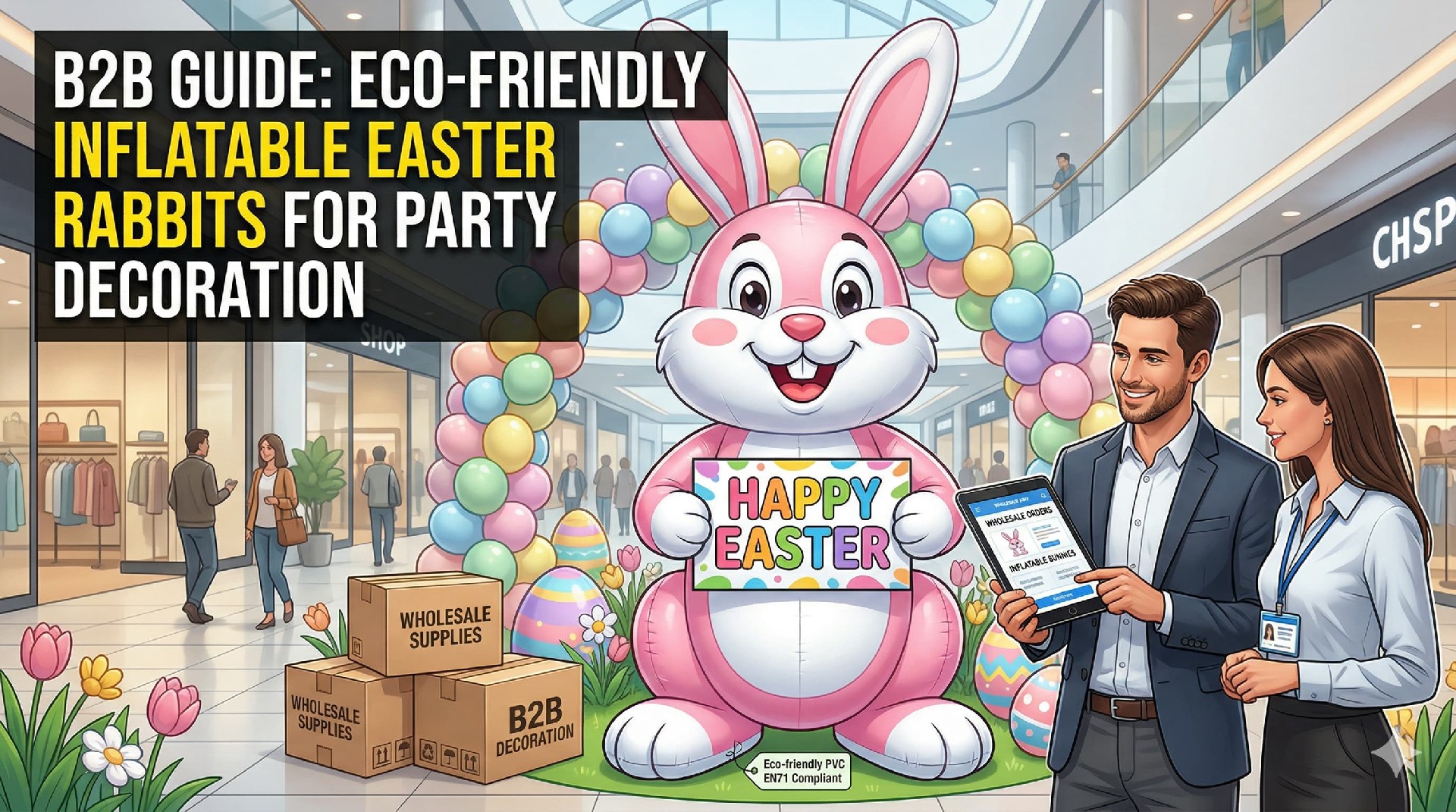
Strategic Advantages of Inflatable Thematic Decor in B2B
1. Logistics and Storage Efficiency
For wholesalers and event planners, physical space is a direct cost. Unlike rigid decor, Rabbit for Party Decoration units can be shipped and stored deflated. This reduces the carbon footprint associated with transport by maximizing the number of units per container. A deflated 6-foot inflatable bunny occupies less than 2% of its inflated volume, allowing for high-density warehousing.
2. Rapid Deployment and Scalability
Time is the most critical resource during event setup. Inflatable decorations can be deployed in minutes using electric blowers. For large-scale events, such as city-wide Easter egg hunts or shopping mall visual merchandising displays, this speed allows decorators to scale up visual impact without proportionally increasing labor costs.
3. Durability and Safety Compliance
Commercial-grade inflatable toy cartoon rabbit units designed for party decoration are typically constructed from 0.18mm to 0.25mm thick PVC. This material provides a superior strength-to-weight ratio, resisting punctures and tears from normal crowd interaction. Furthermore, unlike heavy, rigid props, inflatables pose minimal risk of injury if tipped over, a crucial factor in child-centric events or high-traffic public spaces.
Technical Specifications of the Eco-friendly PVC Rabbit
The product under analysis is a wholesale new design toy cartoon rabbit bunny shape happy Easter eco-friendly PVC inflatable Easter rabbit for party decoration. To appreciate its value, one must understand its composition.
Material Composition: The "Eco-friendly" Distinction
The primary material is Polyvinyl Chloride (PVC). The term "eco-friendly" in this context refers to manufacturing practices that comply with modern environmental standards, such as EN71 (Europe) and ASTM F963 (USA). This ensures the product is:
Phthalate-Free: Safe for contact, crucial for events involving children.
Recyclable: Many suppliers now utilize PVC formulas that are recyclable through specialized industrial channels, aligning with the sustainability mandates of large corporate clients.
Print Technology and Design
The new design toy element leverages high-definition silk-screen or digital UV printing. This ensures that the cartoon rabbit bunny shape remains vibrant under artificial venue lighting or direct sunlight (UV resistance). The design is optimized for 3D visibility, ensuring the character looks appealing from all angles, which is vital for centerpieces and photo backdrops.
Applications Across Diverse B2B Verticals
The utility of the inflatable Easter rabbit extends beyond mere aesthetic enhancement. It serves as a functional tool in several business scenarios.
1. Visual Merchandising and Retail
Retailers utilize giant inflatables to create immersive "destination zones" within stores. A large, well-designed rabbit for party decoration signals the seasonal shift, attracting foot traffic to specific product bays (e.g., Easter candy or apparel). They can also be used as "window grabbers" in high-street retail to draw customers inside.
2. Corporate Events and Hospitality
Hotels, resorts, and corporate event planners use inflatable bunnies to brand seasonal brunches, family-friendly corporate retreats, or trade show booths. The happy Easter thematic element provides an immediate photo opportunity, encouraging attendees to share photos on social media, thus generating organic brand exposure for the venue or corporation.
3. Community and Municipal Events
For municipalities organizing large-scale public Easter egg hunts or parades, inflatables are the most cost-effective method for marking starting lines, designated zones, or creating festive environments over sprawling outdoor areas. Their portability allows them to be moved easily between multiple locations during a weekend festival.
Sourcing Strategy for Wholesale Buyers
For B2B buyers sourcing Rabbit for Party Decoration units, the focus must shift from pure price to total cost of ownership and reliability.
1. Customization and OEM Services
Reliable suppliers offer Original Equipment Manufacturer (OEM) services. Wh wholesalers should look for factories that can customize size, color pallet, printing (e.g., adding a corporate logo), and packaging. This allows the wholesaler to offer a differentiated product line to their retail clients.
2. Minimum Order Quantity (MOQ) and Price Tiers
A sophisticated wholesale strategy involves understanding supplier price curves. Buyers must negotiate MOQs that balance inventory risk with economies of scale. Direct sourcing from manufacturers often allows for lower MOQs on initial "market test" orders, with steep discounts on bulk re-orders.
3. Certifications and Compliance
When importing, buyers must verify that the eco-friendly PVC inflatable units come with verified test reports for their target market. Mandatory certifications include:
Europe: CE, EN71-1-2-3, REACH.
North America: ASTM F963, CPSIA, Phthalates content limits.
Failure to provide this documentation can lead to customs seizures and legal liability.
FAQ Section
1. What are the key safety certifications required for wholesale inflatable party decorations?
For international sourcing of items like a Rabbit for Party Decoration, the absolute minimum safety standards are EN71 (Parts 1, 2, and 3) for the European Union and ASTM F963 for the United States. These standards cover mechanical properties (puncture resistance), flammability, and chemical composition (heavy metals, phthalates). Buyers sourcing eco-friendly PVC inflatables must request certified test reports from the manufacturer to ensure compliance with modern consumer safety laws.
2. How can I verify if a PVC inflatable is truly eco-friendly?
In the inflatable industry, "eco-friendly PVC" typically signifies compliance with restrictions on certain hazardous plasticizers (phthalates) rather than being biodegradable. The standard distinction is non-phthalate PVC or 6P-compliant PVC. Verification requires requesting a chemical analysis report from a third-party testing agency (like SGS or TÜV) stating that the material meets the requirements of regulations like REACH (Europe) or CPSIA (USA).
3. What is the typical lifespan of a commercial-grade inflatable bunny decoration?
The lifespan of an inflatable toy cartoon rabbit used commercially depends heavily on usage environment (indoor vs. outdoor) and storage practices. Generally, a commercial-grade PVC inflatable (0.18mm thickness or greater) can be reused for 3–5 seasons of seasonal usage if properly cared for. Indoor usage, shielded from UV rays and temperature extremes, can extend this lifespan significantly. Proper deflation, cleaning, and dry storage are essential to prevent mold and material degradation.
4. What are the logistical advantages of using inflatables over fiberglass decor for events?
The primary logistical advantage is weight and volume reduction. An inflatable Rabbit for Party Decoration can shrink to less than 2% of its inflated size when deflated, allowing hundreds of units to be shipped in a single container, vastly reducing wholesale inflatable decorations transport costs. In contrast, fiberglass decor is rigid, heavy, prone to cracking during transit, and requires exponentially more storage space.
5. Are electric blowers required for all sizes of inflatable Easter rabbits?
Generally, any rabbit for party decoration larger than 4 feet (1.2 meters) will require an electric blower for rapid, crisp inflation. While smaller, purely decorative air-blown units exist, commercial impact inflatables (6ft to 20ft+) rely on continuous-air blowers or high-pressure sealed-air valves, both of which are best managed with electric pumps during the tight schedules of event setup.
6. Can custom logos be added to wholesale inflatable bunny designs for corporate branding?
Yes, most manufacturers offering wholesale new design toy units provide OEM (Original Equipment Manufacturer) services, which include custom printing. Digital UV or silk-screen printing processes can place high-resolution corporate logos, specific branding messages, or customized happy Easter designs directly onto the PVC panels before assembly, allowing corporations or venues to maximize brand exposure during the event.
7. What is the standard Minimum Order Quantity (MOQ) when sourcing inflatables directly from manufacturers?
MOQs vary significantly by supplier and design complexity. For a new design toy cartoon rabbit, the typical MOQ is 100 to 500 units per design. However, some manufacturers allow lower MOQs (e.g., 50–100 units) for stock designs or initial trial orders from verified business entities. Direct bulk party supplies buyers should expect higher MOQs for complete custom shapes or unique, non-stock color specifications.
8. How should wholesale buyers manage inventory risk with seasonal inflatable decor?
Buyers should adopt a tiered procurement strategy. Initial orders should be placed 4–6 months ahead of the season to test quality and market demand. Buyers should prioritize suppliers with rapid re-order capabilities to minimize stockouts during peak season. Furthermore, focusing on wholesale new design toy units that offer versatile aesthetics (usable in hospitality, retail, and municipal verticals) maximizes the potential customer base, reducing the risk of unsold seasonal inventory.
