

Abstract
This comprehensive white paper explores the engineering, manufacturing, and commercial strategies behind the heart-shape swimming pool, a rapidly growing segment within the global aquatic entertainment and outdoor leisure market. As consumer preferences shift toward highly aesthetic, Instagram-worthy, and uniquely designed recreational products, B2B wholesalers and retailers must understand how to evaluate material integrity, assess structural fluid dynamics, and optimize cross-border supply chains for novelty inflatables. This guide details the critical differences between commercial-grade PVC and TPU materials, outlines rigorous quality assurance protocols, and provides actionable insights for inventory diversification. By reading this analysis, procurement managers and enterprise buyers will learn how to identify premium manufacturing partners, ensure compliance with international safety standards, and maximize profit margins through strategic product bundling. The leisure industry is evolving; adapting your sourcing strategy to include highly visual, emotionally resonant products is no longer optional, but essential for sustained market growth.
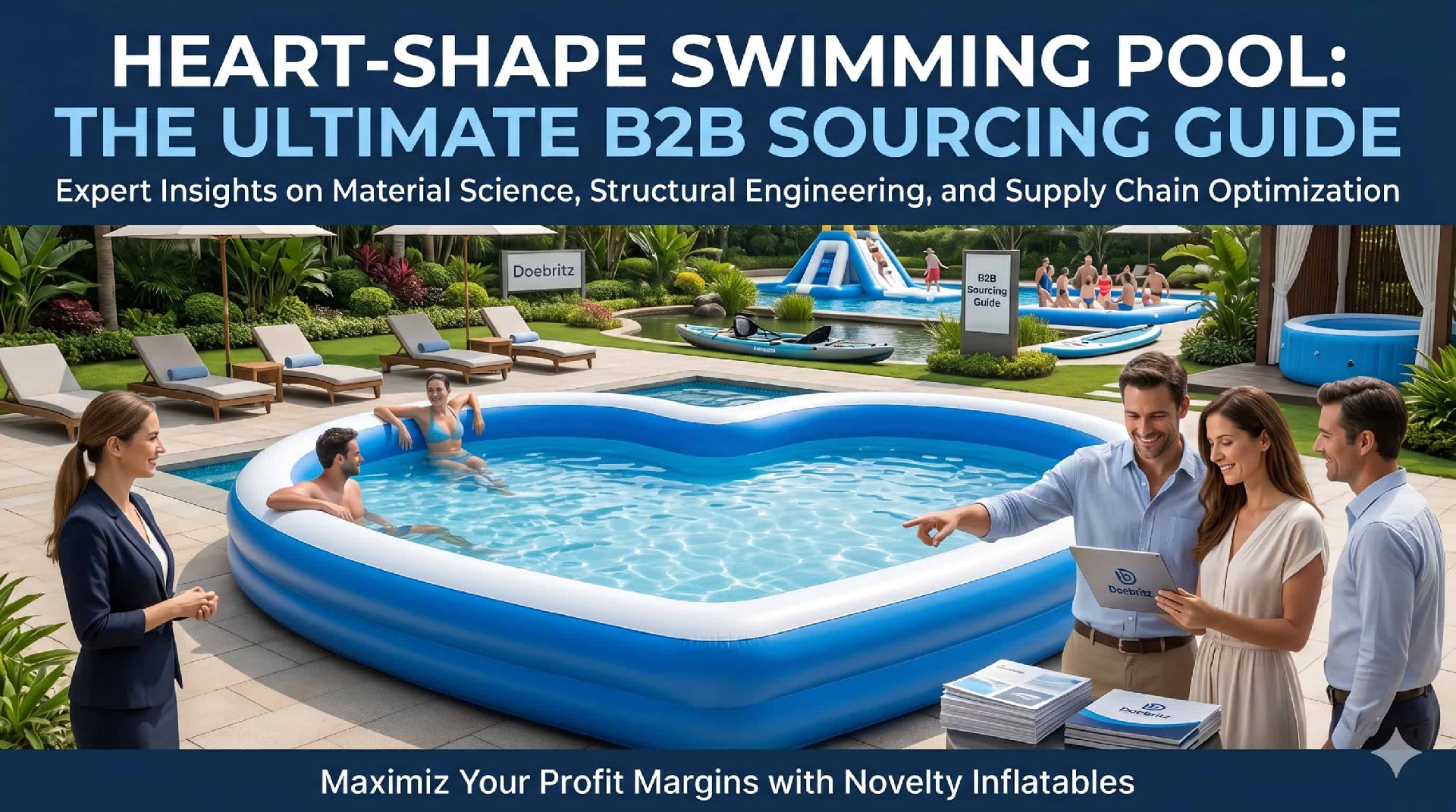
Introduction: The Rising Market Demand for Heart-Shaped Leisure Pools
The global outdoor leisure and aquatic recreation market has undergone a significant transformation over the past decade. Historically dominated by utilitarian, rectangular, or standard circular pool designs, the industry is currently experiencing a massive surge in demand for geometrically unique and highly photogenic products. Among these, the heart-shape swimming pool has emerged as a distinct, high-growth category, capturing the attention of boutique hotels, event planners, and high-end residential consumers.
According to recent market intelligence, the global inflatable pool and leisure equipment market is projected to grow at a Compound Annual Growth Rate (CAGR) of 6.8% from 2024 to 2030 (Source: Grand View Research, 2025). A significant driver of this growth is the "aesthetic premium"—the willingness of consumers to pay up to 40% more for products that feature unique shapes, custom color palettes, and enhanced visual appeal. For B2B distributors and wholesalers, this represents a highly lucrative opportunity. However, sourcing a heart-shape swimming pool requires a much deeper technical understanding than purchasing standard geometric pools. The irregular shape introduces complex challenges in water pressure distribution, seam stress management, and manufacturing precision.
This guide serves as an authoritative resource for B2B professionals, breaking down the technical specifications, material science, and commercial strategies necessary to successfully integrate heart-shaped aquatic products into your enterprise portfolio.
Material Science: Evaluating Polymers for Heart-Shape Swimming Pools
The foundation of any commercial-grade aquatic product lies in its material composition. When evaluating manufacturers for a heart-shape swimming pool, procurement officers must move beyond superficial aesthetics and scrutinize the polymer chemistry and fabric architecture.
Polyvinyl Chloride (PVC) vs. Thermoplastic Polyurethane (TPU)
The two dominant materials in the inflatable aquatic industry are PVC and TPU. Each offers distinct advantages and presents specific use cases depending on the target market.
Commercial-Grade PVC (Polyvinyl Chloride):
PVC remains the industry standard for large-scale, wholesale inflatable pools due to its cost-effectiveness, robust structural integrity, and ease of high-frequency welding. For a heart-shape swimming pool, manufacturers typically utilize a reinforced, multi-layer PVC fabric (often referred to as PVC tarpaulin), ranging from 0.4mm to 0.9mm in thickness.
Tensile Strength: High-density PVC provides exceptional resistance to tearing and puncturing.
UV Resistance: Premium PVC must be treated with advanced UV inhibitors to prevent photodegradation, chalking, and color fading when exposed to prolonged sunlight.
Plasticizers: To maintain flexibility, PVC requires plasticizers. It is critical for B2B buyers to demand Phthalate-free or REACH-compliant plasticizers to meet stringent environmental and health safety regulations in European and North American markets.
Thermoplastic Polyurethane (TPU):
TPU is a premium, high-performance alternative to PVC. While significantly more expensive, it offers unparalleled benefits for specialized or high-end retail markets.
Elasticity and Memory: TPU possesses superior elasticity, allowing the heart shape to maintain its strict geometric contours even under fluctuating temperature conditions.
Environmental Impact: TPU is inherently more eco-friendly than PVC, as it does not require toxic plasticizers and is highly recyclable.
Abrasion Resistance: TPU demonstrates remarkable resistance to abrasion and chemical degradation (such as from chlorine or saltwater), extending the operational lifecycle of the product.
The Role of Drop-Stitch Technology in Irregular Geometries
Achieving a rigid, perfectly contoured heart-shape swimming pool often necessitates the use of drop-stitch technology. Traditional inflatables rely on large air chambers that naturally bulge outward into a cylindrical shape when pressurized. To maintain the sharp inner cleft and the sweeping curves of a heart shape, thousands of internal polyester threads (drop-stitches) connect the top and bottom interior surfaces.
When inflated to high pressure (often 10-15 PSI), these threads tension equally, creating a rock-hard, perfectly flat surface and allowing for precise vertical walls. For B2B buyers sourcing high-end models, verifying the density of the drop-stitch core (measured in threads per square meter) is a critical quality control metric.
Structural Engineering & Fluid Dynamics in Novelty Inflatable Pools
Designing a standard rectangular pool is an exercise in basic hydrostatic pressure management. Designing a heart-shape swimming pool, however, requires advanced structural engineering to mitigate unequal stress distribution.
Hydrostatic Load and Seam Stress
Water exerts equal pressure in all directions. In a circular pool, this pressure is distributed evenly across the curved wall. In a rectangular pool, the straight walls require structural bracing. The heart shape presents a unique challenge: it features convex curves (the two top lobes) and a sharp concave intersection (the cleft at the top), culminating in an acute angle at the bottom point.
The concave cleft is highly susceptible to outward deformation under heavy hydrostatic load. Without specialized internal baffling or reinforced gussets, the weight of the water will push the cleft outward, distorting the heart into a generic oval.
Advanced Baffling Systems
To counteract these fluid dynamic challenges, premium manufacturers employ complex internal baffling systems. Baffles are interior structural walls made of PVC or TPU that divide the main air chamber into distinct compartments.
I-Beam Construction: Vertical internal beams that maintain parallel surfaces and prevent localized bulging.
Honeycomb Matrix: Used in smaller, luxury models to provide absolute structural rigidity.
Tension Gussets: Specifically engineered triangular reinforcements placed at the inner cleft and the bottom point of the heart shape to distribute stress away from the seams.
When conducting factory audits, enterprise buyers must request engineering schematics that demonstrate how the manufacturer addresses hydrostatic load specific to the heart shape. A failure to engineer these stress points will result in a high defect rate, costly product returns, and damage to your brand reputation.
Manufacturing Workflows: High-Frequency Welding and Quality Assurance
The durability of a commercial heart-shape swimming pool is completely dependent on the integrity of its seams. B2B buyers must understand the manufacturing processes used by their suppliers to ensure longevity and safety.
Radio Frequency (RF) and High-Frequency (HF) Welding
Unlike consumer-grade pool toys that may use adhesives or heat sealing, commercial-grade pools require High-Frequency (HF) or Radio Frequency (RF) welding.
HF welding utilizes electromagnetic energy to excite the molecular structure of the PVC or TPU. When two layers of material are pressed together between two specialized dies (electrodes) and subjected to high-frequency energy (typically 27.12 MHz), the molecules heat up from the inside out. The materials melt and fuse at the molecular level, creating a seam that is structurally stronger than the surrounding fabric itself.
For a heart-shape swimming pool, the precision of the HF welding dies is paramount. The complex curves and sharp angles require custom-tooled, heavily articulated dies. A manufacturer utilizing outdated machinery or imprecise dies will produce pools with micro-leaks or visually unappealing, misaligned seams.
Rigorous Quality Assurance (QA) Protocols
A reliable manufacturing partner must implement a multi-stage QA process:
Raw Material Inspection: Spectrometer testing of incoming PVC/TPU rolls to verify thickness, tensile strength, and UV coating consistency.
In-Process Monitoring: Real-time calibration of HF welding machines to ensure optimal pressure, temperature, and cycle times based on ambient factory humidity and temperature.
Inflation and Retention Testing: Every completed heart-shape swimming pool must undergo a mandatory 24-to-48-hour inflation test in a climate-controlled facility to detect micro-leaks or pressure drops.
Hydrostatic Load Testing: Random batch sampling where pools are filled to maximum capacity to ensure structural integrity and shape retention under real-world conditions. (Source: International Organization for Standardization, ISO 9001 Guidelines, 2024).
B2B Sourcing Strategies: Vendor Evaluation and Supply Chain Optimization
Successfully bringing a heart-shape swimming pool to market requires a robust B2B sourcing strategy. Selecting the wrong supplier can lead to catastrophic supply chain disruptions and inferior product quality.
Factory Auditing and Supplier Qualification
Before committing to a high-volume Purchase Order (PO), enterprise buyers should conduct thorough factory audits. Key criteria include:
Production Capacity and Scalability: Can the factory handle seasonal volume spikes? What is their monthly output capacity in TEU (Twenty-foot Equivalent Units)?
Tooling and R&D Capabilities: Do they have an in-house R&D team capable of customizing the heart shape, modifying dimensions, or altering the internal baffling based on your specific requirements?
Export Compliance History: Ensure the manufacturer has a proven track record of exporting to your target markets (e.g., North America, EU) and possesses the necessary customs documentation and tariff classifications (HS Codes).
MOQ and Lead Time Management
Minimum Order Quantities (MOQs) for custom-designed items like a heart-shape swimming pool can be significantly higher than standard products due to the cost of custom HF welding dies and material color matching.
Negotiating MOQs: B2B buyers can often negotiate lower initial MOQs by accepting standard material colors or by combining the order with other aquatic products.
Lead Time Forecasting: The manufacturing process for novelty inflatables is labor-intensive. From order confirmation to ex-works (EXW) delivery, lead times can span 45 to 90 days. Buyers must incorporate comprehensive demand forecasting, factoring in oceanic freight transit times and potential port congestions, to ensure inventory arrives prior to peak summer seasons.
Cross-Selling Opportunities in the Aquatic Entertainment Space
To maximize Average Order Value (AOV) and provide comprehensive solutions to retail clients or end-users, B2B distributors should strategically bundle the heart-shape swimming pool with other synergistic aquatic and recreational products. Expanding your catalog creates a "one-stop-shop" advantage.
Expanding Your Product Portfolio
For enterprises focused on holistic leisure solutions, it is highly recommended to integrate specialized health and recreation products. For example, alongside recreational pools, offering specialized medical-grade or therapeutic inflatables can open new revenue streams. You can explore high-quality options such as the
For large-scale commercial clients, such as resorts or summer camps, a single heart-shaped pool is rarely sufficient. These clients are actively seeking comprehensive aquatic ecosystems. Bundling your offerings to include an expansive
Furthermore, engaging the broader outdoor and water sports demographic allows you to stabilize seasonal revenue fluctuations. While pools are stationary, mobile aquatic equipment is equally popular. Offering a rugged, drop-stitch reinforced
Compliance, Safety Standards, and Global Certifications
In the B2B wholesale market, compliance is not merely a legal requirement; it is a critical competitive advantage. A heart-shape swimming pool must adhere to strict international safety protocols to be legally sold in major consumer markets.
European Market Standards (CE, EN)
EN 16927 / EN 16582: These European standards dictate the safety requirements, test methods, and material specifications for domestic swimming pools. They govern aspects such as structural stability, slip resistance, and the elimination of sharp edges.
REACH Regulation: The Registration, Evaluation, Authorisation and Restriction of Chemicals (REACH) strictly limits the use of hazardous substances, specifically Phthalates and heavy metals, in PVC products imported into the EU.
North American Market Standards (ASTM, CPSIA)
ASTM F2666: The standard specification for above-ground portable pools for residential use. It includes rigorous testing for water depth warnings, entrapment hazards, and structural integrity.
CPSIA: The Consumer Product Safety Improvement Act requires mandatory third-party testing for lead and phthalates for any product marketed toward children under 12 years of age. Even if the heart-shape swimming pool is marketed to adults, passing CPSIA standards provides a vital layer of liability protection.
Enterprise buyers must demand certified testing reports from internationally recognized third-party laboratories (e.g., SGS, TUV Rheinland, Intertek) prior to shipment.
Maximizing ROI: Operational Maintenance and Lifecycle Extension
For commercial buyers (hotels, event rental companies), the Return on Investment (ROI) of a heart-shape swimming pool is directly correlated to its operational lifespan. Educating your B2B clients on proper maintenance protocols adds immense value to your service offering.
Preventative Maintenance Protocols
Site Preparation: The irregular shape of the pool requires a perfectly level, debris-free footprint. The use of heavy-duty, puncture-resistant ground cloths (geotextiles) is mandatory to prevent bottom abrasions.
Chemical Balancing: PVC and TPU can be degraded by excessive exposure to harsh pool chemicals. Operators must maintain strict pH levels (7.2 - 7.6) and utilize slow-dissolving chlorine dispensers. Shock treatments should be pre-dissolved to avoid direct chemical burns on the pool floor.
Pressure Management: As ambient temperatures rise, the internal air pressure of inflatable chambers expands. Operators must routinely bleed excess air during peak solar radiation hours to prevent seam blowouts, particularly at the high-stress cleft of the heart shape.
Winterization and Storage Logistics
Proper off-season storage is critical. The pool must be completely drained, meticulously cleaned with mild, non-abrasive detergents, and allowed to achieve 100% molecular dryness to prevent fungal or bacterial growth (mildew) within the folds. The pool should be folded loosely, avoiding sharp creases, and stored in a climate-controlled environment away from rodent activity and extreme temperature fluctuations.
Future Trends in the Commercial Inflatable Leisure Market
The market for specialty leisure products is continuously innovating. B2B professionals must stay ahead of the curve to maintain a competitive edge.
Integration of Smart Technologies
The integration of IoT (Internet of Things) devices into above-ground pools is accelerating. Future iterations of the heart-shape swimming pool will likely feature embedded sensors capable of monitoring hydrostatic pressure, water temperature, and structural stress in real-time, transmitting this data directly to an operator's smartphone to prevent catastrophic failures.
Sustainable and Eco-Conscious Materials
As global environmental regulations tighten, the industry is heavily investing in the research and development of biodegradable polymers and highly recyclable TPU formulations. Manufacturers who pivot early to verifiable "green" materials will capture premium market segments, as high-end consumers and eco-conscious hospitality brands increasingly prioritize sustainability in their procurement decisions.
Advanced Customization via 3D Modeling
The gap between conceptual design and physical prototyping is shrinking. Advanced 3D modeling and automated cutting tables allow manufacturers to offer bespoke, micro-batch production runs. B2B buyers will soon be able to order heart-shaped pools customized down to the millimeter, perfectly tailored to the architectural constraints of specific hotel rooftops or event venues, with significantly reduced lead times.
Frequently Asked Questions (FAQs) About Heart-Shaped Pools
1. What is the ideal thickness for a commercial-grade heart-shape swimming pool?
For commercial applications, the PVC or TPU material should be a minimum of 0.6mm to 0.9mm thick. This thickness provides the necessary tensile strength to withstand high-traffic usage, hydrostatic pressure, and resistance to environmental punctures.
2. How does a heart-shaped pool maintain its shape without bulging?
Premium heart-shaped pools utilize internal baffling systems, such as I-beams or drop-stitch technology. These internal structural walls bridge the top and bottom or outer and inner walls, preventing the outward expansion of the material when filled with water.
3. Can I use standard pool chemicals in an inflatable heart pool?
Yes, but with caution. You must use chemicals designed specifically for vinyl or PVC pools. Avoid throwing raw chlorine tablets directly into the pool, as this will bleach and degrade the material. Always use floating dispensers or pre-dissolve chemicals.
4. What is the standard lead time for wholesale orders of custom pools?
Standard lead times range from 45 to 90 days, depending on factory capacity, custom tooling requirements for the specific shape, and shipping logistics. Buyers should initiate orders at least 4-5 months prior to the target selling season.
5. Are heart-shape swimming pools compliant with European safety standards?
They can be, provided the manufacturer utilizes REACH-compliant (Phthalate-free) materials and engineers the pool to meet EN 16927 structural and safety standards. Always demand valid third-party certification reports before purchasing.
6. Is TPU better than PVC for aquatic inflatables?
TPU offers superior elasticity, better abrasion resistance, and is more environmentally friendly than PVC. However, it is significantly more expensive. PVC remains the dominant choice for wholesale volume due to its optimal balance of durability and cost-effectiveness.
7. How do I repair a puncture in a commercial inflatable pool?
Commercial pools should be repaired using a heavy-duty PVC/TPU patch and specialized vinyl cement (like HH-66). The area must be thoroughly cleaned, dried, and the patch applied with heavy pressure. Thermal welding using a handheld heat gun is recommended for permanent commercial repairs.
8. What is the Minimum Order Quantity (MOQ) for a custom design?
MOQs for custom geometries typically start between 100 to 500 units, depending on the manufacturer and the size of the pool. The higher MOQ offsets the cost of designing and milling the custom High-Frequency welding dies required for the heart shape.
Conclusion & Call to Action
The rapid rise of the heart-shape swimming pool represents a critical evolution in the aquatic leisure market, shifting the paradigm from purely functional products to highly aesthetic, experience-driven investments. For B2B wholesalers, distributors, and enterprise buyers, capitalizing on this trend requires more than just recognizing consumer demand; it demands a rigorous approach to material science, structural engineering, and global supply chain compliance. By prioritizing advanced manufacturing techniques like high-frequency welding, insisting on REACH and ASTM-compliant materials, and strategically bundling synergistic products, businesses can build a resilient, high-margin product portfolio.
Do not let subpar manufacturing compromise your brand's authority and bottom line. Elevate your B2B sourcing strategy today. Contact our technical procurement team now to request a customized factory audit checklist, or explore our full catalog of commercial-grade aquatic entertainment solutions to secure your inventory for the upcoming season.
