

Abstract
This comprehensive whitepaper explores the engineering, market dynamics, and B2B wholesale strategies surrounding the
What: We dissect the technical evolution of heavy-duty inflatable pools, focusing on multi-chamber structural integrity, advanced polymer materials, and the physics of deep-water retention in portable formats.
Why: The global shift toward premium backyard recreation has made high-capacity, deep inflatable pools a cornerstone of outdoor leisure retail, offering exceptionally high profit margins for distributors who understand quality control and supply chain logistics.
How: Procurement managers, wholesalers, and retail brands will learn actionable strategies for evaluating OEM/ODM manufacturers, optimizing cross-border shipping density, and differentiating product lines. By mastering the material specifications and compliance standards detailed in this guide, B2B buyers can secure a dominant position in the rapidly expanding outdoor recreation market.
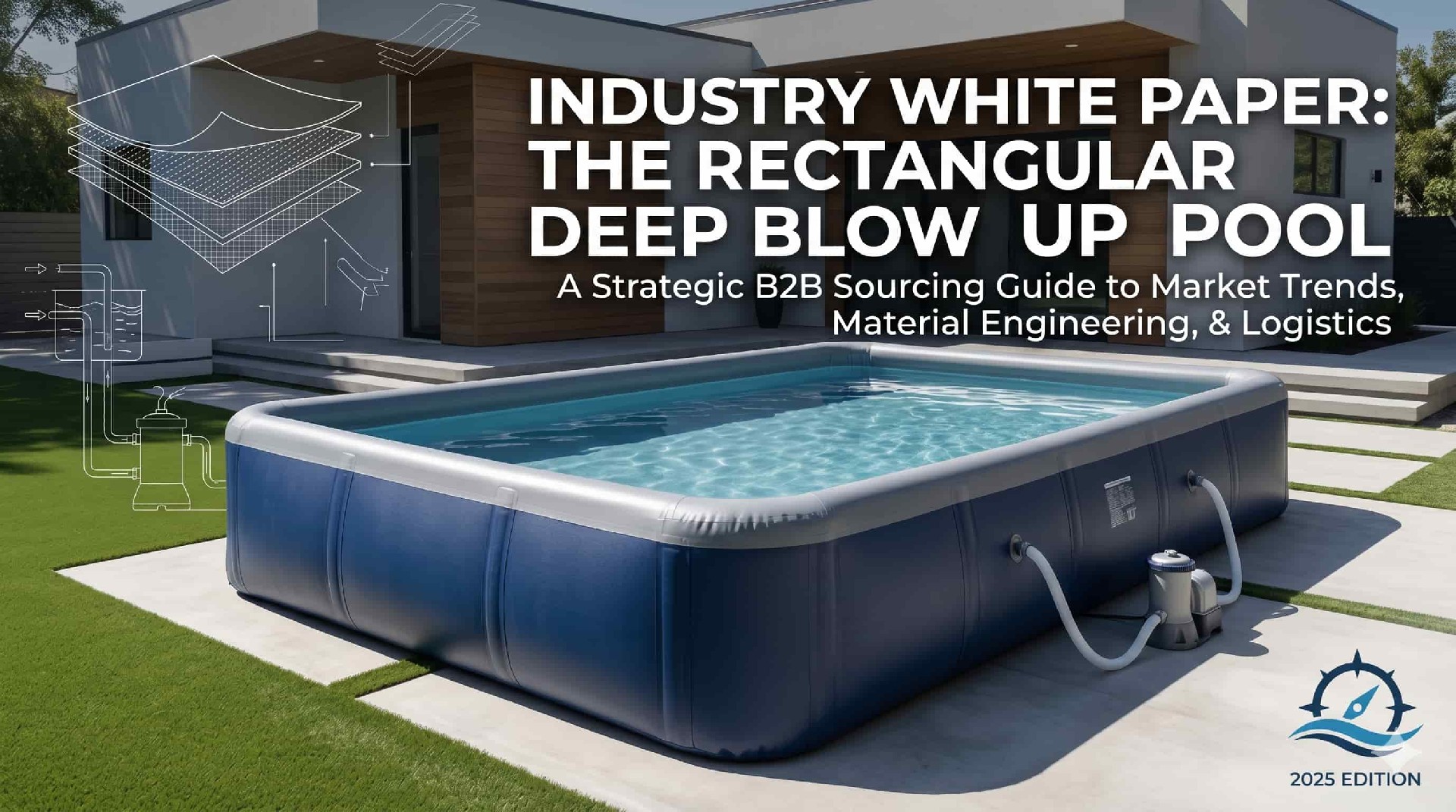
The Evolution and Market Growth of Heavy-Duty Inflatable Pools
Over the past decade, the backyard recreation industry has undergone a massive transformation. The traditional hard-shell, permanent swimming pool, once the ultimate symbol of domestic luxury, is increasingly being challenged by high-quality, ultra-durable inflatable alternatives. At the forefront of this shift is the rectangular deep blow up pool, a product that marries the spatial efficiency of modern geometric design with the logistical advantages of inflatable architecture.
Shifting Consumer Preferences in Backyard Recreation
Consumer behavior has fundamentally shifted toward flexible, semi-permanent home upgrades. Families are no longer willing to commit to the immense capital expenditure, property taxation increases, and year-round maintenance required by in-ground pools. Instead, there is a surging demand for "seasonal luxury." The rectangular deep blow up pool perfectly satisfies this demand. By offering water depths exceeding 22 inches (and often reaching up to 30 inches in premium commercial models), these pools provide a genuine swimming and wading experience, rather than just a shallow splash zone for toddlers.
Furthermore, urban and suburban lot sizes are shrinking globally. The rectangular form factor aligns perfectly with the linear boundaries of modern backyards, patios, and deck spaces, maximizing the usable swimming area without encroaching on the entire lawn. This geometric efficiency is a massive selling point for retailers and a primary reason why B2B buyers are prioritizing rectangular models in their seasonal inventory forecasting.
Global Market Size and B2B Wholesale Opportunities
The market for above-ground pools, heavily driven by the inflatable segment, has seen exponential growth. The integration of puncture-resistant materials has elevated these products from disposable summer toys to durable, multi-season investments. According to recent retail data analyses, the global above-ground pool market is projected to expand at a Compound Annual Growth Rate (CAGR) of 5.8% from 2024 to 2030, with heavy-duty inflatables capturing a disproportionate share of that growth (Source: Grand View Research, 2024).
For B2B wholesalers and cross-border traders, this represents a highly lucrative vertical. The margins on premium, deep inflatable swimming pools can range from 40% to 65% when sourced effectively from top-tier manufacturers. By diversifying product catalogs to include high-end inflatable recreation gear—such as pairing a heavy-duty family pool with a premium
Technical Specifications: Engineering the Deep Inflatable Swimming Pool
Understanding the technical nuances of a rectangular deep blow up pool is critical for any B2B buyer. The depth of the pool dictates the volume and weight of the water it must hold. Water is incredibly heavy (approximately 8.34 pounds per gallon, or 1 kilogram per liter). A deep rectangular pool holding 500 to 1,000 gallons must withstand immense outward hydrostatic pressure.
Heavy-Duty Materials: PVC vs. TPU vs. Drop-Stitch Technology
The foundational element of any inflatable water product is its material composition.
Standard PVC (Polyvinyl Chloride): Entry-level pools utilize single-layer PVC, typically ranging from 0.25mm to 0.35mm in thickness. While cost-effective, these are prone to punctures and UV degradation.
Reinforced 3-Ply PVC (TriTech / SuperTough): Premium rectangular deep blow up pools utilize a 3-ply construction. This involves a core layer of dense polyester mesh sandwiched between two layers of high-gauge PVC (often 0.4mm to 0.8mm total thickness). This composite material prevents the pool walls from stretching or bowing under the weight of deep water and offers exceptional resistance to abrasions from concrete or rough grass.
TPU (Thermoplastic Polyurethane): An emerging, eco-friendly alternative to PVC. It is lighter, highly abrasion-resistant, and free from phthalates. However, its high cost currently restricts it to boutique or specialized outdoor gear.
Drop-Stitch Technology: Borrowed from the inflatable paddleboard industry, drop-stitch construction involves thousands of tiny polyester threads connecting the inner and outer layers of the pool wall. When inflated to high pressure (e.g., 10-15 PSI), the walls become as rigid as a hard-shell pool. While more expensive, this technology represents the future of commercial inflatable pools.
Multi-Chamber Structural Integrity and Load Distribution
A deep pool cannot rely on a single air chamber. If a puncture occurs, a single-chamber pool will suffer catastrophic failure, releasing hundreds of gallons of water instantly. Consequently, superior rectangular deep blow up pools are engineered with multiple independent air chambers, usually stacked in three or four distinct tiers (rings).
This multi-tiered design serves a dual purpose. First, it acts as a fail-safe; if one ring loses pressure, the remaining rings maintain the structural integrity long enough for the pool to be safely emptied or repaired. Second, it distributes the hydrostatic load evenly across the vertical plane. The wide, rectangular footprint further stabilizes the structure, preventing the "roll-over" effect sometimes seen in poorly designed, deep circular pools.
Advanced Filtration Integration and Valve Systems
Stagnant deep water is a breeding ground for algae and bacteria. Therefore, B2B buyers must source pools equipped with dual suction outlet fittings that support external cartridge or sand filter pumps. The integration of 32mm or 38mm universal hose connections is a mandatory requirement for the European and North American markets.
Valve technology is equally crucial. Standard pinch valves are entirely inadequate for the high-volume air requirements of a deep rectangular pool. Procurement teams must ensure their OEM partners utilize Boston Valves or dual-action rapid deflation/inflation valves. These valves feature a one-way mechanism that prevents air from escaping during the inflation process and allows for rapid, wide-mouth deflation when the season ends.
Why B2B Buyers are Shifting to Rectangular Designs Over Circular Models
While circular pools have historically dominated the entry-level market, the rectangular deep blow up pool is rapidly becoming the flagship product for mid-to-high-end retail brands. This shift is driven by a combination of end-user ergonomics and B2B logistical advantages.
Space Optimization and Aesthetic Appeal in Modern Homes
As mentioned in the market analysis, urban density means yard space is at a premium. A circular pool creates dead, unusable space in the corners of a rectangular yard or deck. A rectangular pool, however, fits flush against fences, retaining walls, or patio edges, maximizing the ratio of swimming area to footprint.
From an ergonomic perspective, rectangular pools mimic the traditional swimming lane. This allows adults to lounge side-by-side or children to play aquatic games (like water volleyball) more naturally than in a circular confine. The aesthetic is also inherently more modern; clean, straight lines appeal to contemporary outdoor design trends, allowing retailers to market these pools not just as toys, but as premium lifestyle accessories.
Retail Packaging, Shelf Space, and E-commerce Shipping
From a wholesale and retail perspective, rectangular pools offer distinct advantages in packaging. Because the final folded product naturally forms a block-like shape, it fits more efficiently into standard rectangular retail cartons. This efficiency translates to optimized shelf space in brick-and-mortar stores.
For e-commerce vendors, this packaging density reduces dimensional weight (DIM weight) charges imposed by couriers like FedEx, UPS, or DHL. By tightly folding a rectangular pool and vacuum-sealing it within its retail box, brands can significantly reduce their last-mile delivery costs compared to the bulkier, awkwardly folded circular alternatives.
Quality Control and Manufacturing Standards for Commercial Inflatable Pools
When dealing in high-capacity inflatable goods, quality control (QC) is not just about brand reputation; it is a matter of physical safety and liability. A structural failure in a deep pool can cause property damage or injury. Therefore, B2B buyers must implement rigorous vetting processes for their manufacturing partners in Asia and beyond.
ISO Certification, CE Marks, and Safety Protocols
Any factory producing a rectangular deep blow up pool must operate under ISO 9001 quality management systems. Furthermore, the products themselves must pass strict regional safety standards.
European Market: Pools must comply with EN-16582 (Domestic swimming pools) and EN-71 (Safety of toys, specifically regarding chemical composition and mechanical properties).
North American Market: Compliance with ASTM F2666 (Standard Specification for Aboveground Portable Pools for Residential Use) is highly recommended.
Chemical Compliance: The PVC used must be REACH compliant (in the EU) or meet Prop 65 standards (in California, USA), ensuring it is free from harmful phthalates (like DEHP, DBP, and BBP) and heavy metals.
(Source: Consumer Product Safety Commission, 2025).
Puncture Resistance, Seam Welding Techniques, and AQL Inspections
The weakest point of any inflatable product is its seams. Standard glue-based seams will degrade rapidly under the UV stress and water pressure inherent in a deep pool. Premium manufacturers utilize High-Frequency (HF) Welding (also known as Radio Frequency welding). This process uses electromagnetic energy to fuse the PVC layers at the molecular level, creating a seam that is often stronger than the surrounding material itself.
During mass production, buyers must enforce strict Acceptable Quality Limit (AQL) inspections. A standard AQL of 1.5 for major defects and 4.0 for minor defects is typical, but for deep pools, a mandatory 24-hour inflation test for 100% of the production batch is strongly advised. Every single pool should be inflated to its maximum PSI and left for 24 hours to check for micro-leaks before being deflated, folded, and boxed.
Wholesale Sourcing Strategy: Evaluating Suppliers for Inflatable Goods
Transitioning from domestic purchasing to international B2B wholesale requires a strategic approach. The barrier to entry for setting up a PVC welding factory is relatively low, which means the market is flooded with sub-par manufacturers. Identifying a true, high-capacity OEM partner requires due diligence.
Assessing Production Capacity, Equipment, and Lead Times
When auditing a factory, cross-border traders should look past the showroom and examine the production floor. The number and size of the High-Frequency welding machines directly dictate the factory's capacity to produce large-scale rectangular pools. A factory that primarily makes inflatable armbands will not have the massive 100kW+ HF machines required to weld a 120-inch pool seam in a single, clean press.
Lead times are also critical. The inflatable pool market is highly seasonal. Manufacturing typically peaks between November and February to ensure sea freight arrives in Western markets by April or May. A reliable supplier should offer clear production schedules, typically requiring 30 to 45 days for mass production following sample approval.
Customization: OEM vs. ODM Capabilities
Distributors must decide between OEM (Original Equipment Manufacturing) and ODM (Original Design Manufacturing).
ODM: Purchasing off-the-shelf designs from the factory and applying your brand's logo. This is faster and requires a lower Minimum Order Quantity (MOQ), but offers little differentiation in a crowded market.
OEM: Engineering a custom rectangular deep blow up pool from scratch. This involves choosing specific PVC gauges, specifying the exact dimensions, selecting valve types, and designing custom patterns. While MOQs are higher (often 1,000+ units), this allows brands to command premium pricing.
Smart brands often cross-sell related items to reach these MOQs across a broader factory catalog. For example, a buyer might negotiate a combined container load featuring the deep pools alongside a high-margin
Cross-Border Logistics and Inventory Management
Importing heavy, bulky items like inflatable pools requires meticulous logistical planning. The cost of ocean freight can make or break the profitability of an import operation.
Shipping Density and Freight Optimization (FCL vs. LCL)
Inflatable pools are heavy. A single premium rectangular deep blow up pool in its retail box can weigh between 15kg and 25kg (33 to 55 lbs). Therefore, shipping Full Container Loads (FCL) is mandatory to achieve economies of scale.
B2B buyers must work with their factory's packaging engineers to optimize the carton dimensions to fit perfectly on standard pallets (e.g., 1200x1000mm or 1200x800mm) without overhang. Maximizing the cubic meter (CBM) utilization inside a 40ft High Cube (40HC) container is an exact science. A well-optimized 40HC container can hold anywhere from 1,200 to 2,500 pools depending on their deflated footprint.
Seasonal Inventory Forecasting and Storage Conditions
Because these products are highly seasonal, inventory forecasting is a high-stakes game. Over-ordering leads to massive warehousing costs; under-ordering leaves money on the table during peak summer heatwaves. Utilizing historical weather data and consumer purchasing trends is vital for demand planning.
Storage conditions during transit and warehousing are also critical. PVC becomes brittle at freezing temperatures. If winter shipments pass through cold climates, the material can crack if subjected to impact or rough handling. Warehouses must maintain climate-controlled environments, ensuring the PVC remains pliable and intact until retail distribution in the spring.
Maintenance, Longevity, and the End-User Experience
To minimize return rates and maximize customer satisfaction, B2B sellers must educate their retail partners and end-users on proper pool maintenance. The depth of these pools changes the maintenance requirements from simple water-replacement to active chemical management.
Water Chemistry and Filtration in Deep Blow Up Pools
Unlike a shallow wading pool where the water is dumped daily, a rectangular deep blow up pool holding 800 gallons must be treated like a permanent pool. End-users must be educated on balancing pH levels (ideal range: 7.2 to 7.6) and maintaining proper chlorine or bromine sanitization.
Manufacturers should include clear, prominent warnings against using undiluted chemical shock treatments directly on the PVC, as concentrated chlorine can bleach and degrade the vinyl. Furthermore, the inclusion of an appropriately sized filter pump (e.g., a 530 gal/h or 1000 gal/h system) is essential to cycle the deep water and prevent stagnation.
Winterizing and Long-Term Storage Solutions
The lifespan of a high-quality inflatable pool should be 3 to 5 years, provided it is stored correctly. End-users must completely drain, thoroughly dry, and properly fold the pool before the first freeze. Moisture left inside the pool folds will cause mold and mildew proliferation over the winter. B2B brands that include heavy-duty storage bags and detailed "winterization" instructions in their packaging see significantly lower warranty claims the following season.
Emerging Trends: Smart Tech and Sustainability in Inflatable Water Gear
The future of the rectangular deep blow up pool lies in the intersection of sustainable materials and smart home integration. The B2B buyers who anticipate these trends will capture the next generation of premium consumers.
Eco-Friendly PVC Alternatives and Recyclability
Environmental concerns regarding the manufacturing and disposal of single-use plastics are pushing the industry toward sustainability. Factories are beginning to experiment with bio-based plasticizers and recycled PVC cores. While 100% biodegradable pools are not yet structurally feasible for deep-water retention, the industry is moving toward "closed-loop" recycling programs, where old pools can be returned and ground down into raw material for new products. (Source: Global Plastics and Rubber Industry Report, 2024).
Integration with Smart Temperature Control and IoT
The luxury segment of the inflatable pool market is seeing the introduction of smart technology. High-end rectangular pools are increasingly being paired with IoT-enabled inline water heaters and smart filter pumps. These systems allow users to monitor water temperature, track filter health, and activate the pump via smartphone apps. For B2B distributors, offering "Smart Pool Bundles" presents an incredible opportunity for upsells and increased profit margins.
FAQs
1. What is the ideal thickness for a durable rectangular deep blow up pool?
For commercial-grade durability, the PVC should be at least 0.4mm to 0.6mm thick. Premium models use a 3-ply construction (two layers of heavy-gauge PVC sandwiching a dense polyester mesh core) to withstand the hydrostatic pressure of deep water and prevent punctures.
2. How deep can an inflatable rectangular pool safely get?
Standard family inflatables range from 18 to 22 inches deep. However, premium heavy-duty models with multi-chamber reinforced walls can safely reach depths of 24 to 30 inches, providing a genuine swimming and wading experience for adults and older children.
3. Can I leave a deep blow up pool inflated all winter?
No. Freezing temperatures cause PVC to become brittle, leading to severe cracking and structural failure. The pool must be completely drained, thoroughly dried to prevent mold, folded, and stored in a climate-controlled indoor environment during the winter months.
4. Do I need a filter pump for a rectangular deep blow up pool?
Yes. Any pool holding over 400 gallons of water requires active filtration to prevent algae and bacterial growth. Ensure the pool you purchase has built-in dual suction fittings to accommodate standard 32mm or 38mm cartridge or sand filter pumps.
5. What is High-Frequency (HF) welding in pool manufacturing?
HF welding is a manufacturing process that uses electromagnetic energy to fuse PVC layers at the molecular level. Unlike standard glue, HF welded seams are incredibly strong, air-tight, and highly resistant to UV degradation and high water pressure.
6. How do I fix a puncture in a high-gauge PVC inflatable pool?
Ensure the punctured area is completely dry and clean. Apply a heavy-duty, marine-grade PVC patch using waterproof vinyl adhesive. Press firmly and allow it to cure for at least 12-24 hours before re-inflating and refilling the pool with water.
7. Why are rectangular pools better for wholesale logistics than circular ones?
Rectangular pools fold into highly efficient, block-like shapes that fit perfectly into standard retail cartons. This maximizes container utilization (CBM) during sea freight and reduces dimensional weight (DIM) charges for last-mile e-commerce shipping, increasing overall profit margins.
8. What safety certifications should B2B buyers look for?
B2B buyers should ensure the factory holds ISO 9001 certification. The products must pass EN-16582 and EN-71 (for Europe) or ASTM F2666 (for the US). Additionally, the PVC materials must be REACH or Prop 65 compliant, ensuring they are free from harmful phthalates.
Conclusion
The Rectangular Deep Blow up Pool represents the perfect convergence of consumer demand for accessible outdoor luxury and the logistical efficiency required by modern global trade. By moving away from fragile, single-season toys and investing in heavy-duty, 3-ply PVC structures with advanced HF-welded seams, B2B buyers can offer a premium product that commands high margins and builds lasting brand loyalty. Success in this vertical requires meticulous supplier vetting, a deep understanding of hydrostatic engineering, and strict adherence to international safety certifications.
If you are a retailer, wholesaler, or procurement manager looking to dominate the summer recreation market, now is the time to upgrade your inventory. Do not settle for entry-level products that risk your brand's reputation. Review your supply chain today, demand higher AQL standards from your manufacturers, and strategically expand your product lines to include heavy-duty, commercial-grade inflatable architecture.
