

Abstract
What: This comprehensive B2B whitepaper explores the technical specifications, manufacturing standards, and market dynamics surrounding the Outdoor 8FT PVC Swimming Pool. It breaks down the material science of high-density polyvinyl chloride (PVC), structural engineering of above-ground pools, and the intricacies of international procurement.
Why: The global outdoor recreational equipment market is experiencing unprecedented demand, but supply chain volatility and changing environmental regulations require importers and retailers to adopt a more analytical approach. Understanding the precise engineering and logistics behind these products is critical for maintaining robust profit margins, ensuring regulatory compliance, and minimizing post-sale warranty claims. How: Readers will learn actionable B2B procurement strategies, including how to assess supplier manufacturing capabilities, optimize container loading for freight efficiency, and implement cross-selling techniques to maximize retail average order value (AOV). By leveraging this guide, purchasing managers and wholesale buyers can make data-driven decisions to dominate the summer recreation retail sector.
Understanding the Market Demand for Wholesale Above-Ground Pools
The landscape of backyard recreation has undergone a permanent transformation over the last half-decade. Driven by a combination of hybrid work models, increasing home-improvement expenditures, and a cultural shift toward localized leisure, the demand for accessible, durable water features has skyrocketed.
The Post-Pandemic Growth in Backyard Recreation
Industry data indicates that the global above-ground pool market is projected to expand at a compound annual growth rate (CAGR) of 6.2% from 2024 to 2030 (Source: Global Market Insights, 2025). Unlike permanent in-ground installations, which require significant capital, extensive permitting, and long construction timelines, above-ground options offer an immediate, cost-effective solution for consumers. For B2B wholesalers and retailers, this translates to high-velocity inventory turnover during the spring and summer purchasing seasons.
The consumer psychology has shifted from viewing pools as luxury items to viewing them as standard backyard amenities. Families are investing heavily in "staycation" infrastructure. This behavioral shift ensures a steady, predictable demand curve that allows international buyers to forecast inventory needs with higher accuracy than in the pre-2020 era.
Why the 8-Foot Dimension is the Retail Sweet Spot
When analyzing SKU performance across major big-box retailers and specialized outdoor equipment distributors, the 8-foot dimension consistently emerges as the highest-converting size category. This is not coincidental; it is a direct result of urban and suburban spatial constraints intersecting with family utility.
Spatial Versatility: An 8-foot diameter is small enough to fit comfortably in high-density suburban backyards, patios, and even some urban terraces, yet large enough to accommodate a family of four (typically two adults and two children) simultaneously.
Water Conservation and Economics: At this dimension, the water capacity usually ranges between 600 to 900 gallons (depending on the wall height). This volume is manageable for consumers regarding water bills, chemical treatment costs, and heating requirements, removing the friction often associated with pool ownership.
Logistical Efficiency: For the B2B importer, the packaged footprint of an 8-foot pool is highly optimized for palletization. It maximizes the cubic volume of standard 40-foot High Cube (40HQ) shipping containers, drastically reducing the landed cost per unit compared to larger 12-foot or 15-foot models.
Material Science: The Superiority of High-Density PVC
The core of any high-quality inflatable or frame-supported above-ground pool is its material composition. As an experienced B2B buyer, understanding the technical nuances of Polyvinyl Chloride (PVC) is essential for negotiating with manufacturers and guaranteeing product longevity.
Chemical Composition and UV Resistance
Standard PVC is naturally rigid. To make it pliable enough for an
High-grade pool PVC requires the integration of specialized UV inhibitors. Because these products spend months exposed to direct, intense sunlight, ultraviolet radiation acts as a catalyst for polymer degradation. UV rays break the chemical bonds within the PVC, causing plasticizer migration, which leads to the material becoming brittle, chalky, and highly susceptible to cracking under hydrostatic pressure. Premium manufacturers combat this by adding carbon black or titanium dioxide at the molecular level, reflecting or absorbing the harmful rays. According to recent manufacturing studies, heavily UV-stabilized PVC exhibits a 40% longer lifespan under continuous outdoor exposure compared to untreated vinyl (Source: Polymer Science Journal, 2024).
Furthermore, chemical resistance is a critical factor. The PVC must withstand continuous exposure to chlorine, bromine, algaecides, and pH-balancing acids without degrading. A high cross-link density in the PVC matrix prevents these aggressive chemicals from penetrating the material surface, thereby preventing premature bleaching and structural failure.
Multi-Layered Laminated PVC vs. Traditional Single-Ply Vinyl
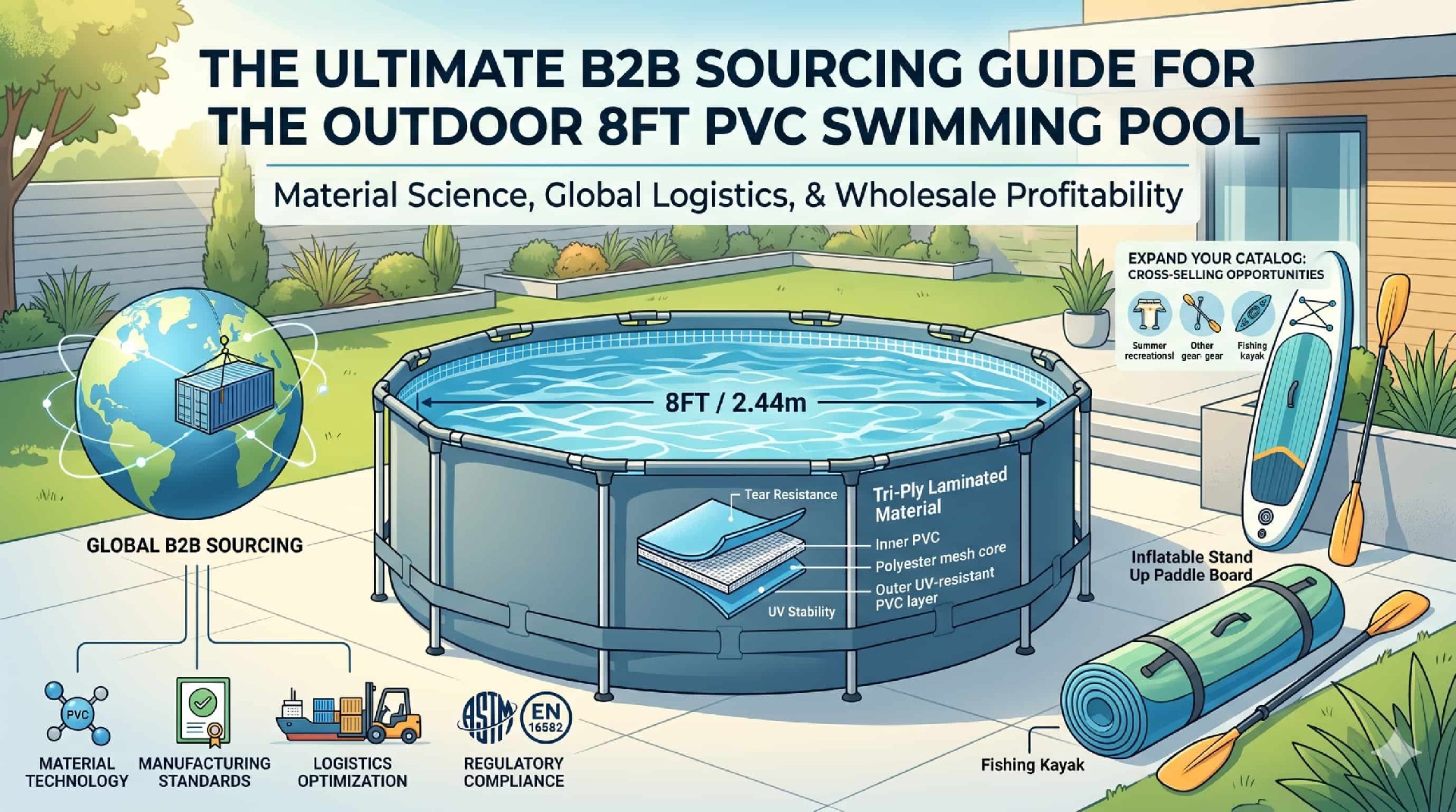
Modern, commercial-grade 8FT pools rarely utilize single-ply vinyl. Instead, they rely on a robust, three-ply laminated architecture (often referred to industry-wide as TriTech or DuraPlus, depending on the OEM).
Inner Layer: A dense layer of heavy-gauge PVC that provides immediate water retention and a smooth, non-abrasive surface for bathers.
Core Layer: A tightly woven polyester mesh or nylon scrim. This is the structural backbone of the material. It prevents stretching, tearing, and deformation under the massive outward hydrostatic pressure exerted by hundreds of gallons of water.
Outer Layer: A final layer of thick, UV-treated, and abrasion-resistant PVC designed to protect the core mesh from environmental hazards, sharp objects, and prolonged sun exposure.
This triple-layer extrusion process results in a material that boasts exceptional tensile strength and puncture resistance. When auditing a new supplier, B2B buyers should request the "denier" count of the internal polyester mesh (a higher denier indicates a thicker, stronger structural thread) and the overall material thickness, typically measured in millimeters or gauge. A standard specification for a high-quality 8-foot pool is a minimum thickness of 0.40mm to 0.55mm for the sidewalls, ensuring it can withstand rigorous family use.
Manufacturing and Quality Control Standards in Pool Production
The factory floor is where raw materials are transformed into profitable retail commodities. Understanding the manufacturing processes allows importers to distinguish between top-tier original equipment manufacturers (OEMs) and sub-standard assembly lines.
High-Frequency (HF) Welding Techniques
The structural integrity of an outdoor PVC pool is entirely dependent on its seams. Traditional gluing or heat sealing is insufficient for containing the dynamic forces of shifting water and human activity. Premium manufacturers utilize High-Frequency (HF) welding (also known as Radio Frequency welding).
In this process, the two pieces of multi-layered PVC are pressed together between two metal electrodes. High-frequency electromagnetic energy (typically around 27.12 MHz) is passed through the material. This energy causes the polarized molecules within the PVC to rapidly oscillate, generating intense, localized heat from the inside out. The material briefly melts and fuses under pressure, creating a seam that is often stronger than the surrounding material itself. HF welding creates an air-tight and water-tight bond without the introduction of foreign adhesives that could degrade over time or react poorly to pool chemicals.
International Safety Certifications and Compliance
Navigating the global regulatory landscape is a primary responsibility for any B2B importer. Products intended for aquatic recreation face strict scrutiny from customs and consumer protection agencies worldwide.
ASTM F2666 (United States): This standard specification covers the safety requirements for above-ground pools, including structural integrity, warning labels, and entrapment hazards.
EN 16582 (European Union): The European standard for domestic swimming pools, which dictates rigorous testing for material strength, water tightness, and chemical safety.
REACH / CPSIA Compliance: Beyond structural safety, the chemical makeup of the PVC is heavily regulated. The European REACH directive and the US Consumer Product Safety Improvement Act (CPSIA) strictly limit the presence of certain harmful phthalates (such as DEHP, DBP, and BBP) and heavy metals (like lead and cadmium) in products accessible to children.
Importing non-compliant inventory can result in catastrophic container rejections at the port of entry, heavy fines, and forced product recalls. Verified B2B buyers must always request valid, third-party laboratory testing certificates (from facilities like SGS, Intertek, or TUV Rheinland) before initiating wire transfers for mass production.
B2B Procurement Strategies for Importers and Wholesalers
Success in the cross-border trade of outdoor recreational equipment relies on strategic procurement and meticulous supply chain management. The lowest Free On Board (FOB) price rarely equates to the highest net profit once logistics, quality control, and after-sales support are factored into the equation.
Assessing Supplier Capabilities and Lead Times
When sourcing 8FT PVC swimming pools, primarily from manufacturing hubs in East Asia, buyers must look beyond the Alibaba storefront or trade show booth. A comprehensive factory audit is essential. Key indicators of a reliable OEM partner include:
Production Capacity and Scalability: Can the factory scale production up during the peak buying season (typically October through February for Northern Hemisphere summer delivery)?
In-House Quality Assurance (QA): Do they conduct 100% inflation and water-retention testing for a minimum of 24 to 48 hours before deflation and packaging? Do they perform batch testing for tensile strength and seam burst pressure?
Tooling and Customization (ODM/OEM): A superior supplier will own their tooling and molds, allowing B2B buyers to customize pool dimensions, print proprietary patterns on the PVC (like mosaic tile interiors or rattan-style exteriors), and design bespoke retail packaging.
Lead times in the inflatable pool industry are highly cyclical. Importers must issue purchase orders (POs) at least 120 to 150 days prior to their desired retail launch date. Failing to account for the Lunar New Year shutdown in major manufacturing countries can completely derail a summer sales campaign.
Cost Breakdown: Freight, Tariffs, and Margin Optimization
The physical volume of above-ground pools makes freight a dominant factor in the landed cost analysis. B2B profitability requires an obsessive focus on packaging engineering.
A standard 8FT pool must be folded and vacuum-compressed with extraordinary precision to minimize carton dimensions. For example, by shaving just one inch off the master carton's length through better folding techniques, an importer might fit an additional 150 units into a 40HQ container. At current trans-Pacific freight rates, this optimization can reduce the per-unit shipping cost significantly, directly padding the gross margin.
Furthermore, tariff engineering plays a role. Importers must ensure the correct Harmonized System (HS) codes are applied. Misclassification can lead to paying artificially high duties or facing customs audits. Partnering with a specialized freight forwarder and customs broker who understands the nuances of sporting goods and plastic articles is a non-negotiable B2B strategy (Source: Gartner Supply Chain Risk Report, 2024).
Cross-Selling and Inventory Expansion for Outdoor Retailers
B2B wholesale is not just about moving single SKUs; it is about providing retail partners with cohesive, high-margin product ecosystems. Once a consumer commits to purchasing an 8-foot pool, they are mentally preparing for an active, outdoor lifestyle, making them prime targets for complementary recreational equipment.
Pairing Pools with Other Summer Equipment
Retailers who treat the 8FT PVC pool as an anchor product can dramatically increase their average order value (AOV) by intelligently merchandising related outdoor gear. For example, a customer outfitting their summer lake house or expanding their backyard repertoire is highly likely to be interested in adjacent water sports.
Offering a bundled promotion or placing an
Similarly, expanding the catalog to include items like a robust
Seasonal Inventory Management and Cash Flow
The seasonal nature of outdoor recreation equipment requires aggressive, data-driven inventory management. Over-ordering leads to massive warehousing costs during the off-season, while under-ordering results in stockouts and lost revenue during the brief, intense summer peak.
B2B buyers should negotiate staggered delivery schedules with their factories. Instead of receiving a massive influx of inventory in March, smart buyers arrange for shipments to arrive in waves—March, April, and May. This preserves cash flow, minimizes domestic warehousing requirements, and allows the buyer to pivot or cancel later orders if early-season retail sell-through data indicates a softer-than-expected market.
Future Trends in Eco-Friendly PVC and Smart Pool Technologies
The B2B landscape is never static. To maintain a competitive edge, wholesalers and retailers must anticipate the technological and environmental shifts that will define the next generation of outdoor recreational products.
The Shift Toward Phthalate-Free and Recycled Materials
Environmental, Social, and Governance (ESG) criteria are becoming increasingly important, not just for corporate reporting, but as a genuine consumer purchasing driver. The traditional reliance on virgin PVC and aggressive chemical plasticizers is facing significant pushback.
Leading manufacturers are investing heavily in R&D to develop bio-based plasticizers and alternative polymers like Thermoplastic Polyurethane (TPU) that offer the flexibility and strength of PVC without the associated environmental footprint. Furthermore, closed-loop manufacturing processes, where scrap PVC is reground and re-extruded into the core layers of new pools, are becoming the gold standard for factory efficiency. B2B buyers who can market their 8FT pools as "Phthalate-Free" or "Manufactured with 30% Recycled Content" will command a significant premium and secure shelf space in eco-conscious major retail chains.
Integrated Filtration and Smart Monitoring
The future of above-ground pools lies in reducing the maintenance burden on the end-user. We are moving away from simple water-holding bladders to integrated aquatic systems.
Emerging trends include OEM pools that feature built-in, low-voltage LED lighting systems integrated directly into the PVC seams, and advanced, ultra-quiet cartridge filtration pumps included as standard equipment. More impressively, the integration of IoT (Internet of Things) technology is reaching the affordable pool market. Smart water monitors that float in the 8FT pool, continuously analyzing pH, chlorine levels, and temperature, and sending real-time push notifications to the user's smartphone, are transforming the user experience. By sourcing pools that are "Smart-Ready" or bundled with these digital tools, B2B distributors can position their inventory as premium, cutting-edge solutions in a crowded marketplace.
FAQs: Top 8 Questions from B2B Pool Buyers
1. What is the expected lifespan of a commercial-grade 8FT PVC pool?
With proper seasonal storage, UV-resistant 3-ply PVC pools typically last between 3 to 5 years. Lifespan is highly dependent on chemical maintenance, tear prevention, and ensuring the pool is completely dry before winterization to prevent mold degradation.
2. How many units of an 8FT pool generally fit in a 40HQ container?
Depending on the specific carton dimensions, inclusion of accessories (like pumps and ladders), and palletization strategies, a standard 40-foot High Cube container can usually accommodate between 1,200 to 1,500 densely packed 8FT pool units.
3. What certifications are absolutely required to import PVC pools to the US and EU?
For the US, you must comply with ASTM F2666 and CPSIA (limiting lead and phthalates). For the EU, CE marking, EN 16582 compliance, and strict adherence to REACH directives regarding chemical composition and toxicity are legally mandatory.
4. What is the technical difference between standard PVC and 3-ply laminated PVC?
Standard PVC is a single extruded layer, vulnerable to stretching and punctures. 3-ply laminated PVC sandwiches a high-tensile polyester or nylon mesh core between two layers of dense PVC, dramatically increasing structural rigidity, tear resistance, and load-bearing capacity.
5. How should B2B buyers handle winterization warranties and end-user claims?
B2B buyers should negotiate an agreed-upon defective allowance (typically 1-2%) directly with the manufacturer to offset inevitable end-user claims. Warranties generally cover factory seam failures but explicitly exclude damage from freezing water or improper winter storage.
6. Can these pools be customized with OEM branding and specific pantone colors?
Yes. Most reputable manufacturers offer full OEM/ODM services. If you meet the Minimum Order Quantity (MOQ)—usually ranging from 500 to 1,000 units—you can dictate custom PVC colors, bespoke interior mosaic prints, and fully customized retail box packaging.
7. What are the common manufacturing lead times during peak production season?
During the peak season (October to February), lead times stretch significantly. B2B buyers should anticipate 45 to 60 days for production, plus an additional 30 to 40 days for ocean freight and customs clearance. Advance planning is critical.
8. Are eco-friendly, phthalate-free PVC pools more expensive to manufacture?
Currently, bio-based plasticizers and specialized phthalate-free PVC blends command a 10% to 15% premium at the factory level compared to standard formulations. However, this cost is often offset by the ability to retail the product at a higher price point to environmentally conscious consumers.
Conclusion
Sourcing the optimal Outdoor 8FT PVC Swimming Pool requires far more than simply finding the lowest price on a B2B marketplace. It demands a rigorous understanding of polymer chemistry, structural manufacturing processes, international safety compliance, and highly optimized supply chain logistics. By prioritizing multi-layered, UV-resistant PVC, demanding strict High-Frequency welding standards, and implementing intelligent cross-selling strategies with related aquatic gear, wholesalers and retailers can secure robust margins and dominate the summer recreational market.
Take action today: Evaluate your current supplier's material specifications, request their latest third-party compliance certificates, and begin planning your container optimization strategy for the upcoming peak season to ensure maximum profitability.
