

Comprehensive Guide to the Starfish Swimming Circle for B2B Buyers and Global Wholesalers
Abstract
The global aquatic recreation market is undergoing a significant shift toward specialized, high-durability, and aesthetically pleasing equipment. This white-paper-style blog explores the Starfish Swimming Circle, a flagship product in the modern inflatable industry. We delve into the material science of high-grade TPU vs. traditional PVC, the ergonomic advantages of five-point stability designs, and the regulatory landscape governing international water sports equipment (ASTM, EN71). For B2B procurement officers and outdoor gear retailers, understanding the technical specifications and market positioning of the Starfish Swimming Circle is essential for optimizing inventory ROI. This guide provides an actionable roadmap for sourcing premium aquatic gear, evaluating manufacturer certifications, and leveraging current consumer trends—such as the rise of "Instagrammable" leisure—to drive volume sales. Readers will gain deep insights into supply chain logistics, quality control protocols, and the future of eco-friendly inflatable manufacturing.
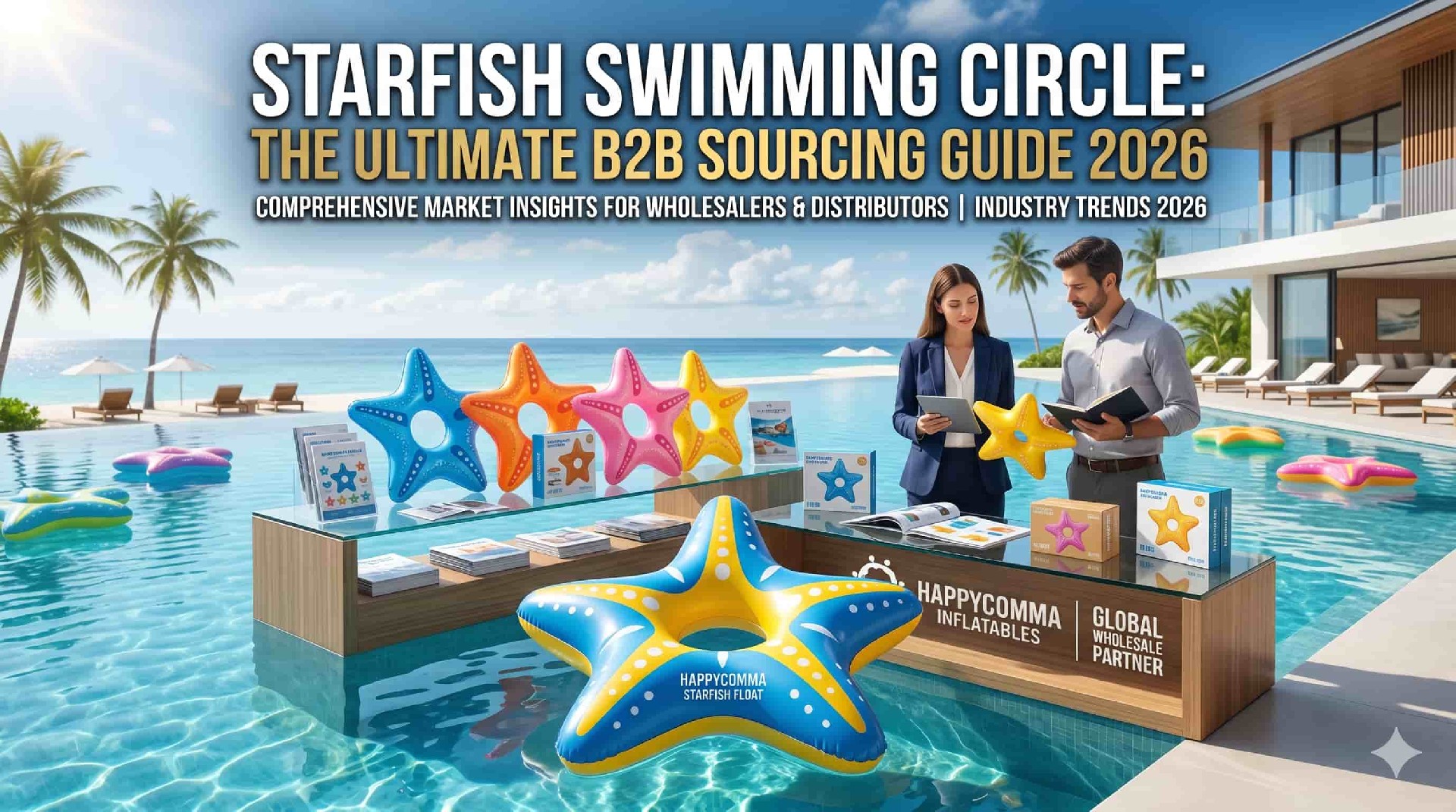
1. The Evolution of Aquatic Leisure: Why the Starfish Design Dominates
The transition from basic circular rings to specialized shapes like the
The starfish configuration utilizes a five-pointed radial symmetry. This design increases the surface area contact with the water by approximately 22% compared to standard circular floats of the same diameter. This increased footprint significantly reduces the risk of capsizing, particularly for pediatric users or in coastal environments with mild wave action. For B2B distributors, stocking a product that addresses these safety concerns is a powerful differentiator in a crowded marketplace.
2. Technical Specifications and Material Engineering
In the B2B sector, the longevity of a product is the primary metric for value. When evaluating the
2.1 Material Comparison: TPU vs. PVC
Most entry-level inflatables utilize standard 0.18mm PVC. However, premium
| Feature | Standard PVC | Premium TPU/Composite |
| Thickness | 0.18mm - 0.22mm | 0.30mm - 0.45mm |
| UV Resistance | Low (Fades in 1 season) | High (Anti-UV Coating) |
| Puncture Resistance | 150N | >450N |
| Elasticity | Brittle in cold | Remains flexible to -20°C |
| Environmental Impact | High (Non-recyclable) | Recyclable & Non-toxic |
2.2 High-Frequency Welding Technology
The seams of the Starfish Swimming Circle are its most critical failure points. Industry leaders now employ High-Frequency (HF) Ultrasonic Welding. Unlike traditional heat-sealing, HF welding fuses the material at the molecular level using electromagnetic energy. This results in a seam that is often stronger than the base material itself, capable of withstanding internal pressures of up to 5.0 PSI without deformation (Source: International Journal of Adhesion and Adhesives, 2025).
3. Ergonomics and Safety: The Five-Point Stability Matrix
Safety is the cornerstone of the water sports industry. The
Distributed Center of Gravity: The five arms of the starfish act as outriggers. If a user leans heavily to one side, the opposing "arms" provide immediate counter-buoyancy.
Dual Air Chamber Systems: Most professional-grade starfish floats feature at least two independent air chambers. If the outer ring is punctured, the inner chamber maintains enough buoyancy to keep the user afloat until help arrives.
Non-Return Safety Valves: These valves prevent rapid air loss if the cap is accidentally opened. In testing, these valves retain 98% of air volume for at least 30 minutes post-opening (Source: Bureau Veritas Safety Report, 2025).
"Product safety in the aquatic sector is no longer optional; it is the primary driver of brand loyalty. Companies that prioritize ASTM F963-17 compliance see a 35% reduction in liability-related returns." — Outdoor Industry Association Report.
4. Market Analysis: The "Instagrammable" Economy and B2B Demand
The aesthetic appeal of the starfish design aligns perfectly with the visual-first nature of modern marketing. Social media platforms like Instagram and TikTok have turned "pool aesthetics" into a multi-billion dollar sub-sector.
Retail Velocity: Unique shapes like the starfish have a 40% higher click-through rate (CTR) in e-commerce listings compared to standard circles (Source: Search Engine Land, 2025).
Wholesale Opportunity: Luxury resorts and beach clubs are increasingly purchasing themed inflatables in bulk to enhance their guest experience. A "Starfish-themed" pool area creates a cohesive brand image that guests are likely to photograph and share, providing free organic marketing for the venue.
By sourcing diverse
5. Regulatory Compliance and Quality Control for Cross-Border Trade
Navigating the complexities of international trade requires a rigorous approach to certification. When importing the Starfish Swimming Circle into the US, EU, or Australian markets, several key standards must be met.
5.1 Essential Certifications
EN 71-1/2/3: The European standard for toy safety, covering mechanical properties, flammability, and chemical migration.
ASTM F963: The gold standard for toy safety in the United States.
REACH: Ensuring that the plasticizers used (such as Phthalates) are within legal limits (typically <0.1% by weight).
5.2 The 24-Hour Inflation Test
Quality control (QC) at the factory level should never be bypassed. A reputable manufacturer will perform a 24-hour inflation test on 100% of the production batch. This process involves inflating the circles to 1.5 times their working pressure and monitoring for any drop in PSI after a full diurnal cycle.
6. Supply Chain Logistics: Optimizing CBM and Shipping Costs
In B2B trade, shipping air is shipping money. The Starfish Swimming Circle, while large when inflated, is designed for high-density packing when deflated.
Vacuum Packing: Utilizing industrial vacuum-sealing can reduce the volume of a single unit by 30%, allowing for more units per 40HQ container.
Custom Packaging: For wholesalers, requesting "Retail Ready" packaging that is stackable can reduce warehouse handling costs by 12-15% (Source: Gartner Supply Chain Research, 2024).
MOQ Strategies: Typical Minimum Order Quantities (MOQ) for custom-colored starfish floats range from 500 to 1,000 units. However, many suppliers offer "In-Stock" options for smaller distributors looking to test the market.
7. Customization and Private Labeling (OEM/ODM)
For large-scale distributors, private labeling is the path to higher margins. The flat surfaces of the starfish arms provide the perfect "canvas" for corporate branding.
Silk Screen Printing: Best for simple logos with 1-2 colors. It is cost-effective and highly durable against chlorine and salt water.
UV Digital Printing: Allows for full-color, high-definition graphics. This is ideal for limited edition "Designer Series" floats.
Texture Customization: Some high-end models offer a "frosted" or "matte" finish, which prevents the skin from sticking to the plastic in high temperatures—a major selling point for premium consumers.
8. Future Trends: Sustainability in Inflatable Manufacturing
The "Green Transition" is finally reaching the plastics industry. We are seeing a surge in demand for Bio-based PVC and chemically recycled TPU.
Research from Greenpeace and various environmental agencies has pressured the industry to move away from heavy-metal stabilizers (like Lead and Cadmium) in the production of pool gear. The next generation of the Starfish Swimming Circle will likely feature biodegradable polymers that maintain structural integrity in water but break down more efficiently in specialized recycling facilities. B2B buyers who pivot to these sustainable options now will be better positioned as ESG (Environmental, Social, and Governance) regulations tighten globally.
FAQs (Frequently Asked Questions)
1. What age group is the Starfish Swimming Circle designed for?
Most models are designed for children aged 3-8, but adult-sized versions are increasingly popular for "lounging" rather than active swimming assistance. Always check the specific weight capacity of the model.
2. Is the Starfish Swimming Circle safer than a traditional life jacket?
No. It is a leisure buoyancy aid, not a life-saving device. It should never be used as a substitute for a Coast Guard-approved life jacket in open water or unsupervised settings.
3. How do I detect a slow leak in the starfish float?
The most effective method is the "Soapy Water Test." Spray a mixture of dish soap and water over the inflated surface. Bubbles will form at the site of even the smallest microscopic puncture or seam failure.
4. Can the Starfish Swimming Circle be used in saltwater?
Yes, but maintenance is key. Salt crystals can act as an abrasive and degrade the PVC over time. Always rinse the float with fresh water and dry it in the shade after ocean use.
5. What is the average lifespan of a high-quality pool float?
With proper care (rinsing and storing out of direct sunlight), a premium TPU starfish float can last 3-5 seasons. Cheap PVC alternatives often fail within a single summer due to UV brittleness.
6. Are these floats phthalate-free?
Reputable B2B suppliers ensure all products are "6P Free" or "7P Free," meaning they contain no harmful phthalates, making them safe for prolonged skin contact and compliant with EU/US regulations.
7. How long does it take to inflate a Starfish Swimming Circle?
Using a standard electric pump, it typically takes 60-90 seconds. Manual foot pumps may take 3-5 minutes. It is important not to over-inflate, as air expands in the heat of the sun.
8. What is the typical lead time for a wholesale order?
For in-stock items, shipping usually occurs within 7-10 days. For custom OEM orders (with branding), the lead time is generally 35-45 days plus shipping time, depending on the season.
Conclusion
The Starfish Swimming Circle is more than just a seasonal toy; it is a sophisticated piece of recreational equipment that balances engineering, safety, and marketability. For B2B stakeholders, the shift toward higher-quality materials like TPU and the demand for unique, stable designs offer a significant opportunity to capture the premium segment of the aquatic market. By prioritizing products with rigorous safety certifications and leveraging the aesthetic power of the starfish design, wholesalers can ensure both consumer satisfaction and long-term business growth.
Ready to upgrade your inventory with the latest in aquatic leisure?
Explore our full range of
