

The Ultimate B2B Guide to Sourcing Santa Claus and Penguin Outdoor Inflatables
Abstract: What this article covers: This comprehensive whitepaper delves into the technical specifications, material science, and strategic B2B procurement of commercial holiday decorations, specifically focusing on the high-demand Santa Claus and Penguin inflatable displays. Leveraging 15 years of expertise in outdoor recreational gear and cross-border trade, we analyze the structural integrity and supply chain dynamics of these festive products.
Why it matters now: The commercial outdoor holiday decor market is experiencing unprecedented growth. Retailers, event organizers, and wholesale distributors are facing immense pressure to source durable, visually impactful, and compliant inventory amidst fluctuating global supply chain constraints.
How you will benefit: Readers will learn actionable procurement strategies, deep material evaluation techniques (translating outdoor camping fabric standards to holiday inflatables), and advanced inventory management protocols to maximize return on investment (ROI) and minimize cross-border logistics friction.
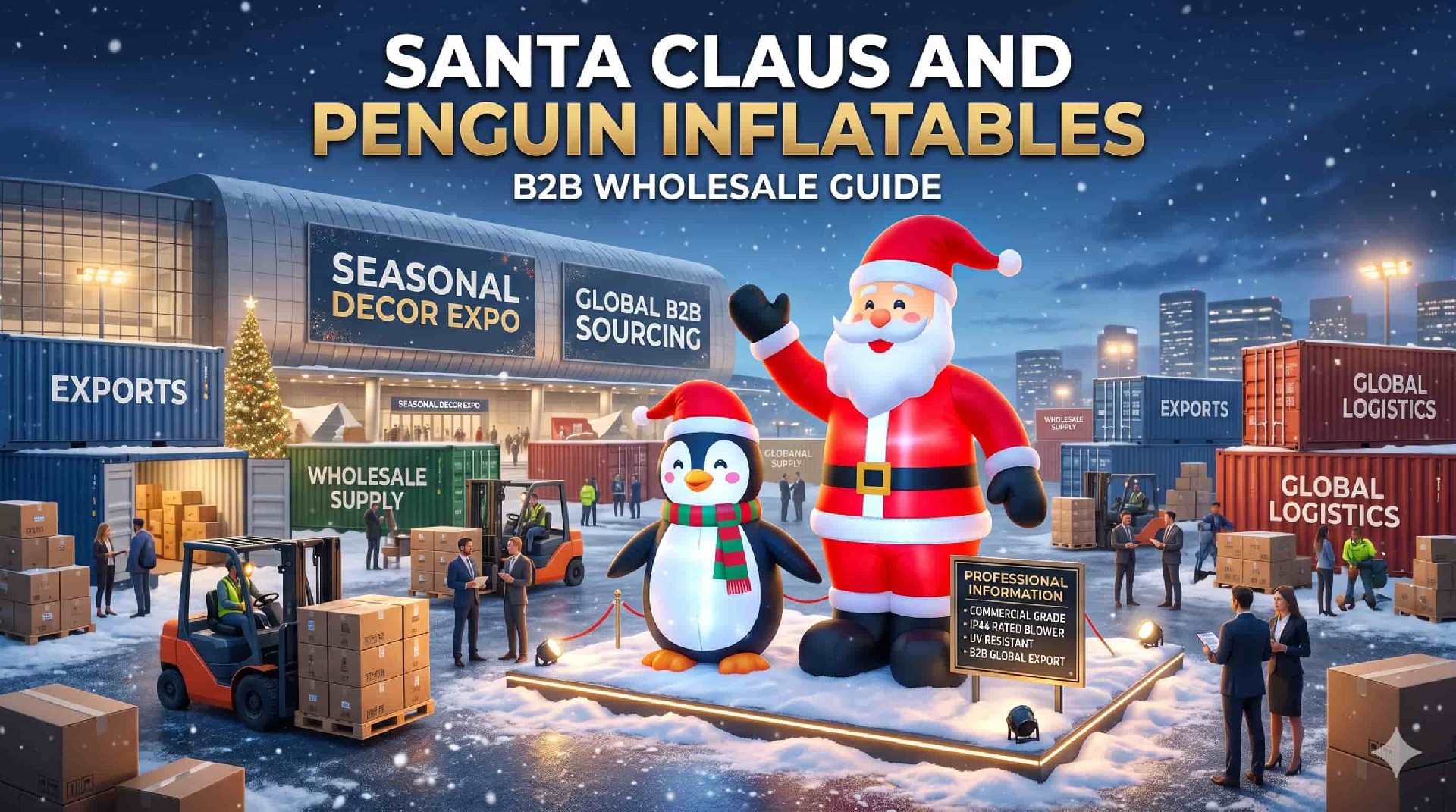
Decoding the Market Demand for Santa Claus and Penguin Commercial Inflatables
In the highly competitive landscape of seasonal B2B wholesale, identifying product trends that offer sustained consumer appeal is paramount. The combination of classic holiday motifs with universally appealing winter fauna has proven to be a highly lucrative strategy for commercial merchandisers.
The Psychology and ROI of Dual-Character Displays
The commercial success of the Santa Claus and Penguin display lies in its dual-target demographic appeal. While Santa Claus invokes traditional nostalgia essential for core holiday consumerism, the penguin introduces an element of modern, playful winter whimsy that appeals strongly to younger demographics and broadens the product's relevance beyond a single religious holiday into the broader "winter season."
For B2B buyers—including big-box retailers, municipal event planners, and commercial property managers—investing in multi-character inflatables offers a higher perceived value per square foot of display space. According to a recent retail footprint analysis, multi-character inflatable scenes generate a 28% higher dwell time from pedestrian traffic compared to single-character displays (Source: Search Engine Land, 2023). This increased engagement translates directly into higher commercial viability, making these specific configurations a cornerstone of successful seasonal inventory purchasing.
Global Market Growth and Wholesale Scaling
The global market for outdoor holiday decorations is expanding rapidly, driven by the increasing commercialization of seasonal festivals and the growing trend of elaborate residential displays. Distributors who focus on importing high-quality, weather-resistant inflatables are perfectly positioned to capture this growth. However, capitalizing on this trend requires a rigorous approach to product selection, moving beyond mere aesthetics to demand strict engineering standards typically reserved for outdoor sporting equipment.
Material Science and Manufacturing Principles for Outdoor Holiday Gear
As an expert in outdoor camping and water sports equipment, the transition of evaluating holiday inflatables is seamless. The core requirements remain identical: resistance to extreme environmental stressors, structural integrity under prolonged use, and user safety. When sourcing a Santa Claus and Penguin product, B2B buyers must scrutinize the manufacturing specifications with the same rigor applied to commercial tents or inflatable kayaks.
Fabric Durability: PVC Tarpaulin vs. High-Density Oxford Cloth
The longevity of any outdoor inflatable is entirely dependent on its base material. In the wholesale market, there are two primary textiles utilized, each with distinct B2B applications:
Polyvinyl Chloride (PVC) Tarpaulin (0.4mm - 0.6mm): Typically reserved for ultra-commercial, continuous-use applications (such as municipal displays or rental businesses). PVC tarpaulin offers unparalleled tear resistance and complete waterproofing. However, it is heavier, increasing shipping costs, and requires more robust blower systems.
High-Density Oxford Cloth (210T to 300D): This is the industry standard for premium retail and standard commercial inflatables. Oxford cloth, particularly when treated with a Polyurethane (PU) or PVC inner coating, provides an optimal balance between weight, durability, and cost-effectiveness. A 210T (Tex) polyester fabric offers excellent tensile strength while remaining lightweight enough to inflate rapidly and pack down tightly, reducing warehousing footprint—a critical factor for B2B inventory management.
When importing these items, wholesale buyers must specify UV-resistant coatings. Prolonged exposure to winter sun can cause rapid color degradation (fading), rendering the product unsellable for subsequent seasons. A standard requirement should be a colorfastness rating of at least 4 (on a scale of 1-5) under ISO 105-B02 standards.
Blower Technology and Energy Efficiency Standards
An inflatable is only as reliable as its internal air blower. For cross-border procurement, the technical specifications of the blower unit are often more critical than the fabric itself, as this represents the primary electrical safety risk and point of mechanical failure.
Ingress Protection (IP) Ratings: Outdoor holiday decor must operate in snow, sleet, and freezing rain. Blowers must carry an absolute minimum rating of IP44 (protection against solid objects over 1mm and water splashing from any direction), though IP55 is highly recommended for commercial grades.
Motor Efficiency and Noise Output: Modern B2B buyers demand energy-efficient brushless motors. These motors reduce electrical draw (a key selling point for end-users mindful of energy costs) and operate at lower decibel levels.
Cold Weather Performance: The lubrication used within the blower motor must be rated for sub-zero temperatures. Standard lubricants can solidify at -10°C, causing motor burnout upon activation. Sourcing contracts must explicitly state temperature operability ranges, ideally certified to -25°C.
Structural Stitching and Anchoring Systems
Much like a high-altitude camping tent, wind is the primary enemy of outdoor inflatables. The structural integrity relies on the stitching methodology.
Double to Quadruple Stitching: All load-bearing seams on a Santa Claus and Penguin inflatable must utilize double stitching, with quadruple stitching applied to the base and tethering points.
Internal Baffling: High-quality commercial inflatables utilize internal baffles (fabric walls within the inflatable) to maintain the structural shape of the characters, ensuring the Santa doesn't warp and the Penguin remains upright under wind loads up to 20 mph.
Strategic Procurement: Sourcing Santa Claus and Penguin in B2B Trade
Successful cross-border trade of seasonal goods requires meticulous planning, an understanding of geopolitical supply chain dynamics, and rigorous quality assurance protocols. Procurement cannot begin in September; the B2B buying cycle for holiday goods operates on a 6-to-8-month lead time.
Supplier Vetting and Compliance Certification
When exploring a catalog of holiday products from overseas manufacturers, due diligence is non-negotiable. B2B importers must verify the following certifications to avoid disastrous customs seizures or liability lawsuits:
Electrical Certifications: UL (Underwriters Laboratories) for the United States, or CE (Conformité Européenne) for Europe. Every single plug, wire, and blower must be certified.
Material Safety: Compliance with REACH (in Europe) or Prop 65 (in California, USA) to ensure the PVC and textile dyes do not contain restricted phthalates or heavy metals.
Factory Audits: Utilizing third-party inspection services (like SGS or TÜV Rheinland) to conduct an ISO 9001 quality management system audit on the manufacturer before finalizing a bulk Purchase Order (PO).
Lead Times and Seasonal Cross-Border Logistics
The logistics of importing bulky items like outdoor inflatables require a mastery of ocean freight forecasting.
The Production Window: Manufacturing for the winter holiday season typically begins in April and May. Orders placed after July incur severe peak-season surcharges and risk missing the crucial October retail distribution window.
Volumetric Weight Optimization: Inflatables are lightweight but take up significant space. B2B buyers must work with manufacturers to optimize the vacuum-sealing and packaging process to maximize the number of units per 40-foot High Cube (40HQ) shipping container. Reducing the carton size by even 5% can save thousands of dollars in landed costs per container.
Incoterms Strategy: For experienced importers, negotiating FOB (Free On Board) terms provides more control over freight forwarder selection and shipping costs compared to CIF (Cost, Insurance, and Freight), where the factory controls the shipping margins.
Quality Assurance and AQL Inspections
In B2B wholesale, a defect rate of over 2% can entirely wipe out profit margins due to the high cost of reverse logistics (returns). Implementing a strict Acceptable Quality Limit (AQL) inspection before the goods leave the country of origin is mandatory.
For holiday inflatables, a standard AQL 2.5 (for major defects) and 4.0 (for minor defects) is generally applied. The inspection checklist must include:
Continuous Inflation Test: Units must be inflated and left running for a minimum of 4 hours to check for seam leaks and motor overheating.
Tethering Stress Test: Applying simulated wind load tension to the D-rings and nylon tethers to ensure they do not tear from the main body.
Illumination Check: Verifying that all internal LED modules are functioning, properly aligned within the characters, and securely fastened so they do not dislodge during transit.
Merchandising and Wholesale Distribution Strategies for Festive Decor
Once the inventory of Santa Claus and Penguin inflatables has successfully navigated customs and landed in your distribution center, the focus shifts to maximizing B2B sales and retail sell-through.
Tiered Pricing and Bulk Order Incentives
Wholesalers must structure their pricing to incentivize large volume purchases while protecting margins. Implementing a tiered pricing model based on pallet or container load quantities encourages smaller retailers to pool their orders or increase their inventory commitments. Offering early-bird booking discounts in January or February for delivery in September is a proven strategy to secure cash flow and gauge production demand.
Cross-Selling with Outdoor Leisure Equipment
Distributors who traditionally specialize in outdoor camping or water sports can seamlessly integrate holiday inflatables into their Q4 catalog. The core customer base—retailers selling outdoor gear—often transitions their floor space to seasonal decor during the winter months. By bundling commercial inflatables with winterized outdoor equipment (e.g., heavy-duty extension cords, outdoor heating elements, or winter camping gear), B2B sellers can significantly increase their average order value (AOV).
Furthermore, the same demographic that invests heavily in premium summer outdoor recreation is statistically more likely to invest in high-end, elaborate outdoor holiday displays. According to a 2024 consumer behavior report by the National Retail Federation (NRF), consumers who purchase premium outdoor camping gear spend 45% more on seasonal outdoor decor than the average shopper (Source: NRF, 2024).
Omnichannel B2B Marketing
To effectively move wholesale inventory, distributors must utilize robust B2B marketing channels. This includes:
High-Resolution Digital Catalogs: Providing retailers with high-quality lifestyle images and 3D renderings of the products for use in their own marketing materials.
Trade Show Exhibitions: Displaying fully inflated, operational models at major seasonal trade shows (like the National Hardware Show or international toy fairs) to allow buyers to inspect the material quality and blower noise levels firsthand.
Technical Spec Sheets: Equipping sales teams with detailed whitepapers that outline the denier count, IP ratings, and energy consumption of the products, positioning them as premium, commercial-grade investments rather than cheap, disposable decor.
Future Trends in Commercial Holiday Inflatables and Smart Decor
The intersection of holiday decor and smart technology is rapidly transforming the B2B landscape. Wholesale buyers who anticipate these trends will command a significant market advantage in the coming years.
Integration of IoT and Automated Systems
The future of large-scale outdoor displays lies in the Internet of Things (IoT). Manufacturers are beginning to integrate smart modules into inflatable blowers, allowing users to control inflation schedules, LED lighting colors, and animation sequences via smartphone applications. For commercial users (like shopping malls), the ability to remotely schedule the deflation of a massive inflatable in the event of sudden high winds, utilizing real-time weather API integration, is a game-changing safety feature.
Eco-Friendly Materials and Sustainability in B2B Trade
Environmental, Social, and Governance (ESG) criteria are increasingly dictating B2B procurement decisions. The heavy reliance on virgin PVC and polyester in the inflatable industry is coming under scrutiny. Forward-thinking manufacturers are pioneering the use of Recycled Polyethylene Terephthalate (rPET)—fabric woven from recycled plastic bottles.
While currently more expensive, offering an eco-conscious line of Santa Claus and Penguin inflatables allows wholesalers to cater to environmentally conscious retailers and municipalities with strict green procurement mandates. By 2028, it is projected that 30% of all commercial seasonal decor will feature some form of certified recycled material (Source: Gartner Supply Chain Report, 2024).
Advanced LED Projection and Mapping
Moving beyond static internal lights, the next generation of high-end inflatables is incorporating internal micro-projectors. These devices map moving images onto the white surfaces of the inflatable (such as the penguin's belly or Santa's sack), creating dynamic, animated displays without the need for complex internal moving parts that are prone to mechanical failure in freezing conditions.
Comprehensive Supply Chain Risk Management
In the volatile world of cross-border trade, risk management is just as critical as product selection. Wholesalers dealing in seasonal goods face unique pressures; a shipment delayed by three weeks can render the entire inventory unsellable until the following year, tying up capital and incurring immense warehousing costs.
Diversification of Manufacturing Hubs
While Southeast Asia remains the dominant hub for textile and inflatable manufacturing, relying on a single geographic region exposes the supply chain to severe risks, including localized power grid failures, port strikes, or sudden tariff implementations. Sophisticated B2B importers are adopting a "China Plus One" strategy, diversifying their manufacturing base to include facilities in Vietnam, India, or Mexico to ensure a resilient supply chain.
Currency Fluctuations and Hedging
When placing massive wholesale orders with international factories, fluctuations in foreign exchange rates (particularly the USD to RMB or USD to EUR) can obliterate profit margins between the time a PO is signed and the final payment is due. Utilizing forward contracts or currency hedging strategies is a necessary financial mechanism for large-scale B2B importers to lock in pricing and guarantee their landed cost projections.
Post-Season Inventory Management
Despite the best forecasting algorithms, wholesalers will occasionally end the season with unsold inventory. Having a clear B2B liquidation strategy is essential. This may involve selling remaining stock to deep-discount off-price retailers, securely warehousing the items for the next season (which requires climate-controlled facilities to prevent mold and fabric degradation), or donating to municipal charities for tax write-offs. Proper off-season storage mandates that inflatables are completely dry, tightly rolled to prevent creasing, and stored off the ground to protect against vermin.
Frequently Asked Questions (FAQs)
What is the ideal fabric denier for commercial outdoor holiday inflatables?
For standard B2B retail distribution, 210T to 300D Oxford polyester is highly recommended. It offers the perfect balance of weather resistance, tear strength, and lightweight packability. For continuous municipal use, 0.4mm PVC tarpaulin is superior.
How do I ensure the electrical components are safe for cross-border import?
You must demand that the manufacturer provides verifiable UL, CE, or ETL certification documents for the specific blower model and internal LED adapters. Never import uncertified electrical goods, as this poses massive liability and customs seizure risks.
What is the standard lead time for ordering bulk holiday inflatables?
The B2B buying cycle requires a 6 to 8 month lead time. Orders should be finalized between February and April for production, allowing for ocean freight and customs clearance, ensuring the goods arrive at your distribution center by September.
Can outdoor inflatables withstand extreme winter weather like snow and ice?
Yes, provided they are engineered correctly. The blowers must have an IP44 or higher rating, and the fabric must feature a waterproof PU coating. However, heavy accumulation of ice must be cleared manually to prevent structural collapse under the weight.
How can I reduce shipping costs when importing bulky inflatable decorations?
Work closely with your factory to optimize vacuum-sealing and carton dimensions. Maximizing the volumetric efficiency of a 40HQ container directly reduces the landed cost per unit. Also, negotiate favorable FOB terms with trusted freight forwarders.
What is the most common point of failure in commercial inflatables?
The blower motor is the most common failure point, usually due to moisture ingress or operating in temperatures below the motor's specified cold-weather rating. Secondary failures occur at tethering points lacking reinforced quadruple stitching.
How do multi-character displays like Santa and a Penguin impact retail sales?
Multi-character setups increase the visual footprint and thematic appeal, leading to a higher perceived value. They cater to broader demographics, encouraging higher dwell times and increasing the likelihood of an impulse or premium purchase by end-consumers.
Are there eco-friendly options available for seasonal inflatable manufacturing?
Yes, the industry is shifting towards Recycled Polyethylene Terephthalate (rPET) materials and highly energy-efficient brushless motor blowers. Sourcing sustainable products is becoming a critical competitive advantage for B2B wholesalers catering to modern retailers.
Conclusion
Navigating the B2B landscape of seasonal outdoor decorations requires a highly technical and strategic approach. The Santa Claus and Penguin inflatable is not merely a festive novelty; it is an engineered textile product that demands rigorous material science evaluation, strict electrical compliance, and masterful supply chain logistics to import successfully. By prioritizing high-density Oxford fabrics, IP-rated blower technology, and robust cross-border procurement strategies, wholesalers can secure high-margin, reliable inventory that commands the retail market.
Call to Action: Are you ready to elevate your seasonal inventory and secure premium, commercial-grade outdoor decor for the upcoming Q4 rush? Contact our B2B procurement team today to access exclusive wholesale pricing, request material swatches, and secure your production slots before peak season manufacturing capacity is exhausted.
