

Procurement Pain Points: Why Standard Footprints Fall Short
For commercial outfitters, glamping resort operators, and rental fleets, the integrity of your tent floor is the bedrock of your guest experience and equipment longevity. Many procurement managers overlook a critical piece of the puzzle: the tent groundsheet cushion. Sourcing a standalone groundsheet is a standard practice, but opting for a specialized cushion that sits between the tent floor and the ground is a strategic upgrade. This guide explores the engineering, materials, and quantifiable Return on Investment (ROI) that a high-specification cushion provides, moving beyond basic protection to a full commercial asset.
Without a groundsheet cushion, your high-value inflatable tents or traditional canvas shelters are directly exposed to abrasive surfaces, sharp debris, and damaging moisture. This leads to accelerated wear, increased puncture risk, and ultimately, fleet downtime. The decision to source a dedicated groundsheet cushion is not just about comfort; it is a decision rooted in Total Cost of Ownership (TCO) analysis.
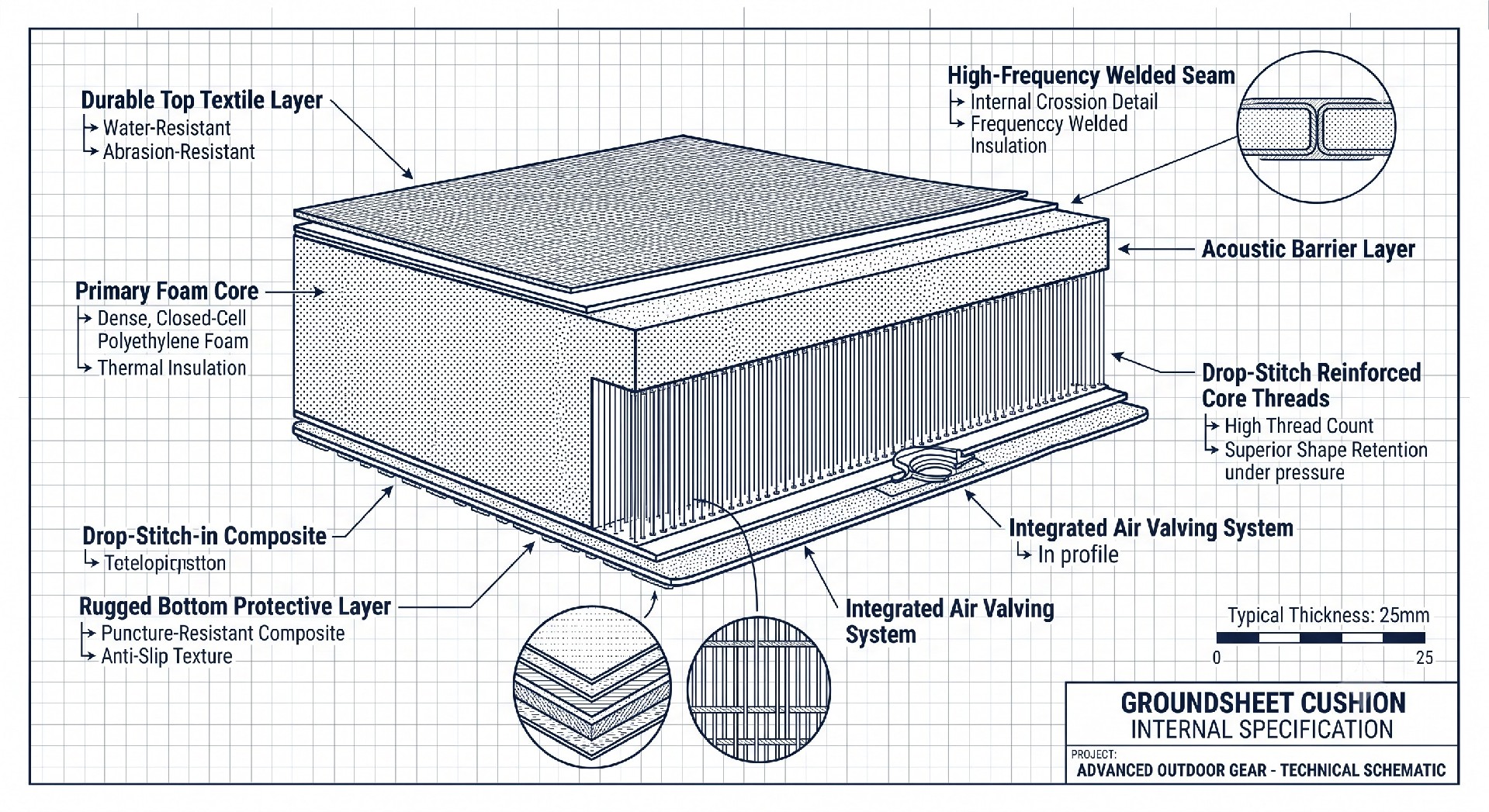
Fabric Technology Deep Dive: The Core of Commercial Durability
The performance of a commercial-grade tent groundsheet cushion is defined by its material science and construction. For B2B applications, we move beyond consumer-grade polyethylene to advanced composites designed for high-frequency use. The most robust options utilize heavy-duty PVC laminates, often reinforced with a high denier count (e.g., 1000D to 1680D) polyester scrim. This combination provides exceptional tensile strength and puncture resistance, crucial for withstanding the daily rigors of setups and takedowns in a rental environment.
Weld Engineering vs. Traditional Seams
In the world of inflatable structures, seam integrity is paramount. Lower-grade alternatives rely on glued seams, which are a common point of failure under fluctuating temperatures and repeated stress. High-end groundsheet cushions employ advanced heat-welded (RF-welded) seams and, in some cases, seam taping. This process molecularly bonds the fabric layers, creating a joint that is as strong, if not stronger, than the surrounding material. This ensures reliable air retention for inflatable cushion variants and prevents delamination. Always look for certifications like ISO 6185 to ensure the manufacturing quality meets international standards for inflatable equipment.
Technical Specifications: Quantifying Performance
When evaluating quotes from overseas suppliers, having a rigorous technical specification sheet is non-negotiable. A comprehensive data matrix allows for direct comparison and ensures the product meets your operational safety and durability requirements. The table below outlines the critical parameters for a tent groundsheet cushion suitable for commercial outdoor operations.
| Key Parameter | Technical Specification |
|---|---|
| Material Composition | Reinforced PVC Laminate / 1100D to 1680D Polyester |
| Seam Construction | High-Frequency Heat-Welded (RF Welded) |
| Maximum Payload / Weight Capacity | e.g., 500 kg / 1100 lbs (Static) |
| Operating Pressure (Inflatable Cushions) | 3-5 PSI (Drop-Stitch Core) |
| Safety Standards | ISO 6185, REACH Compliant, CE Certified |
| Average Deflation Time | < 5 minutes (with high-flow valve) |
Safety Standards and Compliance
Beyond material specifications, ensure your sourcing strategy prioritizes compliance. For the European market, look for adherence to REACH regulations (EC 1907/2006) concerning chemical substances. Additionally, for any inflatable variant, CE certification under the relevant EN norms is essential to guarantee safety and facilitate insurance. These are not just bureaucratic boxes to tick; they are assurances of quality and safety for your clients.
Portability vs. Hard-Shell Alternatives: Operational Efficiency
The primary debate in B2B ground protection is often groundsheet cushion vs. rigid hard-shell systems (like wooden pallets or heavy rubber mats). While hard-shell alternatives offer ultimate durability, they are severely disadvantaged in terms of portability and storage. A high-quality tent groundsheet cushion offers a superior logistical profile: it is lightweight, packs down to a fraction of its inflated or rolled size, and is significantly easier to transport to remote locations. This efficiency directly translates to lower shipping costs and reduced crew fatigue, a key metric often overlooked in initial CapEx comparisons.
For inflatable tent systems, the air-holding capability of a cushion provides a dual function: it creates an insulated air gap that improves thermal comfort and provides a self-leveling surface over minor uneven terrain. This is a significant upgrade over non-inflatable foam pads. One of the most significant return-on-investment points is the lifespan extension of your primary tent assets. By acting as a sacrificial barrier, the cushion absorbs the majority of abrasion and impact, protecting the expensive tent floor from wear and punctures.
[IMAGE_2]
Commercial Use Cases and ROI Strategy
Integrating a tent groundsheet cushion into your fleet is a direct strategy to maximize rental profits and ensure premium guest satisfaction. In a glamping resort scenario, a cushioned floor transforms a standard tent into a luxury suite experience, commanding higher nightly rates. For high-throughput rental operations, the speed of setup is critical; a groundsheet cushion that can be rapidly deployed and deflated using high-volume low-pressure systems is a game-changer.
By adding this product to your B2B sourcing portfolio, you are not just buying a piece of fabric; you are investing in asset protection, operational speed, and enhanced user experience. The long-term savings in tent repairs and replacement, combined with increased rental pricing power, deliver a compelling Total Cost of Ownership (TCO) narrative that any finance director will approve.
Conclusion
Sourcing a high-quality tent groundsheet cushion is a strategic decision for any commercial outdoor business. By focusing on high-denier materials, reinforced welded seams, and rigorous compliance (ISO, CE, REACH), you secure a product that provides tangible returns through asset protection and improved guest experience. Evaluate your needs, prioritize specifications over low upfront cost, and watch your operational longevity and profitability climb.
