

Introduction: The Trunk-Packable Paradigm
For the modern B2B buyer and commercial outfitter, the logistical challenge of transporting inflatable boats is often the primary barrier to fleet expansion. The core value proposition of modern inflatable watercraft is the ability to collapse into a compact, manageable package that fits into a small sedan trunk. However, achieving this requires more than just deflating the chambers; it demands a technical understanding of material science, pressure management, and folding ergonomics. This guide provides a data-driven approach to optimizing transport logistics, focusing on technical specifications, fabric integrity, and proven methodologies to ensure your fleet arrives on-site safely and efficiently.
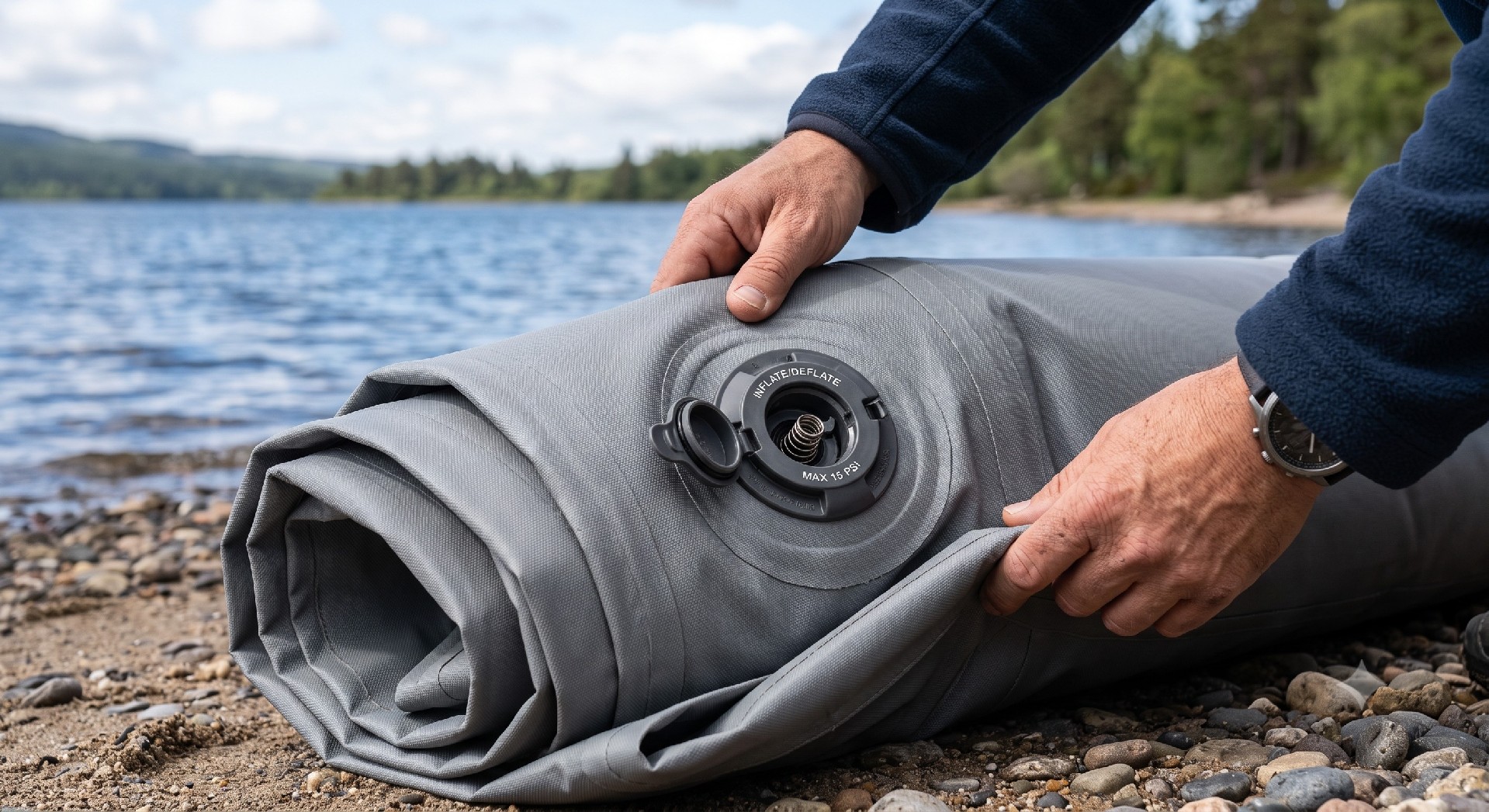
Material Science: The Foundation of Portability
The ease of transport is directly correlated to the fabric's ability to fold and resist crease damage. Commercial-grade inflatables predominantly utilize PVC or Hypalon, each offering distinct advantages in folding dynamics . Heavy-duty PVC, particularly reinforced with a high denier count (e.g., 1000D or 1100D), provides the structural rigidity required for high-pressure drop-stitch floors while remaining pliable enough for tight folding when deflated . A prime example is the combination of 0.9mm thickness with 1100 Denier fabric, as seen in high-performance skiffs, which balances puncture resistance against foldability . Furthermore, the application of double-chine systems and plastic bow/stern molds enhances hull integrity without compromising the compact footprint during storage .
Understanding Drop-Stitch Technology and PSI
Drop-stitch construction is the engineering breakthrough that allows inflatable floors to perform like hard hulls while retaining the ability to deflate flat. This technology utilizes thousands of polyester threads connecting the top and bottom layers of the fabric, creating a rigid, high-pressure core when inflated to optimal PSI levels . For transport efficiency, it is critical to manage PSI limits. While operational pressures can reach up to 15 PSI for floors and 3.25 PSI for side tubes, complete deflation for storage requires opening the valves to relieve all pressure . Failure to release all air can cause creases that may permanently damage the drop-stitch core over time.
Step-by-Step Deflation and Folding Protocol
Professional transport begins with a systematic deflation and folding process to minimize footprint and prevent damage. Adhering to a standardized protocol ensures consistency across fleet operations.
Best Practices for Trunk Packing
Complete Air Evacuation: Open all Boston or high-pressure valves to release internal pressure. For kayaks and canoes, a common technique is to fold the lateral side tubes down onto the floor and roll from the opposite side of the valves to force residual air out .
Rolling vs. Folding: Rolling is generally preferred over sharp folding to prevent creasing and stress on the seams. Ensure the boat is completely dry before rolling to prevent mold and material degradation during storage .
Dimension Management: The packed footprint should be measured against the sedan's trunk opening. Compact models, like the iBoat 160, can achieve packed dimensions as small as 95cm x 45cm x 25cm, fitting into most vehicle trunks . Larger canoes may roll down to 67cm x 44cm x 30cm .
| Key Parameter | Technical Specification | Transport Impact |
|---|---|---|
| Material Thickness (PVC) | 0.9mm / 1100D Reinforced PVC | High tear resistance with flexible foldability for compact storage. |
| Maximum Floor Pressure | Up to 15 PSI (Operational) / 0 PSI (Transport) | Complete deflation is mandatory to prevent crease damage. |
| Tube Pressure | 3.25 PSI (Operational) | Reduction to 0 PSI for trunk packing allows significant volume reduction. |
| Packed Footprint | e.g., 95cm x 45cm x 25cm / 67cm x 44cm x 30cm | Directly determines compatibility with small sedan trunks. |
| Maximum Payload | e.g., 880 lbs (Total Persons & Gear) / 915 lbs | Payload capacity does not affect transport volume, but indicates overall build quality. |
Maximizing Trunk Space and Logistics
Transporting a deflated boat is only half the equation. Managing the ancillary components—paddles, pumps, seats, and outboard motors—is equally crucial. The use of high-pressure drop-stitch floors (0.1 bar/1.5 PSI) and integrated skeg systems, while robust, add bulk to the cargo load . To optimize sedan trunk capacity, B2B buyers should consider investing in high-efficiency pumps and segmented paddle shafts that reduce overall gear volume. Additionally, implementing a color-coded or bagged storage system prevents gear from shifting and causing damage during transit.
Off-Season Storage and Maintenance
Post-transport storage is where many commercial operators face costly repairs. The principle is simple: clean, dry, and store. Inflatables should be stored in a dry, ventilated area away from direct sunlight and extreme temperatures . Heavy or sharp objects must never be placed on the stored boat to prevent punctures and material fatigue . For winterization, it is essential to ensure the boat is stored partially or fully inflated to protect the fabric from creases and the drop-stitch material from taking a permanent set. Routine post-transport checks for UV and abrasion damage will significantly extend the commercial lifespan of the vessel .
[IMAGE_2]
Conclusion: A Strategic Asset
Safe transport of inflatable boats in small sedans is not merely a physical task but a strategic component of B2B fleet management. By understanding the limits of material science—specifically the denier count, PSI limits, and drop-stitch technology—operators can ensure rapid deployment and extended equipment longevity. Implementing a disciplined deflation, rolling, and storage protocol protects your investment and guarantees that your commercial equipment arrives ready for the next high-revenue excursion.
