

Introduction: The Critical Link Between Paddle Length and Commercial Performance
For B2B buyers sourcing inflatable kayaks for rental fleets, resorts, or retail, a seemingly minor specification like paddle length directly impacts customer satisfaction, equipment longevity, and operational efficiency. Wide inflatable kayaks—often exceeding 90 cm (35 inches) in beam—require a fundamentally different approach to paddle selection than traditional hard-shells. This guide provides a technical deep-dive into determining the optimal paddle length, integrating material science, hydrodynamics, and commercial cost-benefit analysis. As industry expert Hank Hayes notes, the width of the boat is "probably the single most important factor" in paddle sizing, and inflatable designs consistently demand longer shafts .
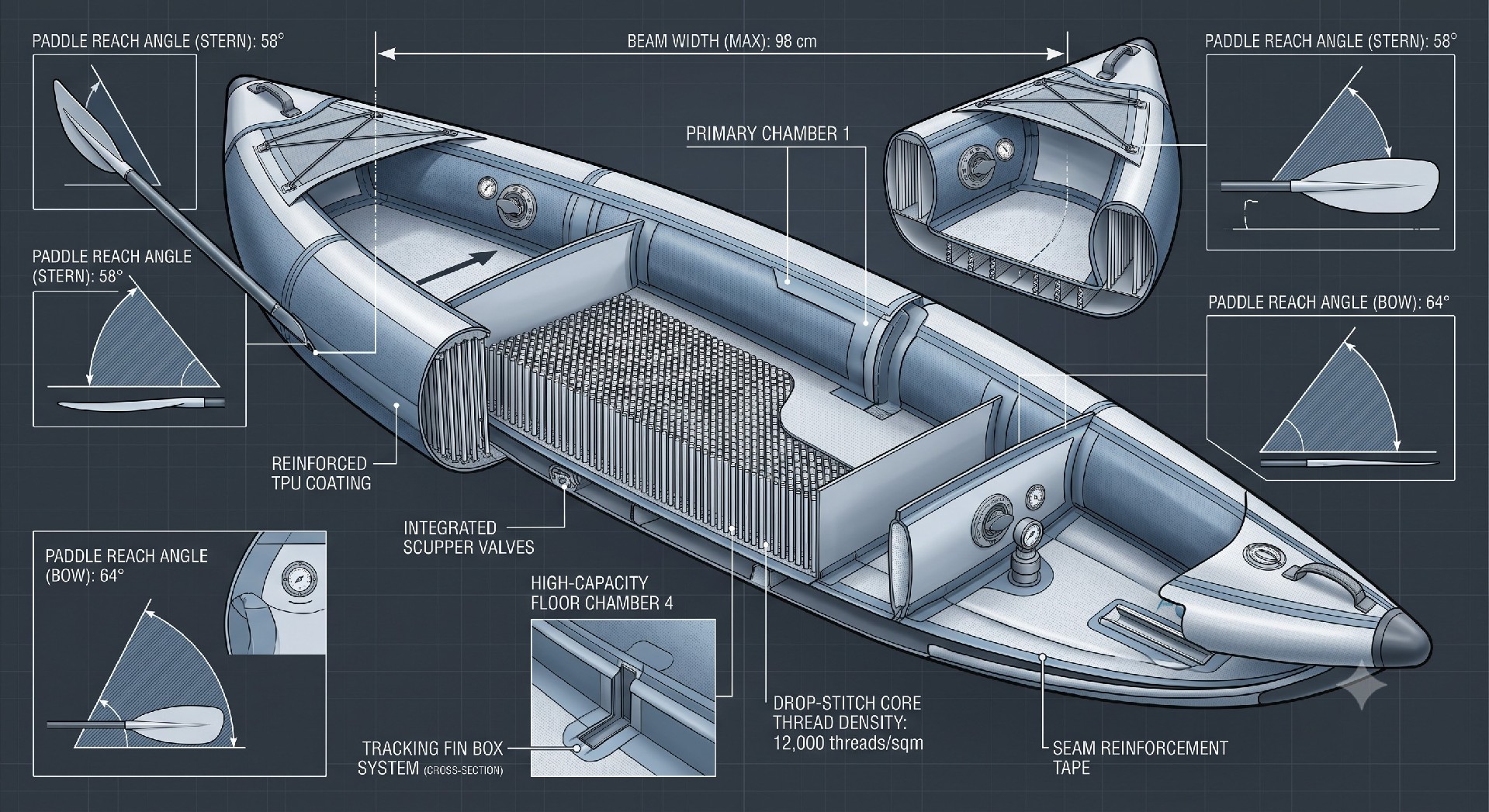
Manufacturing Specifications: How Kayak Width Dictates Paddle Geometry
Wide Beam Dynamics and Stroke Efficiency
The primary challenge with wide inflatable kayaks is the increased lateral reach required for an efficient stroke. A paddle that is too short forces the paddler into an awkward, high-elbow position, increasing fatigue and reducing power transfer. Conversely, an overly long paddle can be cumbersome and reduce maneuverability. For commercial fleets, standardizing on an optimal length range minimizes training issues and enhances the user experience. The consensus across multiple manufacturers and outfitters is that wide inflatables (typically 33 inches/84 cm and wider) require paddles in the 230 cm to 250 cm range, with some specialized fishing models requiring up to 260 cm .
Paddler Height and Kayak Width Cross-Reference
The interaction between paddler height and kayak width is best understood through a cross-reference matrix. This data is critical when procuring a mixed fleet to accommodate diverse user groups. The following table synthesizes data from leading industry sources to provide a definitive sizing guide for commercial operators .
| Key Parameter | Technical Specification / Recommendation |
|---|---|
| Recommended Paddle Length (Recreational) | 230 cm – 240 cm (Standard for most adult paddlers in wide kayaks) |
| Recommended Paddle Length (Fishing/High Seat) | 240 cm – 260 cm (Enhanced reach for elevated seating and wider beams) |
| Material Thickness (Commercial Grade) | 0.9 mm – 1.2 mm Reinforced PVC or Hypalon (CSM) |
| Maximum Payload Capacity | 350 kg – 450 kg (Dependent on chamber volume and PSI) |
| Internal Pressure (Drop-Stitch Floor) | 10 PSI – 15 PSI (for optimal rigidity) |
| Kayak Width Threshold | > 33 inches (84 cm) – Mandates 230 cm+ paddle length |
| Compliance Standards | ISO 6185, REACH, EN71 (Material Safety) |
High vs. Low Angle Paddling: A Commercial Consideration
Paddling style introduces another variable. Low-angle strokes—characterized by a relaxed, sweeping motion—are the industry standard for recreational rentals and touring. They require a longer paddle to maintain proper blade immersion. High-angle strokes, used for quick acceleration or whitewater, benefit from a shorter shaft. For B2B applications focused on leisure and glamping experiences, a low-angle recommendation typically prevails, reinforcing the need for longer shafts .
Fabric Tech and Structural Integrity: Matching Paddle Load to Kayak Specs
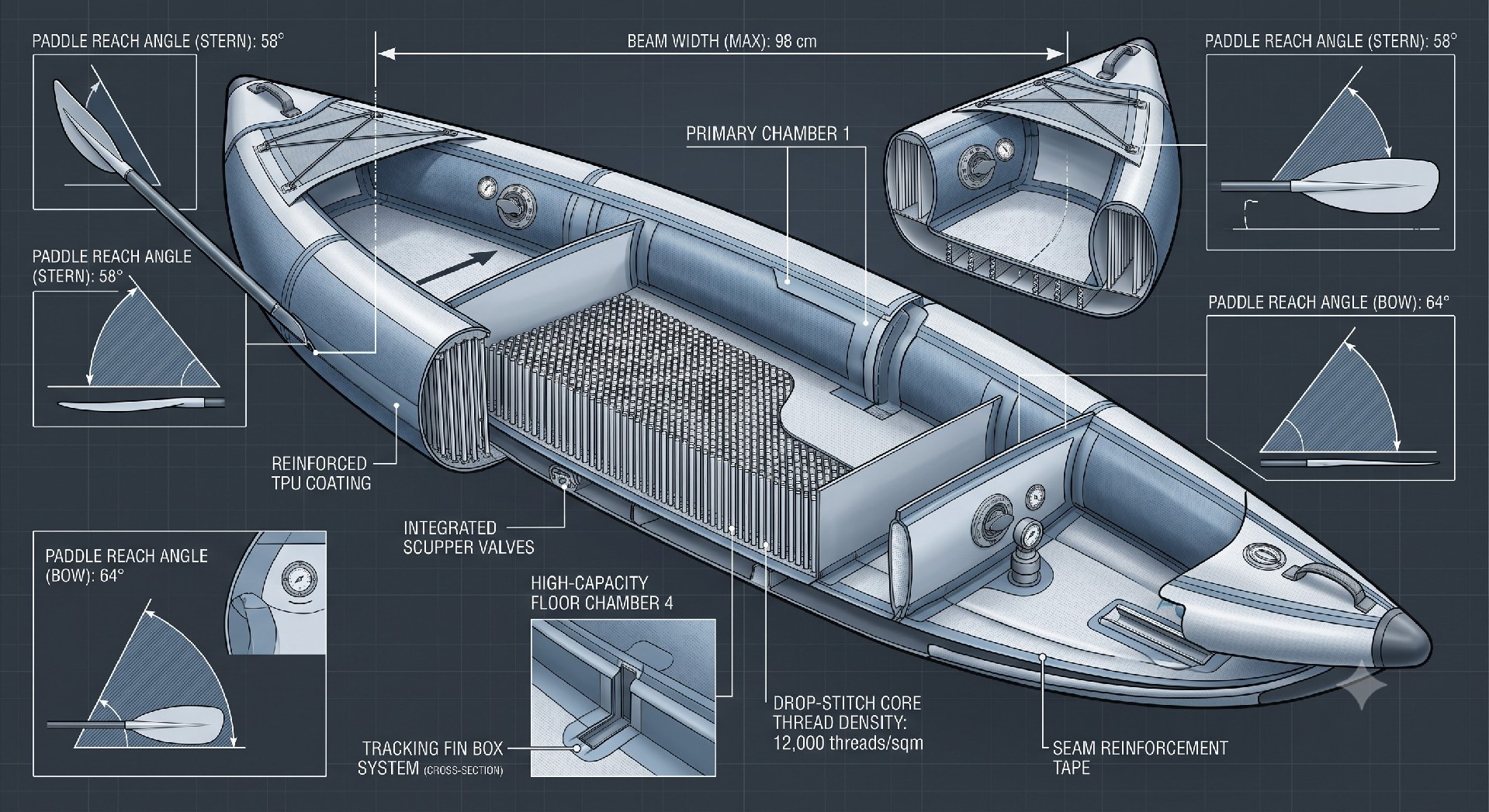
While paddle length is critical for ergonomics, the durability of the kayak itself dictates the commercial ROI. For heavy-duty use, material specifications are paramount. Commercial-grade wide inflatables utilize high-denier PVC (e.g., 1100 Denier) or Hypalon (CSM) with thicknesses ranging from 0.9 mm to 1.2 mm. The construction method, such as heat-welded seams versus glued seams, determines puncture resistance and long-term reliability under high stress. A high-quality drop-stitch floor can maintain internal pressures of 10-15 PSI, providing the rigidity needed to support heavy payloads. This structural rigidity ensures the kayak maintains its wide beam under load, making paddle length selection consistent regardless of passenger weight .
Technical Specifications: The Commercial Spec Matrix
When evaluating wide inflatable kayaks, sourcing managers must scrutinize the following key parameters to ensure compatibility with the chosen paddle lengths and operational demands.
| Key Parameter | Technical Specification / Recommendation |
|---|---|
| Recommended Paddle Length (Recreational) | 230 cm – 240 cm (Standard for most adult paddlers in wide kayaks) |
| Recommended Paddle Length (Fishing/High Seat) | 240 cm – 260 cm (Enhanced reach for elevated seating and wider beams) |
| Material Thickness (Commercial Grade) | 0.9 mm – 1.2 mm Reinforced PVC or Hypalon (CSM) |
| Maximum Payload Capacity | 350 kg – 450 kg (Dependent on chamber volume and PSI) |
| Internal Pressure (Drop-Stitch Floor) | 10 PSI – 15 PSI (for optimal rigidity) |
| Kayak Width Threshold | > 33 inches (84 cm) – Mandates 230 cm+ paddle length |
| Compliance Standards | ISO 6185, REACH, EN71 (Material Safety) |
Commercial Applications: Fleet Strategy and Target Markets
ROI and Total Cost of Ownership
Investing in the correct paddle length is a low-cost, high-impact strategy for reducing OpEx. Incorrect paddle sizes lead to user frustration, premature equipment returns, and potential damage to the kayak's side tubes. Standardizing on a 230 cm to 240 cm paddle length for a fleet of wide kayaks (33+ inches) simplifies inventory management and serves the majority of adult paddlers, which is a key recommendation from various industry sizing guides .
Rapid Turnaround and Ergonomics
In high-throughput rental scenarios, ease of use is paramount. A correctly sized paddle reduces the physical strain on the user, increasing the likelihood of a full-day rental. For resort and glamping operations, providing a premium, lightweight paddle (e.g., fiberglass or carbon composite shafts) enhances the perceived value of the experience, aligning with the premium nature of the infrastructure .
Compliance and Safety Standards
While paddle length is not directly regulated by standards like ISO 6185 or CE, these certifications ensure the platform (the kayak) is safe. A stable, well-inflated kayak (achieved through high PSI drop-stitch technology) allows the standard paddle length calculations to remain accurate. Buyers should demand compliance with EN71 (for materials safety) and REACH (for chemical compliance) to ensure the equipment is safe for end-users .
Conclusion: Data-Driven Procurement for Optimal Performance
Determining the right paddle length for wide inflatable kayaks is a data-driven exercise requiring a balance of engineering, ergonomics, and operational strategy. For B2B buyers, the evidence clearly points to a standard recommendation of 230 cm to 250 cm for kayaks exceeding 33 inches in width, with adjustments for specific paddler demographics. Prioritizing this specification, alongside core material quality (PVC/Hypalon thickness, seam integrity), ensures superior user experiences, extended commercial lifespans, and maximized rental profitability. By adhering to these technical guidelines, sourcing managers can confidently build a fleet that meets the rigorous demands of the modern water sports industry.
