

Introduction: The Algae Challenge in Small Inflatable Pools
Algae growth remains the primary operational headache in small inflatable swimming pools. For B2B buyers—whether sourcing for rental fleets, glamping resorts, or retail distribution—the ability to present a clean, algae-free product is non-negotiable. This guide dissects the problem from an industry perspective, analyzing the material science and maintenance protocols that determine commercial success.
Understanding the Root Causes: Why Algae Thrives
Small inflatable pools create a perfect habitat for algae due to their shallow, uncirculated water that rapidly heats up in direct sunlight . Unlike inground pools with powerful filtration, these pools rely on the end-user, making your product design and accompanying maintenance guidance critical. Algae spores are ubiquitous; they proliferate when organic matter, such as dirt, grass, and sunscreen, enters the water and feeds their growth . The primary fuel for this rapid reproduction is photosynthesis, which means that UV exposure is a direct contributor to the problem .
As a manufacturer or wholesaler, addressing this issue upfront is crucial for reducing customer complaints and warranty claims. The absence of a robust filtration system in smaller models means that the onus of prevention is on the user, guided by your product specifications.
Technical Material Specifications for Algae Resistance
PVC Thickness and Density
The material quality is your first defense. In B2B sourcing, the standard for pool durability is often determined by PVC thickness and denier count. Common specs include 0.9mm / 1100D Reinforced PVC, which offers a robust barrier against physical damage and a non-porous surface. A high-density surface reduces the adherence of biofilm—the microscopic layer that forms before algae blooms—making it easier to clean and maintain.
Compliance with industry standards like REACH and EN71 is non-negotiable for materials that will be in contact with water and children. These standards ensure that the PVC compounds are free from harmful phthalates and heavy metals, even as they resist the chemicals used for sanitization.
Seam Integrity: Heat-Welded vs. Glued
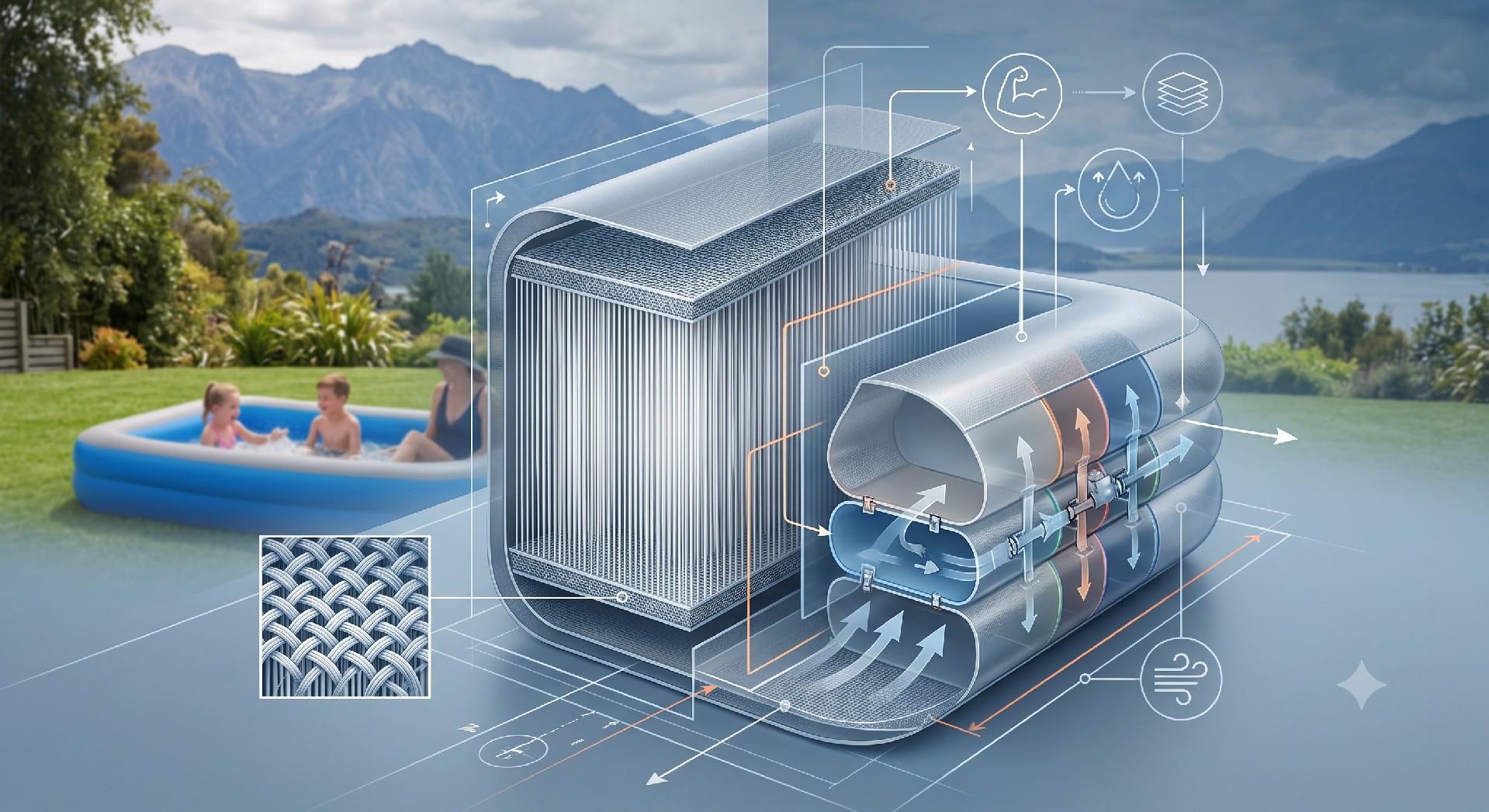
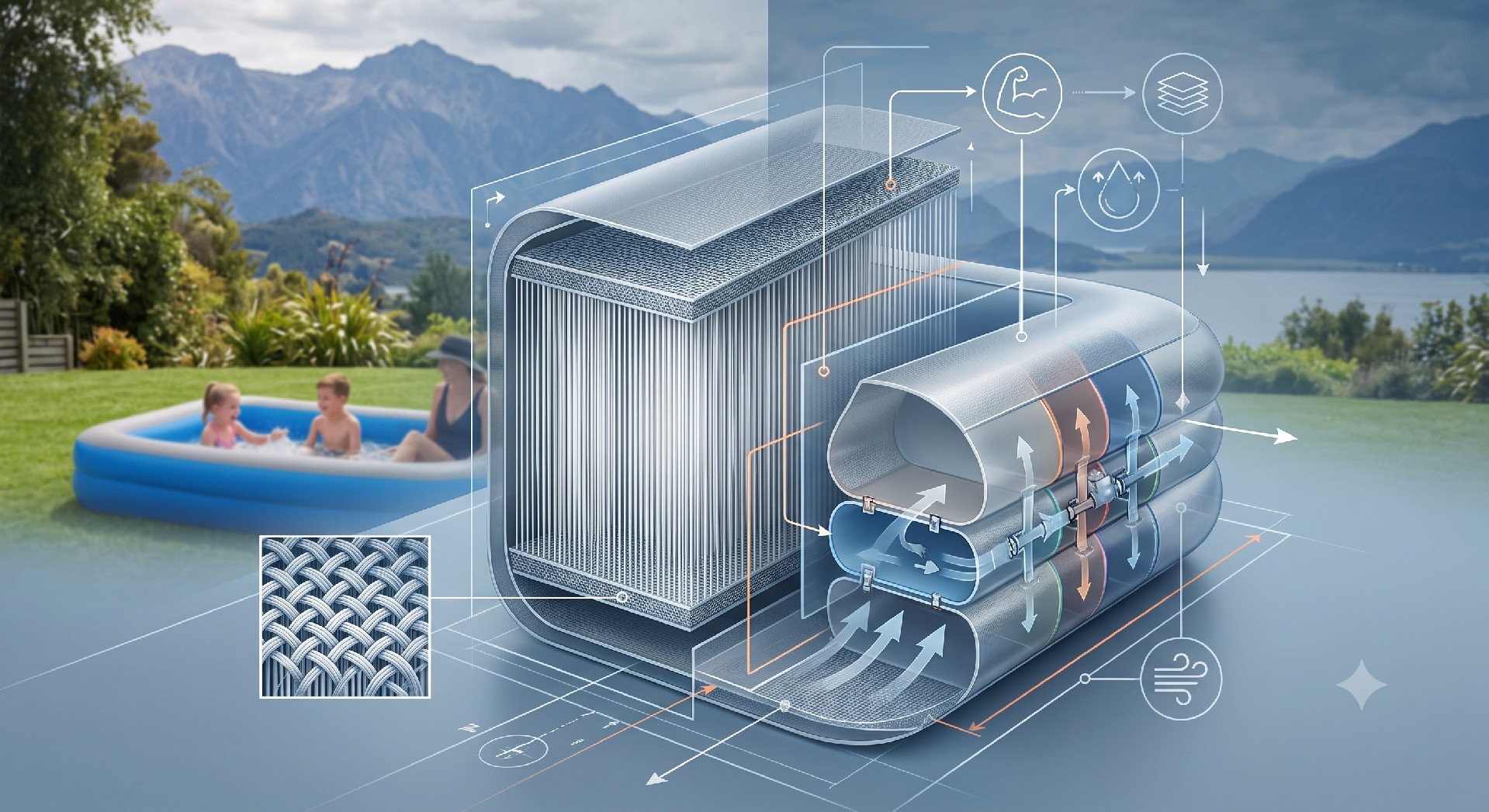
The structural integrity of seams is where many products fail. Heat-welded seams offer superior strength compared to glued seams, as the material itself is fused, creating a monolithic bond. This prevents the seepage of water into the fabric layers, which can become a breeding ground for algae and bacteria. A glued seam degrades over time, providing a microenvironment where algae can proliferate unnoticed, eventually weakening the structure and compromising the ISO 6185 or CE safety ratings of the product.
Furthermore, multi-chamber designs not only enhance safety in the event of a puncture but also ensure that water does not stagnate in hidden cavities between chambers, a common design flaw that promotes algae growth.
UV Stabilization and Color Choice
Algae require sunlight to photosynthesize . Using UV-stabilized materials not only prevents the polymer chains from breaking down, extending the commercial lifespan of your inflatable pool, but also allows for color selection that minimizes heat absorption. Lighter-colored liners tend to reflect sunlight, keeping water slightly cooler and slowing algae growth compared to dark-colored bases. From a manufacturing perspective, this is a direct material choice that impacts the product's Total Cost of Ownership (TCO) for your clients.
| Parameter | Commercial-Grade Specification |
|---|---|
| Material Thickness / Denier | 0.9mm / 1100D Reinforced PVC |
| Seam Construction | Heat-Welded, High-Frequency RF Welding |
| UV Stabilization | Yes (ISO 6185 Compliant) |
| Recommended Sanitizer | Chlorine-Free Tablets / 1-3 ppm Chlorine |
| Cleaning pH Level | Recommended 7.2 - 7.6 |
| Filtration Requirement | Manual Drain Required, No Pump Necessary |
B2B Sanitization Strategies: Balancing Efficacy and User Safety
While daily draining is recommended by health authorities like the CDC , it is not always practical for commercial settings where water conservation and guest convenience are priorities. Here is how commercial-grade solutions approach sanitization.
The Volume-to-Chemical Ratio
For pump-less or small inflatable pools, the use of disinfectants is highly sensitive. Adding chemical sanitizers without a filtration system requires precise measurement to prevent "hot spots" or over-concentration . Effective chlorine levels must be maintained within a narrow band of 1 to 3 parts per million (ppm) to kill algae cells . For small volumes, a conservative dosing strategy of 1/8 teaspoon of unscented bleach per gallon of water is a standard baseline recommendation to mitigate algae without risking skin irritation.
For B2B buyers looking to provide a turnkey solution, including a supply of chlorine-free multi-functional pool tablets in the product package can be a significant value-add . These tablets are designed for slow dissolution in floating dispensers, providing a steady, controlled release of sanitizers that are compatible with the PVC material and safe for end-users.
pH Management
Algae struggles to thrive in water with a lower pH (more acidic). Common distilled white vinegar can be used as a non-chemical pH adjuster, offering a gentle sanitizing effect . However, in a commercial setting, water testing kits must be included to ensure the water's pH and sanitizer levels are balanced. An imbalanced pH not only makes chlorine ineffective but can also degrade the PVC material over time.
Commercial Maintenance Protocols and Operational Efficiency
For rental businesses, efficient maintenance is key to maximizing ROI. This involves a robust protocol that integrates manual cleaning with chemical treatment.
Fleet Turnaround Procedures
A standardized cleaning process must include:
Debris Removal: Using a soft pool net to remove leaves and insects .
Biofilm Scrubbing: Using a soft brush designed for vinyl pools to scrub the sides and bottom, removing the biofilm that harbors algae .
Draining and Rinsing: Complete water replacement and rinsing with fresh water to remove cleaning residue and organic matter .
Air Drying: Allowing the pool to dry thoroughly in a UV-rich environment (sunlight) to desiccate any remaining spores .
Solar Covers and Shading
Recommending solar pool covers or tarps to your clients is a highly effective strategy. Covers block UV rays, reduce water evaporation, and prevent the entry of debris like leaves and dirt that act as nutrients for algae . Furthermore, advising customers to position the pool in partial shade during peak sun hours (10 AM - 4 PM) can significantly reduce algae growth by lowering water temperatures .
Conclusion: Data-Driven Product Evaluation and Sourcing Advice
Preventing algae growth is a design and materials challenge as much as an operational one. For B2B sourcing professionals, selecting pools with UV-stabilized, high-denier PVC, utilizing heat-welded seams, and providing clear maintenance guidelines are non-negotiable aspects of a quality product.
Understanding the interplay between material density, seam integrity, and sanitization logistics is critical for calculating the true ROI of an inflatable pool product. By choosing manufacturers who adhere to ISO 6185 and REACH compliance, you mitigate warranty risk and ensure your products deliver a premium, algae-free experience that drives customer satisfaction and repeat business.
