

What Makes a Family Tent Truly Stormproof in a Heavy Summer Downpour?
Summer rainstorms are often brief, but when they hit, they can turn a family camping trip into a test of gear and patience. A family tent that leaks, pools water on the roof, or collapses under wind gusts is not just an inconvenience—it is a safety risk and a financial loss for a rental operator or retailer. This article focuses on the real-world performance of a family tent against heavy summer rain, evaluating the materials, structural design, and setup practices that separate stormworthy shelters from fair-weather-only products.
Defining the Threat: Summer Storm Characteristics
Heavy summer rainstorms, often associated with convective thunderstorms, can deliver over 25 mm (1 inch) of rain per hour, accompanied by wind gusts of 50-70 km/h (31-43 mph) or more. Unlike a steady drizzle, this is a high-energy event that tests a tent's waterproofing through hydrostatic pressure on the fabric and wind-driven water intrusion. For a family tent, the primary threats are threefold: rain penetration through the fabric, water pooling on a flat roof, and structural deformation or collapse from wind.
When evaluating a tent for this use case, technical buyers must look beyond the generic 'waterproof' claim. The critical factors are the fabric's hydrostatic head rating, the pole system's wind resistance, and the flysheet design that ensures water sheds away from seams and openings.
Fabric Technology and Waterproofing Performance
The first line of defense is the tent fabric itself. Most quality family tents use polyester or nylon with a polyurethane (PU) coating. The waterproofness is quantified by the hydrostatic head (HH) rating, measured in millimeters (mm) of water pressure the fabric can withstand before leaking. For a summer storm tent, a minimum HH rating of 2000 mm is standard for the flysheet, with 3000 mm or higher recommended for the floor to resist water pooling beneath the tent. A 3000 mm rating means the fabric can hold a column of water 3 meters high, simulating heavy rain pressure.
However, a high HH rating alone does not guarantee storm resistance. The fabric's denier (weight) and weave affect its ability to resist punctures and abrasion, especially in windy conditions where branches or debris might strike the tent. A common commercial specification for a durable family tent is a 68D or 75D polyester fabric. Higher denier fabrics like 150D are more robust but add significant weight, which is a consideration for portability and packed volume.
Another crucial aspect is the coating's durability. Waterproofing agents like silicone or PU degrade over time with UV exposure and abrasion. For commercial buyers, the service life of the waterproof coating is often as important as the initial rating. A good supplier will provide test data on the coating's resistance to hydrolysis, a chemical breakdown caused by moisture and heat, which is a common failure mode in humid summer conditions.
Frame Engineering and Wind Resistance
The tent's frame, typically made of fiberglass or aluminum poles, must withstand wind gusts without snapping or bending. Fiberglass is cost-effective but more prone to shattering under stress. Aluminum alloys, such as 7000-series, offer a better strength-to-weight ratio and greater flexibility, allowing the tent to flex under wind loads rather than break. The pole diameter is a direct indicator of strength; a family tent meant for harsh weather might use 10 mm to 13 mm aluminum poles, compared to 8.5 mm fiberglass found in lighter, fair-weather models.
The geometry of the pole system is equally critical. A geodesic or semi-geodesic design, where poles cross to form a rigid structure, distributes wind loads more evenly than a simple dome or cabin-style tent. This design reduces the risk of a single pole failing and causing a collapse. For summer storm conditions, a tent with multiple crossing points and a strong hub system at the peak is preferable, as it prevents the flysheet from sagging and pooling water.
Wind resistance is also a function of the tent's profile. A low-profile tent with a smooth, aerodynamic shape is less vulnerable to wind pressure than a tall, boxy cabin tent. The latter, while popular for headroom, acts like a sail and is more susceptible to being lifted or crushed. A practical specification for storm resistance is a wind speed rating, typically stated as 'can withstand winds up to 40-50 km/h'—though this is often a rough estimate rather than a tested figure.
Seam Construction and Leak Prevention
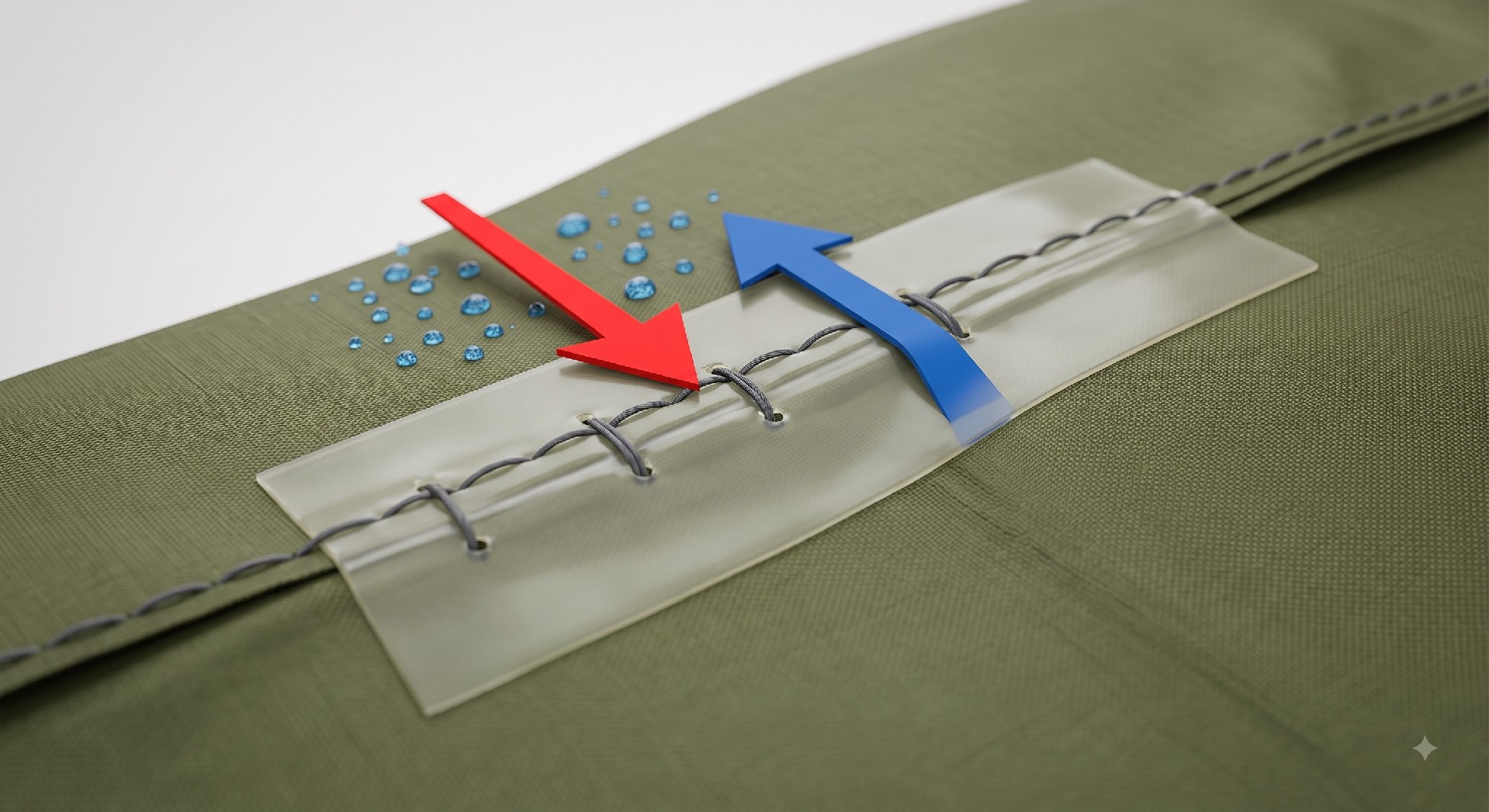
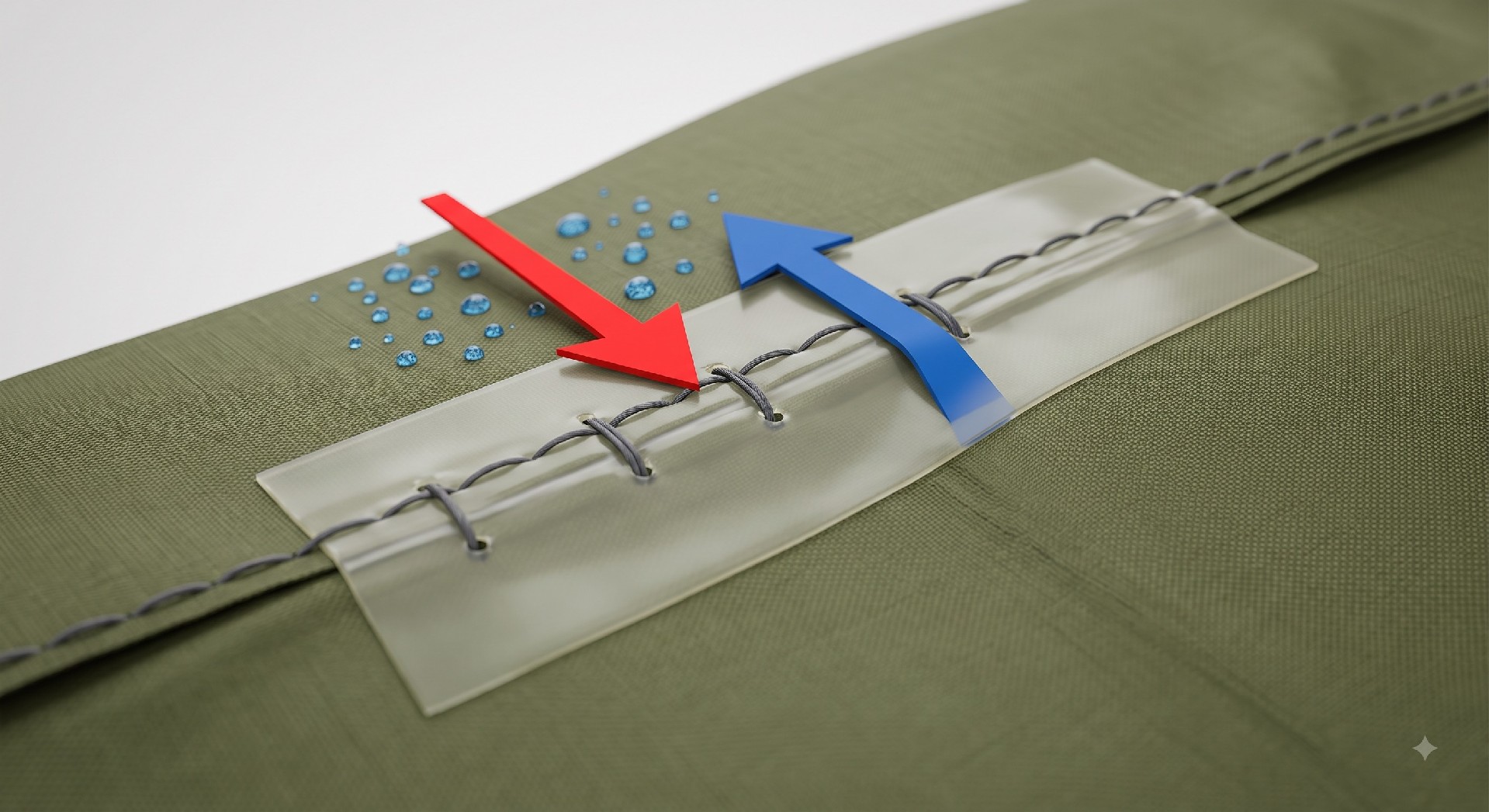
Seams are the most common point of failure in a rainstorm. Even the most waterproof fabric is useless if the seams leak. The industry standard for waterproof seams is tape sealing. A factory-taped seam involves applying a hot-melt tape over the stitched holes, creating a continuous watertight barrier. The quality of this taping is variable; a good supplier will use a multi-needle seam taping machine that ensures full coverage, especially at corners and intersections.
For high-end tents, welding or radio-frequency (RF) welding is used, which fuses the fabric at a molecular level without stitching. This is more durable and leakproof but adds cost and weight. For a family tent in the mid-price range, a well-factory-taped flysheet is the standard. A common issue is seams that are only taped on the flysheet but not on the floor, leading to moisture wicking up from the ground. Buyers should insist on seam taping for both the fly and the floor, particularly at the corners.
Ventilation and Condensation Management
While keeping rain out is crucial, managing internal condensation is equally important to a family's comfort. In a storm, the tent must be closed to keep rain out, reducing ventilation. This can lead to high humidity inside, and when the warm, moist air from occupants hits the cold, rain-cooled flysheet, condensation forms. In a worst-case scenario, this condensation can drip back into the sleeping area, making the inside feel wet.
Modern tents address this with a design that separates the inner tent from the flysheet, often with a vestibule or air gap. This creates a temperature buffer. High-quality tents also feature adjustable vents at the top of the flysheet that can be propped open even in rain, allowing moist air to escape while keeping rain out. A roof vent, combined with a ground-level vent, creates a chimney effect that promotes airflow. Buyers should look for tents with at least two roof vents and a design that allows the inner tent's mesh panels to remain open for cross-ventilation without exposing the interior to rain.
| Component | Critical Specification for Heavy Rain | Why It Matters | Buyer Verification Step |
|---|---|---|---|
| Flysheet Fabric | Hydrostatic head: 2000 mm - 3000 mm, Polyester 68D-75D with PU coating | Resists rain pressure and prevents water penetration. | Request the test report or confirm rating from the datasheet. |
| Floor Fabric | Hydrostatic head: 5000 mm minimum, PE or PU-coated nylon with bathtub design | Prevents water seepage from saturated ground. | Check material spec and floor construction (sewn-in walls). |
| Poles | Aluminum 7000-series, 10-13 mm diameter, semi-geodesic or geodesic design | Provides structural integrity to withstand wind gusts; resists bending. | Inspect pole diameter and material; ask about wind-load testing. |
| Seams | Factory-taped on all flysheet and floor seams with heat-applied tape | Eliminates the primary point of water entry (stitch holes). | Visually inspect seam tape on a sample or request QC process details. |
| Ventilation | At least two roof vents that can be opened in rain, and a mesh inner door | Reduces internal condensation, keeping the interior dry and comfortable. | Check design for adjustable vents and airflow pathway. |
| Anchoring System | Includes at least 4 guy lines, reflective, with strong pegs (steel/Y-beam) | Keeps the tent taut under wind and rain, preventing collapse or pooling. | Examine peg quality; count guy-out points and verify their design. |
Groundsheet and Floor Protection
The groundsheet is the second most critical area for water ingress. Heavy rain can saturate the ground, and water can seep up through the floor through hydrostatic pressure. The floor should be made of a heavy-duty, waterproof material, typically a polyethylene (PE) or a coated nylon with a high hydrostatic head (HH) rating of at least 5000 mm. A PE groundsheet is common in budget tents but is heavier and less breathable. A higher-spec tent will use a nylon or polyester with a robust PU coating.
Beyond the material, the construction method is vital. A bathtub floor, where the floor material extends up the sides of the tent by 10-15 cm, is the best defense against standing water and splashing. This design ensures that even if water flows under the tent, it cannot easily enter. Many high-quality tents also feature a sewn-in groundsheet, which eliminates a seam where the floor meets the wall. This is a strong indicator of a product built for serious weather.
Setup and Anchoring: The Human Factor
Even the best-designed tent will fail if not set up correctly. The anchoring system, which includes pegs, guy lines, and tension straps, is the tent's hold on the ground. A tent must be pitched taut to shed water and wind. A slack flysheet will pool water, and loose guy lines will allow the tent to flap and stress the poles.
Supplied pegs are often a weak point. They are frequently cheap aluminum or plastic that bends in hard ground. Commercial buyers often replace them with stronger, more reliable options like steel or Y-beam pegs. The number and placement of guy-out points are critical; a storm-resistant tent should have at least four guy lines for the flysheet, ideally with reflective elements for safety. Tension straps with buckles allow for quick and precise adjustment to keep the tent taut.
Setup time is a commercial factor; a tent that takes two people 15 minutes to set up is acceptable, whereas one that takes 45 minutes may be impractical for a rental fleet. The engineering of the pole system, including color-coded poles and sleeves, reduces setup time and user error. For storm conditions, ensuring the tent is placed in a sheltered location and not at the foot of a hill is part of the operational protocol.
Post-Storm Maintenance and Lifecycle
After a storm, the tent must be properly dried and cleaned to prevent mold and mildew growth, which can degrade the waterproof coating. A commercial operator will have a defined maintenance protocol that includes airing the tent, checking for damage, and spot-treating areas where the coating has worn off. The service life of a tent used in severe conditions can be significantly shorter than one used in mild weather, often 3-5 years depending on the quality. Buyers should factor this into their purchase decision, perhaps opting for a slightly higher upfront cost for a longer-lasting product.
Final Selection: A Family Tent That Survives the Storm
The choice of a family tent for heavy summer rain is a balance of material specification, structural integrity, and practical setup. For most families and rental operations, a tent with a 3000 mm HH flysheet, a 5000 mm HH floor, a semi-geodesic aluminum pole structure, and factory-taped seams will provide the necessary performance. The commercial decision should prioritize the proven durability of the fabric and frame over features that are less critical in a storm, such as multiple room dividers.
A checklist for the final decision should include confirming the hydrostatic head ratings, inspecting the seam taping quality, evaluating the pole diameter and material, and verifying the ventilation design. Asking the supplier for test data on UV resistance and abrasion, and comparing the packed volume and weight against your transport constraints, will further refine the choice. Ultimately, the best tent is one that, when set up correctly, gives you confidence that it will keep its occupants dry and safe through the most violent summer storm.
