Why Direct Sunlight Is the Biggest Threat to Your Backyard Inflatable Pool
For commercial buyers, resort operators, and high-end residential owners, the dominant challenge with a large backyard inflatable pool isn't water leakage or seam failure—it is the relentless assault of solar radiation. UV exposure degrades PVC at a molecular level, reducing its tensile strength and making the material brittle. More immediately, a pool sitting in full sun can raise water temperatures to uncomfortable levels, accelerating algae growth and evaporating up to 5-10 gallons of water per day depending on the pool's surface area. This creates the quintessential dilemma for any buyer of an inflatable pool: how to shade it effectively without compromising structural safety or incurring excessive setup costs.
This guide addresses the real search intent behind "{keyword}". We are moving beyond generic advice to provide a highly authoritative, commercially useful blueprint for selecting and deploying shade solutions. We will analyze four primary methods—Shade Sails, Pop-Up Canopies, Custom Pool-Specific Covers, and Strategic Landscaping—and evaluate them against key performance metrics for commercial-grade inflatable pools. The goal is to help you make a procurement decision that protects your asset, enhances user comfort, and mitigates long-term lifecycle costs.
Understanding the Commercial Backyard Inflatable Pool Asset
Before selecting a shade, we must define the product class. The typical commercial backyard inflatable pool is constructed from heavy-gauge PVC or Vinyl, with wall heights ranging from 24 to 52 inches, and diameters from 10 to 24 feet for round models or equivalent rectangular dimensions. These pools often incorporate three to four individual air chambers for stability and are designed to hold thousands of gallons of water (a 15-foot diameter pool holds approximately 4,500 gallons). The hydrostatic load places significant pressure on the structural integrity of the walls. When you introduce a shade structure, you are not just adding a canopy; you are introducing a potential wind load that must be anchored independently of the pool itself. A failure in the shade system can lead to structural damage to the pool if the two are improperly connected.
The primary buyer personas for this equipment are luxury resort property managers, high-end residential estate owners, and commercial rental operators. Their purchase stage is typically "Specification Comparison" or "Fleet Expansion". They require solutions that minimize maintenance downtime (frequent cleaning to combat algae) and maximize the lifespan of the asset (reducing UV degradation).
Evaluating Shade Methods: A Commercial Specification Breakdown
We will analyze the four most viable shade methods for a backyard inflatable pool based on their engineering integrity, commercial ROI, and safety profiles.
1. Shade Sails (Tensioned Membrane)
A shade sail is a tensioned fabric structure anchored to poles, trees, or structures. They offer excellent airflow, which prevents the greenhouse effect that can occur under solid canopies. For commercial applications, a multi-point triangular or rectangular sail made of High-Density Polyethylene (HDPE) with a 90-95% UV block rating is recommended. However, the key engineering challenge lies in the anchoring. The downward pull of a sail can exceed 100-200 pounds of force depending on wind conditions.
2. Pop-Up Canopies (Temporary Gazebos)
These are often the go-to for rental operators due to ease of setup. They are portable, relatively inexpensive, and provide instant shade. However, they are structurally weak and can become projectiles in a moderate breeze. From a technical perspective, the frame materials (aluminum or steel) and the canopy fabric (polyester or polyethylene) often cannot withstand sustained wind gusts. They are best suited for small pools (10-12 feet) and only deployed during active use periods, not for long-term coverage.
3. Pool-Specific Covers & Tops
This category includes custom-made vinyl covers designed to encase the pool or floating covers that sit directly on the water surface. While they are effective at limiting UV and reducing evaporation, they must be engineered to account for the pool's structural constraints. A cover that is too heavy can collapse the walls. More importantly, they often require deflation or complex zipping mechanisms. They are excellent for overnight protection but inefficient for daytime use.
4. Strategic Landscaping (Pergolas & Trellises)
For permanent installations, a wooden or aluminum pergola with retractable slats or climbing vines offers a premium aesthetic and high structural stability. The commercial downside is the high upfront CapEx and the fact that the installation is permanent. This approach is suitable for high-end resorts where the pool is part of a fixed landscape asset.
Structural Integration and Wind Load Management
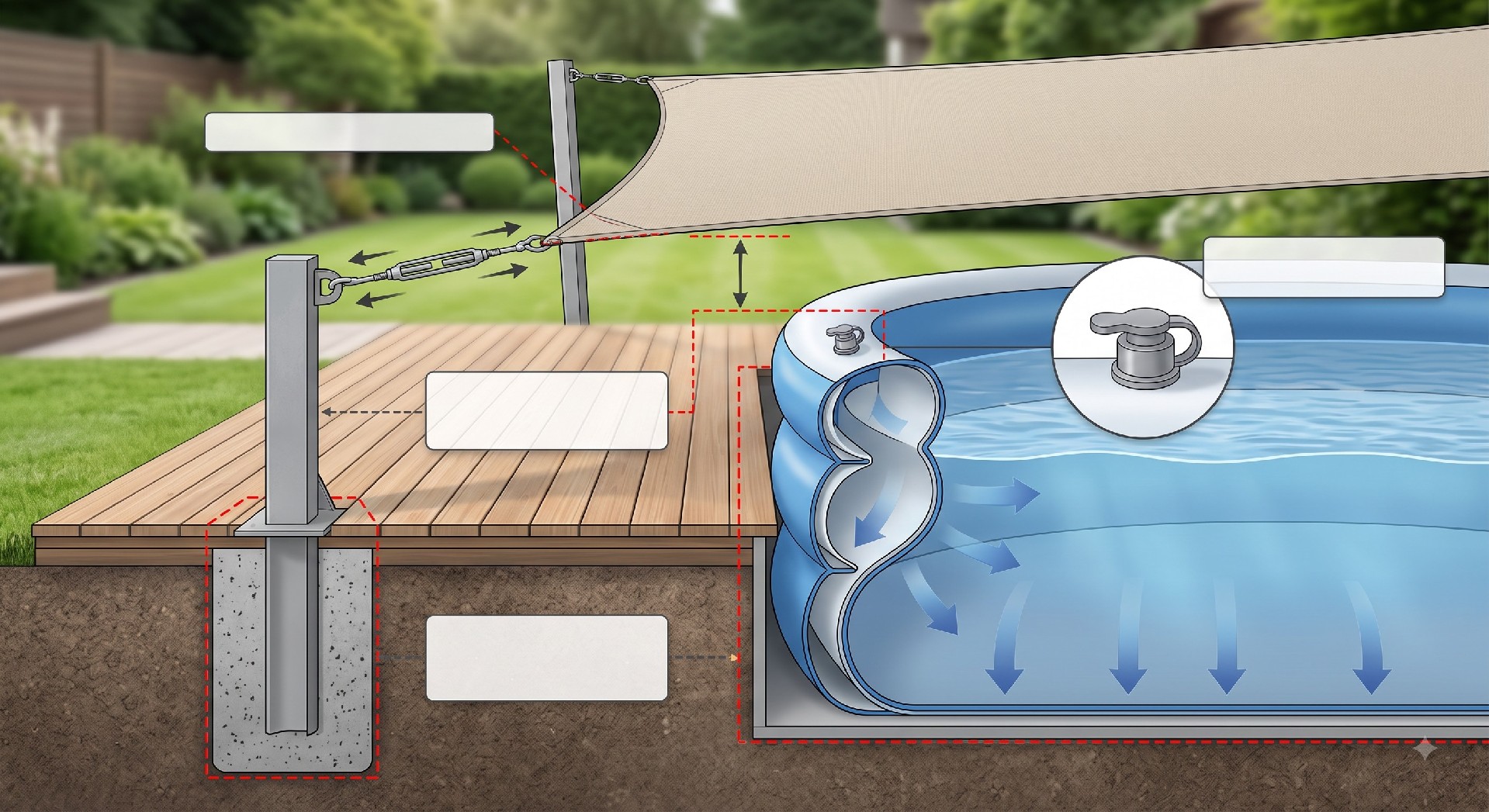
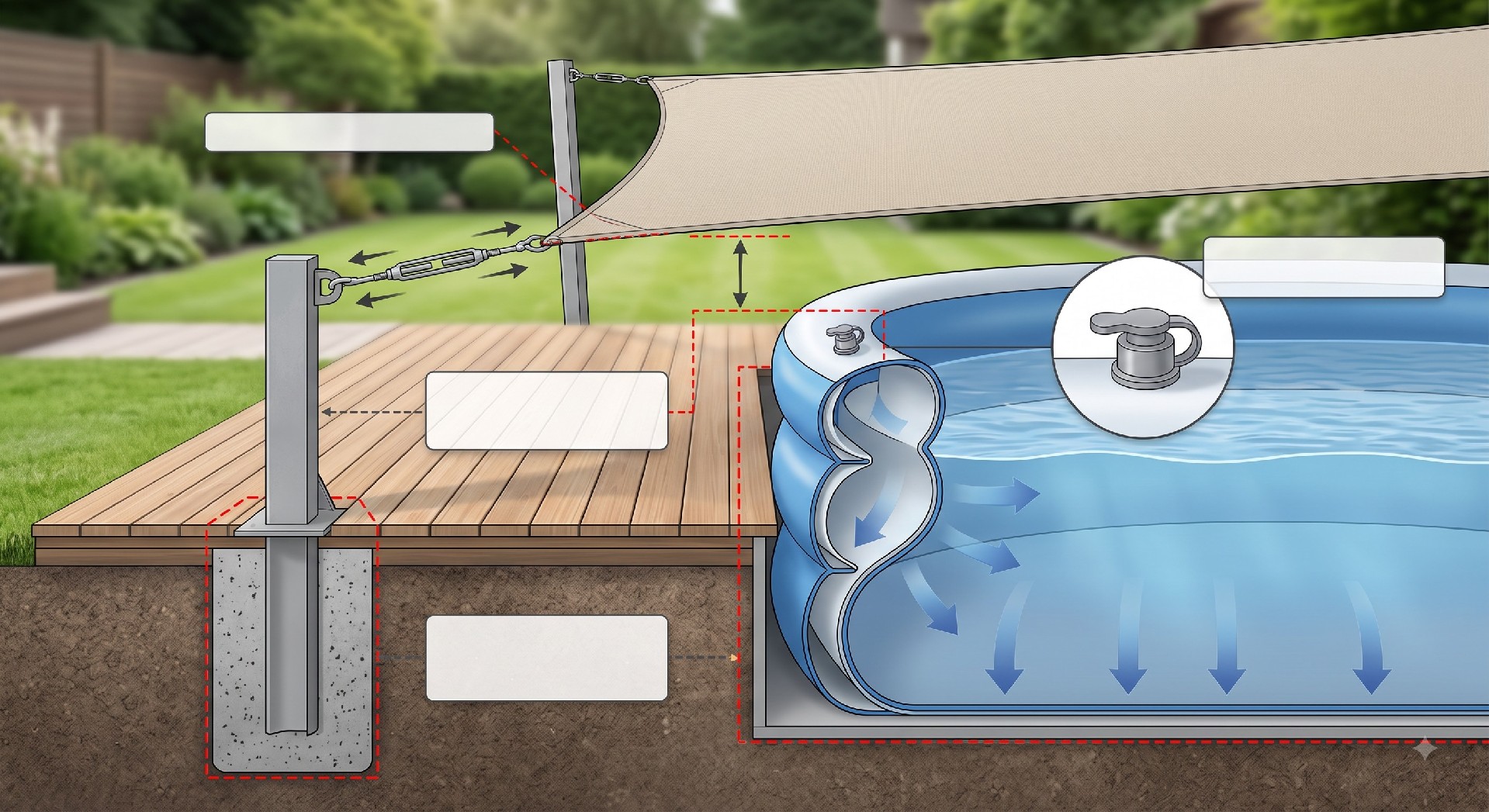
This is the most critical technical detail often overlooked. You must never anchor a shade structure directly to the inflatable pool's D-rings or handles. The inflatable pool is designed to hold hydrostatic pressure (water pushing outward), not dynamic point-loads from a shade sail catching wind. The structural tensile strength of a typical commercial pool PVC is around 200-250 kg/cm² (typical commercial range), but this strength is distributed across the volume. A point-load of 50 lbs on a single D-ring can cause localized stress fractures or seam separation.
The correct commercial specification requires independent anchoring systems. This means ground spikes, concrete blocks, or separate frameworks that bear the load of the shade. The shade structure should be positioned to overhang the pool by at least 2 feet on all sides to ensure shadows remain on the water regardless of the sun's angle. This overlap also reduces the risk of a collapsed structure falling into the pool and damaging the liner.
For commercial buyers, the relationship between the shade and the pool is critical. You must verify the manufacturer's specifications for allowable wind loads. A common buyer specification for commercial backyards is that the shade system must withstand a wind speed of 30-40 mph (supplier-dependent) before the structure must be collapsed or the pool drained. This is a deciding factor in specification comparison.
Operational Workflow and Setup Efficiency
From a commercial ROI perspective, setup time is a labor cost. For a rental operator, the speed of setup determines the number of units you can service in a day. A pop-up canopy might take 15 minutes to set up but will require constant supervision. A shade sail might take 45 minutes to tension with turnbuckles but will last for years. The commercial decision is whether the additional setup labor is offset by reduced asset replacement costs.
| Shade Method | UV Block (Typical) | Setup Complexity (Crew/Time) | Wind Resistance (Target) | Commercial ROI (Fleet/Resort) |
|---|---|---|---|---|
| Shade Sail (HDPE) | 90-95% | Moderate / 2-4 hours | High (30-40 mph) | High (Best for Resorts) |
| Pop-Up Canopy | 70-85% | Low / 15-30 minutes | Low (10-15 mph) | Medium (Best for Rentals) |
| Pool-Specific Cover | 95-100% | High / 1-2 hours | N/A (Not for wind) | Low (Best for Overnight) |
| Pergola/Trellis | Variable (30-80%) | Very High / Permanent | Very High (40+ mph) | Very High (Permanent Install) |
Material Compatibility and Chemical Resistance
We must consider the chemical interaction between the shade material and the pool environment. If you are using a high-UV-block HDPE sail, you are generally safe. However, if using a standard polyester canopy, ensure that the dye is colorfast and that the material does not release chemicals that can oxidize the PVC. Frequent contact between the shade and the pool rim can cause abrasion, especially in inflatable pools with a drop-stitch floor. A drop-stitch floor is a high-tensile fabric that creates the pool's base; it is susceptible to micro-tears if subjected to constant rubbing by a canopy leg.
Buyers should specify that the shade material must be treated with an antimicrobial agent to prevent mold and mildew growth, which is a common issue in humid backyard environments. The PVC pool itself must be protected from direct contact with rubber or plastics that contain plasticizers that can migrate and cause the pool material to swell or become tacky. This is known as plasticizer migration and is a leading cause of premature failure.
Buyer Checklist for Commercial Specification
When procuring a shade solution for your backyard inflatable pool, use this compact checklist to guide your decision:
UV Block: Ensure the shade blocks at least 90% of UV rays. Verify the manufacturer's test data.
Independent Anchoring: Confirm the shade structure has its own anchoring plan. Do not use the pool's valves or straps to secure the shade.
Wind Rating: Verify the maximum safe wind speed for the shade structure. For open backyards, a rating of 25 mph is a minimum commercial target.
Height Clearance: The shade should be at least 7 feet above the pool deck to allow airflow and prevent a greenhouse effect. At least 2 feet of overhang is mandatory.
Material Construction: Specify HDPE for shade sails or marine-grade polyester for canopies. Avoid materials that degrade under UV in less than 1 year of continuous exposure.
Selecting the Best Shade Solution for Your Use Case
The decision on the best way to shade your inflatable pool comes down to your specific operational model. For the Rental Operator, the Pop-Up Canopy is the winner for its portability and low initial CapEx, despite its higher replacement frequency. Ensure you have a spare, as a sudden storm can compromise the unit. For the High-End Resort, a custom Shade Sail system or a Pergola is the logical choice. The upfront cost is higher, but the depreciation is longer, and the aesthetic elevates the guest experience, justifying a higher rental premium. For the Private Owner who wants a "set it and forget it" solution, a high-quality pool cover used exclusively overnight is the most effective way to maintain water temperature and cleanliness, though it does not offer shade for daytime swimmers.
Ultimately, "{keyword}" is about maximizing the utility of your asset while minimizing the risk of material failure. Heat and UV are the most destructive forces acting on your inflatable pool. A well-executed shade solution reduces the need for chemical treatments, lowers water evaporation, extends the life of the PVC by up to 300% compared to an unshaded pool, and enhances user comfort.
Final Decision Matrix for Commercial Buyers
To finalize your procurement, consider your time horizon. If you plan to keep the pool for 3+ years, a permanent structure is essential. If you are renting weekly, the portability and fast setup of a canopy are more important than its long-term durability. It is also vital to source these shade solutions from a supplier that understands the structural limitations of inflatable pools. A good supplier will not simply sell you a canopy; they will advise you on the right anchor size and the necessary clearance angles to prevent damage to the pool walls.
Avoid making a decision based solely on cost. The cheapest pop-up canopy may save you $200 upfront, but if it collapses and punctures your $1,500 commercial-grade inflatable pool, the total cost of ownership skyrockets. The best practice is to inspect the installation site, measure the prevailing wind patterns, and verify the ANSI/ICC 300 standards (where applicable) for swimming pool barriers and shade structures, though the buyer should confirm the exact classification with the supplier.
By following this blueprint, you are not just buying a shade; you are engineering a safer, more profitable, and longer-lasting pool environment. Ensure your shade solution is physically separated from your inflatable structure, structurally sound for your environment, and sourced from a supplier who can provide wind test data and UV degradation analysis for the fabrics they recommend.