

The Commercial Cost of Mold in Field Equipment
For rental operators, outdoor educators, and expedition outfitters, a moldy sleeping bag is more than an inconvenience. It is a direct hit to asset lifecycle, customer satisfaction, and brand reputation. A musty bag returned by a client signals a failure in post-trip processing, and the operational costs of remediation or replacement quickly escalate. This guide provides a commercial-grade, step-by-step protocol for cleaning a moldy sleeping bag after a rainy camping trip. It is designed for procurement and operations managers who need to extend fleet life and minimize downtime, not for a one-time camper.
Understanding Mold's Impact on Sleeping Bag Performance and Value
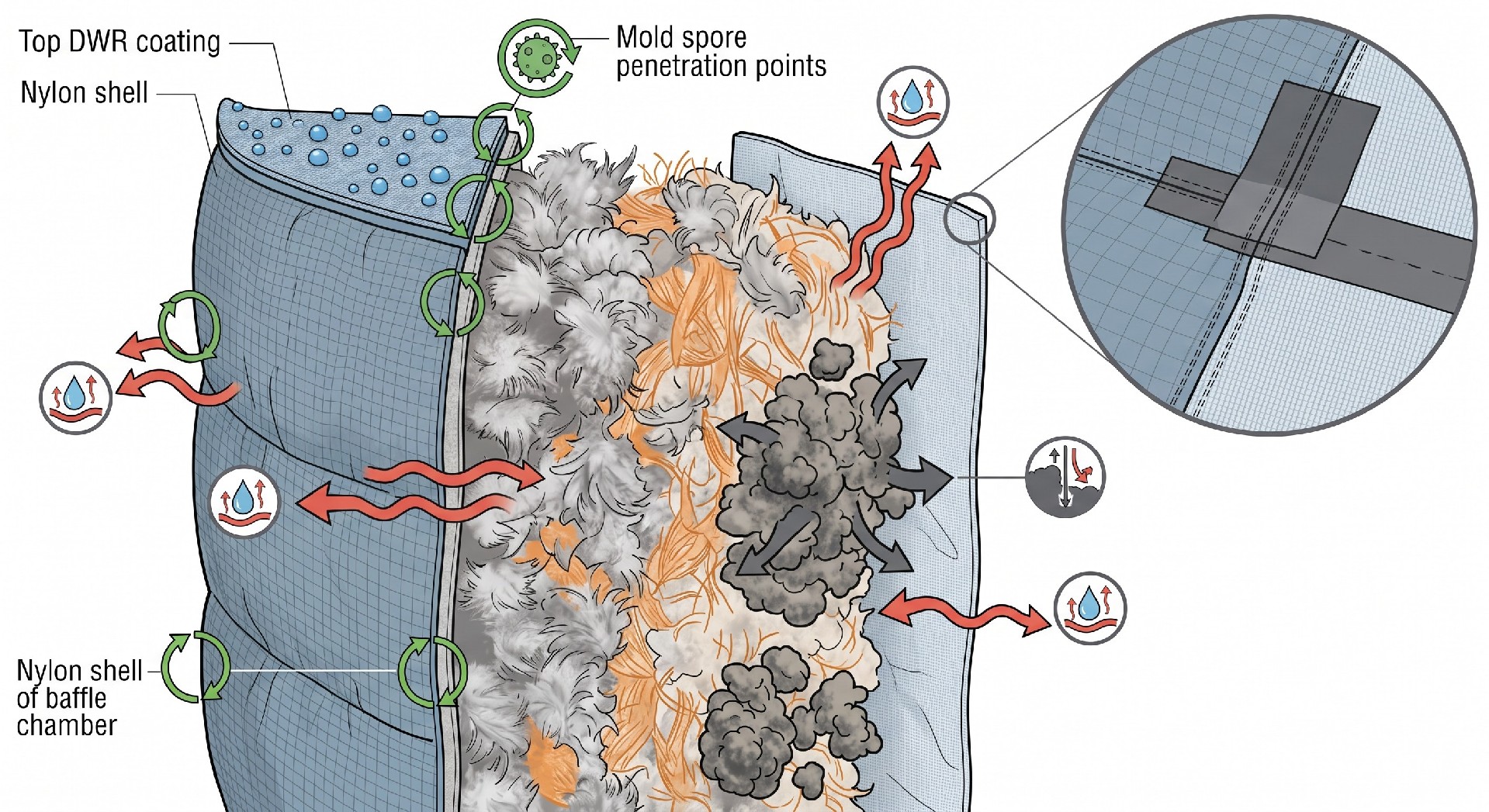
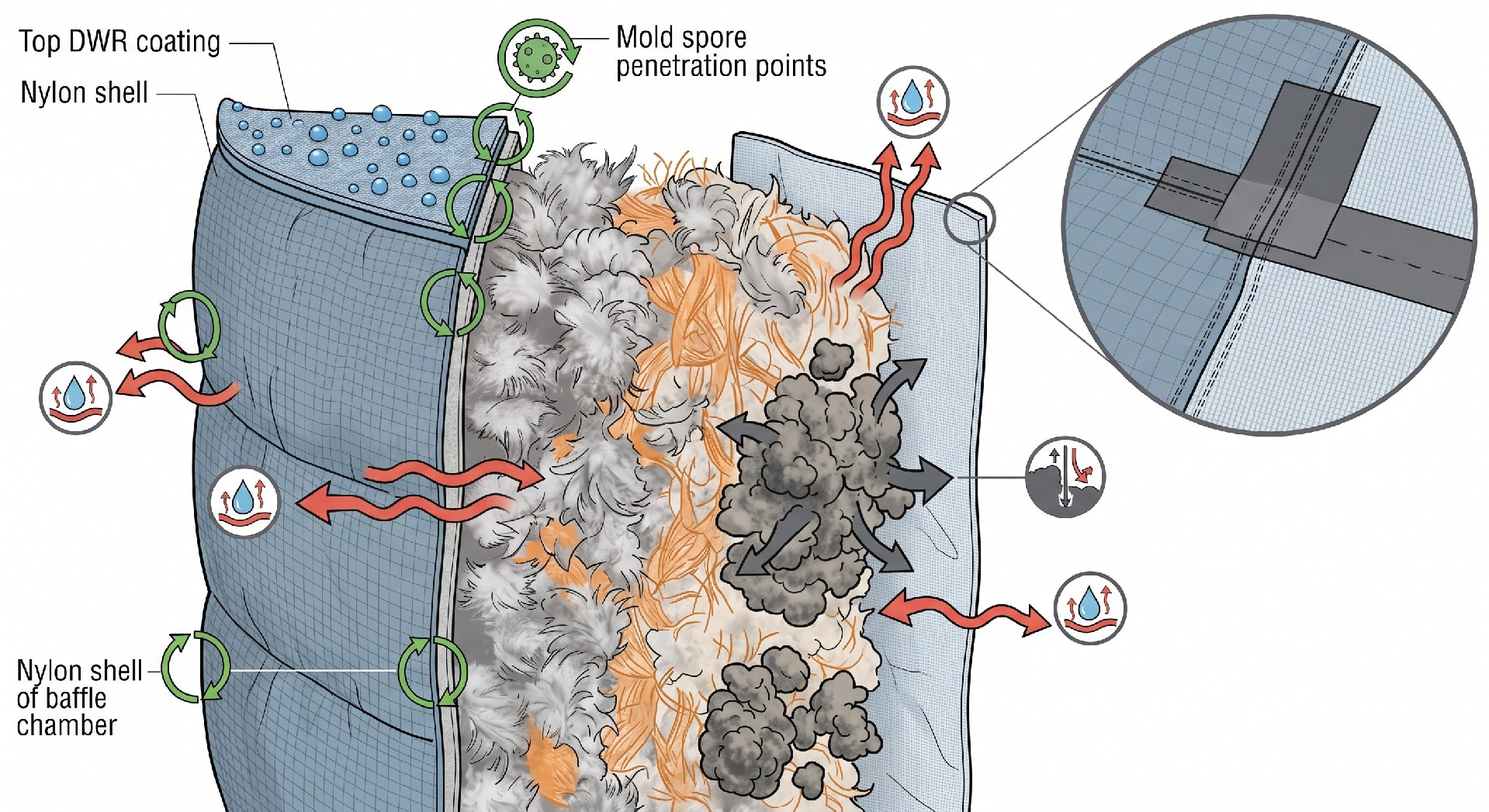
Mold is not merely a surface issue; it compromises the structural and thermal integrity of the sleeping bag. For commercial fleets, the degradation is a direct line to reduced ROI. Mold spores break down natural fibers like down and cotton, reducing loft and therefore thermal efficiency. In synthetic fills, mold can cause clumping, which creates cold spots. For the commercial buyer, this means a bag rated for 20°F might only perform at 32°F after a mold infestation, increasing the risk of customer complaints and hypothermia liability. Furthermore, the smell is notoriously difficult to remove, often leading to bags being rejected by clients on the next rental.
Identifying the Damage: Down vs. Synthetic
Down insulation is highly susceptible to mold because it is a natural protein. Once mold penetrates the down clusters, the structural filaments are eaten away, rendering the bag's loft permanent loss. Synthetic fills, while more resilient, trap moisture and allow mildew to grow within the fibers. The commercial decision on whether to clean or discard often starts with the fill type. A high-fill-power down bag (e.g., 800+ fill) is often worth the intensive cleaning effort, whereas a lower-cost synthetic rental bag may exceed its economic repair threshold. Operational teams must quickly evaluate the cost of cleaning (labor + chemicals) vs. the replacement cost to make the right fleet management call.
Initial Assessment and Triage Protocol
Before introducing any water, a thorough triage inspection is critical to prevent irreversible damage. Here is the buyer's checklist for initial assessment:
Stain Evaluation: Is the mold superficial or has it penetrated the inner lining? Surface mildew is more treatable.
Odor Check: A faint musty smell is easier to neutralize than a pungent, pervasive odor.
Fabric Integrity: Are the nylon or polyester shell fabrics weakened? If the fabric is brittle, washing will likely cause seam failure or tears.
Zipper Function: Mold can corrode zippers. Check for smooth operation.
For commercial operators, establish a triage station with proper lighting and gloves. Bags with severe structural damage or deep, ingrained mold on high-end down should be tagged for specialized professional cleaning or decommissioned for parts.
A Commercial-Grade Step-by-Step Cleaning Protocol
This is not a simple home laundry cycle. To effectively clean a moldy sleeping bag without destroying the insulation, the process must be precise. This protocol assumes you have a commercial front-loading washing machine (no agitator) and a large-capacity dryer. For small operations, this can be adapted, but the commercial reality is that time-to-dry is the primary cost driver.
Preparation: The Critical Pre-Wash
Skip the washing machine at first. The most critical step is to remove as much mold and debris as possible mechanically.
Shake and Sweep: Take the bag outside and vigorously shake it to release dry mold spores (wearing a mask is essential). Use a soft brush to gently remove surface deposits from the shell.
Spot Treatment: For stubborn stains, use a specialized down or technical fabric cleaner like Nikwax Tech Wash or Grangers Performance Wash. Apply the cleaner directly to the moldy spot and gently rub with a soft sponge. Avoid harsh detergents or bleach, which can strip the waterproof coatings (DWR) from the shell.
Bathtub Soak (Optional but Recommended for Down): For valuable down bags, a pre-soak in lukewarm water with a specialized cleaner is vital. Agitate gently with hands to release dirt and mold from the interior before the main wash.
The Main Wash Cycle
This is where precise technical metric selection comes into play to protect the product class.
Machine Settings: Use a front-loading washer only. Set to a delicate or gentle cycle. Water temperature should be cool to lukewarm (max 30°C/86°F). Hot water can melt synthetic insulation or shrink down feathers.
Detergent: Use a mild, non-biological technical cleaner specifically designed for sleeping bags or technical apparel. Use half the manufacturer's recommended dose to prevent detergent residue buildup, which clogs insulation.
Additives: For synthetic bags, adding a cup of white vinegar to the rinse cycle can act as a natural disinfectant and deodorizer. For down bags, a second rinse cycle is non-negotiable to remove all soap residue, which can leave down sticky.
Drying: The Downfall of Many Sleeping Bags
Incorrect drying is the number one commercial error. It causes clumping, melting, and damage to shell fabrics. The goal is to dry slowly, evenly, and at a low temperature.
Air-Drying: The safest method is to hang the bag to dry in a well-ventilated, shaded area, away from direct sunlight. This takes days, which is often commercially unviable for fleets.
Commercial Dryer: Use a large-capacity tumble dryer on the lowest heat setting. Add 3-4 clean tennis balls or wool dryer balls to the drum. These break up clumps of insulation, restoring loft.
Duration: Expect this to take 3-6 hours. Pause the dryer periodically to remove the bag, fluff it, and pull apart any clumps manually. Do not let the bag sit once dry, as residual heat can damage synthetic fibers.
| Commercial Cleaning Stage | Action Item for Moldy Bag | Critical Technical Parameter | Common Fleet Mistake |
|---|---|---|---|
| Triage Assessment | Evaluate fabric integrity and loft loss. | Identify if down fill is 600+ fill power (worth saving) or budget synthetic. | Wasting labor on low-value bags; ignoring shell brittleness. |
| Pre-Wash/Soak | Mechanical removal of spores and surface stains with soft brush. | Water temperature must be < 30°C (86°F) to avoid damaging DWR coatings and down protein. | Using hot water; using standard household detergent which leaves residue. |
| Main Wash Cycle | Run in front-loader on delicate cycle with ½ dose of technical cleaner. | Add white vinegar to rinse cycle for synthetic fill to neutralize odors. | Overloading washer; using fabric softener (destroys water repellency). |
| Drying & Loft Restoration | Tumble dry on LOW heat with 3 tennis/dryer balls. | Target moisture content < 15% before storage. | High heat drying (melts synthetics/shrinks down); storing even slightly damp. |
| Preventive Storage | Store in breathable cotton/mesh sack in climate-controlled room (< 50% RH). | Apply fresh DWR spray after cleaning to restore water resistance. | Storing in non-breathable plastic bags; ignoring humidity control. |
Prevention and Fleet Lifecycle Management
Cleaning is a reactive measure. For the commercial operator, the real cost saving lies in a robust prevention strategy. A moldy sleeping bag is a symptom of a storage or drying protocol failure. Integrating these practices into your supply chain and warehouse operations is crucial.
Drying Before Storage: The Non-Negotiable Rule
This is the single most important commercial decision. Any sleeping bag returned from a rainy camping trip must be fully dried before being stored. 'Fully dried' means the entire down cluster, not just the shell. Use a moisture meter to verify that the core moisture is below 15% before storage. A typical commercial drying station might include dehumidified rooms and rack systems. Factor this labor and electricity cost into your rental overhead.
Storage Environments
Never store sleeping bags in sealed plastic bags. This traps residual moisture and creates a greenhouse for mold. Standard commercial practice is to use large, breathable cotton or mesh storage sacks. These allow air circulation while protecting from dust. The storage area should be climate-controlled with low humidity. Invest in a hygrometer and maintain relative humidity below 50%. The cost of a dehumidifier is far less than replacing an entire fleet of high-grade bags annually.
The Role of Shell Coatings
When procuring new bags, consider the shell fabric's Durable Water Repellent (DWR) coating. A bag with a robust DWR will resist moisture absorption on the outside, reducing the chance of water ingress during a rainy trip. However, DWR needs maintenance. After cleaning, a DWR reapplication (using a spray or wash-in treatment) should be part of the repair protocol to maintain the bag's first line of defense. This reduces the frequency of deep-clean cycles needed for mold removal.
The Repair-or-Replace Decision for Commercial Fleets
Ultimately, the question for the B2B buyer is: when does the cost of cleaning a moldy sleeping bag exceed the cost of replacement? This is a lifecycle economics decision.
Clean When: The bag is a high-value down model (e.g., retail value > $400), the mold is superficial, and the bag's loft is still intact. The cost of specialized cleaning chemicals and labor is justified by the extended lifespan.
Replace When: The bag is a low-cost synthetic model (e.g., < $100 retail), the mold has penetrated the core causing significant loft loss, or the shell fabric shows signs of delamination. The labor cost to rehabilitate it would exceed the wholesale replacement cost.
Conclusion: Mold Management is Asset Management
Managing a moldy sleeping bag after a rainy trip is a fundamental challenge of commercial outdoor equipment operations. It is not about one aggressive cleaning cycle, but about a systematic approach to drying, storage, and proactive maintenance. For the technical product manager, the key takeaway is to implement a standardized triage and cleaning protocol based on bag value and type. For the procurement professional, prioritizing high-quality DWR shells and establishing a climate-controlled storage solution will have the greatest ROI impact on your fleet's lifespan. Ultimately, the decision to clean is always a calculation of cost, labor, and remaining asset value, and this protocol provides the framework for that commercial decision.
