

Introduction: The Real Cost of Wind-Induced Drift
An inflatable boat adrift in a high-wind scenario is more than an inconvenience; it is a commercial liability, a safety hazard, and a source of costly downtime. For rental operators, event organizers, or commercial fleets, an uncontrolled drift can lead to property damage, rescue operations, and negative customer experiences. The common, frustrating question of 'how to prevent inflatable boats from drifting rapidly in high winds' has a technical answer rooted in physics, preparation, and equipment specification. This guide is designed for commercial decision-makers and fleet managers who need actionable, engineering-backed strategies to keep their inflatable watercraft secure and operational in exposed conditions.
Understanding Wind Forces on Inflatable Watercraft
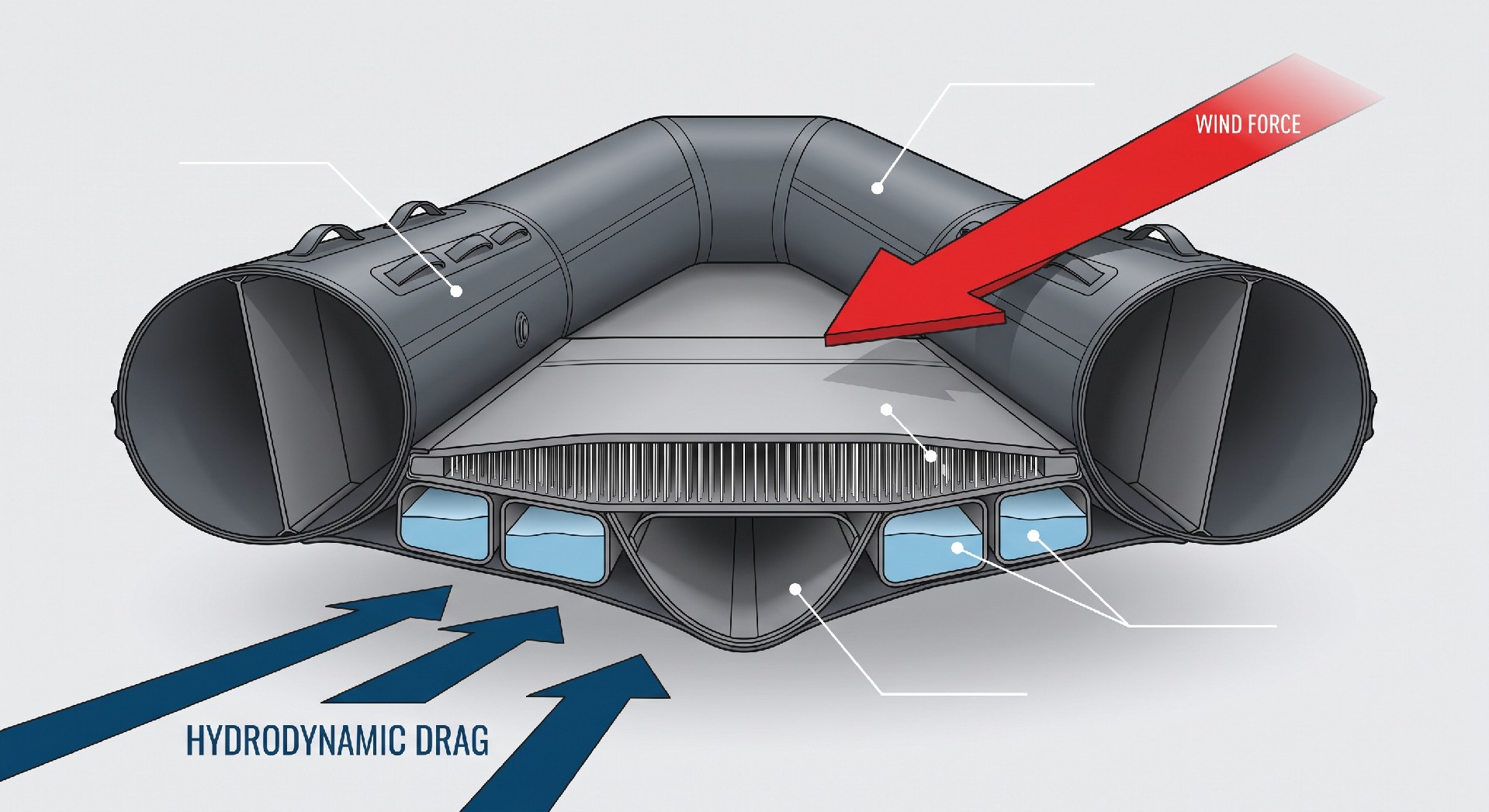
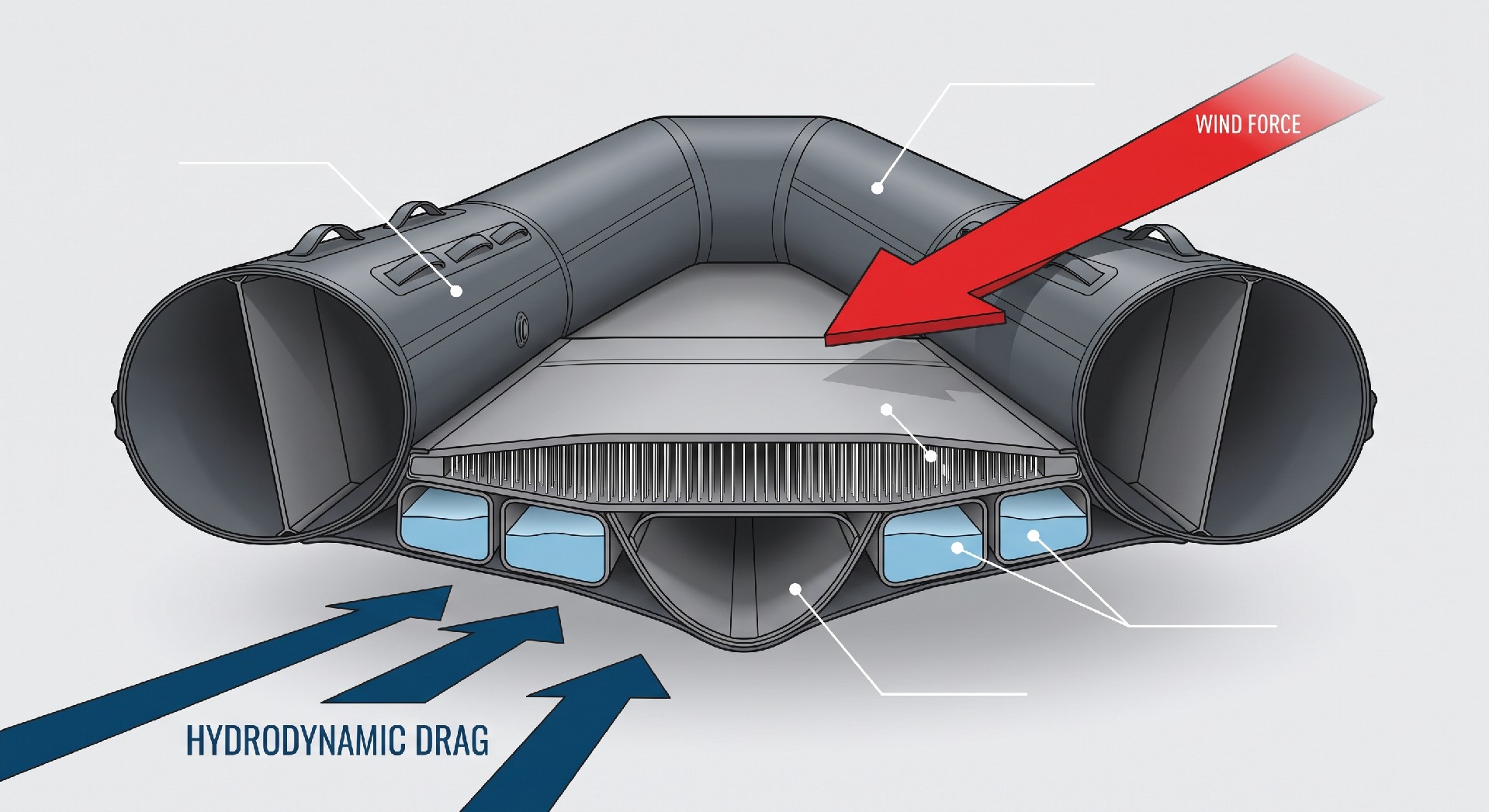
An inflatable boat's light weight and large, exposed surface area make it particularly susceptible to wind forces. Unlike rigid-hulled vessels, they offer less resistance to lateral movement, acting almost like a sail. A 20-knot wind can exert a force of over 100 pounds on a typical 14-foot inflatable, enough to shear poorly placed anchors or drag a boat across a shoreline. The primary challenge is that many standard anchoring systems are designed for calm water, not the dynamic load of high wind gusts. To effectively prevent drifting, one must consider not only the anchor's holding power but also the boat's windage (the area exposed to the wind), payload distribution, and the boat's inherent hydrodynamic resistance to lateral movement. The goal is to transition from a passive 'drop-and-forget' anchoring strategy to an active, multi-point system designed for wind resistance.
High-Performance Anchoring Strategies for High Winds
The cornerstone of preventing rapid drift is a robust anchoring and mooring strategy. This is not a one-size-fits-all solution; the correct approach depends on the seafloor and water depth. For commercial operations, relying on a single fluke anchor is often insufficient. A more secure approach involves using a combination of anchors, such as a primary bow anchor and a secondary stern anchor, to limit the boat's swing and prevent it from turning broadside to the wind. Additionally, the use of a 'sea anchor' or drift anchor, deployed from the bow, can significantly reduce drift by creating drag in the water column.
Anchor Types and Holding Power
Danforth / Fluke Anchors: Excellent for sandy or muddy bottoms, but can break out if the wind shifts or the pull direction changes. Not recommended as a sole anchor in high-wind scenarios.
Plow Anchors: Offer better holding power in varied seafloors (sand, mud, and gravel) and reset themselves if dislodged. A common choice for all-around utility.
Mushroom Anchors: Primarily used for calm water moorings. They are heavy but have poor holding power in soft bottoms and are not suitable for high-wind conditions.
Claw Anchors: Known for their ability to rotate and reset, making them a dependable choice for wind shifts and gusty conditions.
Commercial buyers should specify anchor weight and design based on the boat's length and windage. For example, a 5-meter inflatable in exposed conditions might require a primary anchor weighing 6-8 kg with a deeper-set design like a plow or claw, supplemented by a 3-4 kg stern anchor. The rode (the line connecting the anchor to the boat) must also be considered. A combination of 10-15 meters of high-tensile chain and 50-100 meters of nylon rope is standard, allowing for a 5:1 to 7:1 scope in high winds, which is critical for a proper angle of pull and shock absorption.
Pre-Deployment Ballast and Load Distribution
Beyond the anchoring system, the boat's own weight and how that weight is distributed play a crucial role in drift prevention. A lighter boat has less inertia and is more easily pushed by the wind. In commercial settings, consider adding temporary ballast. The most effective method is to partially fill the boat's floor chambers or add water bladders to the hull to increase the boat's draft, thereby reducing its windage and increasing its resistance to lateral movement. This is a standard practice in commercial fishing and rescue operations.
Payload distribution is equally critical. Positioning gear and passengers low and centered lowers the boat's center of gravity, reducing its roll and making it more stable in gusts. In a high-wind scenario, avoid having the boat fully packed with gear that is high up, which can act like a lever and increase the force required to keep the boat stationary. For fleet operations, specifying boats with heavier, thicker PVC or Hypalon/CSM fabric not only increases durability but also adds significant weight, improving overall stability and reducing drift. A typical commercial-grade 4-meter inflatable might weigh 45-55 kg, while a heavy-duty version for commercial use could weigh 60-70 kg, offering a tangible advantage in wind resistance.
Dynamic and Emergency Drift Control Systems
In situations where high winds are forecast, proactive measures are superior to reactive ones. Utilizing a drogues or a sea anchor is one of the most effective ways to prevent a boat from being blown rapidly downwind. A sea anchor is deployed from the bow and creates hydrodynamic drag, keeping the boat's head into the waves and wind, reducing drift speed significantly. This is especially important for open-water rescue or during emergency preparedness on commercial vessels. For rental or fleet boats, providing a stowable, easy-to-deploy sea anchor as standard equipment is a smart commercial decision that enhances safety and reduces retrieval costs.
Another layer of control is the use of auxiliary engines or trolling motors to hold position. By applying power against the wind, the boat can maintain its heading and location. This is a common practice for boats conducting work in exposed areas but requires reliable power and fuel management. In high winds, a 25-40 horsepower outboard on a medium-sized inflatable can provide the thrust needed to counteract a significant portion of the wind force, effectively acting as a dynamic anchoring system. For event management or commercial filming, this is often the only reliable method to maintain a precise position.
| Wind Condition (knots) | Primary Drift Prevention Strategy | Required Equipment | Operational Risk |
|---|---|---|---|
| 0-15 (Calm to Moderate) | Single anchor, moderate scope (3:1) | Standard plow/fluke anchor, nylon rode | Low: Minimal drift risk; standard anchoring sufficient. |
| 15-25 (Fresh to Strong) | Multi-anchor system (bow and stern), extended scope (5:1) | Primary plow anchor, secondary Danforth anchor, chain/rode combo | Medium: Increased tension on rode; risk of anchor dragging if not set properly. |
| 25-35 (Near Gale) | Sea anchor deployed from bow, plus multi-anchor backup | Drogue/sea anchor, two heavy-duty anchors with separate rodes | High: Dynamic loads require constant monitoring; potential for system failure. |
| 35+ (Gale to Storm) | Dynamic holding (engine power) + sea anchor | Reliable outboard engine, ample fuel, high-visibility sea anchor | Extreme: Abandon anchoring; use engine power to maintain position for survival. |
Fleet Configuration and Maintenance for Wind Resistance
From an operational perspective, preventing drift is as much about the boat's outfitting as it is about its piloting skills. For commercial fleets, standardizing on a pre-deployment checklist that includes anchor inspections, rode integrity, and stowed sea anchors is non-negotiable. A key commercial decision is choosing between single-chamber and multi-chamber hull designs. While multi-chamber boats offer safety in case of puncture, they also allow for independent ballast control. By selectively filling or partially inflating chambers (within safe operating ranges), operators can adjust the boat's hull shape and water resistance to minimize wind effects. For example, inflating the keel chamber more can increase a boat's tracking ability and reduce leeway (lateral drift).
The maintenance of the boat's lower hull and rubbing strakes is also vital. A clean, smooth hull reduces drag and makes it harder for waves to grip the boat and push it sideways. In contrast, a hull with biofouling or damaged strakes will have higher drag and can be pulled more effectively by wind-driven waves, increasing the rate of drift. For operators, regular inspection of D-rings and tow points is essential, as a failure of a critical attachment point can lead to anchor system failure at the worst possible moment. The safety and security of the boat often depend on the tensile strength of these small but vital components. Tensile strengths for commercial D-rings are often specified to exceed 1000 kg.
Decision Matrix: When to Use Which Control Strategy
Choosing the correct strategy for preventing wind drift is a conditional decision, dependent on the scenario. For a boat anchored for a short time in moderate winds (under 15 knots), a single heavy plow anchor with a 5:1 scope may suffice. However, for overnight mooring or in winds over 20 knots, a multi-anchor system with a sea anchor deployed from the bow is strongly advised. For rescue or emergency use, a dynamic strategy using engine power combined with a sea anchor provides the highest level of positional control. For high-value rental fleets, investing in high-quality anchors and heavy-duty rodes pays for itself in reduced lost-gear costs and improved customer safety perceptions. Conversely, a budget-focused operation that under-specifies its anchoring system will frequently incur costs related to boat damage, retrieval services, and insurance claims. It is also worth considering the use of GPS-linked 'virtual anchor' systems, which automatically apply engine or trolling motor power to maintain position, eliminating drift and greatly reducing the need for manual anchoring in high-wind scenarios. However, these systems carry a high upfront cost and require a reliable power source. The choice between these approaches should factor in the frequency of use, the average wind conditions at the operating location, and the available budget.
