

Why Aluminum Alloy Oars Are Vulnerable in Saltwater Operations
For commercial and rescue operations, aluminum alloy oars are essential for their lightweight strength and durability. However, saltwater is a relentless adversary that can compromise even the best marine-grade aluminum. The primary failure pattern for commercial fleets is not catastrophic breakage, but insidious corrosion that weakens the oar at the blade-shaft junction and the ferrule connection. This article provides a technical framework for maintaining aluminum alloy oars specifically to prevent salt corrosion, focusing on inspection protocols, protective coatings, and lifecycle management for fleet operators, OEM buyers, and technical product managers.
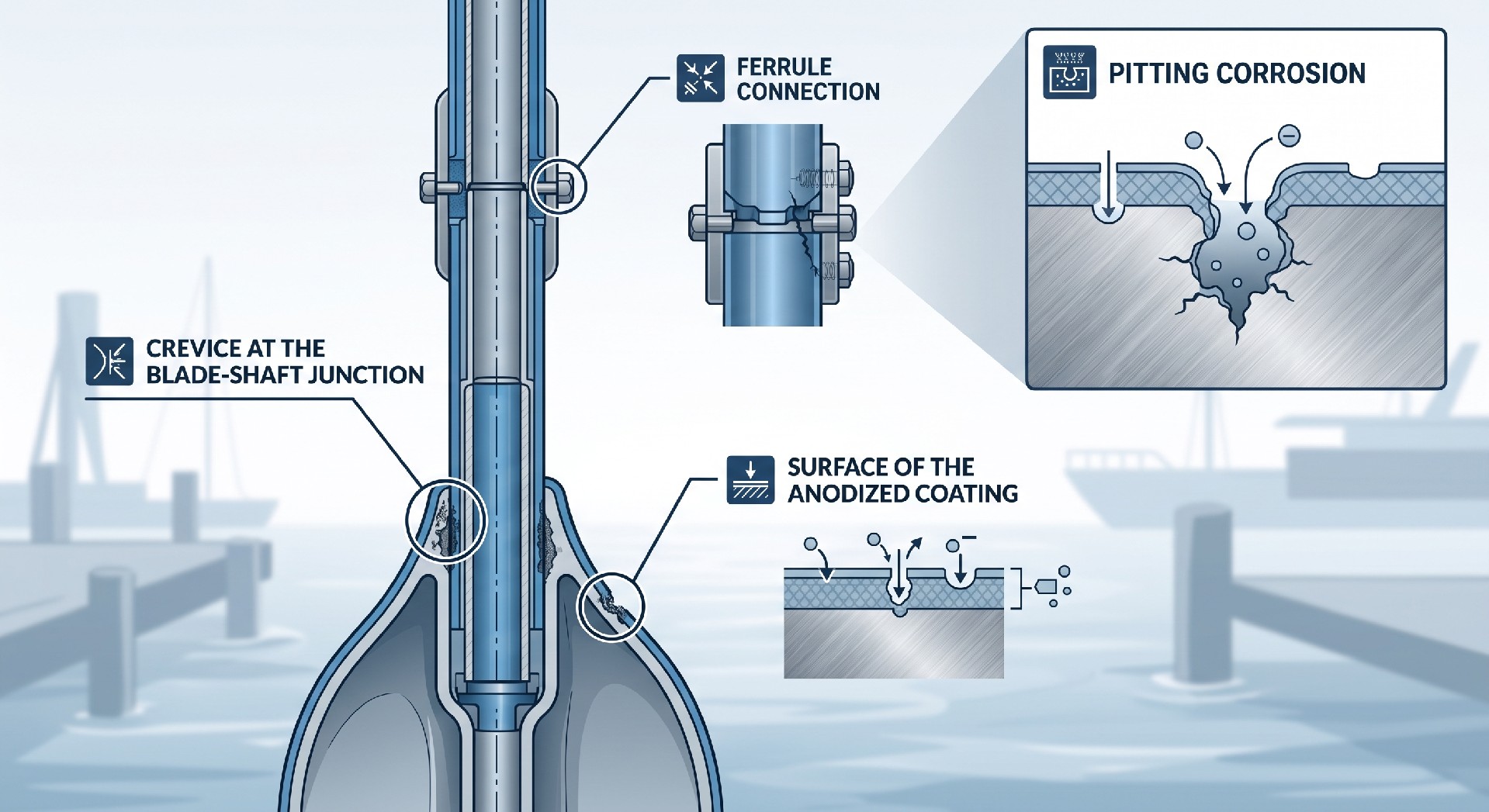
Understanding Salt Corrosion Mechanisms in Marine Aluminum Alloys
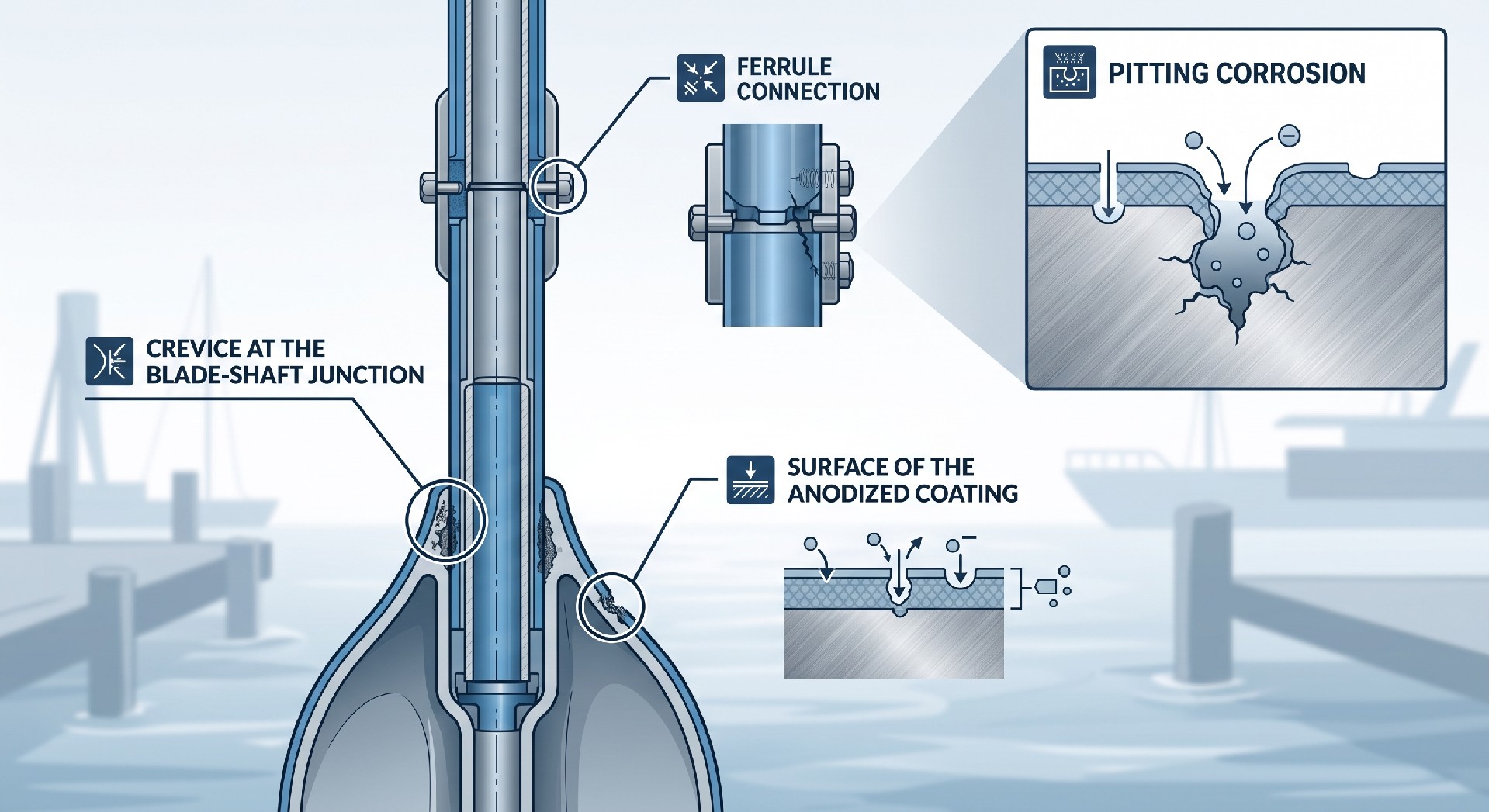
Aluminum is a reactive metal that naturally forms a thin, protective aluminum oxide layer. Saltwater, however, contains chlorides that can break down this passive layer, initiating pitting corrosion—a localized form of attack that leads to small pits or holes. This process is accelerated in crevices, such as under the blade sleeve, inside the ferrule connection, or beneath anodized coatings if they are scratched. For commercial aluminum alloy oars, the most critical areas are often the connection points between the shaft and blade, and the telescoping joint. These are areas where moisture and salt can become trapped, creating an electrochemical cell that accelerates corrosion.
Without a proactive maintenance regime, pitting can lead to stress corrosion cracking, significantly reducing the structural integrity of the oar. This not only impacts performance but also poses a serious safety risk. For rental fleet operators and resort buyers, this translates to unplanned downtime, costly replacements, and potential liability. Understanding that salt corrosion is a lifecycle cost issue is the first step in building a robust maintenance plan.
Key Corrosion Indicators for Commercial Inspection
Commercial buyers and fleet managers should train staff to identify early warning signs. These include:
Pitting: Small, pinpoint cavities on the surface, often appearing as white or gray dust.
Intergranular Corrosion: Attack along the grain boundaries of the alloy, often invisible to the naked eye until severe, but can be detected by a chalky appearance or surface flaking.
Crevice Corrosion: Visible as a dark, discolored line or area at mating surfaces, like where the blade meets the shaft.
Galvanic Corrosion: Occurs when aluminum is in contact with a more noble metal (like stainless steel screws) in saltwater, causing the aluminum to corrode preferentially. Check for any dissimilar metal contact.
A regular, documented inspection routine is the cornerstone of preventing costly failures.
Essential Maintenance Protocols for Saltwater Environments
Effective salt corrosion prevention for aluminum alloy oars hinges on a multi-pronged approach combining immediate post-use care, scheduled deep-cleaning, and protective surface treatments. The following protocols are designed for commercial environments where oars are used daily.
Immediate Post-Use Rinsing and Drying
This is the single most effective preventive measure. After each use in saltwater, oars should be thoroughly rinsed with fresh water. High-pressure washers can be used but maintain a safe distance to avoid damaging any anodized coatings or paint. The goal is to remove all salt residue from the surface and, critically, from any crevices. After rinsing, oars must be completely dried before storage. Store them in a dry, well-ventilated area, preferably separated to prevent moisture entrapment between oars. This simple routine can eliminate the primary catalyst for corrosion.
Weekly Deep-Cleaning and Inspection Cycle
For fleets with high utilization, a weekly deep-cleaning cycle is recommended. This involves:
Washing with a mild, non-abrasive marine soap and fresh water.
Using a soft-bristle brush to clean hard-to-reach areas, especially around the ferrule and blade connection.
Inspecting the entire surface for the corrosion indicators mentioned above.
Lubricating the ferrule or telescoping mechanism with a marine-grade anti-seize compound or silicone grease, ensuring it does not contain graphite, which can promote galvanic corrosion.
Documenting these inspections is crucial for fleet management. A simple log can track the condition of each oar, helping to predict replacement cycles and identify issues early.
| Protective Coating | Corrosion Resistance | Durability (Abrasion) | Touch-Up in Field | Typical Commercial Use |
|---|---|---|---|---|
| Type III Hard Anodizing | Excellent (with proper sealing) | Very High | No | OEM, high-end rescue, military |
| Powder Coating | Good (if coating intact) | High | Limited | Resorts, rental fleets, OEM |
| Marine-Grade Epoxy Paint | Good | Moderate | Yes | Rental fleets, cost-conscious operators |
| Anodizing + Powder Coating | Excellent | Very High | No | Premium commercial, saltwater expedition |
Protective Coatings and Surface Treatments: A Buyer’s Guide
When specifying or purchasing aluminum alloy oars for commercial saltwater use, the protective surface treatment is a key differentiator. There are several common options, each with distinct performance and cost tradeoffs. Understanding these is vital for OEM brand owners, importers, and procurement teams.
Anodizing
Anodizing is an electrochemical process that thickens the natural oxide layer on aluminum, providing a hard, durable surface. Type III (hard coat) anodizing is the most robust for marine applications. However, anodized coatings are porous and must be sealed to be effective. If scratched, the underlying aluminum is exposed and vulnerable. Salt spray testing is critical to verify the quality of the anodizing and sealing process.
Powder Coating
Powder coating involves applying a dry powder that is then cured under heat to form a thick, resilient layer. It offers excellent abrasion and corrosion resistance and is available in various colors for branding. However, any chip or crack can allow moisture to penetrate, leading to corrosion under the coating. A high-quality powder coating system, with proper edge coverage, is essential.
Painting with Marine-Grade Epoxy
Some manufacturers opt for high-performance marine epoxy paints. These offer good corrosion resistance and can be touched up in the field, making them a practical choice for rental fleets. However, paint is softer than anodizing or powder coating and requires more frequent touch-ups to prevent wear-through.
Sacrificial Anodes
For permanently mounted oars on larger vessels, attaching small zinc or aluminum sacrificial anodes to the oar or its mounting hardware can provide cathodic protection. This is a more specialized solution but can be highly effective for preventing galvanic corrosion.
Replacement Decision: When to Retire an Aluminum Alloy Oar
From a lifecycle management perspective, knowing when to retire an oar is as important as how to maintain it. Corrosion is progressive, and the cost of failure—in terms of safety, operational downtime, and potential damage to other equipment—can far outweigh the cost of a new oar.
Retirement Criteria for Corroded Oars
A clear, objective retirement trigger is essential for fleet operators. Consider these criteria:
Perforation: If pitting has penetrated entirely through the shaft or blade, the oar must be retired immediately.
Significant Section Loss: If pitting has reduced the cross-sectional area of the shaft in a critical load-bearing region by more than 10-15% (as estimated by a trained inspector), the oar should be replaced.
Structural Cracking: Any visible crack, especially at the blade-shaft junction or ferrule, is a failure point and warrants immediate retirement.
Compromised Ferrule: If the telescoping or ferrule connection is loose or shows signs of severe corrosion, it risks coming apart under load and should be replaced.
For commercial fleets, a rotating stock of replacement oars is a prudent investment. The goal is to remove fatigued or corroded oars from service proactively, ensuring the safety of personnel and the reliability of the operation. A lifecycle cost analysis that includes a fixed percentage for replacement parts will lead to a more resilient fleet in the long run.
