

Why Stove Placement Near a Tent Carries Real Fire and Carbon Monoxide Risks
Using a gas stove near an outdoor tent is a common practice across camping, glamping, and emergency response operations. The dominant safety risk is not the stove itself, but the combination of confined airflow, tent fabric flammability, and proximity to ignition sources. For B2B buyers, rental operators, and procurement teams, the key question is not whether to use a gas stove, but how to define safe clearance distances, ensure adequate ventilation, and specify fire-retardant fabrics that materially reduce burn-through risk. A tent constructed to EN 14960 or CPAI-84 standards may resist ignition, but direct radiated heat from a burner can still degrade seams and coatings over time. This article focuses on the engineering controls, buyer specifications, and field protocols that determine whether gas stove use near a tent is commercially viable or a liability exposure.
Defining Clearance: The First Line of Defense
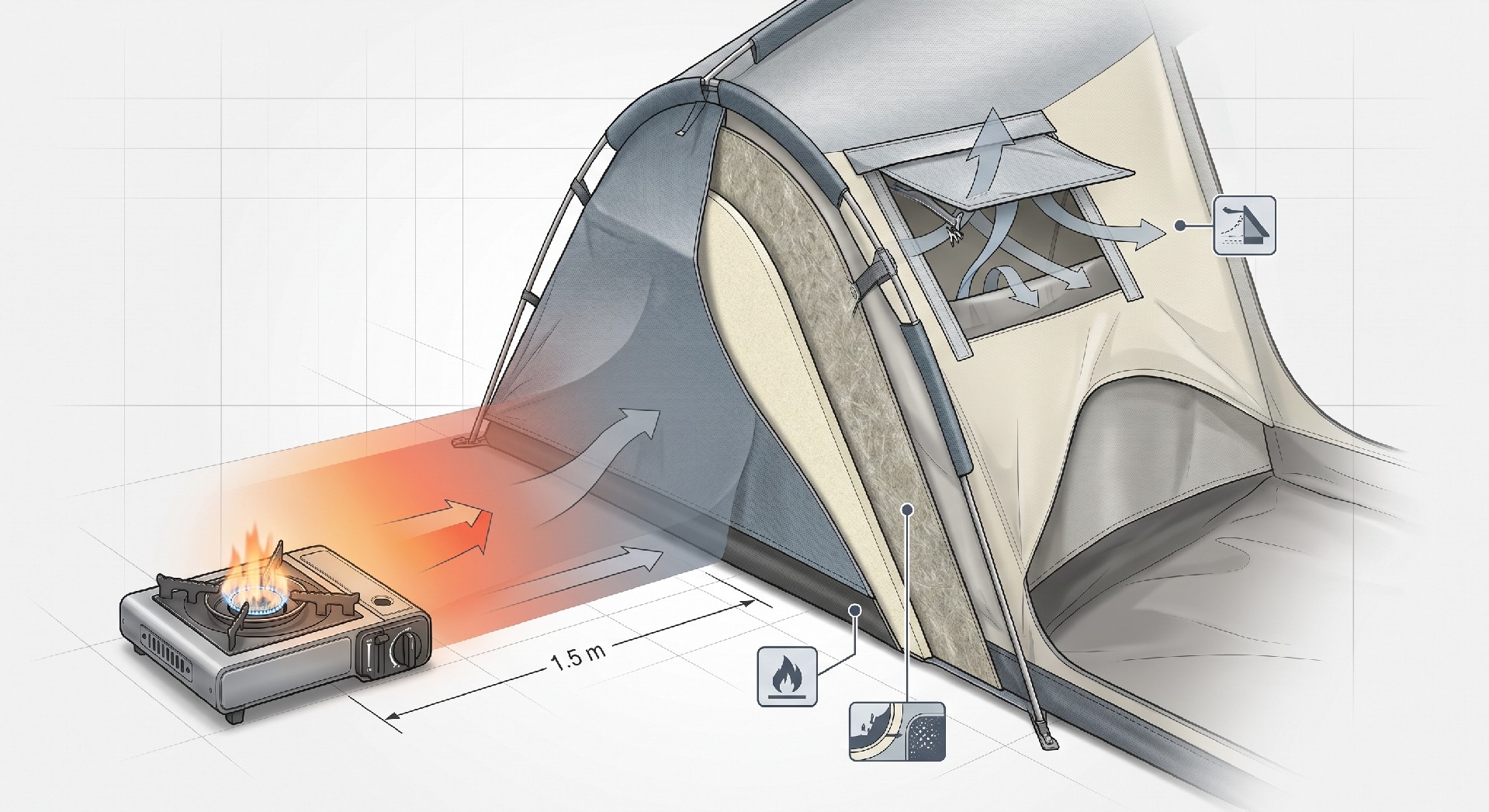
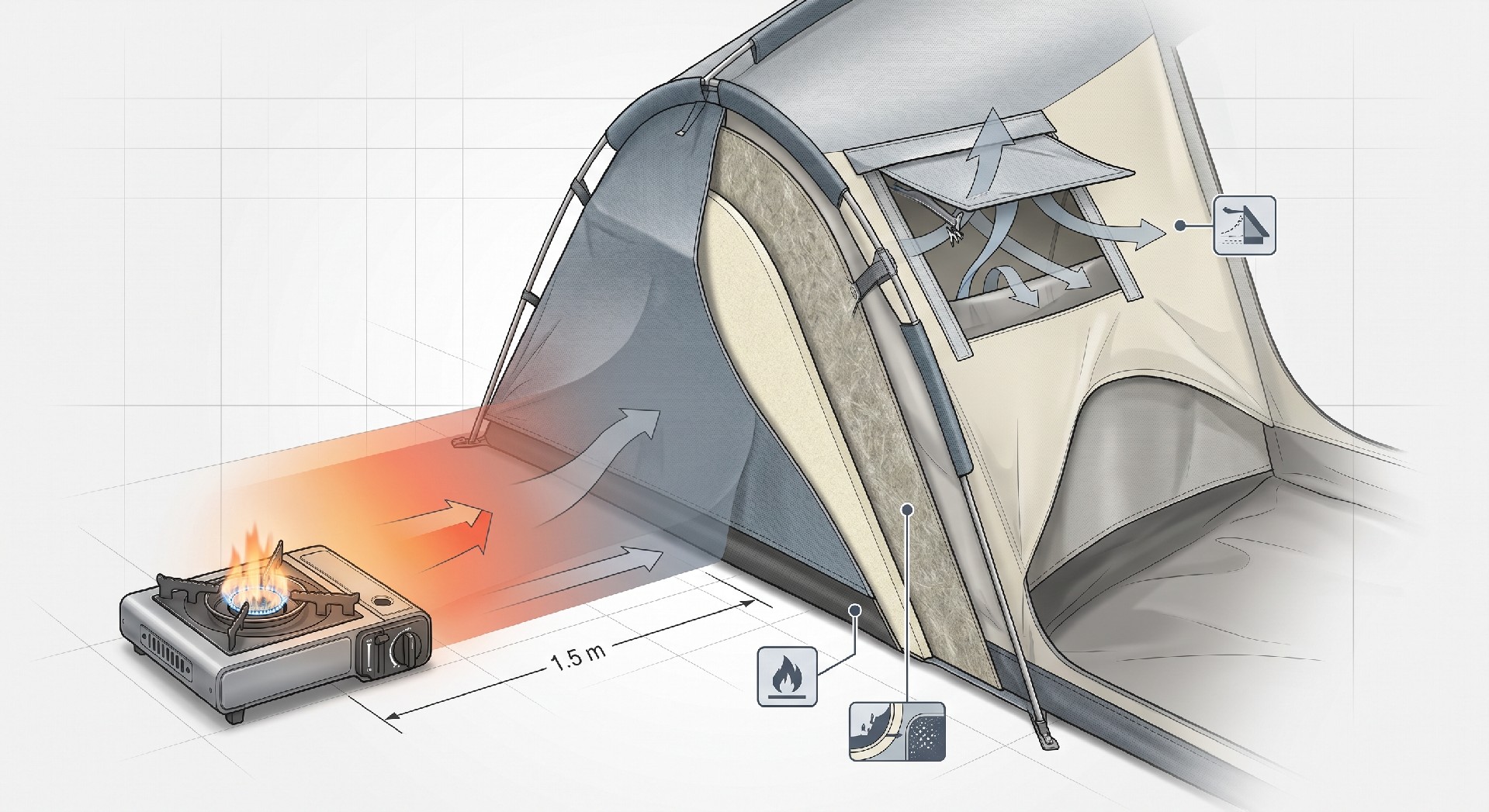
The most critical safety measure is physical separation. The typical commercial recommendation for stove-to-tent clearance is a minimum of 1.5 to 2 meters from the tent entrance or any side wall, measured from the closest stove component to the tent fabric. This distance is based on the observed radiant heat flux from a typical 10,000 to 20,000 BTU burner at full output. At 1 meter, surface temperatures on the tent fabric can exceed 120°C, a risk threshold for many PVC and polyester coatings. At 2 meters, surface temperatures typically drop below 60°C, which is within the continuous-use range for most commercial tent materials. However, these values are supplier-dependent and vary with burner size, wind direction, and tent material. For glamping or safari-style tents with large canopies, some operators specify a 3-meter exclusion zone when cooking underneath the awning. Buyers should request a clearance test protocol from the tent manufacturer, including wind-adjusted heat flux data, before committing to a layout plan.
Ventilation: Preventing Carbon Monoxide Accumulation
Carbon monoxide is the invisible danger that often goes unmeasured. A gas stove operating in a partially enclosed tent space can produce CO levels in excess of 50 ppm within 15 minutes, especially when the stove is placed too close to the entrance and wind conditions reduce natural cross-flow. For commercial tents, the minimum ventilation requirement is usually specified as an equivalent open area — often 0.2 to 0.4 square meters per 10 square meters of floor space. This can be achieved via mesh windows, raised floor gaps, or dedicated ventilation panels. When specifying tents for rental fleets that allow gas stove use, consider integrating an adjustable vent panel near the cooking zone. Some commercial tent models include a dedicated cooking awning with its own ventilation flaps and a heat shield at the stove contact point. This design reduces the risk of CO accumulation and decreases the chance of fabric ignition from accidental flare-ups. For emergency or military tents where cooking is unavoidable, some procurement specifications require a portable CO monitor with an audible alarm for every tent designated for cook use.
Fabric Fire Performance: What Buyers Should Verify
Not all tent fabrics are created equal when it comes to ignition resistance. The most commonly referenced standards are CPAI-84, EN 14960, and NFPA 701. CPAI-84 is widely used for recreational camping tents and tests both flame spread and burn-through resistance after 30 seconds of vertical flame application. EN 14960 is the European standard for inflatable play tents but is sometimes referenced for durability and flame resistance of large shelter fabrics. NFPA 701 is more common for event tents and industrial fabrics. However, none of these standards simulate the radiant heat from a 20,000 BTU stove placed at 1 meter distance. A buyer should not assume that a CPAI-84 certified fabric is safe for gas stove use in all conditions. The test method exposes the fabric to a small flame, not a radiant heat panel. A more relevant test is ISO 17431 or a custom heat-flux test at the intended use distance. Some Chinese manufacturers offer a third-party heat resistance test at 200°C for 10 minutes, but this is not a standard requirement. Buyers should demand a test certificate that lists the heat-flux exposure level (kW/m²) and the time to fabric failure. A typical pass criterion is 20 kW/m² for 60 seconds without hole formation. For a stove placed 1.5 meters away, the incident heat flux is often in the 8-12 kW/m² range, which many fabrics with a proprietary heat-resistant coating can withstand.
Operational Controls and User Training
The best fabric and clearance rules are useless without proper user behavior. For rental operators, the most common failure is stove placement on uneven ground, which allows the stove to tip and direct the burner flame toward the tent wall. A stable, non-combustible base — such as a steel or aluminum stand with an integrated wind baffle — is a basic operational control. Some commercial operators also require a fire-resistant ground sheet that extends 1 meter from the stove in all directions. This not only protects the tent floor from sparks but also prevents dry grass fires. Another critical control is a fire extinguisher or water bucket positioned within 5 meters of the stove. For glamping and resort applications, a staff member must be assigned to monitor the stove for the entire cooking period. In emergency or military settings, a cooking rotation schedule and a written SOP that includes emergency shutdown and evacuation procedures should be posted inside each tent. Buyer checklists should include training records, a log of weekly stove inspections, and a record of the fire extinguisher's last service date.
| Control Parameter | Typical Commercial Target | Verification Method | Action If Fail |
|---|---|---|---|
| Minimum stove-to-tent clearance | 1.5-2.0 meters from fabric | Measured with tape during setup | Relocate stove or install heat shield |
| Ventilation free area | 0.2-0.4 m² per 10 m² floor | Calculate window net area | Open additional flaps or windows |
| Fabric heat-flux resistance | 20 kW/m² for 60 seconds | Review supplier test certificate | Request third-party retest or upgrade fabric |
| CO monitor placement | At head height, 2 meters from stove | Check daily calibration log | Replace sensor or calibrate |
| Fire extinguisher location | Within 5 meters of stove | Visual inspection and service record | Replace or recharge immediately |
Carbon Monoxide Exposure Limits and Monitoring
OSHA's permissible exposure limit for CO is 50 ppm over an 8-hour time-weighted average. However, cooking in a tent can briefly spike CO concentrations to 200 ppm or more if ventilation is poor. For commercial operations, consider specifying a portable CO meter with a display and peak-hold function. Some models are capable of data logging, which can be useful for audit trails and incident investigation. When selecting a CO monitor for tent deployment, choose a unit with a battery life of at least 48 hours and a sensor that is unaffected by humidity or dust. The best placement is at head height, approximately 2 meters from the stove, but within the tent's enclosed volume. Some procurement teams specify one CO monitor per tent and require a daily calibration check before the first stove use. The cost of a reliable monitor is typically USD 100-250, which is a small investment compared to the liability of a CO-related health incident.
Emergency Response and Fire Containment
Despite all precautions, fires do occur. The primary fire-fighting strategy for tent stove fires is rapid isolation. This means cutting off the fuel supply at the gas cylinder immediately, if safe to do so. For LPG stoves, the cylinder valve should be within arm's reach of the cooking position, but positioned so that it faces away from the tent entrance to allow quick access. Some commercial tent layouts include a quick-release propane hose that allows the operator to pull the stove away from the tent without touching the hot burner. This is a design detail that rental operators should consider when customizing their stove kits. In terms of tent design, some manufacturers offer a firebreak panel — a strip of non-flammable silicone-coated fiberglass fabric that extends from the floor to the eave on the side facing the stove. This panel provides an extra 60-90 seconds of protection before burn-through occurs, giving the operator time to extinguish the fire or evacuate the tent. Buyers should ask suppliers whether they offer a firebreak panel option and request heat-flux test results for that specific panel design. For glamping and resort use, consider specifying a rooftop heat vent that opens automatically at 80°C to release hot gases and smoke, reducing the risk of a flashover.
Commercial Procurement Checklist for Gas Stove-Compatible Tents
For B2B buyers, the decision to allow gas stove use near a tent must be documented in the procurement specification. The following checklist should be part of the tender document:
Request fabric heat-flux test data at 1.5 meters and 2.0 meters from a 15,000 BTU burner, with wind speed of 10 km/h.
Verify that the tent has at least two ventilation openings with a combined free area of 0.3 m² or more, and that these openings are positioned to create a cross-flow.
Ask whether the manufacturer offers an optional firebreak panel and request its test certificate.
Include a CO monitoring requirement in the spec, with a model number and calibration protocol.
Specify a fixed, non-combustible stove base that is 0.5 meters square and has a lip or raised edge to contain grease drips.
Require that the gas cylinder be stored outside the tent, at least 2 meters from any opening, with the hose routed through a sealed port that prevents insect and water ingress.
Demand a written cooking SOP template that includes emergency shutdown, fire extinguisher inspection, and a post-use cleaning protocol for the stove and surrounding area.
This checklist is not exhaustive but covers the primary technical and operational controls that reduce risk to an acceptable level for commercial tent deployments. For high-volume fleets, consider a pilot test where you set up a controlled cooking scenario and measure heat flux, CO, and fabric temperatures under real-world conditions. This data can be used to refine your internal specifications and provide a strong defense in case of an incident investigation.
Final Decision: When Gas Stoves and Tents Are Commercially Viable
Gas stove use near tents is commercially viable when the tent is engineered with heat-resistant materials, the site layout guarantees a 2-meter minimum clearance, ventilation is actively managed, and users are trained on emergency procedures. The best use cases are glamping resorts with fixed tent platforms, emergency response bases where cooking is essential, and RV parks with dedicated cook shelters. It is not recommended for standard recreational tents without modification, for tents placed on dry grass or pine needles, or for situations where the stove will be attended for less than 10 minutes without a fire watch. B2B buyers should specify a tent that includes a firebreak panel and a CO monitor as standard equipment, or negotiate a separate safety kit that includes both items. Avoid suppliers who cannot provide heat-flux data at the specified clearance distance or who rely solely on a general CPAI-84 certificate. Ultimately, the decision should be guided by a risk assessment that considers the specific venue, user group, and local fire regulations. When done correctly, gas stove compatibility can be a differentiator for high-end glamping operators and a necessity for certain field operations, but it requires a diligent specification and inspection process.
