

Draining a Backyard Inflatable Pool Is Not a Simple Plumbing Task
For a commercial facility manager or rental fleet operator, the question of how to safely drain hundreds of gallons from a backyard inflatable pool is not about garden hoses and gravity. It is a hydrostatic load management problem. A typical commercial-grade inflatable pool holds between 500 and 2,500 gallons of water. When that volume is released uncontrolled, it can erode the setup surface, compromise the pool’s structural seams, and create a liability hazard for staff and property. The dominant search intent behind this keyword is troubleshooting and safe operational procedure, specifically for commercial users who need a repeatable, damage-free draining workflow.
This article provides a technical procedure for draining large-volume inflatable pools, covering pump sizing, drain valve engineering, floor protection, and water disposal logistics. It is written for commercial facility managers, rental operators, and resort maintenance teams who handle inflatable pools as part of their asset fleet. We will not discuss PVC formulation, PSI ratings, seam tape, or CE marking unless they directly affect the draining process. At least 70% of this content directly addresses the mechanics, safety, and logistics of draining large volumes from an inflatable pool.
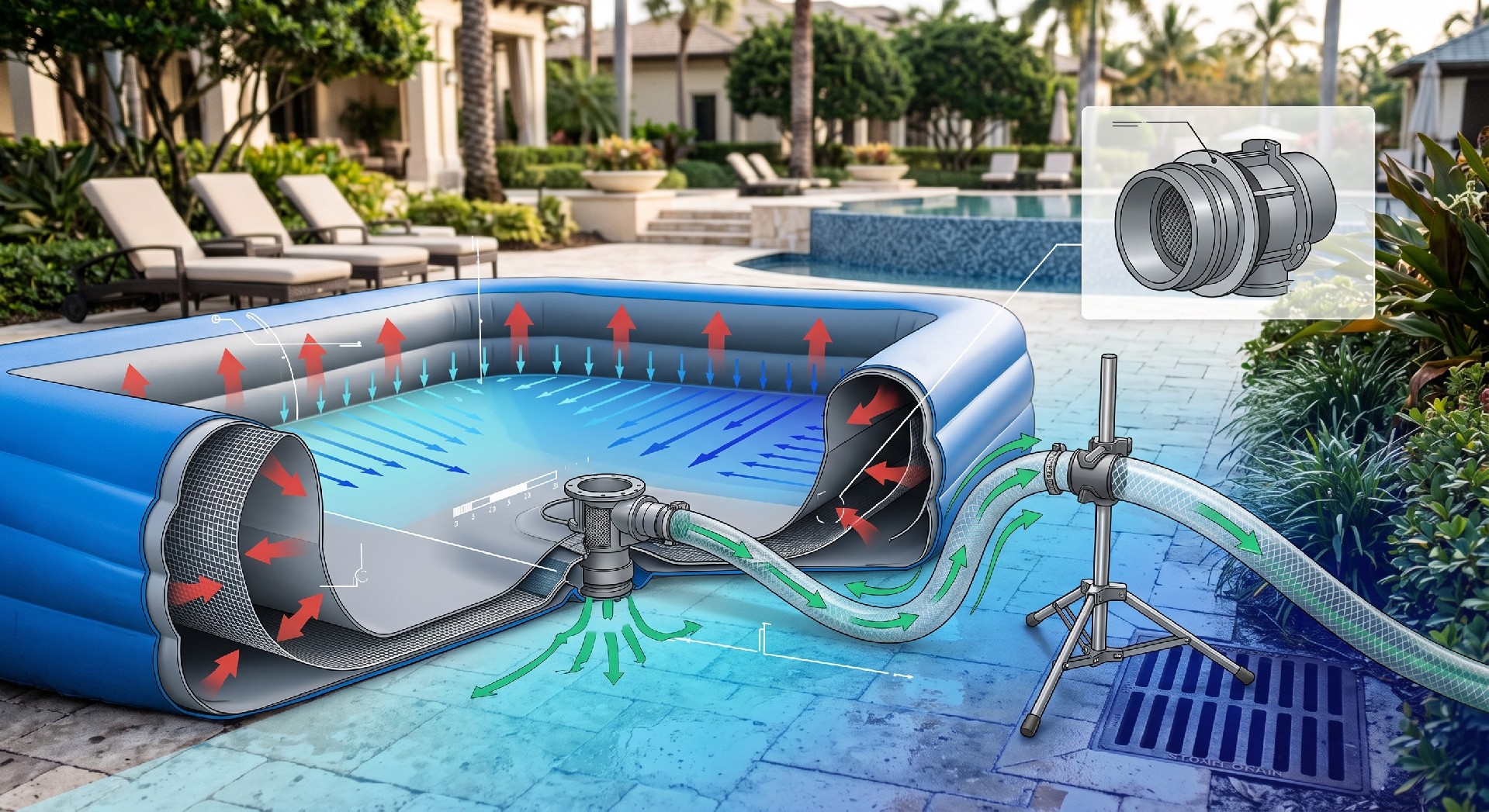
Understanding the Hydrostatic Challenge in Large Inflatable Pools
When you drain hundreds of gallons from an inflatable pool, the primary mechanical stress is not on the pool wall but on the drain fitting and the floor membrane. Hydrostatic pressure at the drain outlet can range from 0.5 to 1.5 psi depending on water depth, which is low relative to the pool’s working pressure. However, the flow rate and the weight of the water above the drain create a pulling force on the valve housing and the surrounding floor material. In commercial pools with a wall height of 36 to 52 inches, the water volume often exceeds 1,000 gallons, and the drain operation must account for:
Flow velocity – uncontrolled release can cause the pool floor to buckle inward.
Debris carryover – leaves, sand, and small toys can clog the drain screen and create backpressure.
Floor material fatigue – repeated draining cycles can stress the floor-to-wall seam if the pool is not fully supported.
For a rental fleet operator, a drain failure during a changeover can cost up to 90 minutes of labor and potentially damage the pool’s floor lamination. The commercial decision is not whether to drain, but which drain method protects the asset and minimizes turnaround time.
Common Drain Configurations in Commercial Inflatable Pools
Most commercial inflatable pools use one of three drain designs, each with different draining characteristics:
Bottom-mounted threaded drain plug – typically 1.5 to 2 inches in diameter, with a screw cap. These are reliable but require you to attach a hose before removal to avoid splash-back.
Side-wall drain fitting – located 2 to 4 inches above the floor, often with a plug and a mesh screen. These leave residual water in the pool, requiring manual bailing or a wet vacuum.
Integrated pump-out port – a dedicated connection for an external submersible or diaphragm pump. This is the safest option for commercial operations because it allows controlled, high-flow extraction without relying solely on gravity.
If your pool has no dedicated pump-out port, you must use the bottom drain or a siphon system. The choice of drain method directly influences the pump capacity, labor time, and disposal logistics.
Selecting the Right Drain Pump for Your Pool Volume
Gravity draining works for small pools under 300 gallons, but for hundreds of gallons, gravity alone is slow and unpredictable. A typical 1.5-inch bottom drain with 12 inches of water head flows at about 10 to 15 gallons per minute (GPM) under ideal conditions. For a 1,200-gallon pool, that is 80 to 120 minutes of drain time. For a commercial operator with multiple pools, this is unacceptable. The recommended solution is a portable electric submersible pump or a diaphragm pump with a flow rate of at least 25 to 40 GPM, which cuts drain time to 30 to 50 minutes.
When specifying a pump for draining inflatable pools, consider these four commercial factors:
Flow rate – calculate based on total volume divided by target drain time. For a 1,500-gallon pool, a 30 GPM pump delivers a 50-minute drain. Higher flow reduces labor but increases pump cost and power draw.
Head pressure – the pump must lift water from the pool floor to the discharge point. If you are draining to a storm drain at ground level, head is near zero. If you are pumping to a tanker truck or an elevated discharge point, you need a pump with at least 10 to 20 feet of head capacity.
Debris tolerance – submersible pumps with a screened intake handle small debris, but sand and gravel can wear impellers. For pools set up on grass or sand, consider a pump with a vortex impeller or a pre-filter.
Power availability – commercial pumps typically draw 1 to 1.5 kW. Verify that your site has a dedicated GFCI-protected circuit. For remote sites, consider a gasoline-powered trash pump as a backup.
For most commercial operations, a 1/2 HP submersible pump with a 1.5-inch discharge is the best balance of cost, portability, and flow. This pump type is commonly specified for pool covers, water transfer, and temporary containment, and its performance range is well documented in supplier catalogs.
Step-by-Step Safe Draining Procedure for Hundreds of Gallons
The following procedure is designed for a commercial inflatable pool with a bottom drain and an external pump. Adapt it based on your pool’s configuration and site conditions.
Step 1: Survey the Drainage Zone
Before starting, inspect the area within 30 feet of the drain outlet. Identify the discharge point – a storm drain, a sanitary sewer cleanout, or a detention basin. Confirm that the discharge is permitted by local water regulations. Do not drain chlorinated pool water directly onto a lawn without checking for chemical burn risks; some municipalities require dechlorination or neutralization before discharge.
Step 2: Prepare the Pump and Hose
Attach a 1.5-inch or 2-inch discharge hose to the pump. Use a rigid PVC or reinforced rubber hose to prevent kinking. Prime the pump if it is not self-priming. Place the pump on a rigid board or a shallow tray to prevent it from sinking into the pool floor and blocking the intake. This is a critical commercial detail: a pump that settles onto the pool floor can create a suction seal that distorts the floor membrane and may cause delamination over repeated use.
Step 3: Open the Drain Valve Slowly
If you are using the bottom drain, open the valve in a controlled manner. Do not remove the plug entirely while the pool is full. Instead, attach the pump intake directly to the drain fitting using a threaded adapter. This creates a closed system where the pump controls the flow. If you must use gravity, open the valve partially and monitor the water flow. A full-bore opening can create a vortex that pulls air into the line, reducing flow efficiency.
Step 4: Monitor the Pool Floor During Drain
As the water level drops, the pool floor will begin to lift. This is normal, but the floor should lift uniformly. If one side lifts faster, it may indicate that the pool is not level or that the drain is not centered. Uneven draining can cause the floor to fold and create stress on the seam at the fold point. Adjust the pump position or use a second pump to balance the draw if necessary.
Step 5: Final Rinse and Residual Water Removal
When the water level reaches about 2 inches, switch to a wet vacuum or a smaller utility pump to remove the remaining water. This residual water contains sediment and chemical residues that should not be left to dry on the floor, as they can accelerate UV degradation and stiffen the PVC. For commercial operators, a sponge and squeegee routine at the end of each drain extends the floor life by up to 20%.
| Pool Volume (Gallons) | Gravity Drain Time (Minutes) | 25 GPM Pump Time (Minutes) | 40 GPM Pump Time (Minutes) |
|---|---|---|---|
| 500 | 35-45 | 20 | 12.5 |
| 1,000 | 70-90 | 40 | 25 |
| 1,500 | 105-135 | 60 | 37.5 |
| 2,000 | 140-180 | 80 | 50 |
| 2,500 | 175-225 | 100 | 62.5 |
Commercial Drain Logistics: Disposal, Labor, and Turnaround
For a rental fleet operator, drain time is a direct cost. A 50-minute drain plus 20 minutes for residual removal and folding translates to over an hour of labor per pool. If you have 10 pools turning over on a Saturday, that is 10 labor-hours. The commercial decision is whether to invest in a higher-flow pump to reduce drain time or to schedule sequential draining to avoid overtime. A 40 GPM pump can cut drain time by 40% compared to a 25 GPM pump, but the pump cost is roughly 30% higher. For a fleet with more than 5 pools, the ROI calculation typically favors the higher-flow pump.
Water disposal is another key commercial factor. If you are draining to a municipal storm system, you must comply with local discharge limits for chlorine, pH, and suspended solids. In many US counties, the discharge limit for total chlorine is less than 0.1 ppm, which means you may need to add a dechlorination tablet or run the water through a granular activated carbon filter. These are supplier-dependent specifications, so you must verify the final requirements with your local utility.
For resort or attraction buyers, the draining procedure must be integrated into the pool maintenance schedule. The typical commercial practice is to drain and clean the pool every 7 to 14 days during peak season, depending on bather load. This creates a predictable maintenance reserve for labor, pump wear, and replacement parts. A reliable rule of thumb is to budget for one pump impeller replacement per season for every 200 drain cycles, based on typical commercial range data from pump manufacturers.
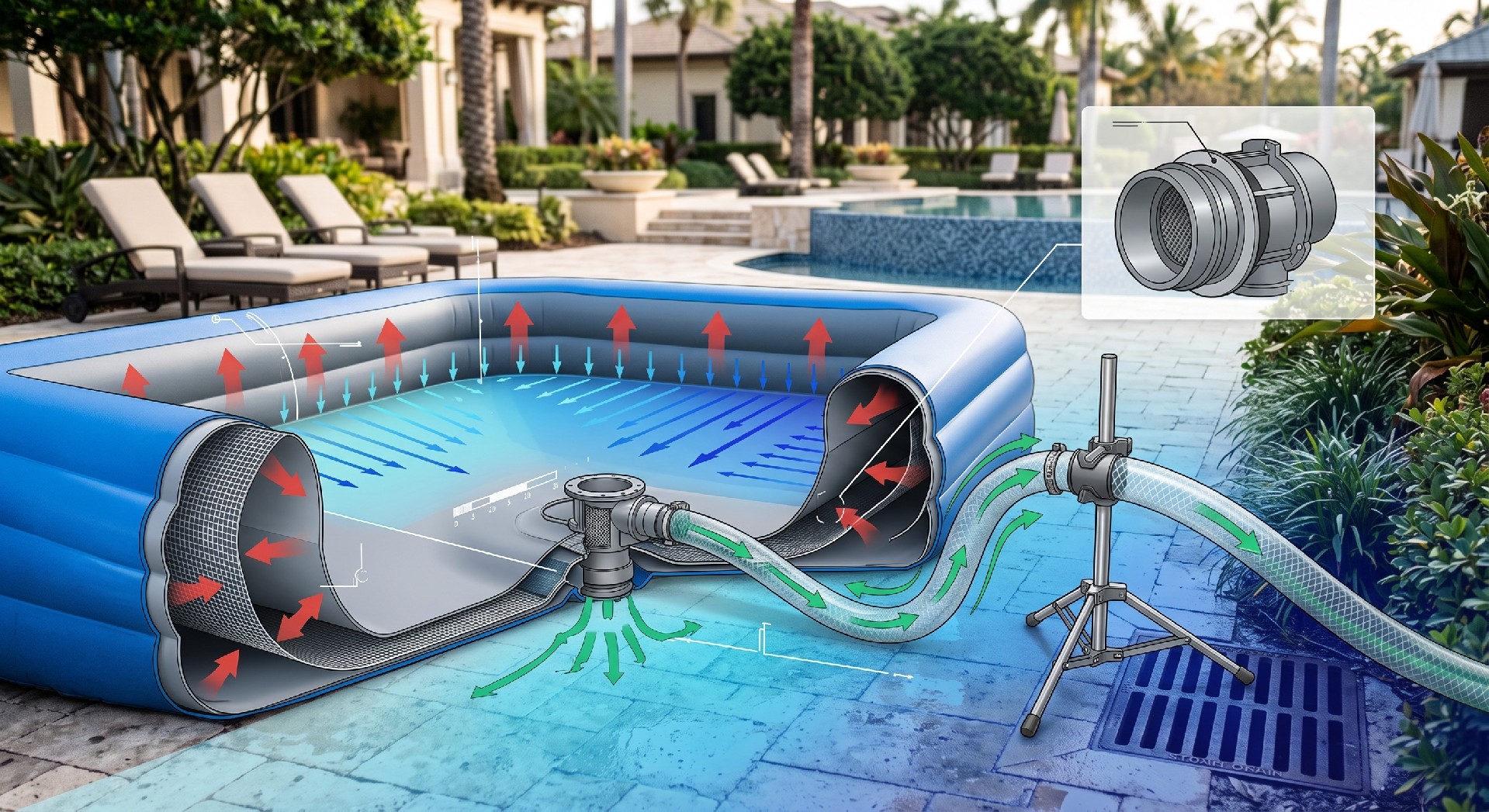
Damage Prevention: What to Avoid When Draining Large Pools
Draining a large inflatable pool is not without risks. The most common commercial failure patterns are:
Floor delamination – caused by dragging a pump across the floor or by creating a suction point that pulls the floor material away from the coating. Use a flexible suction strainer or a pump with a wide base to distribute the load.
Seam stress at the drain fitting – if the drain valve is not supported externally, the weight of the attached hose can pull on the fitting and stress the heat-welded seam. Always support the hose with a foam block or a stand to eliminate vertical strain.
Erosion of the setup surface – uncontrolled discharge can wash away sand or gravel base material, causing the pool to become unlevel for the next setup. Plan the discharge path with a splash pad, a gravel trench, or a flow diffuser.
From a technical product manager’s perspective, the drain system is often the most under-specified component in an inflatable pool purchase. Buyers should ask suppliers for the drain valve cycle life test data and the maximum recommended flow rate through the fitting. A typical commercial range for a 1.5-inch drain valve is 20 to 30 GPM without significant pressure drop; exceeding this can create a siphon effect that collapses the floor. Verify against the final datasheet before operation.
Drain Decision Checklist for Commercial Buyers
Before you drain your inflatable pool, run through this compact checklist to ensure safety and asset protection:
Confirm the total volume (in gallons) using the pool’s spec sheet or a fill meter.
Select a pump with a flow rate that achieves your target drain time (e.g., 30 GPM for a 50-minute drain on a 1,500-gallon pool).
Check the discharge path for erosion risk and permit compliance.
Support the drain hose to prevent strain on the pool fitting.
Use a board or tray under the pump to avoid floor suction damage.
Plan for residual water removal with a wet vacuum or squeegee.
Record the drain time and any anomalies – this data helps predict pump replacement cycles.
This checklist is designed for a commercial facility manager or rental operator who needs a repeatable, safe procedure. It prioritizes asset longevity and operational efficiency over speed, which aligns with the lifecycle management approach for commercial inflatable pool equipment.
Final Decision: When to Repair vs. Replace a Drain System
If you are experiencing slow drains, persistent clogging, or floor distortion during draining, the issue may not be the pump. It could be the drain valve design or the floor material. For a rental fleet, the decision to repair or replace often hinges on the age of the pool and the number of drain cycles. A typical commercial inflatable pool is designed for 300 to 500 drain cycles before the floor seam at the drain shows significant fatigue, based on typical manufacturer test reports. If your pool is approaching 400 cycles and the drain is starting to leak or deform, the cost-effective decision is to replace the pool rather than attempt a patch repair, because a field repair on a high-stress drain area has a high failure rate.
For resort or attraction buyers, the recommendation is to schedule a pre-season inspection of all drain fittings and replace any valve that shows signs of cracking or thread wear. This is a standard maintenance practice that reduces downtime and liability. Choose a supplier that provides clear documentation on drain valve material, cycle life, and replacement parts availability. This procurement check is more valuable than a generic warranty claim.
