

Can an Inflatable Baby Pool Be Used Indoors During Winter?
Yes, an inflatable baby pool can be used indoors during winter, but doing so safely and profitably requires a shift from outdoor summer thinking to a controlled-environment operational model. For B2B buyers—including rental fleet operators, resort activity planners, and early childhood facility managers—the core question is not simply 'is it possible?' but rather 'under what commercial conditions does indoor winter use make sense?' This article addresses the dominant search intent: a use-case planning guide for commercial operators considering indoor winter deployment. We will cover water containment, splash management, floor protection, heating, drying, and the specific maintenance protocols that differ from summer outdoor use. At least 70% of this guide directly addresses the practicalities of indoor winter operation for inflatable baby pools, moving beyond generic PVC and seam discussions to focus on site conditions, staffing, and operational workflow.
Commercial Context and Buyer Risks
The primary commercial opportunities for indoor winter use include: children's indoor play centers adding a water-based attraction, resorts offering a year-round pool experience in cold climates, and rental operators diversifying their off-season revenue. However, the shift indoors introduces new risks. Water spillage on finished floors can lead to slip hazards and damage claims. Evaporation increases indoor humidity, potentially causing mold or damaging building structures. The heating required to maintain a comfortable water temperature (typically 30°C to 32°C for young children) adds significant operational costs. Furthermore, the setup surface—be it tile, concrete, or carpet—must be carefully considered. A commercial facility manager must evaluate these factors against the potential revenue, which might range from a per-session fee at a play center to a premium amenity at a winter resort.
Critical Operational Requirements for Indoor Winter Use
To deploy an inflatable baby pool indoors during winter, the following operational parameters must be defined and controlled:
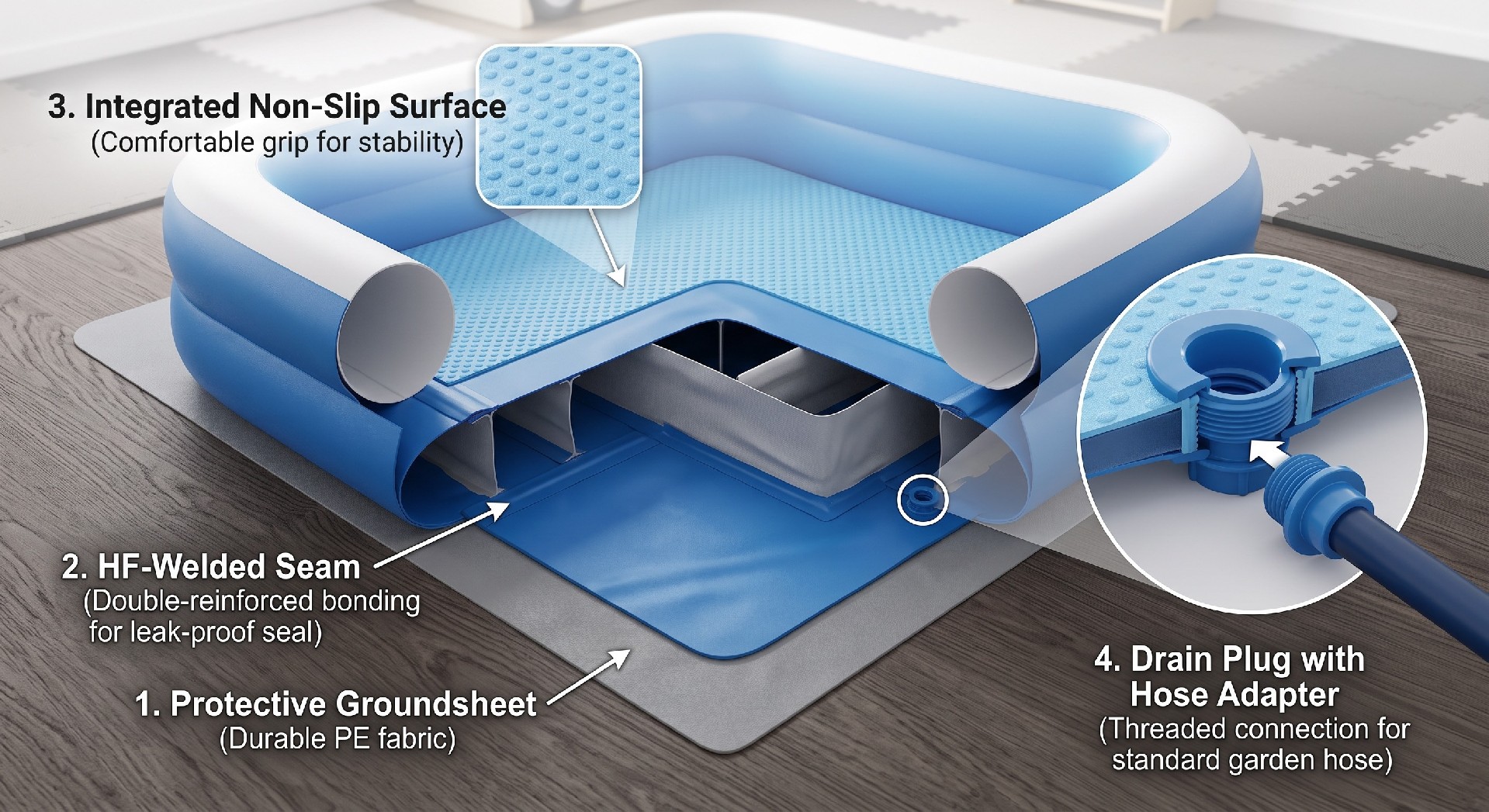
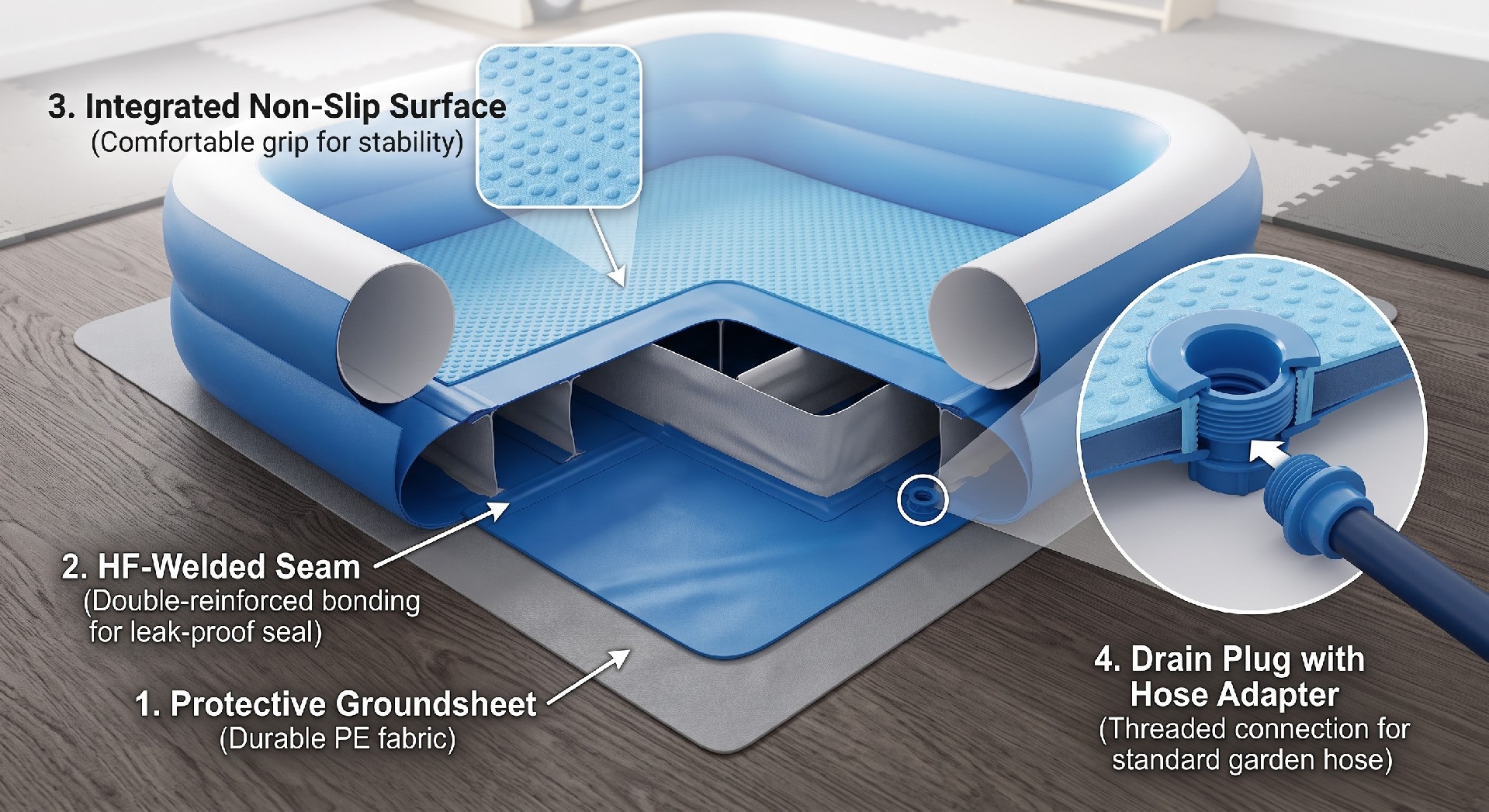
Floor Protection: The pool must be placed on a protective groundsheet or matting. This prevents abrasion to the pool's floor from hard surfaces and protects the building's flooring from moisture. A commercial-grade tarp with a high denier count (e.g., 1000D) is commonly specified.
Splash Containment: Even with a shallow pool (water depth typically 15-25 cm), splashing is inevitable. The area around the pool must have absorbent, non-slip matting to prevent slips. A containment apron or a perimeter of rubber gym mats is a common commercial solution.
Heating Strategy: The water will be cold initially and will lose heat rapidly in a heated room (20-22°C) if not insulated. A submersible pool heater is essential. The required wattage depends on the water volume and ambient temperature. For a typical 1.5m diameter pool (approx. 300L), a 1.5kW to 2kW heater is often targeted.
Ventilation and Drying: Humidity control is paramount. An exhaust fan or dehumidifier is necessary to prevent condensation and long-term moisture damage. After use, the pool must be completely drained, cleaned, and dried before storage to prevent mold and material degradation.
Setup and Breakdown Workflow: Indoor use allows for a more controlled setup, but the pool must be filled and drained carefully to avoid flooding. A submersible pump speeds up drainage and reduces manual labor. The entire setup and takedown process, including drying, should be considered a single operational cycle.
The relationship between heating and floor protection is a critical tradeoff: heating the water makes the pool more comfortable and extends use time, but it also increases evaporation, which places a higher demand on the ventilation system. Buyers should verify the capacity of their facility's HVAC system before scaling this offering.
| Deployment Variable | Recommended Setup | Operational Risk | Contingency |
|---|---|---|---|
| Floor Surface | Commercial-grade protective tarp (1000D) + non-slip matting perimeter | Water damage to flooring, slip hazard | Immediate spill cleanup, use of wet vac |
| Water Heating | Submersible pool heater (e.g., 1.5-2kW for 300L), maintained at 30-32°C | Electrical hazard, high energy cost | GFCI outlet, monitor water temperature, calculate energy budget |
| Humidity Control | Continuous operation of exhaust fan or dehumidifier | Mold growth, structural damage | Monitor humidity levels, pre-set limits for shutoff |
| Occupancy & Supervision | Max 3-4 children under 4 per pool with 1:2 adult-to-child ratio | Drowning risk, injuries from rough play | Constant supervision, clear pool rules, limit session to 45 min |
| Post-Use Drying | Completely air-dry pool in a well-ventilated area before storage | Mold and material degradation | Use of blower to speed drying, inspect all seams |
| Leak Emergency | Repair kit (PVC patches and adhesive) on hand | Sudden water loss, child evacuation needed | Evacuate pool immediately, contain water, apply temporary patch |
Product Architecture and Configuration Choices
While the basic product class is an inflatable pool, not all are suited for repeated indoor winter use. Commercial operators should look for certain design features that enhance safety and durability in this specific context:
Liner Thickness: A typical commercial range for the pool floor and walls is 0.3mm to 0.5mm PVC. Thicker material (0.4mm+) offers better resistance to abrasion from both the floor and the bathers. However, increased thickness also increases packed volume and weight, which is a consideration for storage and transport.
Seam Construction: High-frequency welded (HF-welded) seams are superior to glued seams for water containment. HF welding fuses the material, creating a stronger, more watertight bond that is less prone to failure under the continuous hydrostatic load of the water.
Drain Design: A bottom drain plug that is easy to access and operate is crucial for rapid draining. Without a good drain, the pool is difficult to empty and dry, leading to extended downtime and potential mold growth. Some commercial models feature a larger, threaded drain outlet for connecting a hose.
Floor Protection Integration: Some heavier-duty pools include a reinforced, multi-layer floor that provides better insulation and abrasion resistance. This can reduce the need for a separate, heavy-duty groundsheet, simplifying setup.
These architectural decisions directly impact operational efficiency. For example, a pool with a superior drain design can reduce takedown time by 30-40%, allowing for more sessions per day and improving ROI.
Deployment Workflow and Contingency Plan
A structured deployment workflow is the cornerstone of safe and efficient indoor winter operation. The following is a recommended sequence for a commercial operator:
Pre-Setup Inspection: Inspect the pool for any damage, particularly to the seams and floor. Set up the protective groundsheet and splash matting.
Inflation and Filling: Inflate the pool's top ring or walls to the manufacturer's specified pressure (usually a low pressure, around 1-2 PSI for these products). Begin filling with water, monitoring the water temperature and ensuring the heater is operational. Do not overfill; leave space for splashing.
Occupancy and Supervision: Establish a strict adult-to-child ratio for supervision (e.g., 1:2 for children under 4). Post clear rules regarding no diving, no running, and no glass containers. A timer can be used to limit session duration to, for example, 45 minutes to prevent fatigue and manage humidity.
Post-Use Draining and Cleaning: Use a submersible pump to drain the water completely. Remove the pool and clean all surfaces with a mild, non-toxic cleaner. Rinse thoroughly. Allow the pool to dry completely before deflation.
Deflation and Storage: Deflate the pool, fold it neatly, and store it in a dry, climate-controlled area. Avoid storing the pool under heavy objects to prevent crease damage.
Contingency Plan: In the event of a leak, have a repair kit on hand. A standard patch kit with PVC adhesive and a patch can provide a temporary fix. For a significant leak that causes a rapid loss of water, have a plan to evacuate children safely and contain the water spill. Identify a designated area for drying and storage away from main traffic paths.
Commercial Decision: Is Indoor Winter Use Right for Your Operation?
The decision to deploy inflatable baby pools indoors during winter is a strategic one. It is best for facilities with controlled environments, robust humidity management, and a clear revenue model, such as indoor play centers, hotels with large indoor atriums, or year-round water parks. It is not ideal for venues with limited space, poor ventilation, or facilities that cannot accommodate the potential water spillage (e.g., carpeted areas). Buyers should verify the actual water capacity and heating requirements against their facility's electrical and HVAC systems. Choose a pool with HF-welded seams, a robust drain, and a thicker liner for commercial longevity. Avoid using standard outdoor summer pools indoors without proper floor and splash protection; the risk of damage and injury far outweighs the potential benefits. Ultimately, with the right product selection, a meticulously planned workflow, and a focus on humidity control, an inflatable baby pool can be a viable and profitable year-round amenity.
For B2B buyers, this application is a clear example of how product relevance and specific operational controls transform a simple summer toy into a commercially viable asset. The key to success lies not in the product itself, but in the comprehensive operational ecosystem built around it.
