

Why grommet rust is a structural problem, not a cosmetic one
Rust on a camping tent's grommets and metal loops is rarely isolated to the hardware itself. When a grommet corrodes, its bore diameter effectively shrinks as iron oxide expands, which means the pole tip or stake shaft no longer seats cleanly. The result is point-loaded stress on the surrounding fabric, elongated eyelets, and eventually a tear that no amount of seam tape will fix. For commercial tent fleets — rental operators, event shelters, and outdoor education programs — this is a lifecycle cost problem, not a cosmetic annoyance. A corroded grommet can take a serviceable tent out of rotation in a single season.
The correct treatment depends on three variables: the base metal and its coating, the stage of corrosion, and whether the tent is a personal shelter or a commercial asset with an inspection log. This article covers diagnosis, field repair, replacement, and the specification decisions that prevent recurrence.
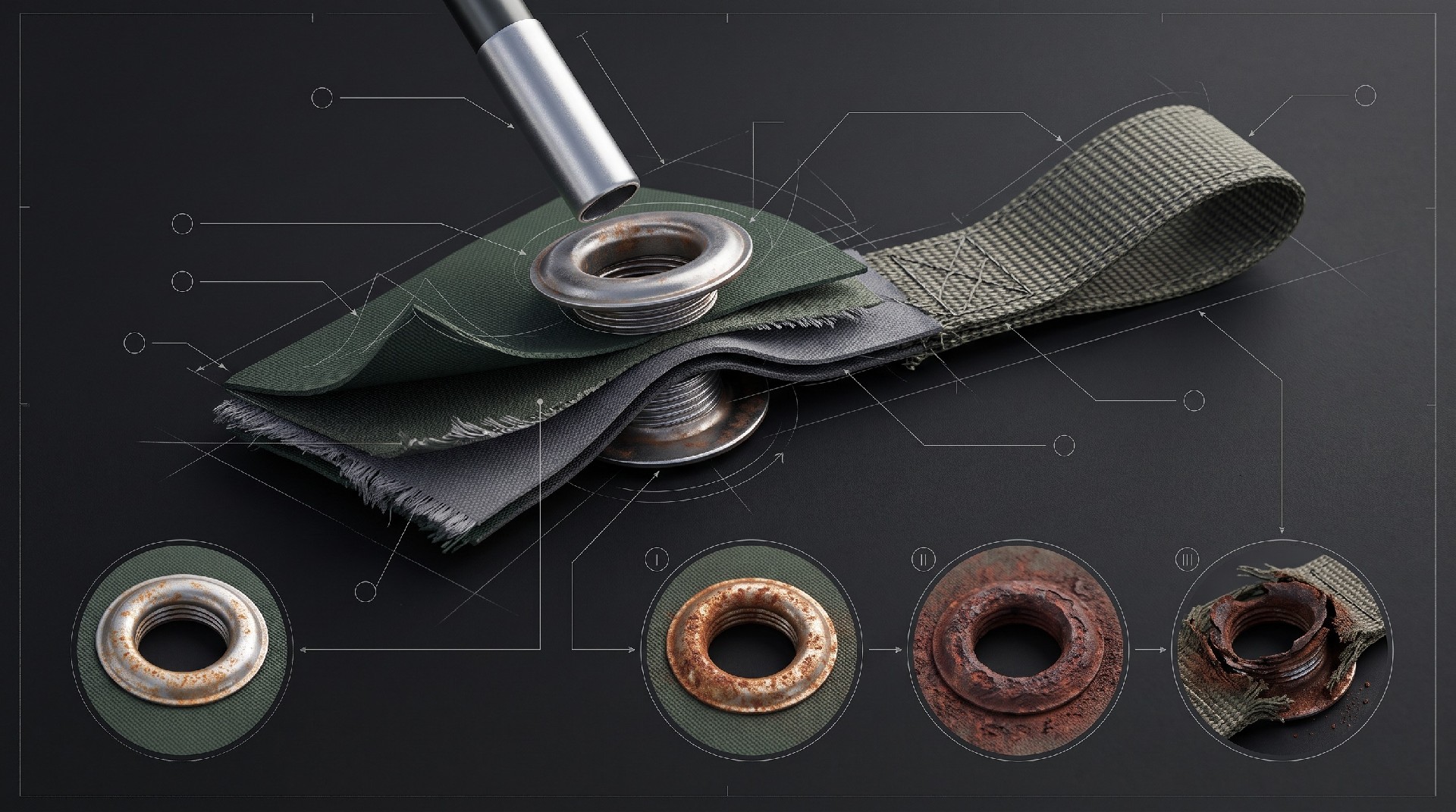
Identify the base metal before you touch the rust
Not all tent hardware corrodes the same way. The treatment that works on a stainless steel D-ring will damage a zinc-plated grommet or a painted brass loop. Before applying any chemical or abrasive, determine what you are dealing with.
Magnet test: A magnet that sticks firmly suggests carbon steel or a ferritic stainless grade. Weak or no attraction points to austenitic stainless (304/316) or brass.
Colour and pitting pattern: White or grey powdery corrosion suggests zinc or aluminium. Red-brown flaking indicates iron oxide from carbon steel. Green patina indicates copper or brass.
Location in the tent: Grommets on the stake loop of a groundsheet are typically zinc-plated steel. Pole-end grommets and webbing loops are often stainless or aluminium. Rainfly D-rings may be anodised aluminium.
For commercial tents, record the hardware specification from the supplier datasheet. If the datasheet is missing, treat the metal as unknown and use only mechanical removal methods until you can confirm the alloy.
Staged treatment: from surface bloom to structural failure
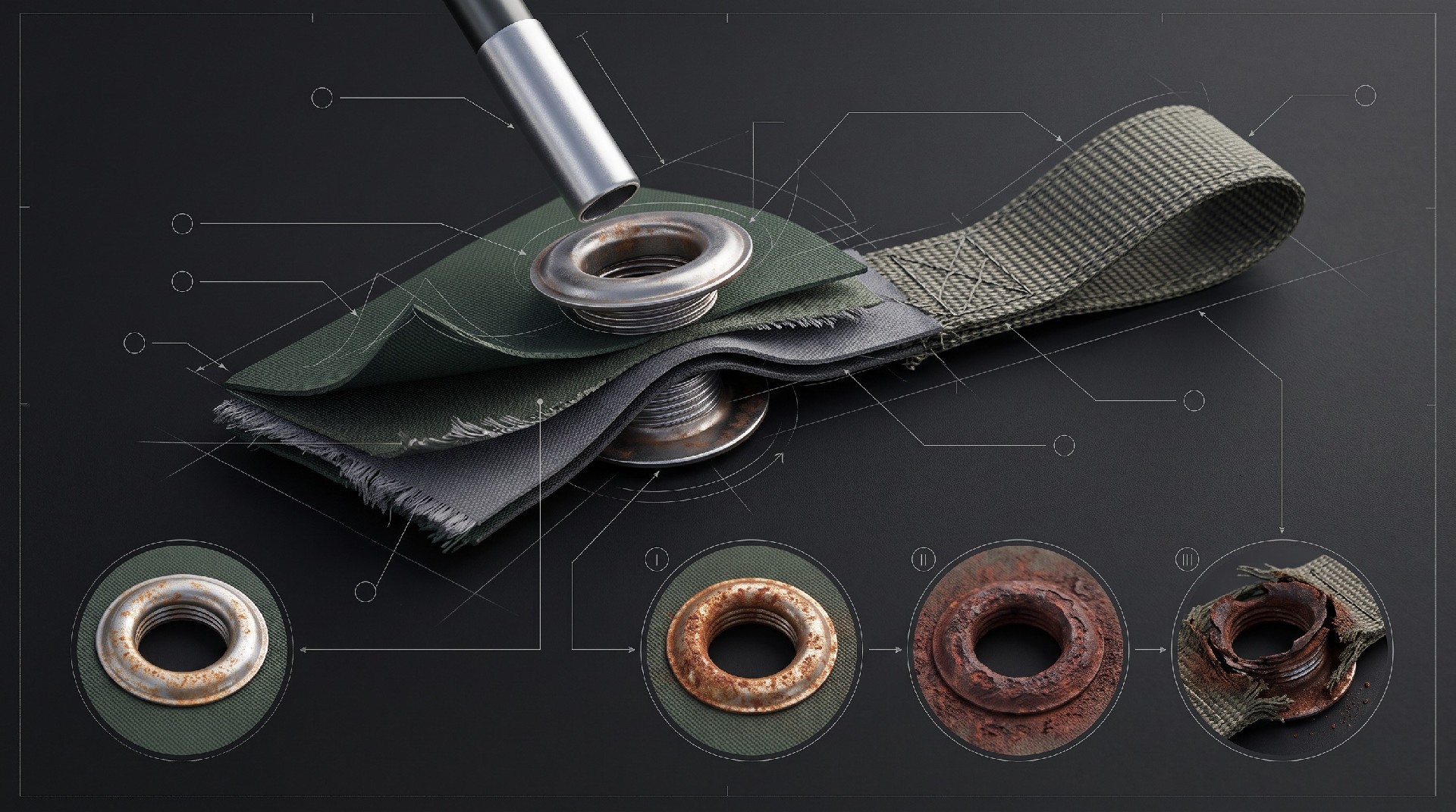
Stage 1 — Surface rust (no pitting, no metal loss)
Surface rust appears as a thin orange film. The metal underneath is still sound. This is the only stage where in-field treatment is genuinely reliable.
Remove the hardware if it is detachable. If it is riveted or sewn in, work in place.
Apply a phosphoric acid-based rust converter with a small brush. These products convert iron oxide to iron phosphate, a stable dark grey surface that accepts paint or sealant. Avoid hydrochloric or sulphuric acid cleaners on thin tent hardware — they continue attacking the base metal after the rust is gone.
Let the converter cure fully (typically 12–24 hours at ambient temperature, supplier-dependent).
Seal with a flexible, UV-stable coating. For tent hardware, a clear polyurethane or acrylic conformal coating is preferable to enamel because it flexes with the hardware during pole insertion.
Stage 2 — Pitted rust (localised metal loss, rough surface)
Pitting means the corrosion has breached the protective coating and is eating into the base metal. A rust converter alone will not restore load capacity. Mechanical removal is required.
Use a brass wire brush or fine abrasive pad. Avoid steel wool — it sheds iron particles that seed new rust.
Clean the pit cavities with isopropyl alcohol and dry thoroughly.
Apply a two-part epoxy putty if the pit compromises the bearing surface of the grommet. Shape it while still workable so the pole tip or stake still passes through.
Re-coat with a flexible sealant. Do not rely on paint alone over a pitted surface.
Stage 3 — Structural rust (flaking, cracks, deformation)
When rust has caused the grommet to crack, deform, or lose its circular bore, repair is not viable. The hardware must be replaced. Continuing to use a structurally compromised grommet risks pole ejection, fabric tear-out, and — in commercial settings — a failure during occupied use.
| Inspection Point | Failure Signal | Service Action | Retirement Trigger |
|---|---|---|---|
| Stake loop grommet | Orange surface film, no pitting | Clean, apply rust converter, seal with flexible coating | Recurrence within one season |
| Pole-end grommet | Pitting, rough bore, pole tip wobble | Mechanical removal, epoxy fill, reseal, or replace | Crack, deformation, or bore enlargement > 0.5 mm |
| Rainfly D-ring | White or grey powder, green patina | Identify metal, clean, apply compatible sealant | Galvanic corrosion with pole contact |
| Webbing loop attachment | Fabric elongation around stitch line | Reinforce with bar-tack, inspect metal insert | Tear-out or delamination of reinforcement patch |
| Groundsheet corner grommet | Flaking rust, fabric staining | Replace grommet, treat fabric stain, dry fully | Fabric hole enlargement beyond grommet flange |
Replacement options and their trade-offs
Replacing a grommet or metal loop is straightforward if you match the original specification. The four common replacement paths are:
Like-for-like zinc-plated grommet: Lowest cost, shortest service life in coastal or humid environments. Best for dry-climate personal tents.
Stainless steel 304 grommet: Moderate cost, good general corrosion resistance. Not ideal for constant salt exposure; 316 is preferred for marine-adjacent camping.
Anodised aluminium grommet: Lightweight, no red rust, but can suffer galvanic corrosion if paired with stainless poles in wet conditions. Use with non-metallic pole tips.
Plastic or nylon grommet: Zero corrosion, but lower load capacity and higher wear rate. Suitable for lightweight tents and low-tension stake loops, not for high-wind commercial shelters.
When replacing, use a grommet setting tool sized to the hardware. A hammer and punch deforms the barrel unevenly and creates a leak path for water into the fabric layers. For sewn-in metal loops, a bar-tack or box-X stitch with UV-stable polyester thread is the minimum acceptable attachment.
Prevention: specification and maintenance protocol
Prevention is cheaper than replacement, especially across a rental fleet. Three decisions matter most:
Hardware specification at purchase: Specify stainless 304 or 316 grommets for any tent used in coastal, humid, or year-round commercial service. Zinc-plated hardware is acceptable only for seasonal, dry-climate use.
Galvanic isolation: Where aluminium hardware contacts stainless poles, use a nylon or plastic washer to break the electrical path. Galvanic corrosion accelerates dramatically in wet conditions.
Post-trip drying and inspection: Rust on tent hardware is almost always a storage problem. Packing a tent wet is the single largest driver of grommet corrosion. Commercial operators should build a dry-and-inspect step into every return workflow.
Field maintenance schedule for commercial tent fleets
After every use: Wipe hardware dry, check for surface bloom, and air-dry the tent fully before packing.
Monthly (seasonal use): Inspect all grommets and loops for pitting, deformation, and fabric elongation around the hardware.
Pre-season: Apply a thin conformal coating to all metal hardware. Replace any grommet showing stage 2 or stage 3 corrosion.
Annually: Review hardware material against the operating environment. If rust is recurring, the specification is wrong — not the maintenance.
Repair or replace? A decision sequence for buyers and operators
Use this sequence before committing labour or parts:
Is the metal still structurally sound? If yes, proceed to treatment. If no, replace the hardware.
Is the rust isolated to one grommet or widespread? Isolated rust is usually a storage or damage issue. Widespread rust indicates a specification problem — replace hardware across the affected batch.
Is the tent used in a commercial or safety-critical application? If yes, do not field-repair stage 2 or stage 3 corrosion. Replace and document.
Does the replacement hardware match the pole tip and stake diameter? A grommet that is 0.5 mm oversized will cause pole wobble and fabric wear. Measure before ordering.
Is the surrounding fabric still sound? If the fabric around the grommet is elongated, torn, or delaminating, the repair must address the fabric, not just the metal.
For personal camping tents, stage 1 surface rust is a manageable DIY repair. For commercial shelters, rental fleets, and any tent used in supervised settings, the decision should default to replacement once pitting is visible. The cost of a stainless grommet and ten minutes of labour is trivial compared to a mid-event structural failure.
Buyer checklist for tent hardware specification
Confirm base metal and coating from the supplier datasheet — not from a product photo.
Specify 304 or 316 stainless for humid, coastal, or year-round commercial use.
Require galvanic isolation washers where dissimilar metals meet.
Verify grommet bore diameter against the actual pole tip or stake diameter.
Include hardware corrosion inspection in the fleet maintenance log.
Stock spare grommets, setting tools, and conformal coating as service parts.
