

Why Long-Exposure UV Degradation Outpaces Normal Wear on PVC Boats
On a multi-week river descent or a season-long coastal expedition, a PVC inflatable boat can accumulate more solar radiation exposure in 30 days than a weekend boat sees in three years. The damage mechanism is cumulative and non-linear: UV-A and UV-B photons break carbon-chlorine bonds in the PVC polymer backbone, liberating chlorine radicals that attack plasticizer molecules. Once plasticizer migrates out of the compound, the fabric loses flexibility, surface gloss, and tensile strength. The failure is not cosmetic. A tube that feels slightly tacky in week two may exhibit plasticizer bloom, chalking, and micro-cracking by week six, with seam adhesion dropping measurably.
This article addresses the maintenance and lifecycle intent behind preventing sun damage on PVC boat fabrics during long trips. It is written for rental fleet operators, expedition outfitters, and commercial boat owners who measure fabric life in seasons, not outings. The guidance applies to PVC inflatable boats, RIBs, and pontoon tubes used in sustained open-air operation.
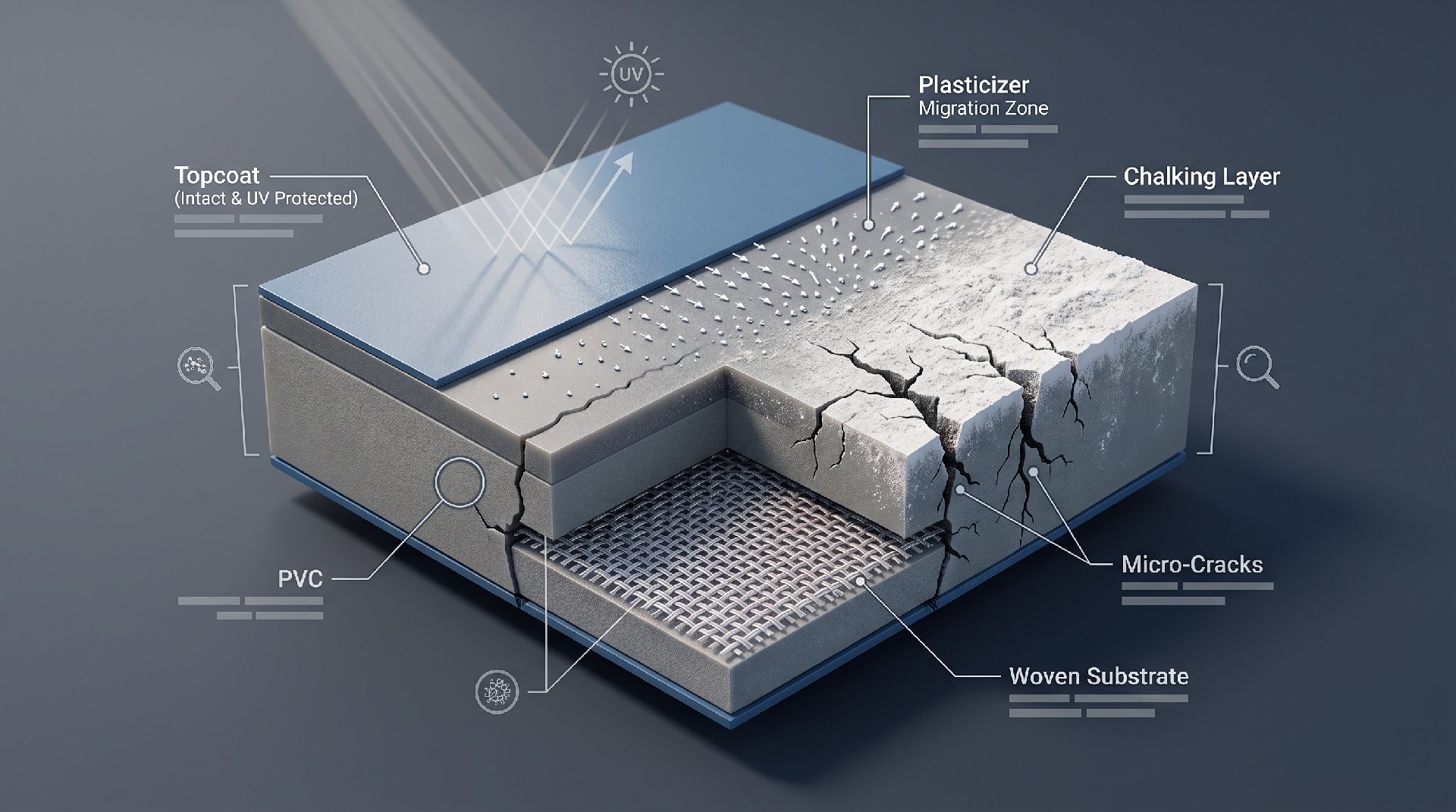
How UV Attacks the PVC Laminate System
A marine PVC fabric is not a single material. It is a composite: a woven polyester or nylon substrate, a PVC coating on both faces, and often a topcoat or lacquer that carries UV stabilizers and colorants. Sun damage proceeds in layers.
Stage 1: Surface plasticizer loss
UV energy preferentially attacks the plasticizer that keeps PVC supple. Early signs include a slight color shift, a dry or waxy feel, and a loss of the original surface sheen. On long trips, this stage can begin within 10-21 days of continuous tropical exposure, depending on stabilizer package and latitude. Typical commercial PVC fabrics vary widely in UV stabilization; verify the supplier's QUV or xenon-arc test data rather than assuming all 1100 dtex fabrics perform equally.
Stage 2: Chalking and pigment degradation
As the topcoat erodes, pigment particles are exposed and the surface develops a chalky, powdery layer. This chalk reduces seam tape adhesion and makes field repairs unreliable. Dark colors absorb more heat and accelerate plasticizer migration; light colors reflect more UV but show chalking sooner.
Stage 3: Micro-cracking and substrate exposure
Once micro-cracks penetrate the PVC coating, the woven substrate is exposed to moisture and UV. The fabric then fails at loads well below its original tensile rating. In a long-trip context, this is the point where a tube that held 3.0 psi in the morning may lose pressure by mid-afternoon through crack networks rather than a single puncture.
Practical UV Defense for Multi-Week Deployments
Prevention is a combination of material selection, operating discipline, and field protection. No single measure is sufficient on a long trip.
Specify UV-stabilized fabric from the start. Ask for the stabilizer type and loading, and request accelerated weathering data. Typical commercial marine PVC may target 500-1000 hours QUV without catastrophic failure; expedition-grade compounds may target more. Treat these as buyer-defined targets and verify against the final datasheet.
Reduce idle sun exposure. When the boat is not in use, cover tubes with a breathable, light-colored cover. A simple white or silver reflective cover can cut surface temperature by 10-20°C and block direct UV.
Rotate and reposition. On long trips, rotate the boat or shift mooring lines so the same tube face does not receive full sun every day.
Maintain correct pressure. Under-inflation allows the fabric to flex and abrade; over-inflation stresses seams. Follow the manufacturer's working pressure and check it daily as temperature changes.
Apply a UV protectant designed for PVC. Not all 303 or silicone products are compatible with every topcoat. Test on a small area first. Avoid petroleum-based dressings that can leach plasticizer.
| Inspection Point | Failure Signal | Service Action | Retirement Trigger |
|---|---|---|---|
| Tube top surface | Chalking, color fade, dry feel | Clean, apply compatible UV protectant, increase shade | Cracking spans more than 20% of tube surface |
| Seam tape edges | Lifting, discoloration, adhesive bleed | Clean with IPA, re-tape with PVC seam tape | Seam separation exceeds 30 mm in any zone |
| Valve bodies | Cracking, stiff operation, slow leak | Replace valve, apply UV-resistant cap | Valve seat cracked or cannot hold pressure |
| Bow and high-exposure zones | Tacky surface, plasticizer residue | Reduce pressure slightly, cover when idle | Fabric feels brittle or tears under light load |
| Pressure retention | Loss greater than 0.2 psi over 24 hours | Locate leak, patch, monitor daily | Cannot maintain working pressure overnight |
| Woven substrate visibility | White or frayed fibers visible through coating | Field patch and cover; plan replacement | Substrate exposed across multiple panels |
Field Inspection and Early Intervention
On a long trip, inspect the boat every 3-5 days. Focus on high-exposure zones: the top of the tubes, the bow, and any area that faces the sun during storage. Use a simple three-tier check.
Daily check
Look for pressure loss, new chalky patches, or a change in surface feel. If a tube feels tacky or leaves a residue on your hand, plasticizer is migrating. Increase shade and reduce pressure slightly.
Weekly check
Wash with fresh water and a mild pH-neutral soap. Avoid harsh solvents. Dry fully before covering. Inspect seams for lifting or discoloration. Check valves for UV-induced cracking on plastic components.
Mid-trip intervention
If chalking is visible, clean the surface and apply a compatible UV protectant. If micro-cracks are present, clean with isopropyl alcohol, apply a PVC patch or seam tape, and keep the area covered when not in use. Do not attempt to sand or abrade the surface; this removes remaining stabilizer.
[IMAGE_2]
Repair vs. Replace: A Decision Framework for Fleet Operators
Sun damage is progressive. The decision to repair or retire a PVC boat tube depends on where the damage sits on the degradation curve.
Repair when: damage is surface-level (chalking, light color fade), seams are intact, and pressure retention is stable over 24 hours. Field patches and UV protectant can extend service life through the trip.
Monitor when: micro-cracks are present but localized, and the boat holds pressure. Increase inspection frequency and keep the boat shaded.
Replace when: cracking spans multiple tube sections, seam adhesion has failed, or the boat cannot hold working pressure overnight. On a long trip, this means arranging a replacement tube or boat before the next leg.
For rental fleets, the commercial decision is whether to carry spare tubes or plan replacement intervals around UV exposure. A fleet operating in high-UV latitudes may see fabric life reduced by 30-50% compared to a shaded or temperate operation. Build that into your replacement cycle and spare-parts stocking.
Buyer checklist for long-trip UV resilience
Confirm fabric UV stabilization and request test data.
Verify seam construction and seam tape UV resistance.
Specify a light-colored or reflective cover as part of the kit.
Train crew on daily pressure and surface checks.
Stock compatible UV protectant, PVC patches, and seam tape.
Define retirement criteria before the trip, not after a failure.
The most cost-effective intervention is material selection before the boat leaves the factory. The second most effective is shade and inspection discipline during the trip. Together, they can add multiple seasons to a PVC boat's service life.
