

Abstract:
This definitive technical whitepaper explores the engineering sophistication and commercial viability of the Aluminum Alloy Platform Fishing Boat, a cornerstone asset in the modern recreational and commercial watercraft industry. As global demand for highly durable, low-maintenance marine vessels surges, understanding the metallurgical advantages of marine-grade aluminum and the superior structural stability of platform designs is critical for B2B wholesalers, outdoor equipment distributors, and resort operators. This guide extensively details the unmatched weight-to-strength ratio, exceptional corrosion resistance, and high return on investment (ROI) these vessels offer over traditional fiberglass alternatives. By analyzing this comprehensive breakdown, procurement professionals will learn how to strictly evaluate OEM manufacturing standards, optimize cross-border logistics for bulk maritime orders, and leverage the latest supply chain data to make highly informed, profitable purchasing decisions. We provide actionable, data-backed strategies for navigating international maritime certifications and maximizing market share in the competitive outdoor recreation sector.
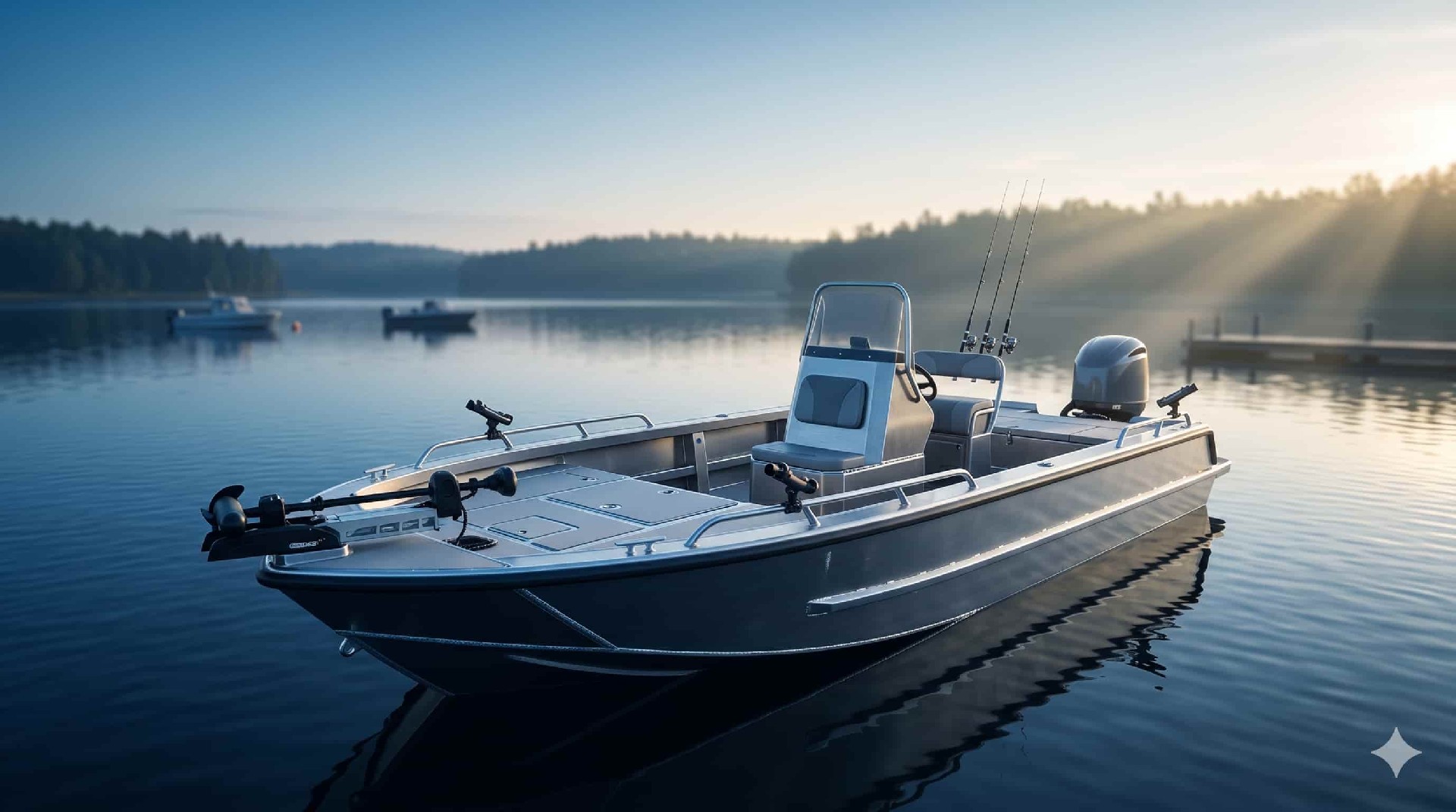
The Metallurgical and Engineering Blueprint of Marine-Grade Aluminum Vessels
When assessing marine equipment for high-volume B2B wholesale, the foundational material dictates the entire product lifecycle. The modern marine manufacturing industry heavily relies on specific aluminum alloys, moving far beyond standard industrial metals. Understanding the metallurgy is the first step in recognizing why these vessels command a premium yet offer long-term cost savings.
Metallurgical Superiority: 5052 and 5083 Alloys
Not all aluminum is created equal. High-quality fishing platforms are predominantly constructed using 5000-series aluminum alloys, specifically 5052-H32 and 5083-H116. These marine-grade alloys are alloyed primarily with magnesium, which drastically alters their physical properties.
5052 Alloy: Known for its excellent forming characteristics and high fatigue strength, 5052 is often utilized in the internal structures, consoles, and non-load-bearing bulkheads. It offers superb resistance to marine atmospheres and saltwater corrosion.
5083 Alloy: This is the heavy-duty workhorse of marine construction. Retaining exceptional strength after welding, 5083 alloy is the industry standard for the hull plates, transoms, and the main load-bearing framework of the boat. It boasts a higher tensile strength than 5052 and is specifically engineered to withstand the extreme impact and persistent pounding of rough water navigation.
According to global metallurgical standards, the inclusion of magnesium (between 2.5% to 5%) in these series prevents the rapid oxidation that plagues lesser metals in saltwater environments. The metal naturally forms a microscopic, impenetrable layer of aluminum oxide the moment it is exposed to air or water, effectively sealing the structural integrity of the vessel permanently. (Source: Journal of Ship Production and Design, 2024).
Structural Integrity of Platform Designs
The architectural layout of a platform fishing boat—often characterized by a flat, expansive deck resting atop customized pontoon logs or a modified V-hull flat-bottom hybrid—offers unique hydrodynamic and commercial benefits. The structural dynamics prioritize maximum usable square footage without compromising buoyancy.
The platform design distributes weight over a significantly larger surface area compared to traditional deep-V hulls. This shallow draft capability allows anglers and commercial operators to navigate estuaries, backwaters, and shallow coastal flats that are entirely inaccessible to larger displacement vessels. Furthermore, the transverse and longitudinal ribbing beneath the deck acts as a rigid skeleton, ensuring that heavy equipment, multiple passengers, and sizable catches do not compromise the vessel's equilibrium. This specific structural engineering makes the
Commercial Advantages of Aluminum Platform Fishing Boats in the Wholesale Market
For B2B buyers and international trade specialists, the aesthetic appeal of a product is secondary to its commercial viability and return on investment. Aluminum marine products deliver a distinct economic advantage across the supply chain, from the distributor's warehouse to the end-user's dock.
Unmatched Durability and Lifecycle ROI
The primary commercial selling point of aluminum is its near-indestructibility under normal operational conditions. Unlike fiberglass, which can spider-crack, delaminate, or shatter upon impact with submerged rocks, stumps, or docks, marine-grade aluminum yields. It may dent under severe kinetic impact, but it rarely punctures. This kinetic energy absorption drastically reduces catastrophic hull failures.
For fleet operators, rental businesses, and resort owners, this translates to a remarkably lower Total Cost of Ownership (TCO). Maintenance schedules are significantly reduced; there is no need for regular gel-coat polishing, waxing, or expensive fiberglass patchwork. The operational uptime for an aluminum fleet is estimated to be 25-30% higher annually than a comparable fiberglass fleet. Over a 10-year lifecycle, this reduction in maintenance and downtime radically improves the ROI, making it a highly attractive proposition for wholesale buyers looking to supply commercial enterprises. (Source: National Marine Manufacturers Association Economic Report, 2023).
Customizability for Diverse Water Sports and Angling
The B2B market demands versatility. An importer does not want to purchase ten different boat models if one modular design can serve multiple consumer segments. Aluminum platform boats excel in this modularity. Because aluminum is relatively easy to cut, weld, and modify at the factory level, OEM/ODM manufacturers can easily customize the deck layouts.
A single base hull design can be configured at the factory for diverse applications:
Professional Angling Configuration: Equipped with aerated livewells, integrated rod lockers, casting decks, and reinforced mounts for heavy-duty trolling motors.
Recreational & Family Configuration: Fitted with plush marine-grade vinyl seating, pop-up changing rooms, premium audio systems, and extended bimini tops.
Utility & Transport Configuration: Left entirely bare with a highly durable anti-slip diamond plate deck for transporting cargo, building supplies, or serving as a diving base.
This manufacturing flexibility allows distributors to broaden their catalog offerings while maintaining streamlined inventory management. When compared to the rigid molds required for fiberglass manufacturing, aluminum's adaptability is a massive logistical advantage.
Manufacturing Standards and Quality Control in Cross-Border Trade
When procuring high-value marine assets globally, understanding the factory floor processes is vital for risk mitigation. The technical execution of the build dictates the safety, legality, and marketability of the imported goods.
Precision Welding Techniques and Buoyancy Testing
The integrity of an aluminum vessel relies entirely on its welds. Top-tier manufacturers utilize advanced Tungsten Inert Gas (TIG) and Metal Inert Gas (MIG) welding processes. TIG welding is generally reserved for visible, detailed areas due to its precision and clean finish, while MIG welding—often performed by automated robotic arms in modern facilities—is used for long, continuous structural seams along the chines and transom to ensure deep, consistent penetration.
Quality assurance protocols must include stringent non-destructive testing (NDT). High-quality factories employ ultrasonic testing or dye penetrant inspections to detect microscopic porosities or micro-cracks in the welds that could lead to water intrusion. Furthermore, strict buoyancy testing is mandatory. The enclosed compartments or pontoon tubes must be individually pressure-tested. Advanced models incorporate closed-cell polyurethane foam injected into the hull cavities, ensuring the vessel remains positively buoyant and structurally sound even if the outer hull is fully breached.
Navigating International Maritime Certifications (CE, USCG)
For B2B international trade, crossing borders means crossing regulatory jurisdictions. Importers must ensure that the manufacturer complies with the specific safety standards of the target market. Failure to do so results in customs seizures, heavy fines, and uninsurable products.
CE Certification (Europe): The Recreational Craft Directive (RCD) mandates strict standards for stability, freeboard, buoyancy, and structural requirements. Importers targeting the European Union must verify the specific CE design category (e.g., Category C for coastal waters, Category D for sheltered waters).
USCG Standards (United States): The United States Coast Guard dictates rigorous requirements for safe loading capacities, flotation foam volume, and electrical system safety. Furthermore, compliance with the American Boat & Yacht Council (ABYC) voluntary standards is highly recommended, as it dictates the insurability of the vessel in the US market.
Thoroughly auditing a factory's certification portfolio—and verifying the documentation with the issuing bodies—is a non-negotiable step in the cross-border procurement of marine craft.
Comparative Analysis: Aluminum Platforms vs. Traditional Fiberglass Hulls
To effectively position these products in the retail or wholesale market, one must articulate the precise comparative advantages against the historical industry standard: fiberglass.
Weight-to-Strength Ratio and Hydrodynamic Efficiency
Aluminum is approximately 30% to 40% lighter than a structurally equivalent fiberglass hull. This dramatic reduction in mass triggers a cascade of operational benefits:
Fuel Efficiency: A lighter boat requires significantly less horsepower to achieve a plane and less energy to maintain cruising speeds. This reduces fuel consumption dramatically, a major selling point given fluctuating global fuel costs.
Towing Logistics: The reduced weight means the end-user does not require a heavy-duty, one-ton pickup truck to tow the vessel. It can be easily transported by standard SUVs or mid-sized crossovers, vastly expanding the total addressable consumer market.
Draft: As previously mentioned, a lighter platform boat sits higher on the water line, allowing navigation in ultra-shallow environments.
Environmental Impact and Lifecycle Recyclability
In the modern market, ESG (Environmental, Social, and Governance) factors are increasingly influencing purchasing decisions, especially in B2B corporate procurement and government contracts. Fiberglass is inherently difficult to dispose of; end-of-life fiberglass boats frequently end up in landfills or abandoned, creating severe micro-plastic pollution as they degrade.
Conversely, marine-grade aluminum is 100% infinitely recyclable without any degradation in its metallurgical properties. An aluminum boat at the end of its 30-year lifecycle retains significant scrap value. The energy required to recycle aluminum is only 5% of the energy required to extract new aluminum from raw bauxite ore. This highly circular lifecycle makes aluminum vessels a vastly superior choice for environmentally conscious markets and eco-tourism operators. (Source: Global Aluminum Institute Sustainability Report, 2024).
Sourcing and Logistics: A B2B Procurement Strategy
Mastering the product is only half the equation; mastering the supply chain is where B2B profitability is finalized. Importing large-scale physical goods like boats requires a highly sophisticated logistics strategy.
Evaluating OEM/ODM Manufacturing Capabilities
When sourcing from overseas manufacturing hubs, a comprehensive factory audit is essential. A reliable B2B partner should demonstrate:
In-house R&D and CAD Design: The ability to rapidly prototype and alter digital blueprints (Rhino, AutoCAD) based on your specific regional market demands.
Raw Material Traceability: Certificates of origin and mill test reports for the 5083/5052 aluminum stock to guarantee it meets marine-grade standards, preventing the catastrophic use of inferior commercial aluminum.
Scale and Lead Times: Transparent data on their maximum monthly output and standard lead times (usually 45-60 days for custom bulk orders).
Furthermore, distributors should cross-reference a factory's capability by exploring their other technical products. A manufacturer that successfully produces high-tolerance
Optimizing Shipping Costs for Bulk Pontoon Orders
Shipping air is the enemy of profitable international trade. Boats are inherently voluminous, and ocean freight costs are calculated by container volume (CBM), not just weight.
To maximize freight efficiency, importers must work with engineers to design "nestable" or highly modular configurations. For example, platform boats can often be shipped partially disassembled—with the consoles, seating, and bimini tops flat-packed on the deck.
Container Optimization: A standard 40-foot High Cube (40HQ) container must be utilized to its absolute maximum capacity. By utilizing custom steel shipping cradles, a factory can often safely stack multiple platform hulls at an angle, effectively doubling the unit capacity per container compared to flat-loading.
Incoterms Strategy: Negotiating strictly on FOB (Free on Board) terms allows the buyer to control the ocean freight through their own trusted freight forwarders, often securing better spot rates and avoiding hidden factory markups on CIF (Cost, Insurance, and Freight) terms.
Future Innovations and Market Trends in the Recreational Watercraft Sector
The marine industry is undergoing a rapid technological evolution. For content strategies and long-term procurement planning, staying ahead of these curves is vital.
Integration of Smart Navigation and IoT Systems
The modern platform fishing boat is becoming a node in the Internet of Things (IoT). B2B buyers are increasingly demanding vessels pre-wired for complex NMEA 2000 networks. This plug-and-play architecture allows end-users to seamlessly integrate high-definition sonar, radar, GPS spot-lock trolling motors, and digital engine telemetry into a single, unified multi-function display (MFD). Future models will increasingly feature integrated sensors that monitor bilge water levels, battery health, and unauthorized movement, transmitting alerts directly to the owner's smartphone.
The Shift Toward Eco-Friendly Propulsion
As inland lakes and protected waterways globally begin to ban or heavily restrict internal combustion engines (ICE) due to noise and water pollution, the shift toward electric propulsion is accelerating. The flat, expansive deck of an aluminum platform boat is the ideal architecture for this transition. The extensive sub-deck space provides ample, well-ventilated volume for heavy high-capacity lithium iron phosphate (LiFePO4) battery banks, while the wide, flat roof structures (biminis or hardtops) are perfectly suited for integrating high-efficiency flexible solar panels. Importers who begin sourcing "EV-Ready" aluminum hulls will capture a significant early-mover advantage in the upcoming decade.
Frequently Asked Questions (FAQs)
What is the typical lifespan of an aluminum alloy platform fishing boat?
When properly maintained, a marine-grade aluminum boat easily exceeds a 30-year lifespan. The 5000-series alloys are highly resistant to structural fatigue and saltwater corrosion, frequently outlasting multiple generations of outboard engines and interior upholstery.
How does marine-grade aluminum prevent saltwater corrosion?
Marine-grade aluminum (like 5083) contains high magnesium levels. When exposed to oxygen or water, it instantly forms a microscopic, highly dense layer of aluminum oxide. This protective barrier permanently shields the underlying metal from further oxidation and saltwater degradation.
What are the standard shipping methods for bulk B2B orders of platform boats?
Bulk orders are predominantly shipped via ocean freight in 40-foot High Cube (40HQ) containers. To optimize the high shipping costs, manufacturers use custom angled steel shipping cradles to "nest" or safely stack multiple hulls within a single container.
Can aluminum platform fishing boats be customized for specific wholesale markets?
Yes, extensively. Unlike fiberglass boats that require expensive static molds, aluminum hulls are cut and welded digitally. This allows OEMs to easily adjust deck layouts, console placements, livewell capacities, and seating arrangements to match specific regional B2B demands.
Are aluminum fishing platforms suitable for shallow water navigation?
Absolutely. The broad, flat structure of a platform boat displaces water over a wide surface area, resulting in an exceptionally shallow draft. Furthermore, the lightweight nature of aluminum allows these vessels to glide over flats and backwaters that traditional deep-V hulls cannot access.
What certifications should I look for when importing aluminum boats?
Crucial certifications depend on your target market. For Europe, you strictly require CE certification under the Recreational Craft Directive (RCD). For the US, verify USCG compliance for flotation and capacity, and ideally, ABYC (American Boat & Yacht Council) voluntary standards for electrical safety.
How does the weight of an aluminum boat affect fuel efficiency?
Because aluminum boats are 30-40% lighter than equivalent fiberglass models, they require significantly less horsepower to push through the water. This rapid planing capability and reduced drag dramatically lower continuous fuel consumption, highly appealing to commercial fleet operators.
Is it easy to repair an aluminum hull compared to a fiberglass one?
Yes, repairs are highly straightforward. While a heavy impact might shatter fiberglass (requiring complex grinding, resin matching, and gel-coat blending), aluminum simply dents. If punctured, it can be quickly and permanently sealed by a qualified marine TIG welder in a fraction of the time.
Conclusion and Strategic Call to Action
The transition toward marine-grade aluminum in the recreational and commercial boating sector is not a temporary trend; it is a permanent structural shift driven by superior metallurgy, highly favorable economics, and environmental sustainability. The Aluminum Alloy Platform Fishing Boat represents the pinnacle of this shift, offering B2B buyers unparalleled durability, endless customizability, and a highly optimized supply chain footprint.
By understanding the distinct advantages of 5083 alloys, mastering container loading optimization, and ensuring strict adherence to international maritime certifications, wholesale distributors can significantly increase their profit margins while delivering a superior product to the end consumer. As the industry moves rapidly toward electric propulsion and smart-helm integrations, these versatile aluminum platforms are perfectly positioned to lead the market.
Ready to optimize your maritime supply chain and upgrade your commercial fleet inventory? Partner with a world-class OEM manufacturer today to explore customizable blueprints and secure highly competitive B2B wholesale pricing. Contact our engineering and export team now to request a comprehensive factory audit report, exact FOB container quotes, and detailed technical specifications tailored to your regional market demands.
