

Abstract
What: This comprehensive whitepaper explores the critical engineering, material science, and B2B procurement dynamics surrounding the commercial Two Person Canoe market. It provides a technical breakdown of hydrodynamics, manufacturing processes, and global supply chain logistics.
Why: As the outdoor recreation industry continues its post-pandemic maturation, the demand for tandem watercraft has stabilized into a highly profitable sector. Ecotourism operators, rental fleets, and big-box retailers are shifting their focus toward durable, high-ROI vessels. Understanding the structural and logistical nuances of these products is paramount for minimizing total cost of ownership (TCO) and maximizing retail margins.
How: Sourcing professionals and technical buyers will learn how to evaluate hull materials for specific commercial applications, navigate complex cross-border logistics for bulky freight, and implement quality assurance protocols that guarantee product longevity. By leveraging the strategic insights detailed below, B2B buyers can optimize their inventory and secure a competitive advantage in the global water sports equipment market.
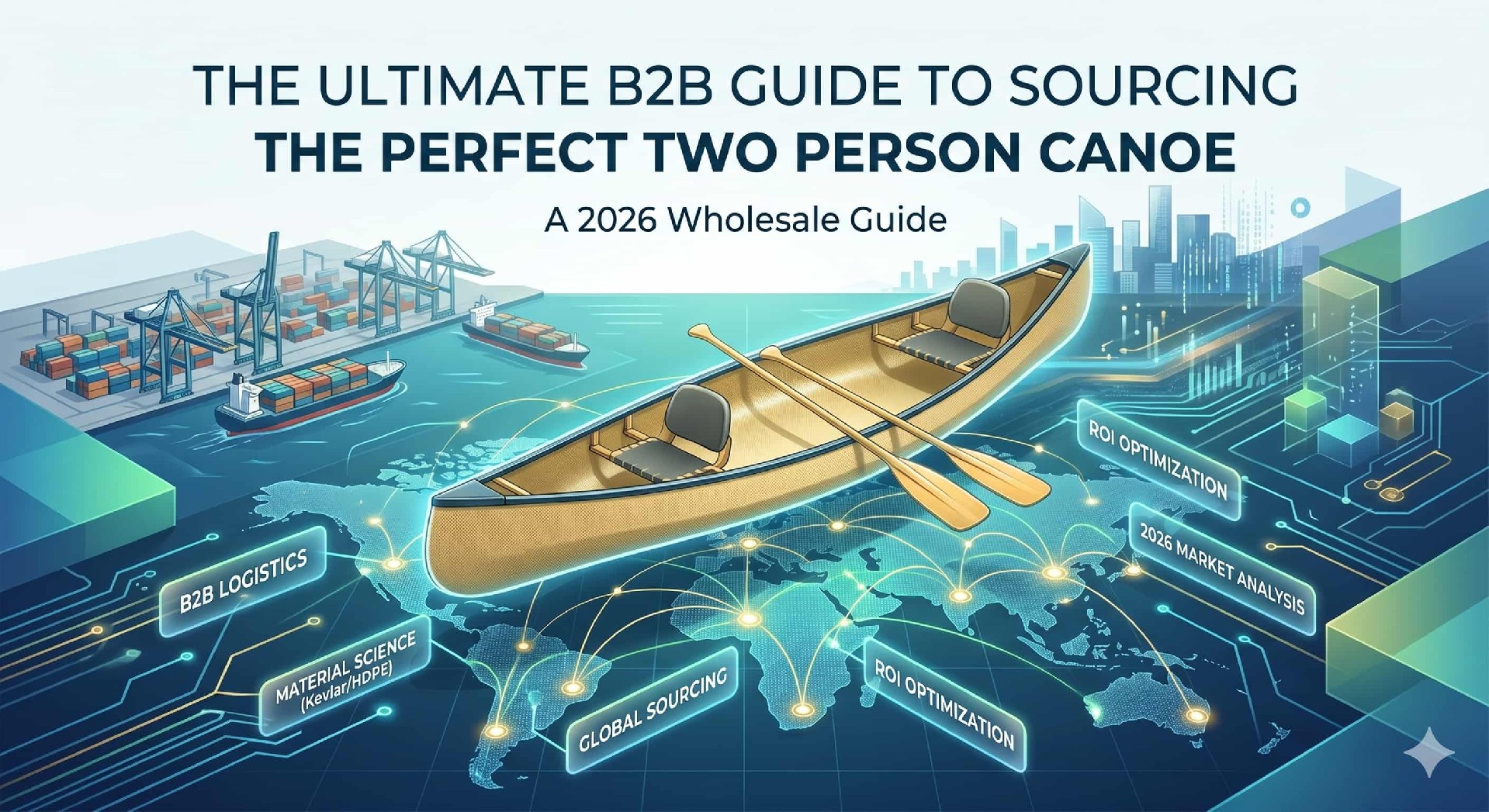
Global Market Trends for the Two Person Canoe Industry
The global landscape for non-motorized water sports equipment has undergone a paradigm shift over the past decade. The two person canoe, often referred to as a tandem canoe, sits at the nexus of recreational leisure, expedition touring, and commercial outfitting. For B2B wholesale buyers, understanding macro-economic trends is the first step in formulating a robust procurement strategy.
The Rise of the Ecotourism Sector
One of the primary drivers of tandem canoe sales in the B2B sector is the explosive growth of global ecotourism. Resorts, national park concessionaires, and localized rental businesses require fleets of reliable watercraft to service a growing demographic of experiential travelers. According to recent industry analytics, the global ecotourism market is projected to expand at a compound annual growth rate (CAGR) of 14.3% through the end of the decade (Source: Global Wellness Institute, 2025). This surge directly correlates with increased commercial fleet purchases. Unlike B2C consumers who prioritize lightweight performance or aesthetic appeal, B2B buyers in this sector prioritize durability, UV resistance, and low-maintenance designs that can withstand daily abuse from inexperienced paddlers.
Demographic Shifts and Recreational Preferences
The demographic profile of the average paddler is also shifting. Millennials and Generation Z are showing a distinct preference for shared outdoor experiences, which perfectly aligns with the utility of a two person canoe. Furthermore, the aging Baby Boomer population continues to engage in outdoor activities but increasingly seeks stable, comfortable, and accessible recreation. The tandem canoe, with its high payload capacity and inherent stability, satisfies both ends of the demographic spectrum. Retailers stocking these items must carefully balance their inventory to cater to both the entry-level recreational family and the serious wilderness tripper.
Supply Chain Resilience and Nearshoring
Following the unprecedented supply chain disruptions of the early 2020s, many large-scale distributors have fundamentally restructured their procurement frameworks. While Southeast Asia and China remain the dominant hubs for bulk manufacturing, there is a measurable trend toward "China Plus One" strategies and nearshoring. Buyers are increasingly vetting manufacturers in Vietnam, Mexico, and Eastern Europe to diversify risk. However, for specialized items like the high-performance
Material Science: Evaluating Tandem Canoe Manufacturing Processes
The core value proposition of a canoe is inextricably linked to its construction material. For B2B buyers, the choice of material dictates the wholesale cost, shipping weight, target retail demographic, and the expected lifespan of the product in a commercial fleet.
High-Density Polyethylene (HDPE) and Rotomolding
For the vast majority of rental liveries, big-box retailers, and summer camps, High-Density Polyethylene (HDPE) is the undisputed champion. Manufactured primarily through rotational molding (rotomolding), HDPE canoes are incredibly impact-resistant.
The Process: Polymer resin in powder form is placed inside a large, heated aluminum or steel mold. The mold is then rotated biaxially, melting the plastic and coating the interior evenly. Once cooled, the canoe is extracted as a single, seamless piece.
B2B Advantages: Extreme durability, low manufacturing cost at scale, and virtually zero maintenance. These hulls can be dragged over gravel bars and withstand severe impacts without structural failure.
B2B Disadvantages: Heavy weight (often exceeding 80 lbs for a 15-foot tandem) and susceptibility to UV degradation over prolonged, unprotected exposure. They also suffer from "oil canning" (hull flex) if not properly braced with structural thwarts or a keelson.
Thermoformed Plastics and Co-Extruded Polymers
A step up from standard rotomolded polyethylene is thermoformed plastic, utilizing materials like ABS layered with acrylic. This process involves heating a flat sheet of plastic until pliable and then drawing it over a male mold using a vacuum.
B2B Advantages: Thermoformed canoes offer the glossy aesthetic and lightweight properties closer to fiberglass but retain the impact resistance of plastic. They are significantly lighter than HDPE, making them highly attractive to premium retailers whose customers demand easier car-topping capabilities.
Market Position: This material sits in the highly profitable "prosumer" mid-market, offering better margins for retailers than entry-level rotomolded boats.
Advanced Composites: Fiberglass, Kevlar, and Carbon Fiber
At the premium end of the wholesale market are composite canoes. These are manufactured via hand lay-up or vacuum resin infusion processes, utilizing woven fabrics of fiberglass, aramid (Kevlar), or carbon fiber, impregnated with marine-grade epoxy or vinyl ester resins.
B2B Considerations: Composite canoes are labor-intensive to produce, resulting in higher wholesale costs and longer lead times. However, they command premium retail prices and yield substantial profit margins.
Target Market: Wilderness outfitters, expedition retailers, and specialized paddle sports shops. A Kevlar tandem canoe weighing a mere 42 lbs is a crucial product offering for wilderness trippers who face frequent portages.
Drop-Stitch Inflatable Technology
A disruptive innovation in recent years is the heavy-duty inflatable tandem canoe utilizing drop-stitch PVC technology. This is the same manufacturing process used for high-end inflatable stand-up paddleboards. Thousands of polyester threads connect the top and bottom layers of the PVC, allowing the vessel to be inflated to high pressures (e.g., 10-15 PSI), creating a rigid hull. This category is rapidly capturing market share from urban dwellers lacking storage space (Source: Paddlesports Trade Coalition, 2024).
Hydrodynamics: Engineering the Optimal Two Person Canoe
To effectively market and sell canoes, B2B professionals must understand the physics of hull design. A canoe's shape determines its performance characteristics: stability, tracking, maneuverability, and speed.
Primary vs. Secondary Stability
Primary Stability (Initial Stability): How stable the canoe feels when sitting flat on calm water. Flat-bottomed canoes offer excellent primary stability, making them feel secure to beginners. This is the preferred design for rental fleets and recreational buyers.
Secondary Stability (Final Stability): How stable the canoe feels when leaned or tipped on its side. Canoes with a shallow-arch or shallow-V hull have lower primary stability but excellent secondary stability, preventing capsizing in rough water or waves. Outfitters operating in whitewater or large, choppy lakes require high secondary stability.
Hull Cross-Sections
Flat Bottom: Maximum initial stability, slow speed, poor secondary stability. Ideal for fishing and calm ponds.
Shallow Arch: A compromise offering good initial stability, improved speed, and excellent secondary stability. The most versatile profile for touring tandems.
Shallow V: Provides excellent tracking (ability to paddle in a straight line) and supreme secondary stability, often favored in expedition-grade vessels.
The Role of Rocker
"Rocker" refers to the upward curve of the canoe's hull from the center toward the bow and stern, much like the curve of a rocking chair.
Zero to Minimal Rocker: The canoe maximizes its waterline length, resulting in excellent tracking and speed but poor maneuverability. Ideal for flatwater lake touring.
Heavy Rocker: The bow and stern are elevated out of the water. This allows the canoe to pivot easily, making it highly maneuverable. Essential for whitewater rivers, but frustratingly difficult to paddle in a straight line on a windy lake.
Sizing the Tandem Canoe
For two paddlers, the ideal length typically ranges between 15 and 17 feet.
15-Foot: Highly maneuverable, suitable for day trips and winding rivers, but lacks storage space for multi-day gear.
16-Foot: The industry standard. It provides the optimal balance of tracking, maneuverability, and payload capacity for two adults and weekend gear.
17-Foot+: Expedition length. Exceptional tracking and high volume for heavy gear, favored by professional outfitters for week-long wilderness trips.
B2B Procurement Strategies: Sourcing and Supply Chain Management
Successfully integrating tandem canoes into a B2B product catalog requires meticulous vendor evaluation, rigorous negotiation, and stringent quality control.
Vendor Vetting and Factory Audits
When sourcing internationally, a thorough factory audit is non-negotiable. Procurement officers must verify that the manufacturer possesses ISO 9001 certification for quality management systems. Furthermore, examining the factory's production capacity, tooling quality, and environmental compliance is crucial. A reliable supplier should be able to demonstrate consistency in hull thickness, resin curing times, and UV inhibitor integration.
Minimum Order Quantities (MOQ) and Container Utilization
Canoes are highly volumetric cargo; you are essentially shipping trapped air. Therefore, B2B negotiations heavily revolve around shipping efficiency. Standard MOQs for rotomolded canoes are often dictated by the capacity of a standard 40-foot High Cube (40HQ) shipping container.
Negotiating "nestable" designs—where the hulls and thwarts are designed so the canoes can stack inside one another—can drastically increase container density. A well-designed nesting strategy can increase the number of units per 40HQ container from 40 to over 120, significantly reducing the per-unit landed freight cost.
OEM vs. ODM Manufacturing
Original Equipment Manufacturer (OEM): The buyer provides the specific CAD designs, material specs, and branding. The factory acts solely as the producer. This requires significant upfront R&D investment but ensures a unique product.
Original Design Manufacturer (ODM): The factory provides an existing, pre-engineered canoe design (a "white-label" product), and the buyer simply applies their branding and colorways. This allows for rapid speed-to-market and lower initial costs, which is ideal for distributors looking to quickly flesh out their catalog.
Diversifying the Watercraft Catalog
Relying solely on one type of watercraft limits B2B revenue streams. Astute wholesale buyers often consolidate shipments by sourcing a variety of complementary products from the same regional manufacturing hubs. For example, a retailer stocking tandem canoes should also consider catering to the booming angling market by importing a specialized
Cross-Border Trade: Navigating Tariffs, Shipping, and Logistics
The physical movement of large watercraft across international borders presents complex logistical challenges that can erode profit margins if not managed expertly.
Harmonized System (HS) Codes and Tariffs
Accurate classification of goods is the cornerstone of cross-border trade. Watercraft are categorized under specific international HS codes, which dictate the import duty rates. For instance, non-motorized recreational boats often fall under chapter 89 of the Harmonized Tariff Schedule (HTS).
However, the specific material can influence sub-classifications and tariff rates. A plastic canoe may be tariffed differently than a composite one. Furthermore, buyers importing into the United States must remain acutely aware of Section 301 tariffs on goods manufactured in China, which can add a punitive duty of 25% or more, fundamentally altering the ROI calculations for OEM production. Continual consultation with a licensed customs broker is mandatory to avoid compliance penalties and unexpected costs.
Freight Forwarding and Incoterms
Selecting the appropriate International Commercial Terms (Incoterms) is vital for defining risk and cost allocation between the buyer and the seller.
FOB (Free On Board): The manufacturer is responsible for loading the goods onto the vessel at the port of origin. The buyer assumes the cost and risk of ocean freight, insurance, and final delivery. This is the most common and generally preferred term for experienced B2B importers, as it allows the buyer to control freight costs by negotiating directly with their own freight forwarders.
DDP (Delivered Duty Paid): The seller handles everything, including shipping, customs, and delivery to the buyer's warehouse. While convenient for novice buyers, it generally results in higher overall costs as the seller builds in risk margins.
Managing Inland Freight
The logistical challenges do not end at the destination port. Moving a 40HQ container of canoes from the Port of Los Angeles to a distribution center in the Midwest requires specialized drayage and inland freight management. Due to the bulky nature of the product, Less Than Truckload (LTL) shipping for subsequent distribution to individual retail stores is notoriously expensive. B2B distributors must optimize palletization and negotiate specialized "over-dimensional" freight rates with domestic carriers.
Target Demographics: Aligning Canoe Inventory with Consumer Demand
A successful B2B operation does not just buy well; it buys with a clear understanding of the end-consumer. Inventory must reflect the specific demands of the retail channels being serviced.
The Recreational Family Market
This demographic shops at large sporting goods stores and big-box retailers. Their primary concerns are safety, price, and ease of use.
Ideal Product: A 15 to 16-foot rotomolded or thermoformed tandem canoe. It must feature a flat or shallow-arch bottom for high primary stability, molded plastic seats with backrests, and a highly competitive retail price point (typically under $800). Durability is favored over performance.
The Wilderness Tripper and Enthusiast
This segment shops at specialized outdoor outfitters. They are experienced paddlers willing to pay a premium for performance, weight savings, and craftsmanship.
Ideal Product: A 16 to 17.5-foot composite (Kevlar or Carbon Fiber) or T-Formex canoe. It should feature a shallow-V hull for secondary stability, a slight rocker for maneuverability, ash or cherry wood trim, and traditional webbed seats. Price is secondary to weight-saving metrics and hull efficiency.
The Commercial Outfitter and Livery
These B2B customers are buying fleets (10 to 50+ units at a time). Their sole priority is return on investment through extreme durability and zero downtime.
Ideal Product: Heavy-duty, three-layer rotomolded polyethylene or aluminum canoes. They must feature reinforced stems (the very front and back tips of the boat, which take the most impact), aluminum gunwales, and simple, unbreakable hardware. Aesthetics are entirely secondary to structural integrity.
Sustainability in Canoe Manufacturing: The Eco-Friendly Shift
As global regulatory frameworks tighten and consumer sentiment shifts toward environmental consciousness, sustainability has transitioned from a marketing buzzword to a critical B2B procurement metric. Over 68% of outdoor industry consumers now factor brand sustainability into their purchasing decisions (Source: McKinsey & Company, Outdoor Industry Report, 2024).
Recycled Plastics and Circular Economies
Leading B2B manufacturers are pioneering the use of post-consumer and post-industrial recycled plastics in their rotomolding processes. While a canoe hull requires virgin material for maximum structural integrity, internal components like seats, thwarts, and decking can be manufactured from up to 100% recycled HDPE.
Furthermore, forward-thinking brands are implementing "take-back" programs, where end-of-life plastic canoes are returned, ground down into pellet form, and re-injected into the manufacturing stream. Distributors highlighting these closed-loop circular economies gain significant leverage when pitching to eco-conscious retailers.
Bio-Resins and Eco-Friendly Composites
In the premium composite sector, the heavy reliance on petrochemical-based epoxies is being challenged by the advent of bio-resins. These resins substitute a significant percentage of petroleum content with renewable organic materials derived from plant waste. Additionally, manufacturers are experimenting with sustainable reinforcement fibers, such as flax or basalt, as alternatives to energy-intensive fiberglass and carbon fiber. While currently a niche in the B2B wholesale market, these eco-composites represent the future trajectory of premium watercraft manufacturing.
FAQs
1. What is the optimal length for a two person canoe?
For general recreational use and weekend tripping, a 16-foot canoe is considered the industry standard. It offers the perfect balance of tracking, maneuverability, and sufficient payload capacity for two adults and their gear without being overly cumbersome to transport.
2. Which material is best for a commercial canoe rental fleet?
High-Density Polyethylene (HDPE), particularly manufactured via three-layer rotomolding, is the premier choice for commercial fleets. It provides unparalleled impact resistance and longevity, requiring virtually zero maintenance even under heavy, daily abuse by inexperienced paddlers.
3. What is the difference between primary and secondary stability?
Primary stability refers to how secure and flat the canoe feels on calm water, which is crucial for beginners. Secondary stability dictates how well the canoe resists capsizing when leaned on its edge or navigating through rough, choppy water, essential for advanced paddling.
4. How many tandem canoes can fit in a standard 40HQ container?
Standard non-nesting canoes may only fit 30-40 units. However, if the B2B buyer negotiates a "nestable" hull design where seats and thwarts are installed post-shipping, a 40-foot High Cube container can hold upwards of 110-130 units, drastically reducing freight costs.
5. Are inflatable two person canoes durable enough for B2B retail?
Yes, modern inflatables utilizing military-grade PVC and high-pressure drop-stitch technology are incredibly rigid and durable. They are highly profitable B2B retail items, specifically targeting urban demographics who lack the vehicle racks or garage space required for rigid hulls.
6. What does "rocker" mean in canoe design?
Rocker is the upward curvature of the canoe's hull from the center to the ends. A flat hull (zero rocker) travels fast and straight on lakes. A heavily rockered hull turns and pivots effortlessly, making it necessary for navigating fast-moving whitewater rivers.
7. Why are Kevlar canoes so expensive at wholesale?
Kevlar canoes utilize expensive aramid fibers and complex, labor-intensive manufacturing processes like vacuum resin infusion. While the wholesale cost is high, they offer incredible weight savings (often under 45 lbs), allowing B2B retailers to command premium, high-margin retail prices.
8. What Incoterm should I use when importing canoes from Asia?
FOB (Free On Board) is generally recommended for experienced B2B buyers. It provides the buyer with greater control over ocean freight negotiations, shipping lines, and insurance, ultimately allowing for better margin optimization compared to DDP terms.
Conclusion
Sourcing and distributing the Two Person Canoe within the B2B marketplace requires a sophisticated understanding of polymer science, hydrodynamic engineering, and global logistics. From identifying the correct hull material to match your target retailer's demographic, to negotiating nestable container loads that mitigate exorbitant freight costs, every step of the procurement process impacts your bottom line. As the outdoor recreation industry continues to thrive, prioritizing durable materials, strong vendor relationships, and scalable supply chain practices will ensure your catalog remains highly competitive.
Call to Action: Ready to optimize your water sports inventory and improve your commercial profit margins? Analyze your current supply chain metrics, audit your factory partnerships, and begin integrating highly-engineered tandem vessels into your next quarterly purchasing cycle.
