

Understanding the Softness: A Cold-Water Pressure Problem
You launched your inflatable boat in cold water, and within an hour the tubes felt noticeably soft. This is not an uncommon concern, and it is often misdiagnosed as a puncture or valve leak. The real culprit, in most cases, is a fundamental principle of physics: the relationship between temperature and gas pressure, known as Gay-Lussac's Law. The immediate answer is that your boat's internal air pressure has decreased proportionally to the drop in temperature, causing the fabric to lose its designed rigidity. For commercial operators and fleet managers, understanding this phenomenon is critical. The soft hull increases drag, reduces payload capacity, affects handling, and can lead to accelerated wear if the boat is operated under-inflated. This article is a technical guide to understanding, diagnosing, and correcting this specific type of pressure loss in your inflatable watercraft.
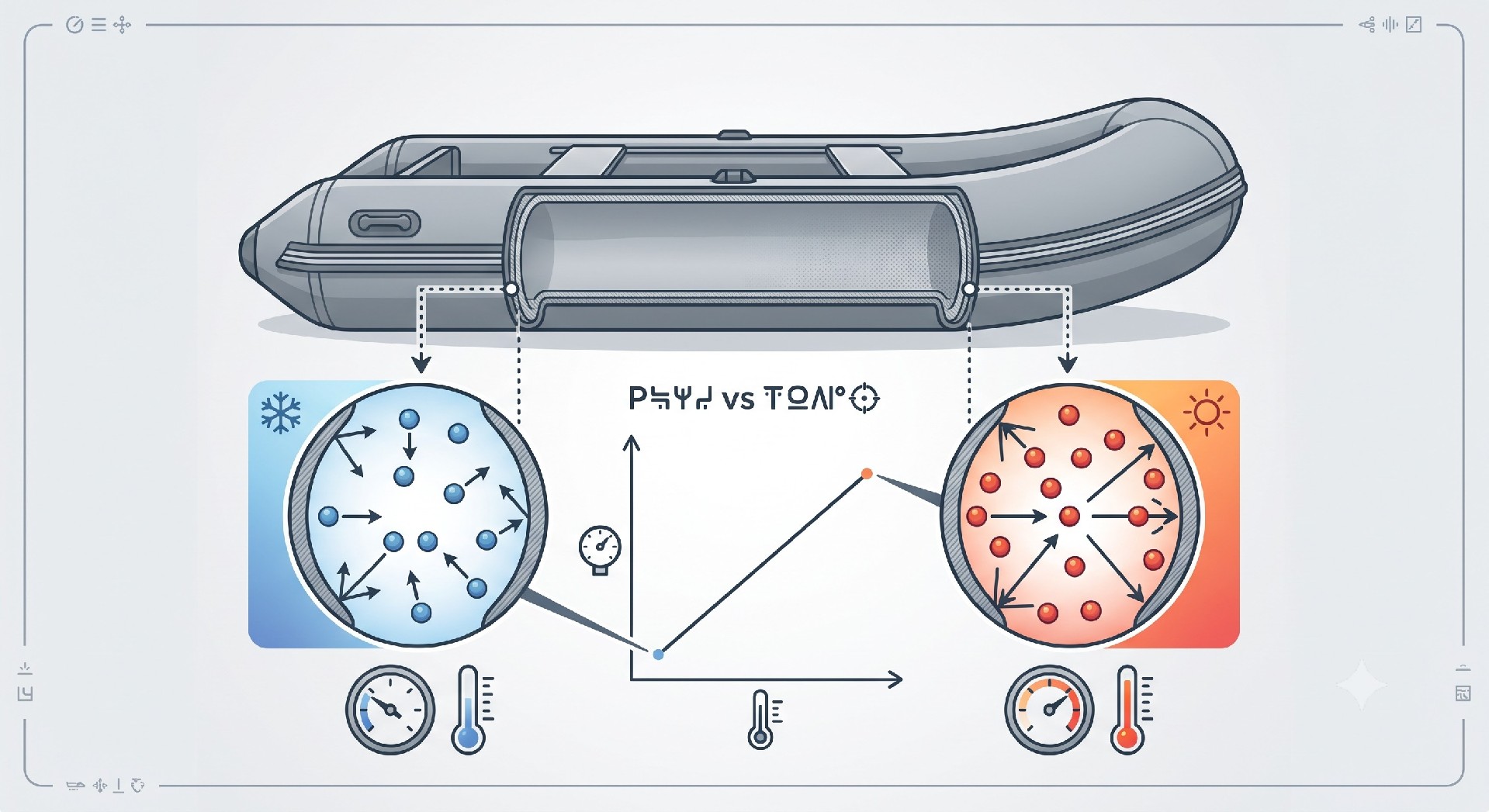
The Physics of Cold Water Pressure Drop
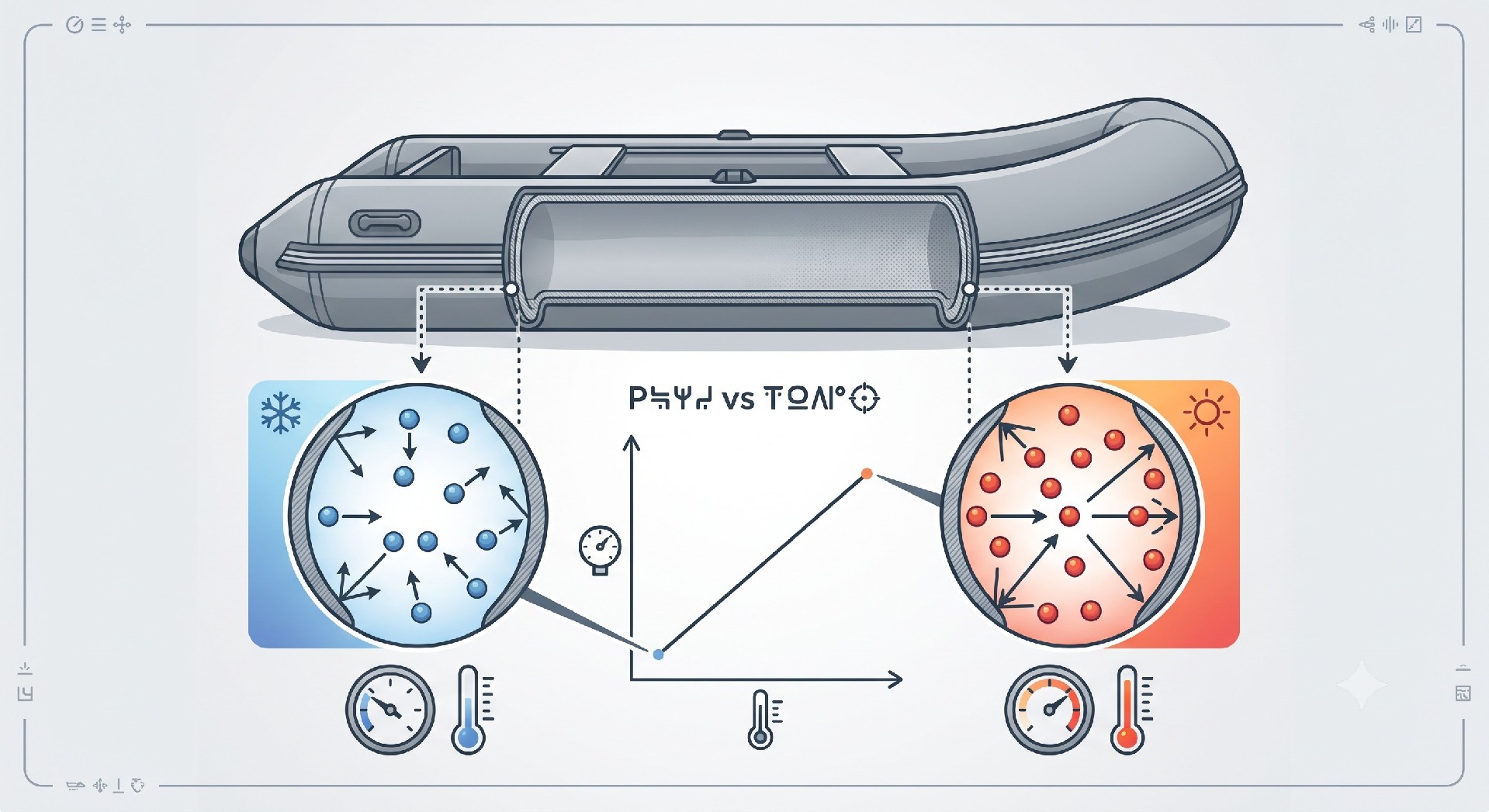
Gay-Lussac's Law states that the pressure of a gas of fixed mass and fixed volume is directly proportional to the gas's absolute temperature. When you inflate your boat to its recommended working pressure at a warm ambient temperature of, for example, 25°C (298 K), and then you place the hull in water at 5°C (278 K), the temperature of the internal air will begin to equilibrate with the cold environment. The absolute temperature drops by approximately 7%. According to the law, the absolute pressure will also drop by roughly 7%. For a boat inflated to 3.0 PSI, this equates to a pressure loss of approximately 0.2 PSI. While 0.2 PSI may sound negligible, it is a significant percentage of the typical operating range for inflatable boats and can result in a visibly sagging hull, particularly on large-diameter tubes or heavy-duty floors. This is the primary answer to "Why Does My Inflatable Boat Feel Soft After Leaving It in Cold Water?".
The Role of High-Frequency Welding and Seam Integrity
While pressure drop is the cause, the material construction directly influences how the boat 'feels' and performs when pressure drops. A boat constructed with a high-quality PVC or Hypalon/CSM fabric, using high-frequency welding, will maintain its shape and structural integrity better under slight pressure loss than a boat with less rigid fabric or mechanical seams. The fabric's inherent stiffness and the seam's ability to resist stretching are what determine the noticeable softness. In a commercial context, a 0.2 PSI drop on a boat with a high-tenacity fabric and robust drop-stitch floor might feel slightly less responsive. On a lower-cost boat with single-coated material, that same pressure drop can make the hull feel like a wet noodle, drastically affecting performance and safety.
Specification vs. Outcome: Higher working pressure generally requires a more robust material specification (e.g., 1100 Decitex, 1670 Decitex) to control stretch and maintain dimensional stability. If the material isn't designed for the pressure, the boat will feel softer more quickly as temperature drops because the fabric itself is deforming.
Diagnosing Cold-Water Pressure Loss: A Logical Sequence
Before undertaking any repairs, a systematic diagnostic approach is essential. The goal is to rule out other common causes of pressure loss, ensuring you address the correct issue.
Step 1: Re-inflate and Monitor: The most straightforward test is to inflate the boat to its recommended cold pressure (often indicated on the manufacturer's plate). If the boat holds this pressure for several hours in the cold water without a further drop, it confirms the issue was a temperature-related pressure drop. This is the first thing to do when asking "Why Does My Inflatable Boat Feel Soft After Leaving It in Cold Water?"
Step 2: The Soapy Water Test: If the pressure continues to drop, apply a soapy water solution to all seams, valves, and potential abrasion points. Bubbles indicate a leak. This test is non-negotiable for any pressure-loss investigation. Common leak points on commercial boats are around transducer mounts, d-ring patches, and tow points.
Step 3: Check the One-Way Valves: Many inflatable boats have one-way valves in the tubes. If the valve's internal spring or seal is weak, it can cause slow pressure release. Check for air escaping from the valve when the cap is off.
Step 4: Load and Hull Shape: The boat's shape will feel softer under a heavy, uneven load. Ensure the load is distributed evenly to see if the softness is a combination of pressure loss and load distribution.
| Observed Symptom | Likely Cause | Diagnostic Check | Corrective Action |
|---|---|---|---|
| Hull feels soft after launch in cold water | Pressure drop from thermal contraction | Check pressure with gauge; compare to earlier warm reading | Top up to operating pressure; adjust for cold-water use |
| Softness persists after re-inflation | Very small leak at valve or seam | Soapy water test all seams and valves, inspect for bubbles | Patch leak or service valve; re-test |
| One tube is softer than the others | Isolated leak in that chamber, or faulty valve on that tube | Check individual chamber pressure; isolate and test | Repair chamber or replace valve core |
| Rapid loss of pressure during use | Significant puncture or seam failure from abrasion | Visual inspection; soapy water test on affected area | Immediate removal from service; commercial-grade patch or professional repair |
Corrective Actions and Operational Adjustments
Once you've diagnosed the issue, the correct action depends on the diagnosis. Here is the recommended operational protocol for commercial fleets.
Action 1: Adjust Inflation to Cold-Water Working Pressure
The most effective and common solution is to adjust the inflation pressure. Inflate the boat to its recommended cold-pressure rating if one is provided. If not, inflate it to the standard working pressure after it has been in the water for 30 minutes. If you are inflating on land in a warm environment, you will need to compensate for the expected temperature drop by over-inflating slightly. However, never exceed the maximum inflation pressure stated on the builder's plate, as this risks seam failure, blowouts, or damage to the floor structure. A practical approach is to inflate to the standard pressure, place the boat in the water for 20-30 minutes, and then top it up to the correct pressure. This ensures the hull's structural integrity is maintained without risking over-pressurization in warmer air.
Action 2: Identify and Seal Minor Leaks
If the soapy water test reveals a pinhole or seam leak, immediate repair is required. For commercial operators, a well-stocked repair kit with the correct adhesive (PVC or Hypalon-specific) and patch material is critical. A slow leak is often indistinguishable from a cold-water pressure drop, which is why the diagnostic sequence is so important. For a commercial fleet, a periodic, systematic check using a digital pressure gauge and soapy water is a small investment that prevents costly downtime and safety risks.
Action 3: Manage the 10% Rule
A common industry practice for commercial inflatables is the '10% Rule': If the boat loses more than 10% of its operating pressure over a 24-hour period under stable temperature conditions, it should be taken out of service for a leak test. This rule is designed to detect slow leaks before they become critical failures. A pressure drop due to a 20°C temperature difference is expected; a 10% loss in stable conditions is a sign of a leak.
Preventing Future Softness: A Commercial Operator's Checklist
Preventative measures will reduce the frequency of this issue and extend the lifespan of your inflatable fleet. For rental operators, this translates to improved customer experience and reduced complaints. Here is a practical checklist to integrate into your standard operating procedures.
Temperature Compensation Chart: Create a simple chart for your operations team that correlates ambient air temperature with the required inflation pressure to achieve a consistent operating pressure in cold water. This is the single most effective preventative measure.
Regular Pressure Monitoring: Invest in a quality, calibrated digital pressure gauge. Do not rely on visual inspection alone. A soft-looking hull is a clear sign, but the pressure drop may be more subtle. For commercial fleets, daily pressure checks before each use are a baseline requirement. A gauge is essential to accurately answer "Why Does My Inflatable Boat Feel Soft After Leaving It in Cold Water?" with data, not just observation.
Valve Maintenance: Periodically inspect the one-way valves. Ensure the seals are clean and lubricated with a silicone-based lubricant to prevent sticking and ensure a tight seal. Worn valve cores are a common cause of slow pressure loss.
Fabric Care: The material's ability to hold pressure is dependent on its condition. UV degradation makes the fabric brittle and more prone to micro-cracking. Regular cleaning, drying, and the use of UV protectants, as specified by the material manufacturer (e.g., 3M 303 Protectant for PVC, specific Hypalon treatments), will extend the life and pressure-holding performance of the hull.
By following this approach, you can differentiate between a simple temperature effect and a genuine maintenance issue, ensuring your inflatable boats are always performing at their peak, regardless of the water temperature.
