

The Problem: Mosquitoes Are a Business Risk
For resort operators, rental fleet managers, and campground owners, a backyard inflatable pool is a high-ROI asset that drives guest satisfaction and revenue. But standing water attracts mosquitoes, and guest complaints about bugs can tank your online reviews, reduce repeat bookings, and expose you to health-code scrutiny. The technical challenge is clear: how do you make your inflatable pool comfortable, safe, and profitable without letting insects take over?
This guide covers mosquito prevention strategies from a commercial operator's perspective. We focus on pool design, water management, chemical treatments, and the equipment choices that reduce your operational overhead. You will learn which material and system features matter most, how to budget for pest control, and what to verify before buying your next pool.
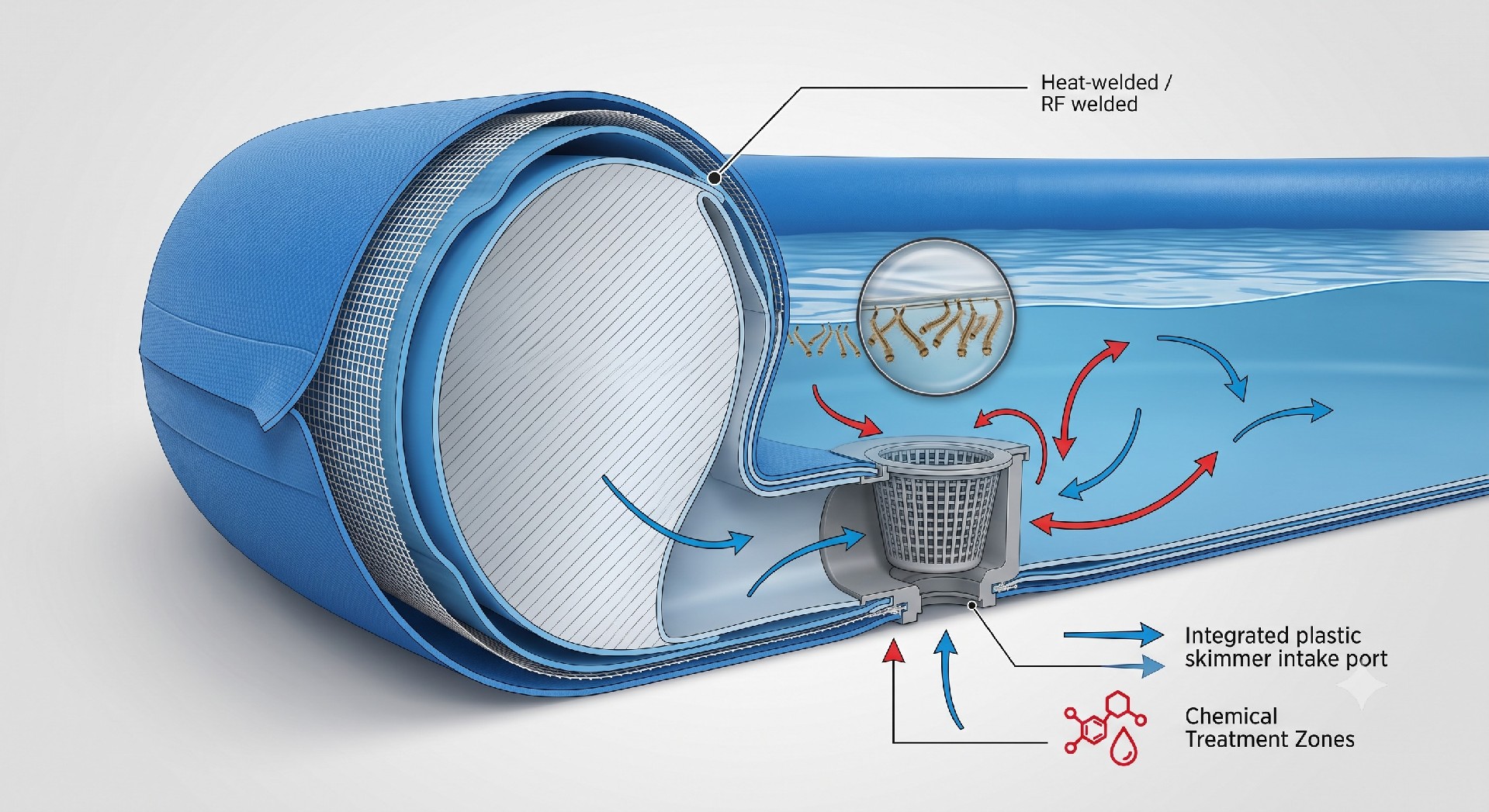
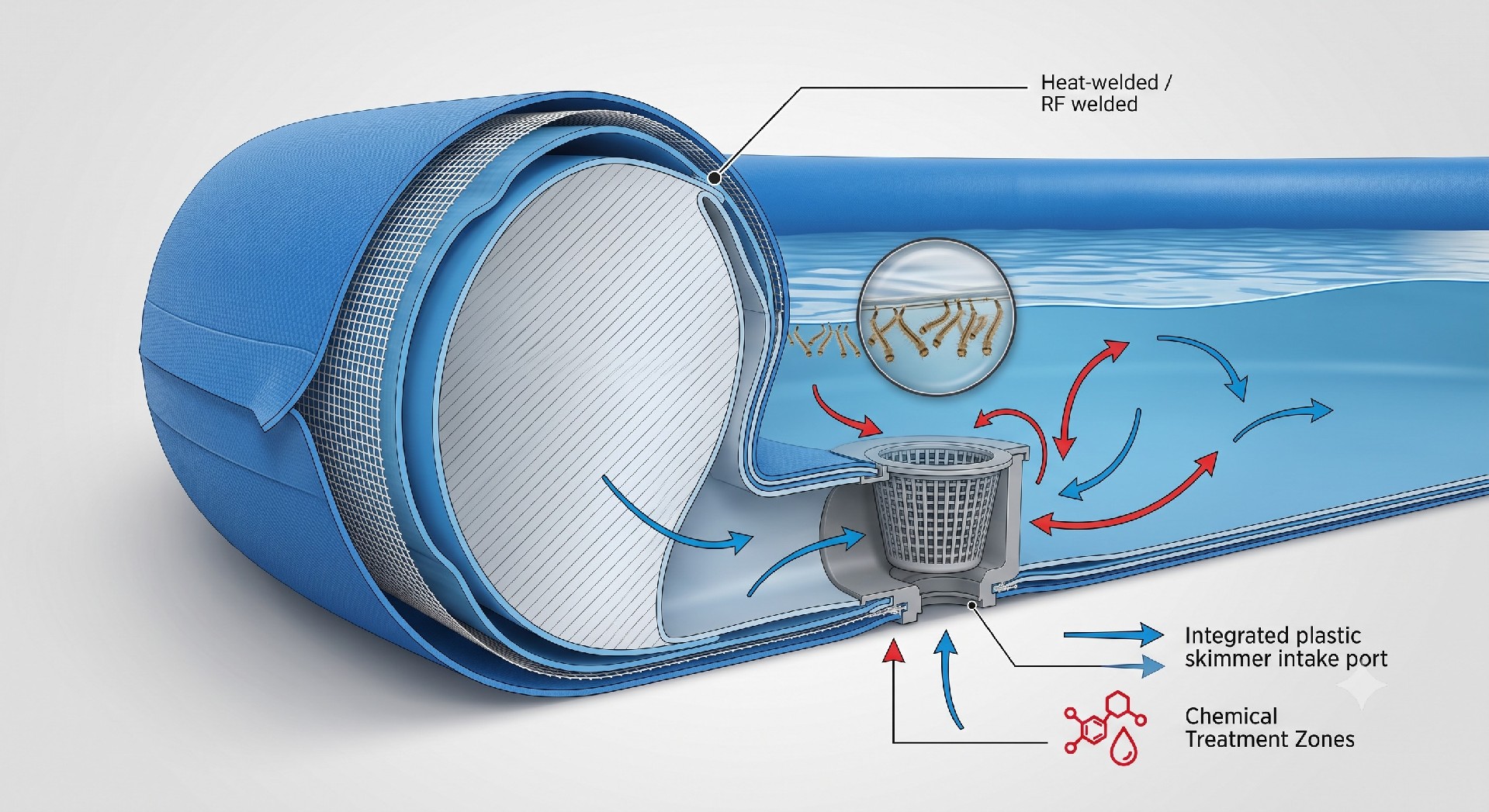
Keep bugs and mosquitoes away from your backyard inflatable pool by managing three key factors: water quality, physical barriers, and chemical treatment. This is not about a single magic solution. Effective protection requires a combination of proper pool setup, regular maintenance, and targeted products that won't damage your PVC liner or harm swimmers. We break down the commercial-grade approach that works for daily rentals and high-traffic summer operations.
Your Pool's Design Matters More Than You Think
The geometry and materials of your inflatable pool determine how easily water stagnates and where mosquitoes breed. A shallow, wide pool with minimal circulation is a prime habitat. A deeper pool with a pump-driven filtration system or a built-in circulation feature disrupts the mosquito life cycle by keeping water moving.
Wall Height and Water Volume
For commercial settings, we recommend pools with wall heights of at least 48 inches (120 cm) and water volumes above 1,500 gallons (5,700 liters). Larger volumes allow more stable water chemistry and accommodate submersible pumps that keep the water oxygenated. A pool that is too shallow invites mosquito eggs and larvae, which thrive in still water less than 24 inches deep. If you manage a pool under 30 inches, you must rely heavily on frequent chemical treatments and physical covers.
Liner Material and Surface Texture
Commercial inflatable pools use 0.5 mm to 0.9 mm PVC or TPU liners with a smooth finish. Smooth surfaces prevent algae and biofilm accumulation, which attract mosquitoes. Textured or slip-resistant surfaces are common on pool floors, but they trap organic matter and require vigorous cleaning. For mosquito control, prioritize smooth walls and a floor with a low-profile pattern that you can scrub easily.
Choose pools with a UV-resistant coating. UV exposure degrades PVC over time, creating microscopic cracks that hold moisture and breed bacteria. A pool with a 2-year UV stability guarantee will maintain its smooth surface longer, reducing your cleaning frequency and chemical consumption.
Drain and Filtration Systems
A integrated skimmer and cartridge filter system is not a luxury; it is a critical investment. Skimmers remove debris and mosquito eggs from the water surface before they sink and hatch. Filters with a 200-micron or finer rating trap larvae and organic particles. Look for pools that include a built-in pump with a flow rate of at least 1,000 gallons per hour (GPH) for pools up to 15 feet in diameter. For larger models, target 2,000 GPH or more. Without circulation, you are essentially creating a mosquito nursery.
Chemical Treatment Strategies That Work
Chemical control is your primary line of defense. But not all chemicals are compatible with PVC liners, and some can degrade the material or cause skin irritation. We recommend a three-tier approach: chlorine-based sanitation, larvicides, and natural repellents.
Chlorine and pH Balance
Maintain free chlorine levels between 1.0 and 3.0 ppm and pH between 7.2 and 7.6. This range kills mosquito larvae and bacteria without damaging your PVC seams. Check levels daily during high-use periods. A pool with unbalanced water attracts insects and promotes algae, which mosquitoes feed on. Use a digital test kit or test strips for accuracy. Never exceed 5 ppm chlorine, as it can cause liner discoloration and seam degradation over time.
Larvicides: Bacteria-Based Options
Bacillus thuringiensis israelensis (Bti) and Bacillus sphaericus are bacterial larvicides that are safe for PVC liners and harmless to humans and pets. Apply Bti granules or dunks every 7 to 14 days to prevent mosquito larvae from maturing. This is especially important if your pool sits idle for a few days between rentals. A single Bti application can provide up to 30 days of control in stagnant water. For commercial use, consider a liquid Bti concentrate that you can add directly to the pump skimmer for even distribution.
Natural Repellents: Citronella and Essential Oils
Plant-based repellents like citronella, lemongrass, and peppermint oils create a volatile barrier that deters adult mosquitoes. Use a battery-operated misting system or place repellent candles around the pool perimeter. However, these are not a standalone solution. They are effective for short-term events but require reapplication every 1-2 hours. Avoid adding essential oils directly to pool water; they can form a film on the liner and reduce filter efficiency. Use them only as air treatments.
Physical Barriers: Covers and Nets
A mesh pool cover is your most effective physical barrier when the pool is not in use. It prevents debris, leaves, and mosquitoes from entering the water. Choose a cover with a mesh size under 1 mm to block all insect stages. A cover also reduces water loss from evaporation, saving you money on chemicals and water. For rental fleets, a cover that is easy to deploy and secure reduces setup time and protects the liner from UV damage.
For daytime use, consider a pop-up mosquito net enclosure that fits over the pool area. These nets provide a bug-free zone for swimmers and are especially valuable in high-mosquito regions. Look for nets with a 600D polyester frame and a fine-mesh screen that resists tears. Weighted bases or ground stakes keep the net stable in light wind.
| Maintenance Task | Frequency | Key Metric | Commercial Impact |
|---|---|---|---|
| Test chlorine and pH | Daily | Cl 1.0-3.0 ppm, pH 7.2-7.6 | Prevents larvae and algae, avoids liner damage |
| Apply Bti larvicide | Weekly or after rain | 0.5-1.0 oz per 1,000 gallons | Reduces larvae population by >90% |
| Run filtration pump | 8 hours/day | Flow rate ≥1,000 GPH | Circulation disrupts mosquito breeding |
| Clean pool cover | After each rain | Remove standing water and debris | Prevents mosquito access and chemical dilution |
| Deep clean and scrub liner | Weekly | Soft brush, mild detergent | Removes biofilm and organic material |
| Inspect seams and valves | Monthly | No visible cracks or moisture | Prevents leaks that create stagnant pockets |
Maintenance Scheduling and Record Keeping
Preventive maintenance is the most cost-effective mosquito strategy. We recommend a daily checklist for commercial operators. Each morning, inspect the pool for standing water on the cover, remove debris, and test chemical levels. Record pH, chlorine, and temperature to spot trends that indicate algae growth or chemical inefficiency. A weekly deep clean involves draining the pool, scrubbing the liner with a soft brush and mild detergent, and inspecting seams and valves for leaks.
Mosquito activity increases after rain. Plan to apply larvicide within 24 hours of a heavy rainfall and check the pool cover for pooling water. If you use a pump-based filtration system, run it for at least 8 hours per day during peak mosquito season to keep water moving and prevent stagnation.
Storage and Off-Season Care
Proper storage prevents mold, mildew, and insect infestations in the off-season. Completely dry the pool before folding it. Store it in a rodent-proof container or bag. Rodents and insects can damage stored PVC if they find moisture or food residue. Use desiccant packs to control humidity and prevent the growth of fungus that attracts insects.
When to Replace Your Inflatable Pool
Seam failure, UV degradation, and persistent leaks make mosquito prevention impossible. If you detect more than three pinprick leaks per season or if the liner shows fading and cracking, it is time to replace the pool. A new pool with modern materials will have better chemical resistance and smoother surfaces that repel organic buildup. Plan for a replacement every 3-5 years for heavy commercial use.
Your Mosquito-Control Action Plan
Protecting your backyard inflatable pool from bugs and mosquitoes is a systematic process, not a one-time fix. Follow these steps for a robust defense:
Select a pool with a pump and filter that moves at least 1,000 GPH and includes a skimmer. This is your first and most important purchase decision.
Test and balance water chemistry daily during the rental season. Keep chlorine at 1.0-3.0 ppm and pH at 7.2-7.6.
Apply Bti larvicide weekly or after heavy rain. Use granules, dunks, or a liquid concentrate for uniform coverage.
Use a mesh cover when the pool is idle to block debris and insects. Secure it tightly to prevent gaps.
Maintain a log of chemical levels, cleaning dates, and equipment checks to identify patterns and adjust your schedule.
Replace the pool every 3-5 years to avoid material degradation that compromises your mosquito control efforts.
By integrating these design, chemical, and maintenance practices, you will reduce mosquito populations, increase guest satisfaction, and maximize the commercial return on your inflatable pool investment. Consult your pool supplier for specific chemical compatibility and warranty guidelines. Remember, a mosquito-free pool is a profitable pool.
