

Defining the Product and Its Critical Use Case
A floating ring for a 2-year-old is a distinct commercial product category. It is not a generic swim aid, a large towable, or a recreational pool float. For this age group, the product must prioritize structural stability, secure containment, and age-appropriate ergonomics above all else. When evaluating a floating ring for a 2-year-old, commercial buyers—including resort kids' club managers, private-label sellers, and rental fleet operators—must assess the product's ability to keep a mobile toddler safely positioned in the water. The core commercial decision is not simply about buoyancy, but about how the product's design prevents accidental submersion, supports the child's natural movement, and provides clear supervision sightlines for parents or lifeguards.
This guide focuses on the specific requirements for a floating ring designed for a 2-year-old. We will examine the essential design features, material selection for safety and durability, and the critical compliance checks that should govern any commercial purchase. The goal is to move beyond generic descriptions and provide a technical, buyer-focused blueprint for this specific product.
Essential Design Architecture: Stability, Containment, and Ergonomics
The fundamental difference between a floating ring for an adult and one for a 2-year-old lies in the design philosophy. An adult float prioritizes comfort and lounging. A floating ring for a 2-year-old must be engineered for active containment. Key design elements include:
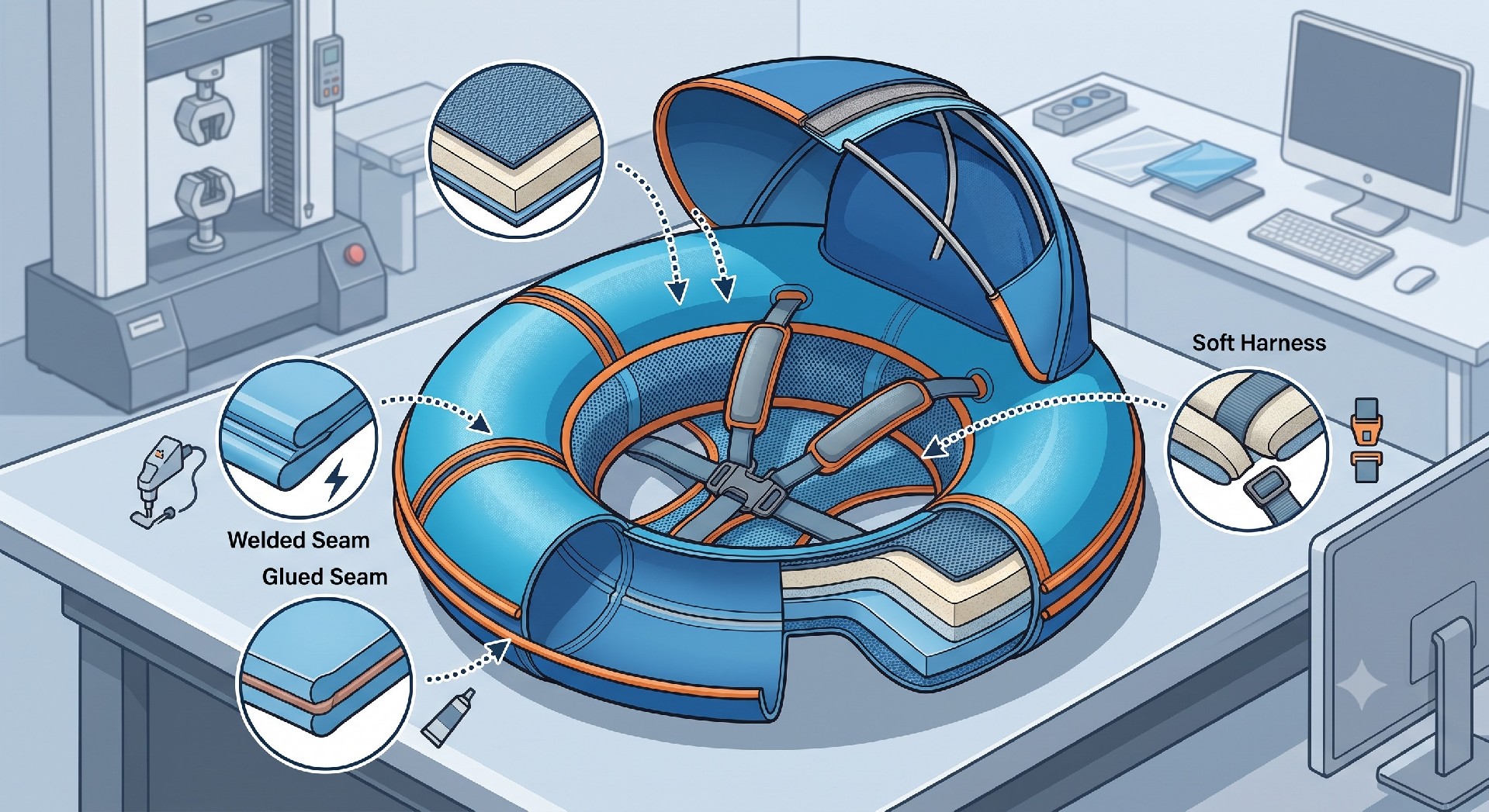
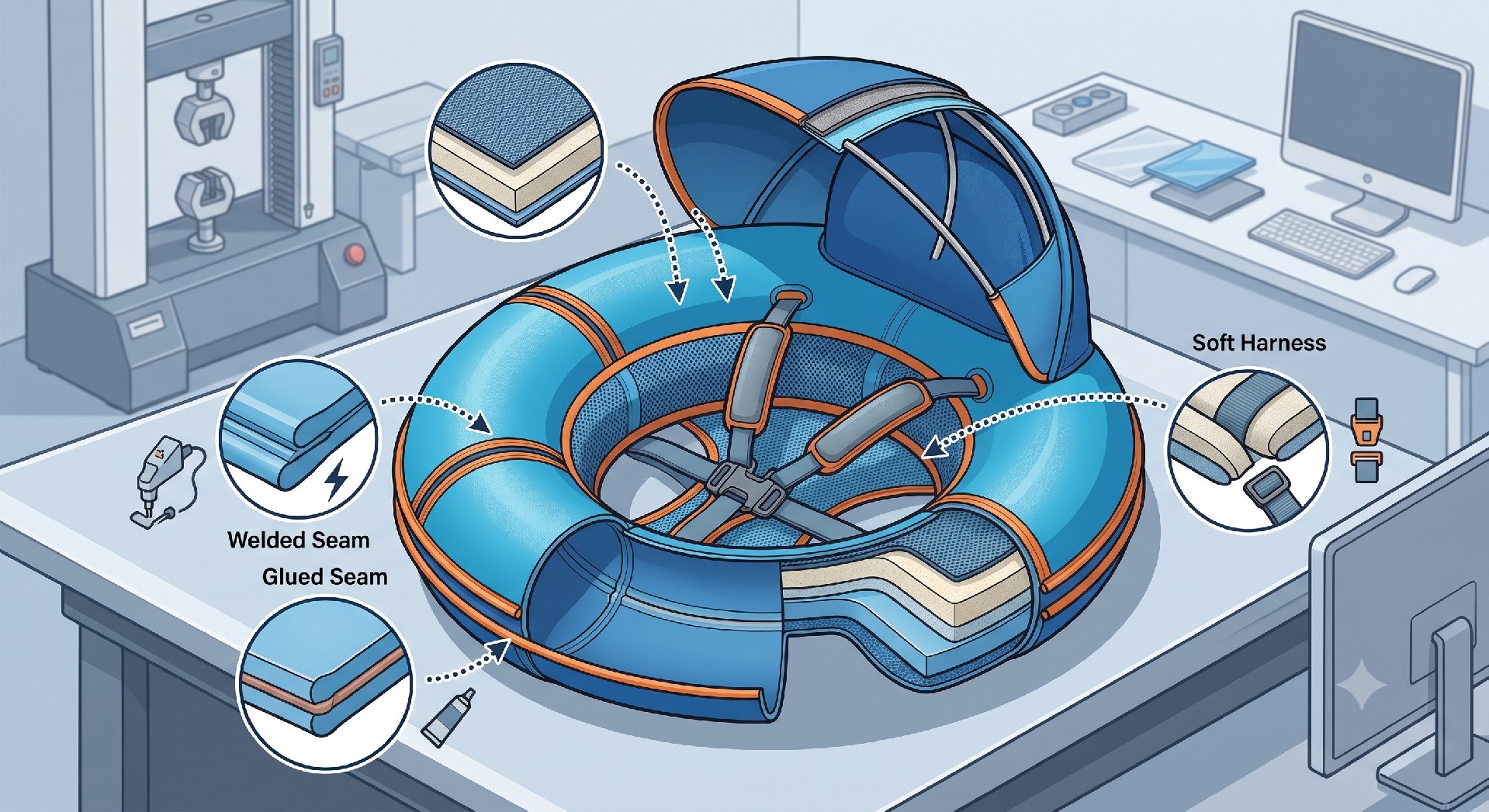
Leg Holes: Unlike a simple ring, a floating ring for a toddler almost always features leg holes. This design allows the child to sit in the ring, with their legs dangling in the water. This provides a far more secure and natural position, significantly reducing the risk of the child slipping through the center of the ring. The leg holes must be appropriately sized. If they are too large, the child can slip through; if too small, they can be restrictive and cause discomfort or chafing.
Central Canopy or Deck: Many advanced models include a fabric or mesh deck within the ring. This deck supports the child's bottom, providing a stable seating platform. This is a critical feature for a 2-year-old, as they are still developing their core stability. A proper deck distributes their weight evenly, making the float more stable and comfortable. It also prevents the child from dipping too low into the water.
High Backrest: A high backrest is not just for comfort; it provides essential head and neck support. A 2-year-old's head is proportionally heavy, and they may tire easily. A supportive backrest helps keep their head above water, even if they lean back suddenly. This is a key safety differentiator between a high-quality floating ring and a basic, low-cost alternative.
Safety Harness: Some premium products incorporate a soft, adjustable safety harness that clips around the child's chest. This is the gold standard for security, as it ensures the child cannot slip out of the float, even if they lean forward or attempt to climb out. When evaluating a floating ring for a 2-year-old, the presence of a well-designed harness is a strong indicator of a safety-first design philosophy.
These design elements work together to create a contained environment. The commercial buyer should verify that these features are not just present but are integrated effectively to create a low center of gravity and maximum stability in the water.
Material Selection and Construction: Safety and Durability in a B2B Context
For a commercial or private-label floating ring, the materials and construction are paramount. The product must be safe for a child, durable enough for repeated use, and easy to clean and maintain. The most common material for this product is PVC (Polyvinyl Chloride). However, the quality of the PVC varies significantly. Commercial buyers should specify a high-quality, phthalate-free PVC. For the European market, this is often tied to compliance with the REACH regulation, which restricts the use of certain hazardous chemicals. For products marketed globally, it is often best practice to specify materials that meet or exceed these requirements, ensuring the product is safe for skin contact.
Beyond the material itself, the construction method is equally critical. The seams are the most vulnerable point on any inflatable. For a floating ring for a 2-year-old, the best seams are high-frequency welded, not glued. High-frequency welding uses radio waves to fuse the PVC material at a molecular level, creating a bond that is as strong as the material itself. Glued seams are far more susceptible to delamination and failure, especially in warm conditions or after repeated exposure to water and sun.
The fabric used for the deck, backrest, and canopy should be durable, quick-drying, and resistant to UV degradation. A breathable mesh is often preferred for the deck, as it allows water to drain away, keeping the child comfortable and preventing the float from becoming waterlogged. Consider the use of soft, flexible materials for the leg hole edges to prevent chafing on a child's delicate skin. In a commercial setting, the product must withstand repeated inflation, deflation, cleaning, and use, making material quality a direct factor in the product's lifecycle cost and reputation.
| Evaluation Dimension | Commercial Target / Specification | Verification Method | Common Red Flag |
|---|---|---|---|
| Material Safety | Phthalate-free, high-grade PVC, compliant with EN 71-3. | Request a third-party test report. | Supplier cannot provide a test report, or the material has a strong chemical odor. |
| Seam Construction | High-frequency welded seams (not glued). | Physical inspection of the sample; ask the supplier to confirm the manufacturing process. | The sample shows glued seams, or the seam area feels sticky or appears translucent. |
| Safety Harness (if applicable) | Adjustable, soft, and secure, preventing the child from slipping out of the ring. | Physically test the harness on a sample to ensure it is functional and comfortable. | Harness is flimsy, difficult to adjust, or does not create a secure fit. |
| Deck / Seating Platform | A supportive, breathable mesh deck to provide a stable seating platform. | Physical inspection of the sample; verify the deck is taut and supportive. | The deck is loose, poorly attached, or made of non-breathable material. |
| Load Capacity | Clearly stated maximum user weight (e.g., 15-30kg / 33-66 lbs) suitable for a 2-year-old. | Check the product packaging and labeling. | No stated maximum weight, or the weight limit seems unreasonably high for the size of the product. |
| Regulatory Compliance | EN 71 (Europe) or relevant CPSC standards (USA). | Request the specific test report. Do not accept a generic certificate. | A certificate is provided but not a detailed test report from an accredited lab. |
Safety and Compliance: Certifications and Buyer Verification
The most critical commercial decision when buying a floating ring for a 2-year-old is ensuring it meets the relevant safety standards. The primary standard for this product category is EN 71, the European standard for toy safety. This is not a generic standard; it is the specific regulatory framework that applies to products designed for children under 14. A floating ring for a 2-year-old falls squarely within this scope.
EN 71 is a multi-part standard. The most directly relevant sections include:
EN 71-1: Mechanical and physical properties - This addresses potential hazards like sharp edges, small parts, and structural integrity.
EN 71-2: Flammability - This ensures the materials used do not present an unacceptable fire risk.
EN 71-3: Migration of certain elements - This is critical for a product that a child will be in constant contact with. It limits the migration of heavy metals and other hazardous substances from the materials. Compliance with this part is closely linked to material specifications, such as ensuring PVC is phthalate-free.
For the U.S. market, the standard is similar. The Consumer Product Safety Commission (CPSC) has stringent requirements for children's products. Commercial buyers should always request a copy of the supplier's test report from an independent, accredited third-party laboratory, such as Intertek or SGS. The report should explicitly state the standard and the testing method. A certificate from the manufacturer is not sufficient; a third-party test report is the only reliable evidence of compliance.
Beyond these legal requirements, the product's design must also inherently support safe usage. This includes ensuring the float is not easily tipped over. The center of gravity should be low, and the product's overall dimensions should be proportional to a 2-year-old's size. The float should have a clear maximum user weight specified, and the buyer should ensure the product is marketed for the correct age group. Overly large floats for small children can be as dangerous as those that are too small, as the child may struggle to stay positioned correctly. For a commercial operation, providing the correct product for the child's size is a fundamental duty of care.
Decision Framework: A Buyer's Checklist for a Floating Ring for a 2-Year-Old
To streamline the specification and purchasing process, commercial buyers should adopt a systematic decision framework. This checklist translates the technical considerations into actionable verification points.
Verify Third-Party Test Reports: Do not accept supplier certificates. Insist on a test report from a recognized lab showing compliance with EN 71 (Europe) or relevant CPSC standards (USA). The report must be dated and relate to the exact product model you are ordering.
Specify High-Frequency Welded Seams: When defining the product with an OEM or evaluating a supplier's sample, confirm the seam type. High-frequency welded seams are essential for commercial-grade durability and safety.
Confirm Phthalate-Free PVC: The product specification must explicitly state the PVC is phthalate-free. This is the minimum expectation for safety and is a pre-requisite for compliance with EN 71-3 and REACH.
Assess the Leg Hole and Harness Design: Evaluate the product physically. Are the leg holes sized appropriately for a 2-year-old's body? Is the harness (if present) comfortable and secure, but not restrictive? A poor design here is a product failure, regardless of material quality.
Evaluate the Canopy/Deck: Is the deck supportive and does it help stabilize the child? A high-quality deck is a sign of a well-engineered product.
Define a Maximum User Weight: This must be printed on the product and in the instructions. For a 2-year-old, a typical safe working limit would be in the 15-30 kg range (33-66 lbs), though this depends on the specific float's volume and design. Verify the specification for your chosen product.
Request a Pre-Production Sample: Always conduct a physical assessment of a sample before placing a commercial order. This is your opportunity to test the product's inflation, stability, and material feel before committing to a large batch.
By following this framework, the buyer moves from a position of risk to one of control, ensuring they are procuring a product that is safe, compliant, and fit for its critical purpose.
Commercial Verdict: Specifying Safety and Value
Purchasing a floating ring for a 2-year-old is a decision weighted with safety and commercial responsibility. The ideal product is one that meets rigorous safety standards, is engineered with a focus on stability and containment, and is constructed from high-quality, durable materials. For a resort buyer, this translates to a safe, enjoyable experience for guests and reduced liability. For a private-label seller, it means a defensible product that builds brand trust. For a rental operator, it means a durable asset with a predictable lifecycle.
Choose a floating ring that is explicitly tested to EN 71 or applicable CPSC regulations, features high-frequency welded seams, and incorporates design elements like leg holes and a supportive deck. The lowest initial purchase price is almost never the lowest total cost of ownership or risk. By prioritizing safety and specification over simple cost, the commercial buyer makes a sound investment in quality, compliance, and their brand's reputation.
